Blog

  • Chuunibyou – The high school crisis

    Chuunibyou – The high school crisis

    Have you ever encountered characters or people acting as if they were in a fantasy world? This is more common than you think, and the Japanese have a term for it called Chuunibyou.

    Sometimes a young boy influenced by games, animes, mangas, movies, and fantasies may end up having Chuunibyou. In this article, we will explore everything about this crisis of the second year of high school in Japan.

    Chuunibyou, or “second-year high school syndrome,” is a Japanese term used to describe a certain type of adolescent behavior. It is often characterized by an exaggerated sense of self-importance, dramatic behavior, and an intense desire to stand out from the crowd.

    The syndrome is often harmless and fades over time, but in some cases, it can lead to serious social and psychological problems.

    We also recommend reading:

    What does Chuunibyou mean

    Chuunibyou (中二病) is a slang term used to refer to chuugakkou ni-nen byou [中学校二年病] which literally means “second-year high school disease” in Japan.

    Chuunibyou is used to describe a person who exhibits delusional behavior, especially thinking they have special powers.

    Originally, this term was used to refer to children in the second year of high school who like to act like adults and belittle others; the term evolved into one used to describe delusional behavior.

    Some symptoms of this syndrome are:

    • Exaggerated or grandiose behavior: Acting as if you are the star of your own action movie, or constantly speaking in a grandiose or pretentious manner.
    • Dramatic behavior: Always trying to be the center of attention, or going out of your way to cause a scene.
    • Intense desire to stand out: Dressing in strange or eccentric ways, or trying to stand out in any possible way.

    This term originated in 1999 when it was first used in a radio program called “Hikaru Ijuin UP’S“. People with Chuunibyou can be literally crazy, difficult to deal with, and sometimes have some underlying issue or an identity crisis.

    Types of Chuunibyou

    There are 3 types of Chuunibyou, I will describe each one and provide a sample dialogue.

    DQN [系] Dokyun-kei

    The DQN pretend to be anti-social or act like delinquents when in reality they are not. They create stories about the common behavior of gangs such as fights or take pride in knowing about this subculture. “DQN” is slang for “anti-social person” or “annoying delinquent.”

    Example: (Getting furious with their own mother and saying: respect my privacy!)

    • You’re covered in Band-aids! What happened?
    • I was in a gang fight.
    • Oh come on, I know you don’t have a gang.

    Subcultural or Hipster – Sabukaru-kei

    Sabukaru-kei [サブカル系] often avoids anything popular or well-known, prefers less known trends, and establishes itself as being special.

    People of this type do not really love their own subculture, but rather strive to achieve the “cool” factor by not having the same interests as others.

    Example: (Listening to Japanese music to be different)

    • When you go to get Pokémon cards, I want originals in Japanese!
    • And can you read Japanese?
    • -_-; Yes, of course I can…

    Evil Eye – Jankigan-Kei

    Jakigan-kei [邪気眼系] admires mystical powers and thinks they have a hidden power within them. This type is also known as the delusional type. They often establish a special name and tend to name their powers and things related to fantasy.

    Example:

    • Don’t touch this bandana on my left wrist. It is sealing a malevolent spirit inside me, and if you take it off, I might lose control.
    • Man, calm down. You just have chuunibyou.
    Chuunibyou - The crisis of high school

    Is Chuunibyou a disease?

    Chuunibyou is by no means a mental problem or anything like that, but it is often a psychological issue when it serves as an escape from reality for some.

    Unfortunately, there are many people who have Chuunibyou in Japan, and many do not overcome this phase due to a lack of acceptance from others.

    If someone admires idols, celebrities, foreign cultures, and starts to act like one of them, they can be labeled as a variation of Chuunibyou.

    Although chuunibyou is often associated with negative connotations, there are also some positive aspects. For example, many people who suffer from chuunibyou are incredibly creative and imaginative.

    They often have a very strong sense of individualism and are not afraid to express themselves. If you think you or someone you know may be suffering from chuunibyou, do not hesitate to seek professional help.

    Although it can be a syndrome that is difficult to overcome, with the right treatment and support, it is possible to lead a happy and fulfilling life.

    Anime Characters with Chuunibyou

    At various times, characters with this syndrome appear, some of them are:

    • Rikka “Wielder of the Wicked Eye, Master” Takanashi – Chuunibyou Demo Koi ga Shitai!
    • Erio “E.T.” Touwa – Denpa Onna to Seishun Otoko
    • Megumin – Kono Subarashii Sekai ni Shukufuku wo!
    • Gundam “Forbidden One” Tanaka – Danganronpa 3;
    • Jurai “July, Ju-kun” Andou – Inou-Battle wa Nichijou-kei no Naka de
    • Yoshiteru “Blademaster General” Zaimokuza – Oregairu;
    • Hyouketsu no Judgness – Mayoiga
    • Ryouko Satou – Aura: Maryuuin Kouga Saigo no Tatakai
    • Shun “Jet-Black Wing” Kaidou – Saiki Kusuo no Ψ-nan
    • Akiko “Shion” Tachibana – Anitore! EX

    Notice that most Chuunibyou increase their name with some strange middle name derived from powers, abilities, foreign names, and other representations.

    Chuunibyou in the world

    The term Chuunibyou has gained more fame in the West with some animes that deal with this theme, such as “Chuunibyou demo Koi ga Shitai!” and other animes that feature a character with this problem such as:

    • “Inou Battle wa Nichijou-kei no Naka de;
    • Boku wa Tomodachi ga Sukunai;
    • Hentai Ouji to Warawanai Neko;
    • NHK ni Youkoso!;

    And you? Have you ever escaped reality? Have you ever tried to be an adult when you weren’t? Do you imagine yourself with powers and in fantasy worlds? Or are you an Otaku who insists on learning Japanese, only hears things, and only talks about Japan? Then you have Chuunibyou!

    Don’t forget to leave your comment on the subject and, if possible, share our article.

  • Okonomiyaki – Japanese Pancake – Curiosities and recipe

    Okonomiyaki – Japanese Pancake – Curiosities and recipe

    Do you know the famous Japanese dish called Okonomiyaki? In this article, we will see some curiosities and a recipe for this famous Japanese pancake or crepe.

    Okonomiyaki [お好み焼き] are savory Japanese pancakes filled with meat, seafood, and vegetables. They can be topped with mayonnaise, Katsuobushi, Nori, pickled ginger, and a sauce similar to Tonkatsu sauce (breaded pork cutlet).

    The batter for Okonomiyaki is made with flour, vegetable broth or Dashi, eggs, and chopped cabbage. It is topped with green onions, onions, meat, bacon, cheese, octopus, squid, shrimp, vegetables, mochi, and whatever you want.

    To finish, a small line of mayonnaise covers the entire Japanese pancake. The order of the layers can vary depending on the style and preference of the cook, and the ingredients can also vary depending on the customer’s preference.

    We also recommend reading:

    Okonomiyaki - Japanese Pancake - Curiosities and Recipe

    The Origin of Okonomiyaki

    The word Okonomiyaki literally means “what you want fried.” The word Yaki (焼き) means grilled or fried, while the word okonomi (お好み) means what you want, desire, or like.

    We can even notice the presence of the ideogram (好) which means to like and love. It got this name because there are no limits to its recipe; you can fill it with whatever you like or desire.

    A researcher named Tekishu Motoyama says that the Japanese crepe may have been derived from the dough of funoyaki, a wheat dough from the 16th century. It was created by Sennotikyuu, where he mixed water, sake, and flour to make a flat dough. This recipe was dipped in miso, but this tradition disappeared at the end of the Edo period.

    We recommend reading:

    Okonomiyaki - Japanese Pancake - Curiosities and Recipe

    After Funoyaki, Mojiyaki and several other variants emerged. It was only after the great Kanto earthquake in 1923 that people began to cook these crepes, which soon became popular and turned into the phenomenon known as okonomiyaki.

    Around 1912 in the Taisho Era, in the city of Kyoto, Issen Yoshoku was becoming popular, another possible predecessor of Okonomiyaki that was filled with Worcestershire sauce and chopped green onions.

    Curiosities and Types of Okonomiyaki

    Okonomiyaki is the pride of Osaka. Any informed tourist visiting Osaka goes straight to Dotonbori street to eat Okonomiyaki. In Osaka, the dish is also called butatama. In Kyoto, Okonomiyaki is usually made with a darker green.

    Okonomiyaki - Japanese Pancake - Curiosities and Recipe

    In Hiroshima, okonomiyaki is considerably more difficult to prepare. The ingredients are always more chopped than mixed. The layers are typically made with cabbage, bacon, and optional items (squid, octopus, cheese, etc.), and there are even versions with yakisoba and fried egg.

    Monjayaki is popular in Tokyo; its difference is that they are more consistent. The result is a crispy pancake with a burnt cheese texture. While okonomiyaki is a pancake for one person, monjayaki is prepared as a giant pancake for a table.

    In Okinawa, okonomiyaki is called Hirayachi. They are thinner and prepared at home. They are not typically sold in restaurants.

    Okonomiyaki - Japanese Pancake - Curiosities and Recipe

    Other types of okonomiyaki are:

    • Negiyaki – A thin pancake filled with Negi. (Type of onion)
    • Modanyaki – An okonomiyaki with a bottom layer of fried noodles (yakisoba or yakiudon);
    • Matsuri Okonomiyaki – Sold at festivals and events, made in large quantities, usually has standard ingredients like bacon and cabbage;
    • Hashimaki – A version rolled around a chopstick;
    Okonomiyaki - Japanese Pancake - Curiosities and Recipe

    Okonomiyaki Recipe

    This recipe is quite varied and can be made in many ways and with various ingredients. The most common batter has the following ingredients:

    • 150g of carrot;
    • 150g of cabbage or more;
    • 200g of cream cheese;
    • 3 eggs;
    • 15g or a tablespoon of salt;
    • 50g of butter;
    • 200g of wheat flour;
    • water;
    • Green onions to taste;

    If you need to make the okonomiyaki sauce:

    • 250 ml of soy sauce;
    • 50 ml of Worcestershire sauce;
    • 130g of tomato paste;
    • Black pepper to taste;
    • 8 tablespoons of sugar;

    To make the sauce, just mix the ingredients and boil them in a pot until thickened. You can also use Tonkatsu sauce or invent your own derivative and use other ingredients;

    Ingredients for topping:

    • Okonomiyaki sauce;
    • Mayonnaise;
    • Nori (seaweed) cut into thin strips;
    • Katsuobushi (dried and grated fish);
    • Seafood (optional)
    • Chopped or sliced bacon;
    • Mochi (optional);
    • cheese (optional);

    How to make:

    1. Mix the wheat flour, water, eggs, and salt;
    2. Then mix in the carrot, cabbage, and chopped onion;
    3. Pour the batter into a frying pan with oil, spreading it in a pizza shape;
    4. After it starts grilling, add some filling like bacon and flip the batter;
    5. Add the sauce;
    6. Then add other toppings like green onions, cheese, katsuobushi, ginger, and others;
    7. Make your art with the mayonnaise and serve yourself;

    To understand better, we recommend watching the videos;

    Preparation Method in Videos

    We will leave below some videos that show how to prepare:

  • Sensations and flavors of the palate in Japanese

    Sensations and flavors of the palate in Japanese

    Do you know all the flavors in Japanese? Do you know how to express the sensations of taste in the Nipponese language? In this article, we will talk about the taste sensations used by the Japanese palate and detail some of them.

    The Japanese take cuisine and flavor so seriously that they even discovered an official taste sensation named umami. They use many seasonings and little salt to give a unique and distinct flavor to their food.

    The palate is a chemical sensation perceived by specific cells, the taste buds. Through them, we can distinguish salty, sweet, bitter, sour, and umami flavors. But have you ever wondered how to say this in Japanese?

    We also recommend reading:

    How to say flavors in Japanese?

    When eating or tasting something, the expressions for flavors and sensations in the Japanese language are:

    • Aji [味] – Flavor;
    • Oishii [美味しい] – Delicious, Tasty;
    • Umai [うまい] – Good;
    • Amai  [甘い] – Sweet;
    • Nigai  [苦い] – Bitter;
    • Suppai [酸っぱい] – Sour;
    • Shoppai  [しょっぱい] – Salty;
    • Umami [旨味] – Umami;
    • Shiokarai [塩辛い] – Salty;
    • Karai [辛い] – Spicy;
    • Shibui  [渋い] – Astringent;
    • Mazui [まずい] – Bad Taste;
    • Atsui [熱い] – Hot;
    • Tsumetai  [冷たい] – Cold;
    • Atatakai  [温かい] – Warm;
    Sensations and flavors of the palate in Japanese

    How to say something is tasty in Japanese?

    There are several ways to say that something is tasty, delicious, or very good in Japanese. See in detail some of the expressions below:

    Oishii [美味しい] – A common word to say that something is tasty and delicious. Its use extends beyond food; it can be used to say that a person is attractive or has a warm body.

    Umai [うまい] – Means good, tasty, and delicious. The word Umai is often used not only when we taste something delicious but also when we witness something good and are surprised by the result, wanting to say: Well done! Skillful!

    Umai, besides being written in hiragana, can be written in various kanji:

    • 美味い – Literally refers to a good taste;
    • 旨い – Refers to something delicious;
    • 巧い/上手い – Refers to the act of doing something good, clever, tasty;

    Examples of use:

    • うまく行く– umaku iku – Go well, be successful;
    • 日本語うまいですね – nihongo umai desu ne! – You speak Japanese very well!

    It is worth remembering that the pronounced form also greatly influences the effect of the word; whenever expressing taste for something, speak in a way that expresses feeling.

    Kekkou [結構] – Although its use to describe flavors is not very common, some may use it to say that the food is splendid, wonderful, nice, and delicious. It can also indicate that a person is already full, does not want more, finds it tolerable, or thanks, so be careful when using it.

    • Maiuu [まいうー] slang for umai;
    • Boono [ボーノ] comes from the Italian buono;
    • Maiyu [まいゆ] – slang for umai;

    Another way to show gratitude for the food, especially in restaurants, is by finishing the meal by saying Gochisousamadeshita [ご馳走様でした].

    Read also: Itadakimasu and Gochisousama – What is the true meaning?

    Sensations and flavors of the palate in Japanese

    How do you say sweet in Japanese?

    To express that something is sweet in Japanese, we use amai [甘い], which can also mean naive, unprepared, mediocre, excessively tolerant, mild, soft, insufficient, incomplete, ineffective, juicy.

    Unlike Portuguese, this word can have a negative connotation when used in occasions that are not describing the taste of food. So be careful when calling something sweet. For example:

    • Niamae [人に甘い] – Can refer to a spoiled or easy person;
    • Amaeru [甘える ] – Means to flatter, to fawn, to hit on;
    • Amai hahaoya [甘い母親] – Negatively, a mother who spoils her child;
    • Amaku kangaeru [甘く考える] – To underestimate, to be unprepared, to dream too much;

    How do you say sour in Japanese?

    To say sour in Japanese, we use the expression Suppai [酸っぱい], which fortunately has no other meanings besides sour. The word is used to refer mainly to acidic things and can also be used in phrases like:

    • Sui mo amai mo [酸いも甘いも] Good and bad times

    Acidity is an indispensable and daily flavor on the Japanese table, whether in food or condiments. To refer to sourness, we use the expression “Sanmi” [酸味]. A source of sour flavor that the Japanese like and consume is vinegar, Umeboshi, which are pickled plums, and some sauces.

    Read also: Get to know Ume, the Japanese plum and its variations

    Sensations and flavors of the palate in Japanese

    How do you say bitter in Japanese?

    The bitter taste or bitterness in Japanese can be expressed with Nigami [苦味]. The adjective for bitter in Japanese is Nigai [苦い] and can be found in some Japanese sauces and in the famous dish Goya Chanpuru.

    Read also: Goya Chanpuru – A bitter dish from Okinawa

    In addition to bitterness, we also have astringency, which in Japanese is called Shibumi [渋み]. Astringency is not a flavor but a mechanical sensation. The adjective for something astringent in Japanese is Shibui [渋い].

    Astringency occurs when a product is consumed, the drying effect fills the mouth, just like the tongue’s sensation inside the cheeks. Astringency is often confused with bitterness, which is “detected” by the taste buds on the tongue.

    Sensations and flavors of the palate in Japanese

    Umami – The Japanese flavor

    It is considered one of the 5 basic flavors, recognized worldwide, yet little spoken about. Umami is on the same level as sweet, salty, and sour, but is rarely mentioned when referring to tastes.

    Umami [うま味] – Can be translated as “pleasant savory flavor.” This particular writing was chosen by Professor Kikunae Ikeda. It is a derivation of UMAI [うまい] which means “delicious” and MI [味] which means “taste.”

    Umami has a smooth but lasting residual taste, difficult to describe. It induces salivation and a velvety sensation on the tongue; it can stimulate the throat, palate, and the back of the mouth.

  • Weeaboo and Wapanese – Understand the Meaning

    Weeaboo and Wapanese – Understand the Meaning

    Do you know what the word weeaboo means? Could you be a weeaboo? What do the Japanese think about these people? In this article, we will analyze the meaning of this word in depth.

    Weeaboo, also known as “wapanese,” is a derogatory slang term that defines people who are not Japanese but behave like a Japanese person, showing their preferences and passion for Japan in an exaggerated way. In short, it’s a Japan fanboy.

    These people prefer all things Japanese over their own culture. This person can be an otaku addicted to anime and manga, a hikikomori who only lives at home because they have no interest in anything other than Japan.

    We also recommend reading:

    What does weeaboo mean? Don't be a weeaboo!

    Origin of the word Weeaboo

    In the 18th century, a similar term called Japanophile appeared. This term refers to the appreciation and love for Japanese culture, people, or stories from Japan. In Japanese, this term is known as “Shinnichi” (親日), and it was created after Japan exported its works in the 18th century and attracted the interest of thousands of foreigners, but this word is not derogatory.

    The term Wapanese emerged around 2000 and became popular in 2003 due to images posted on the site 4chan. In 2005, Nicholas Gurewitch invented the term Weeaboo, and the site 4chan began to use this term. The origin of Weeaboo has no meaning; it simply replaced the use of the word Wapanese.

    What about fans of Korea? Those addicted to elements of Korean culture, especially K-Pop and Doramas, there are two terms: Koreaboo and Hallyu.

    What does weeaboo mean? Don't be a weeaboo!

    How to identify a weeaboo?

    It is not wrong to appreciate Japanese culture, learn the language, or like anime and manga. Unfortunately, a weeaboo does this excessively. Weeaboos are known for acting in the ways we will mention below, but do not think that anyone who does this is a weeaboo.

    Speaking Japanese words – A weeaboo speaks random Japanese words in the presence of people who do not speak Japanese. Words like kawaii, sugoi, baka, etc. They also tend to use Japanese suffixes on people’s names, even when not in Japan.

    We recommend reading: Japanese Honorifics – The Meaning of san, kun, chan, and others

    Only wants things from Japan – A weeaboo only prefers Japanese cuisine, movies, doramas, and Japanese animations. They also prefer products made in Japan or use certain products, apps, clothing, and websites because they are popular in Japan.

    Thinks Japan is better – For them, Japan is the best country, the safest, the most beautiful; for them, everything revolves around Japan. They cannot see the negative side of the country, ignore it, and get angry when Japan receives criticism.

    We also recommend reading:

    What does weeaboo mean? Don't be a weeaboo!

    What do the Japanese think of weeaboos?

    If you love and appreciate Japanese culture, congratulations! There is nothing wrong with liking Japanese culture and sharing it with others. But do this in moderation, and despite the difficulties, do not belittle your country of origin.

    In the video below, we see some Japanese people reacting to the indescribable actions performed by weeaboo addicts in Japan:

  • Fujido Cave in Gunma Japan | Tourist Guide

    Fujido Cave in Gunma Japan | Tourist Guide

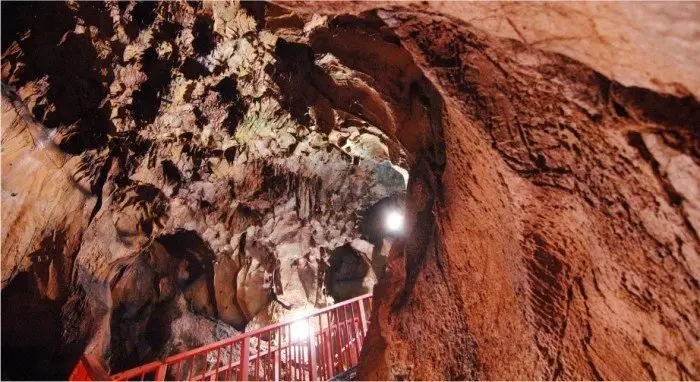
    The Fujido Cave is the largest limestone cave in the Kanto region, with a length of 2.2 km. A cave for tourist exploration and, due to its unique characteristics, was designated as a Natural Monument of Gunma Prefecture.

    To enter the cave, it is necessary to traverse a (constructed) tunnel of 120 meters, which leads to a vertical cavity of 40 meters, where a spiral staircase was built, providing access to the main cave.

    The temperature inside the cave is 11 degrees all year round; it is cool in the summer and considered warm in the winter.

    1200 years ago, near the mountain Ofukuju, a dense forest grew. In this place, there were several groups of monkeys that stole food from each other and played.

    One day, a villager, finding the commotion among them strange, approached and noticed that these monkeys were surrounding a small hole. Thus, the discovery of this stalactite/stalagmite cave was made.

    Read also:

    Exploring the Fujido Cave

    Over the years, many people have tried to explore the interior of the cave, but due to the complexity of its structure, they were unable to succeed in their endeavor. However, 400 years ago, a Buddhist monk named Chukoukaisan managed to explore the interior of the cave and spread the location for the practice of asceticism (practical exercise that leads to the effective realization of virtue).

    Fujido Cave [不二洞探検]

    In the year 40 of the Showa era, the cave was surrounded by fantastic stories; causing people to avoid the location. To dispel this myth, the local government decided to invest in infrastructure works, so that these natural beauties (stalactites/stalagmites) could be appreciated by a large number of visitors.

    This cave has a path of stairs, lighting, and walkways, allowing visitors of any age to safely explore its interior.

    This is just one of the thousands of tourist attractions in Gunma and the other provinces of Japan.

    Discover this cave through the video below, accompanied by the classic soundtrack of Indiana Jones.

    Which hotels are near Fujido Cave?

    Mahobano Mori (0.43 km)
    Fujinoya (1.05 km)
    Imaiya Ryokan (1.35 km)
    Villa Seseragi (1.95 km)
    Nogurizawa onsen Suribachiso (2.15 km)

    Which restaurants are near Fujido Cave?

    Restaurant Mahoba (0.43 km)
    Fukujuan Main Store (1.19 km)
    Ja Uenomura Kotohira Center Restaurant (1.16 km)
    Ja Uenomura Yakiniku Center (2.92 km)
    Kannamachi Kyoryu Center (4.55 km)
  • Advocacy and Lawyers in Japan

    Advocacy and Lawyers in Japan

    Lawyers and judges are highly valued around the globe. With that in mind, in this article we will talk a little about the legal profession in Japan.

    In Japan, lawyers are known as Bengoshi [弁護士]. There are two types of lawyers in Japan: public lawyers and private lawyers. Public lawyers work for the government and are responsible for criminal cases, while private lawyers work for individuals and corporations and handle civil cases.

    Being one of the largest economies in the world and a leading global financial center, Japan is an attractive destination for many international lawyers. The country’s legal system is based on civil law, with a strong influence from German and French law.

    Japan is a member of the Hague Convention on the Civil Aspects of International Child Abduction, and is a signatory of the New York Convention on the Recognition and Enforcement of Foreign Arbitral Awards.

    We also recommend reading:

    Becoming a Lawyer in Japan

    There are several reasons why lawyers may choose to practice in Japan. The country has a large and sophisticated legal market, with many opportunities for lawyers with international experience.

    The Japanese legal system is known for its efficiency and impartiality, being ranked as one of the best in the world. Japan is also a safe and stable country, with a low crime rate and a high standard of living.

    Becoming a lawyer in Japan is not an easy task. First, you must pass the bar exam, which is notoriously difficult. Only about 10% of those who take the exam pass it.

    Once you pass the bar exam, you must then complete a two-year legal training program. After that, you can finally practice law.

    If you are a foreigner and have already passed the bar in your country, you do not need to go through these processes in Japan. You will be recognized as a foreign lawyer.

    The Japanese legal system is extremely complex, and lawyers play a vital role in it. If you are interested in becoming a lawyer in Japan, it is important to be prepared for a long and difficult road ahead.

    Lawyers in Japan - Learn a Little More

    Lawyer Culture in Japan

    A historical fact is that Japanese customs create a certain apprehension regarding legal involvement. This is based on the doctrines of Confucianism and Japanese principles of harmony. Yes, one of the most interesting things about Japanese culture is the passion they have developed for the sense of harmony.

    It is basically to say that someone brought before a court for a criminal or civil matter has suffered public and private humiliation. This is due to disrupting harmony in some way. Of course, in some cases, legal involvement is necessary, but that is up to each individual.

    The Lawyer Industry

    More than 100 universities have a law school at the undergraduate level. Check out some of the universities in Japan here. Thus, many study law at the undergraduate level and go to work for companies in roles unrelated to law. However, to become a lawyer, it is necessary to go to law school, pass the bar exam, and complete the LTRI.

    As of August 2014, there were 35,031 lawyers registered with bar associations in Japan. The starting salaries for Japanese lawyers are typically around 10 million yen (US $100,000). This is in established law firms and about half of Japanese companies.

    Judge wooden gavel and flag of Japan. Law and justice. Legality concept.

    Bar Exam

    Currently, the exam is like our OAB test. Where graduates are tested and thus gain the qualification certificate. But in Japan, the bar exam is just the first step to professional life.

    The exam is divided into two stages. The first stage is a one-day quick response exam on the six laws and administrative law. The second stage is a three-day exam on essays in public law, civil law, and criminal law, as well as subjects that can be selected by the examinee (including labor law, environmental law, public international law, and private international law).

    Additionally, a law school requirement has been introduced. All participants in the admission exam must complete a two or three-year graduate program and are limited to taking the exam within five years after graduation.

    The Japanese bar exam is known as one of the most difficult exams in the world. Although bar passage rates have been rising after the structural reform in 2006, only about 20% of law school graduates surpass the barrier.

    Students can only attempt to pass 5 times, after which they are disqualified. Most students study at independent private schools to pass the admission exam. The average age of those who pass the exam is 28 to 29 years.

    Supreme Court Legal Training and Research Institute

    Those who pass the admission exam participate in a one-year training process for the study of practical skills at the LTRI. Training at the LTRI consists of group training, classroom lessons, and field training.

    The LTRI focuses on teaching litigation skills. When students pass the final exam at the LTRI, they become lawyers, prosecutors, or judges. Prosecutors and judges are carefully selected by the LTRI.

    We recommend reading: Franchise in Japan: Discover the 8 Best Segments to Invest

    Lawyers in Japan

    Lawyers in Japan - Learn a Little More

    In short, as we can see, the life of becoming a lawyer is not easy at all. Moreover, it is likely to be a little valued profession. It is a cat that no one wants to disturb the peace, or rather, most people do not want to.

    Thus, lawyers remain as a last resort. But it is always possible to count on law firms, especially here in Brazil. After all, what is better than resolving everything in a good conversation among friends? But now it’s up to you, leave your comments on what you thought of the article.

    Feel free to share the site on social media, it helps a lot. And if you have any questions, doubts, or anything like that about lawyers in Japan, leave a comment. Thank you for reading the article this far, goodbye.

  • List of musical instruments from Japan

    List of musical instruments from Japan

    In this article, you will learn about all the traditional Japanese musical instruments. There are dozens of instruments of Japanese origin, and we will try to briefly discuss each one and list them.

    Japan has a long and rich history of music and traditional instruments. The country has many types of music, from traditional Japanese music of Noh and Kabuki theater to the more modern pop and rock music of today that still uses traditional instruments.

    There is a wide variety of traditional Japanese instruments, from the well-known Shamisen and Koto to the less familiar Shamisen-bushi and Biwa. These instruments are used in a wide range of musical genres, from traditional Japanese music to more modern styles.

    We also recommend reading:

    Main Traditional Instruments of Japan

    There are hundreds of Japanese instruments that we will not go into detail about, but the most popular deserve at least two paragraphs of information.

    The ones mentioned below will not appear in the list of musical instruments of Japan separated by category.

    Shakuhachi

    The shakuhachi is a traditional Japanese flute that was originally used by Buddhist monks of the Fuke sect. The shakuhachi is made from a bamboo stalk about two meters long. It has a warm and soft sound and is often used in traditional Japanese music.

    It is also used in a wide variety of Japanese musical genres, in contemporary music, and even in pop music. The shakuhachi has a very beautiful sound and is a very popular instrument in Japan.

    Traditional bamboo Japanese flute with Jew's harp on gray background

    Taiko

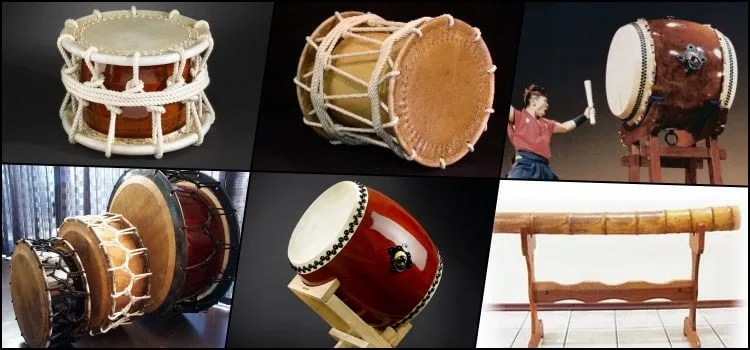
    The taiko is a large Japanese drum that is typically played with two sticks. The taiko is traditionally used in Japanese music and folk festivals.

    The sound of the taiko is very loud and energetic, and it is often used to keep the rhythm in traditional Japanese music. There are different types of Japanese drums that have Daiko in their name.

    Taiko – Drum – Japanese Percussion Instruments

    Shamisen

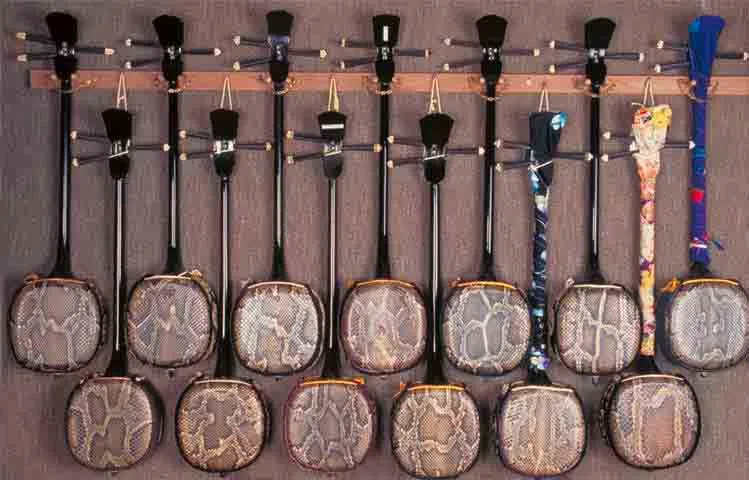
    The shamisen is a three-stringed instrument played with a plectrum. It has a long neck and a body shaped like a drum. The shamisen is used in a wide range of Japanese music, from traditional folk songs to more modern pop music.

    It resembles a banjo with three strings; brought to Japan from China in the 16th century. Popular in the entertainment districts of Edo, the shamisen was often used in Kabuki theater.

    We recommend reading: Shamisen – Japanese Musical Instrument with 3 Strings

    Shamisen – Japanese Musical Instrument with 3 Strings

    Koto

    The Koto is a Japanese instrument with a long history. It is a string instrument played with a plectrum. The koto has a resonant body, and its strings are stretched over a movable bridge.

    The koto is a very versatile instrument and can be used for a wide range of musical genres. The koto was first introduced to Japan in the eighth century.

    Initially, the koto was played only by the nobility, but later it became popular among the general population. The koto has a strong association with the Japanese imperial family.

    Koto - traditional musical instrument of Japan

    Japanese Percussion Instruments

    • Hyōshigi (拍子木) – wood or bamboo clappers
    • Den-den daiko (でんでん太鼓) – pellet drum, used as a children’s toy
    • Bin-sasara (編木, 板ささら; also written bin-zasara) – clappers made of wooden slats connected by a string or cord
    • Kagura suzu – handbell tree with three layers of pellet bells
    • Ikko – small hourglass-shaped drum
    • Kakko (羯鼓) – small drum used in gagaku
    • Kane (鉦) – small flat gong
    • Kokiriko (筑子, こきりこ) – a pair of sticks that are struck together slowly and rhythmically
    • Shakubyoshi – clappers made from a pair of flat wooden sticks
    • Mokugyo (木魚) – wooden fish-shaped percussion instrument, struck with a wooden stick; often used in Buddhist chants
    • San-no-tsuzumi (三の鼓) – double-headed hourglass drum; struck only on one side
    • Ōtsuzumi (大鼓) – hand drum
    • Sasara (ささら) – clappers made of wooden slats connected by a string or cord
    • Sekkin – a thin striking drum
    • Shime-daiko (締太鼓) – small drum played with sticks
    • Shōko (鉦鼓) – small bronze gong used in gagaku; struck with two horn mallets

    Japanese String Instruments

    • Biwa – a pear-shaped lute
    • Ichigenkin (一絃琴) – Monochord
    • Junanagen (十七絃) – the 17-string koto
    • Kugo (箜篌) – an angular harp used in ancient times and recently revived
    • Sanshin (三線) – a precursor from Okinawa to the continental Japanese shamisen (and the Amami Islands)
    • Taishogoto (大正琴) – a zither with strings and metal keys
    • Yamatogoto (大和琴) – ancient long zither; also called wagoto (和琴)
    • Tonkori (トンコリ) – a plucked instrument used by the Ainu of Hokkaidō
    • Kokyū – a bowed lute with three (or, more rarely, four) strings and a body covered with skin

    Japanese Wind Instruments

    Japanese flutes are called fue (笛). There are eight traditional flutes, as well as more modern creations.

    • Hocchiku (法竹) – vertical bamboo flute
    • Nohkan (能管) – transverse bamboo flute used for Noh theater
    • Komabue (高麗笛) – transverse bamboo flute used for komagaku; similar to the ryūteki
    • Ryūteki (龍笛) – transverse bamboo flute used for gagaku
    • Kagurabue (神楽笛) – transverse bamboo flute used for the mi-kagura ritual
    • Shakuhachi (尺八) – vertical bamboo flute used for Zen meditation
    • Shinobue (篠笛) – popular transverse bamboo flute
    • Bow flute (弓笛) – a flute developed by Ishida Nehito with bow hair to accompany the kokyū.
    • Horagai (法螺貝) – conch shell horn; also called jinkai (陣貝)
    • Hichiriki (篳篥) – double-reed flute used in different types of music
    • Tsuchibue – globular flute made of claymore
    • Shō (笙) – mouth organ with 17 pipes used for gagaku
    • Mukkuri (ムックリ) – jaw harp used by the Ainu people
    • U (竽) – large mouth organ
    • Koukin (口琴) – general name for the jaw harp, in the Edo period also called Biyabon (びやぼん)

  • Are foreigners discriminated against in Japan?

    Are foreigners discriminated against in Japan?

    Are foreigners discriminated against in Japan? Articles involving prejudice, racism, and xenophobia are recurring on our site and always generate controversies. This time we will look at occasions when foreigners end up being discriminated against in Japan.

    Be very careful when reading my article; many readers take what I write too seriously and generalize thinking that all of Japan and the Japanese are prejudiced. Remember that things are relative; if I say this or that, I am talking about a minority and not the majority.

    If for some reason, after reading this article, you think that Japanese people are prejudiced, you are the real prejudiced one. Discrimination against foreigners exists in any country; it can be prejudice or it can have another reason. Just read the article without generalizing.

    We recommend reading our other articles involving prejudice:

    Meaning of Discrimination – Differentiate, distinguish, classify, group, segregate, separate; An adverse attitude towards a specific characteristic.

    Don’t generalize

    We are not going to try to downplay the cases of discrimination and prejudice in Japan; they will be in the next paragraphs with strong writing. We just want to say not to worry about it.

    Although you may find Japanese people who are prejudiced at heart, or who act prejudiced because they are in groups and do not think about the subject, know that there are other Japanese people.

    The Japanese population is 127 million inhabitants, so even if there is 1 prejudiced person for every 10 people, make friends with the rest of those people. Don’t let the hatred of a dozen people take away your joy of living in Japan.

    We are not saying that there is 1 prejudiced person for every 10 people in Japan; it is very likely that this number is lower. Unfortunately, human beings like to generalize.

    See, for example, suicides in Japan are propagated in a generalized way around the world. Japanese people have a reputation for being suicidal, but only 16 out of 100,000 people commit suicide; it is a high number compared to some countries, but nothing to the point of creating labels.

    TOKYO, JAPAN JUNE 28 - 2017: Crowd of people walking at night in the streets of Ikebukuro, a commercial and entertainment district in Toshima, Tokyo

    Fear of Foreigners?

    In recent years, there has been an influx of foreigners coming to Japan to work or study. While most of these foreigners are welcomed with open arms, there are some who feel they are being discriminated against.

    Japan has a long history of xenophobia, and although it has become more welcoming to foreigners in recent years, there are still those who feel they are being treated as second-class citizens.

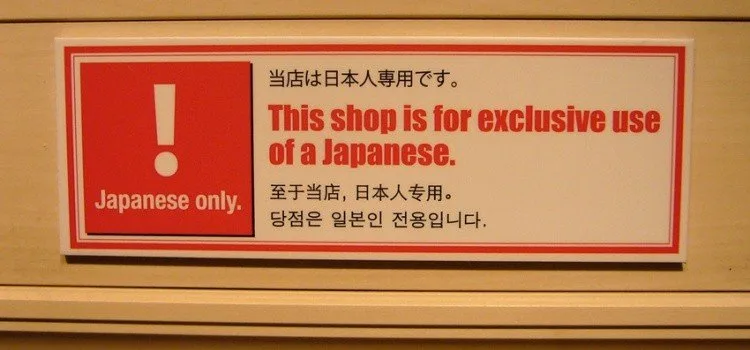
    There are several reports of foreigners being refused service in restaurants or being asked to leave establishments, and there have also been cases of employers refusing to hire foreigners.

    Some argue that discrimination against foreigners is a result of fear of terrorism, as Japan is often targeted by terrorist attacks. However, it cannot be denied that foreigners are sometimes made to feel unwelcome in Japan.

    This changes if you are a tourist; often this discrimination happens more in schools, workplaces, and perhaps neighbors in a locality. In general, Japanese people are quite welcoming and kind.

    We recommend reading: Learn about Japanese cultural values

    Karoshi – Death from overwork in Japan

    Occasions when foreigners are discriminated against in Japan

    Unfortunately, foreigners end up finding buildings and apartments in Japan that when trying to rent, they cannot due to being foreigners.

    There is a lot of discrimination against foreigners in Japan. Japan is a very homogeneous society, and they do not like people who are different.

    Foreigners are often treated as second-class citizens. They do not receive the same opportunities as Japanese people and are often treated with suspicion.

    Foreigners are discriminated against in the workplace, in the educational system, and in everyday life. It is very difficult for foreigners to find work in Japan, and even if they do, they are often paid less than Japanese people.

    One of the most common examples of discrimination against foreigners is when companies offer discounts or special deals to Japanese people while charging foreigners the full price.

    In the educational system, foreigners often do not receive the same opportunities as Japanese students. They do not receive the same financial aid and often have to pay higher tuition fees.


    Another common form of discrimination against foreigners in Japan is how they are portrayed in the media. Foreigners are often stereotyped as being lazy, dirty, and untrustworthy. They are also frequently shown as incompetent, which can make it difficult to obtain jobs or be taken seriously.

    Sometimes they do not receive the same respect as Japanese people in everyday life, and often have to endure racism and prejudice. In general, life is very difficult for foreigners in Japan. They are constantly confronted with discrimination and prejudice, and this can be very isolating and lonely.

    We recommend reading: Thinking about working in Japan’s factories? Think carefully!

    Is there prejudice against hair types and colors in Japan?

    What to do if I suffer discrimination in Japan?

    If you feel that you are being discriminated against, there are a few things you can do. First, you can try to talk to the person or organization that you feel is discriminating against you.

    If they are not willing to listen to your concerns, you can file a complaint with the Equal Employment Opportunity Commission. You can also contact your local embassy or consulate for assistance. They can help you resolve the issue or put you in touch with someone who can.

    If you are suffering discrimination, it is important to remember that you are not alone. There are many other foreigners who have gone through the same thing. You can find support from your friends, family, or other foreigners who have been in your situation.

    Remember, if you suffer any discrimination in Japan, remember that not all Japanese people are like that. You are probably in the wrong environment.

  • Karate – Everything about the Japanese martial art of the empty hands

    Karate – Everything about the Japanese martial art of the empty hands

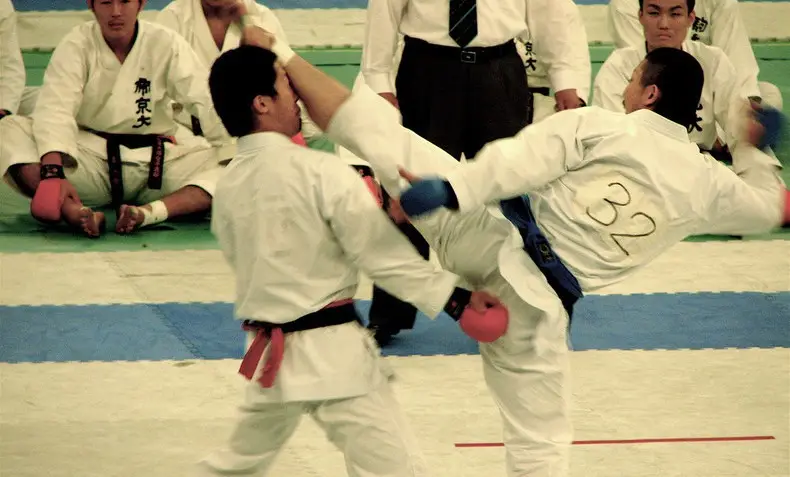
    Karate is one of the most famous Japanese martial arts in the world, especially in Brazil. An art famous for using only the hands to fight the enemy without the use of weapons. In this article, we will talk about everything related to this martial art.

    Many questions and curiosities arise around Karate. Some question its origin, rules, customs, history, curiosities, and even writing. In this article, we will answer the main doubts regarding Karate.

    We also recommend reading:

    How is karate or karatê written?

    As mentioned, Karate comes from Japanese [空手] which means the art of empty hands. Brazilians tend to write Caraté or Caratê, but in fact, these words are just transliterations from Japanese to Portuguese.

    The word in Japanese is written with [K] Karate without accentuation since there are no [C] letters or accentuations in the Japanese language. There is no right or wrong, but we at Suki Desu prefer to use the words written in their original Japanese form.

    The accentuations of the Portuguese language are somewhat illogical in transcribed words; there is no error in writing karate, caratê, or karatê. Just be aware that the correct term in Japanese is kara [空 empty] te [手 hands].

    How and where did Karate originate?

    Karate originated on the Island of Okinawa, through many Masters of Naha-te, Shuri-te, and Tomari-te, which are the names of the cities (without the te) on the islands of Okinawa that had their typical style of martial fighting.

    The practitioners of the art migrated from China in search of new knowledge. It is said to have originated from the Chinese martial art of Kung Fu.

    Karate is now practiced worldwide and is a popular sport, particularly in Asia and the United States.

    Karate at sunset

    Curiosities about Karate

    The word Karate [空手], in fact, is a combination of two Japanese words – “kara“, which means empty, and “te”, which means hand. Thus, karatedou [空手道] means the art of empty hands.

    There are many different styles of karate, and each has its own unique techniques. Some of the most popular styles of karate include Shotokan, Wado-ryu, Shito-ryu, and Kyokushin.

    Karate training typically consists of three main elements – kata, or formal exercises; kumite, or sparring; and randori, or freestyle fighting.

    Kata are patterns of pre-arranged movements that simulate fighting against multiple opponents. Kumite is a fight against a single opponent, while randori is a free fight against multiple opponents.

    Karate tournaments are held worldwide and are a popular sport among spectators. The World Karate Federation is the international governing body of karate.

    Karate training

    Benefits of Practicing Karate

    Karate is a versatile martial art and can be used for self-defense, sport, or exercise. It is also a great way to stay fit.

    Karate is a great way to make new friends and meet people from all over the world. It can also help relieve stress and have fun.

    Karate is an art that requires discipline, dedication, and hard work. It is not an easy martial art to master, but the rewards are well worth the effort.

    We also recommend reading:

    martial arts, brown, orange, blue and black belts closeup

    Where to Learn Karate?

    If you are interested in learning karate, there are many different options available to you. You can find karate classes at your local community center, YMCA, or martial arts school.

    You can also find instructional DVDs and books on karate, which can be a great way to learn at your own pace.

    No matter what your reasons are for wanting to learn karate, there is a class and a style out there that is right for you. So, go out there and start exploring the different options available to you.

  • Haiku – The small Japanese poems

    Haiku – The small Japanese poems

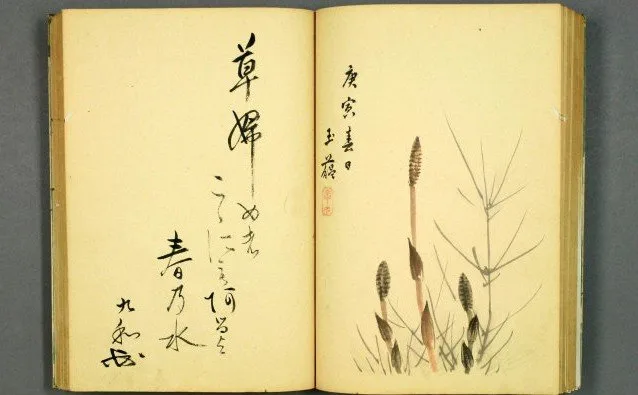
    Haiku (俳句) or Haikai (俳諧) is a style of poetry that emerged in the 16th century, spread in Japan, and has been spreading around the world during this century.

    The Haiku values conciseness and objectivity; many of its poets were Zen Buddhist masters who expressed much of their thoughts in the form of myths, symbols, paradoxes, and poetic images.

    Haiku is a Japanese form of poetry that typically has three lines, with a total of seventeen syllables. The first line has five syllables, the second line has seven, and the third line has five. The Haiku traditionally focuses on nature and often includes a seasonal word (kigo), but this is not necessary.

    We also recommend reading:

    What is a Haiku Poem?

    Haiku is a type of Japanese poetry that is typically characterized by three qualities: (1) Focus on nature or the seasons. (2) A brief and simple style. (3) An emphasis on the present.

    Haiku poems are written in three horizontal lines that express not only the delicate Eastern sensitivity but also human reactions to the world around them.

    It is the art of saying the most with the least, capturing a moment of experience, an instant in which the simple suddenly reveals its inner nature and makes us look again at the observed, human nature, life.

    The Haikai or Haiku (as it is known in the West) is generally characterized by 4 aspects or rules:

    • The traditional haiku consists of 17 Japanese syllables, divided into three verses of 5, 7, and 5 syllables
    • It usually has some reference to nature, a kigo (seasonal reference);
    • It refers to a particular event (i.e., it is not a generalization)
    • They usually present an event that is “happening now,” and not in the past;
    tokyo, japan - november 13 2020: Japanese stone Kuhi stele dedicated to the Haiku poem harumoyaya meaning The spring haze written by poet Matsuo Basho who contributed to the Mukojima-Hyakkaen Gardens.

    What is the origin of Haiku?

    The Haiku is called “incomplete” poetry because it requires the reader to finish the text with their own heart. The Haiku was born from haikai no renga, a collaborative group poem that typically has a hundred verses.

    The hokku, or initial verse, of the renga collaborations indicated the season and also contained a cutting word. The haikai of this style continues to follow its tradition.

    Haiku began as a form of waka, or Japanese court poetry, in the 13th century. It was only in the 17th century that short Japanese poetry began with the current form.

    The haiku masters Basho, Buson, and Issa are responsible for much of the development and popularity of the form.

    Haikai

    Haijin – Poets of Few Words

    Haijin (俳人) is the name given to poets. Haiku are so simple that nowadays anyone can be a Haijin, even a child.

    Contemporary haiku poets can write poems that are just a short fragment with three or even fewer words.

    But of course, throughout Japan’s history, we had several names that shaped Haiku and its history, among them the most famous is Matsuo Basho.

    Matsuo Basho

    Matsuo Bashō is considered the most famous haiku poet; his poetry is still widely read and studied today. His haiku often focuses on the simple beauty of nature and the fleeting moments of joy that can be found in everyday life.

    Matsuo Basho is one of the most famous poets of the Edo period and the greatest active figure in Japanese haikai during the second half of the 17th century.

    He did the work of his life, transforming Haiku into a literary genre. For Bashō, Haikai involved a combination of comic playfulness and spiritual depth, ascetic practice, and engagement in human society.

    He composed Haiku masterpieces in a variety of genres, including renku, haibun, and haiga. In contrast to the traditional Japanese poetry of his day, Bashō’s Haiku is about the everyday lives of ordinary people, figures from popular culture, people like beggars, travelers, and farmers.

    In the crystallization of the newly popular Haikai, he played an important role in giving birth to modern Haiku, which reflected common culture.

    Other Names of Haikai

    Other great names of the Haikai style were Yosa Buson (1716–1783), Kobayashi Issa (1763–1827), and Masaoka Shiki (1867–1902), known for reforming and modernizing Haikai poems.

    The haikai also came to Brazil. The poet Afrânio Peixoto (1875-1947), in 1919, in his book “Trovas Populares Brasileiras,” established the form of the Brazilian hakai (5-7-5).

    In 1922, Haiku in its Japanese poetic form was discussed and practiced by the poets of the “Modern Art Week.” Oswald de Andrade adopted it in Pau Brasil (1925).

    Waldomiro Siqueira Jr. published the first book of hakais in Brazil in 1933. Guimarães Rosa won an award from the Brazilian Academy of Letters in 1936 with “Magma.”

    Examples of Haiku

    Appreciating Haiku in Japanese is not so simple for us who do not know the language. I will only mention the translation of some of these famous Haikus.

    Remembering that the translation of the poem line is not exactly the same; the grammar of Japanese differs, so some words may have ended up in another line or switched positions in the translation.

    The most famous Japanese haiku by Matsuo Basho, “the old pond”:

    • 古池や – ふるいけや – Old pond..;
    • 蛙飛び込む – かわずとびこむ – a frog jumps in it
    • 水の音 – みずのおと – the sound of water

    Poem by Matsu Basho:

    • 初しぐれ – はつしぐれ – the first cold shower
    • 猿も小蓑を- さるもこみのを- even the monkeys seem to want
    • ほしげ也 – ほしげなり- a small straw coat

    Poem by Issa:

    • 江戸の雨 – えどのあめ – how many gallons
    • 何石呑んだ – なんごくのんだ – did you drink from the rain of Edo?
    • 時鳥 – ほととぎす – cuckoo

    Made by Brazilians:

    • Long live Brazil
    • where all year round
    • it’s April Fool’s Day
    • by Millôr Fernandes

    ————————————————-

    • The ice melts;
    • However, if the water cools:
    • It cold, I burn…
    • by Afrânio Peixoto.

    ———————————————

    • Silently
    • without a cluck
    • the Night lays the egg of the moon…
    • by Mario Quintana.

    There are also several other sites that followed this trend of creating poems with 3 verses and 17 syllables. You can check countless Haiku by browsing the internet.

  • Super Saiyan – See all the Transformations of Dragon Ball

    Super Saiyan – See all the Transformations of Dragon Ball

    Do you know the meaning of the word Saiyajin? Do you know all the forms of Super Saiyajin? In this article, we will present all the transformations from Dragon Ball.

    The Dragon Ball series has always been popular among fans for its interesting plot and unique characters. One of the things that makes the series so popular is that the main characters can transform into powerful beings known as Super Saiyajin.

    In the Dragon Ball universe, Saiyajin are a powerful race of aliens who can transform into incredibly powerful beings. The Saiyajin first appeared in the original Dragon Ball series, where they were introduced as the main antagonists. However, the Saiyajin have since become some of the most popular characters in the series.

    Saiyajin are characterized by their superhuman strength, speed, and agility, as well as their distinct hairstyle and hair color. They are also known for their fierce competitiveness and pride, which often leads them to conflict with each other.

    We also recommend reading:

    Japanese quotes from Dragon Ball Z

    What does Saiyajin mean?

    Before we talk about the forms and transformations of Dragon Ball, we need to understand what the word Saiyajin means and the secrets behind the word chosen by the author.

    Perhaps you already know, but the names of the characters in Dragon Ball always refer to some type of vegetable. This is obviously seen in names like Vegeta, Kakarot, and Broly.

    Vegetable in Japanese is Yasai [野菜], but if we reverse the ideograms, we get the pronunciation Saiya [菜野] followed by [人] which refers to a type of person (nationality, ability, quality, and others).

    The word Yajin [野人] usually refers to a rustic, wild, unrefined person. This represents a bit of the personality and origin of certain characters.

    Understanding the transformations of Dragon Ball

    The Saiyajin can transform into several different forms, each with its own unique powers and abilities. The Super Saiyajin form is so powerful that it is said to be able to destroy entire planets.

    Understanding the transformations and their power levels can be confusing, as the transformations not only have their levels but also have variations and branches that differ very little. The differences can also lie in the user who activated the transformation.

    The different levels of Super Saiyan each come with their own unique set of benefits and drawbacks. The higher the level of Super Saiyan, the greater the power increase, but the greater the risk of losing control.

    Oozaru – Great Ape

    To achieve the Oozaru Transformation, the Saiyajin must absorb a large amount of Blutz Waves. These waves can be found both in natural sunlight and in artificial light sources that mimic sunlight.

    Once a Saiyan has absorbed enough Blutz Waves, their body will begin to change, becoming larger and more muscular. Their hair will also change, becoming longer and thicker.

    The most noticeable change, however, is the growth of a tail. The tail is used to absorb even more Blutz Waves, which in turn allows the Saiyan to transform into an Oozaru or a Great Ape.

    The Oozaru Transformation is an incredibly powerful form that grants the Saiyan greater resilience, speed, and durability. However, it also causes the Saiyan to lose reason and go out of control. As such, it is generally considered a last-resort transformation.

    After the Oozaru transformation, in the same branch, we have Golden Oozaru and SSJ4.

    Super Saiyajin

    In Dragon Ball Z, the Super Saiyan transformation is the result of a Saiyajin increasing their power to a level beyond what their natural body can physically handle.

    The transformation is triggered when a Saiyajin experiences a powerful emotional upheaval, such as the death of a family member or loved one.

    Once the transformation is complete, the Saiyajin’s hair turns golden and their eyes become green or blue. Their muscle tone becomes more defined, and their overall strength, speed, and durability increase dramatically.

    The first time this transformation occurred with Goku was after the death of Krillin. It was thanks to this power that Goku was able to defeat Frieza.

    Since then, we have seen many other Saiyans achieve the transformation, including Vegeta, Gohan, and Trunks. The most recent addition to the list is Goku’s son, Goten.

    There are three levels of Super Saiyan: Super Saiyan, Super Saiyan 2, and Super Saiyan 3. Each level gives the Saiyan access to more power. The higher the level, the harder it is to maintain that power.

    Phases of Super Saiyajin

    In addition to the second and third forms of Super Saiyajin, we also have phases in the transformations, which fit into the same branch.

    Phases 2 and 3 of Super Saiyajin involve an increase in power from the initial transformation, so they are not considered transformations.

    Super Saiyajin 2

    In the Dragon Ball Z anime, the Super Saiyan 2 transformation is the next level form of the original Super Saiyan transformation.

    The transformation is achieved by Gohan during his battle against Cell. This transformation requires a rigorous training regimen.

    The transformation is characterized by a marked increase in muscle mass, a greenish golden aura, and a more aggressive personality.

    The power of Super Saiyajin 2 is greater than the Super Saiyajin transformations, Super Saiyajin phase 2, or even Super Saiyajin Full Power.

    Super Saiyajin 3

    The third level of the Super Saiyan transformation is one of the rarest. Throughout the series, only two characters (so far) have achieved it: Goku and Gotenks.

    Goku was the first to achieve the form, all after seven years of training in the Other World. The form is incredibly powerful, but also incredibly draining on the body.

    Super Saiyajin 4

    The Super Saiyan 4 is the highest level of Super Saiyan. It is so powerful that it can only be achieved through fusion with a being of equal or greater power.

    In this form, the hair color changes, and the same happens with the tail, and the body is covered in red fur.

    Vegeta transformed into Super Saiyajin 4 in the fight against Super Li Shenlong after using the Blutz Wave Generator to transform into a Golden Oozaru.

    Super Saiyajin God

    To reach the power level of Bills, Goku achieves this transformation in the movie Dragon Ball Z: Battle of the Gods.

    The form is only accessible to those with a pure heart, who can control their emotions. The transformation turned Goku’s eyes and hair red.

    The Super Saiyan God form is a powerful transformation that allows the user to harness all the power of the Super Saiyan transformation.

    There is an even more powerful level of Super Saiyajin God, where the hair turns blue. These forms are called:

    • Super Saiyajin God Super Saiyajin
    • Super Saiyajin God Super Saiyajin: Evolution

    Super Saiyajin Rosé

    In Dragon Ball Super, the villain called Goku Black achieves a form called Super Saiyajin Rosé, turning his hair pink!

    This transformation is only possible when a Saiyajin with divine power transforms into Super Saiyajin.

    Ranking – Which Saiyajin is the strongest?

    To complement, we will leave a list showing which of the 12 Saiyajin are the strongest:

    • 1 – Broly
    • 2 – Cumber
    • 3 – Gohan
    • 4 – Goku
    • 5 – Vegeta
    • 6 – Goku Black
    • 7 – Future Trunks
    • 8 – Caulifla
    • 9 – Caulifla
    • 10 – Kyabe
    • 11 – Yamoshi
    • 12 – Trunks

    List of Dragon Ball Transformations

    In addition to Super Saiyajin, other transformations have been achieved by characters from Dragon Ball. Below we will list all of them:

    • Professional Power Staff
    • Imperfect Bio-Android
    • Perfect Bio-Android
    • Semi-Perfect Bio-Android
    • Demon God
    • Super Saiyajin God
    • Superior Ego
    • Formation
    • Total Power Hera-seijin
    • Kaioken
    • Kakunsa
    • Legendary Super Saiyajin
    • Gigantic Monkey
    • Golden Gigantic Monkey
    • Villain Mode
    • Purification
    • Ribrianne
    • Rozie
    • Evil Saiyajin
    • Super Mira
    • Super Total Power Saiyajin 4 – Limits Overcome
    • Super Saiyajin
    • Super Saiyajin 2
    • Super Saiyajin 3
    • Super Saiyajin 3 Total Power
    • Super Saiyajin 4
    • Super Saiyajin God Super Saiyajin
    • Super Saiyajin God Super Saiyajin: Evolution
    • False Super Saiyajin
    • Fury Super Saiyajin
    • Total Power Super Saiyajin
    • Super Saiyajin Rosé
    • Total Power Super Saiyajin Rosé
    • Super Saiyajin phase 2
    • Super Saiyajin phase 3
    • Out of Control Super Saiyajin
    • Terrifying Super Transformation
    • Supervillain
    • Diabolical Transformation
    • Old Kaioshin Unlocking Technique
    • Final Evolution: Golden Form
  • Who is Pochita in Chainsaw Man?

    Who is Pochita in Chainsaw Man?

    Chainsaw Man is a work of gigantic success, and one of the standout characters is Pochita. Who is this Kawaii and Assassin character really?

    Pochita is a mysterious demon who merged with Denji early in the story. A unique and complex character that will certainly entertain the readers of the Chainsaw Manga series.

    We also recommend reading:

    Who is Pochita?

    Pochita was created by the devil to be a walking, talking, chainsaw destruction weapon. However, Pochita is not completely under the devil’s control and often gets agitated, much to the dismay of those around him.

    Pochita is a powerful and destructive force, but he is not completely evil. He has a strong sense of justice and often helps those in need.

    His title is Chensō no akuma [チェンソーの悪魔] which literally means Chainsaw Devil. It is worth noting that despite the name Akuma, the Japanese view of demons differs from the West.

    We recommend reading: 10 Ways to say “Demon” in Japanese

    What is Pochita’s true form?

    Pochita is often depicted as a small orange canine devil with a chainsaw-like appendage protruding from the center of his head, with a handle allowing it to be used as a weapon.

    This kawaii appearance depicted when searching for images of the anime is actually his near-death state. His true form is that of a large humanoid devil with four arms and a chainsaw protruding from each arm and from his head.

    Pochita lost his form after disappearing in battle with the Four Horsemen, transforming only into a barking canine mascot.

    Did Pochita die in Chainsaw Man?

    Denji is killed while trying to kill a Demon at the request of the Yakuza. Pochita is also severely injured, but the two had made a pact that allows Pochita to merge with Denji, reviving him as a human-demon hybrid with Pochita’s chainsaw ability.

    Pochita supposedly died after merging with Denji. However, at the end of the Public Safety arc, Pochita manages to connect with Denji subconsciously.

    Basically, Pochita is alive, just changed form and remains the heart of our protagonist. His dog form remains without the chainsaws.

  • Car Rental in Japan – Is It Worth It? How Does It Work?

    Car Rental in Japan – Is It Worth It? How Does It Work?

    One of the biggest concerns when traveling in Japan is transportation. The country is famous for its trains that run throughout the country, but many places are only accessible by car. With that in mind, is it worth renting a car in Japan? How does car rental work in the country?

    In this article, we will answer all the questions regarding car rental in Japan, and we will also mention costs, companies, car rental prices, tips, and much more.

    We also recommend reading:

    Why does Japan use English hand? Drives on the Left?

    Is it worth renting a car in Japan?

    Renting a car in Japan will depend on your objective. The country has train lines that allow access to practically the entire country, in addition to buses, tour guides, planes, and others.

    Nowadays, car rental has lost its strength thanks to Uber, which came with the proposal to cost much less than a traditional taxi. The big problem is that Uber is not that popular in Japan, or it is not cheaper than a taxi.

    Taxis still have a lot of strength in Japan, so renting an Uber in Japan may not be very viable. We do not know how this will change over the years.

    So if your desire is just to go to a destination inaccessible by train or bus, you need to calculate the costs of renting a car or paying for a taxi or Uber.

    Another factor that should be considered is that your International Driving Permit may not work in Japan if it is from a certain country. If that is the case, car rental should be disregarded.

    Japan only accepts the IDP from 95 countries, including the United States, Canada, Korea, Africa, and Europe. If you are from a country like Brazil, unfortunately, you will not be able to drive in Japan with an IDP.

    We recommend reading: Can I drive in Japan with an International permit or CNH?

    Generally, car rental is quite popular in remote areas like Hokkaido and Okinawa. It is not usually sought after in Tokyo and Osaka.

    Car rental is also quite sought after by groups of travelers who need to move around with family and want to explore all of Japan without worrying about waiting for trains.

    It is worth remembering that Japan is a country full of mountains and has a winter full of snow. It can be dangerous to travel on some remote roads, so think carefully before taking risks.

    Photo of cars in the street

    How to rent a car in Japan?

    If you are planning to rent a car, there are a few things you will need to know. Here is a quick guide to renting a car in Japan.

    The first thing you will need to do is decide what type of car you want to rent. There are a variety of different options available, from small economy cars to larger vans and SUVs. Once you have decided on the type of car you want, you will need to choose a rental company.

    There are several different rental companies in Japan. Therefore, it is important to do your research and choose one that is reputable and has a good selection of vehicles.

    Once you have found a rental company that you like, the next step is to book your rental car. You will need to provide your contact information, as well as your travel dates and the type of car you want to rent. Most rental companies will require a deposit, so be sure to have your credit card ready.

    Once you have your rental car, you are ready to hit the road! Japan has an extensive network of highways and expressways, so you should not have any problems getting around. Just obey the speed limit and drive safely.

    Be aware that Japan drives on the left side, so if you are from the West, you may find it a bit confusing to drive in Japan, as everything is the opposite.

    We recommend reading: Why does Japan use English hand? Drives on the Left?

    car insurance - How does car insurance work in Japan?
    how does car insurance work in japan?

    How much does it cost to rent a car in Japan?

    The price of renting a car will depend on the type of car chosen. You can find car rentals starting at 30 USD per day.

    In Japan, individuals can also rent their cars to third parties if they go through certain procedures. Generally, these private cars are differentiated.

    Renting a car in Japan can be a great way to see the country, especially if you are planning to do a lot of traveling. But how much does it cost to rent a car in Japan?

    The cost of renting a car in Japan can also depend on the duration of your rental and where you are renting from. Generally, the longer you rent, the cheaper it will be per day.

    If you are renting from a big city like Tokyo or Osaka, you will probably pay more than from a smaller city.

    Here are some estimated costs for renting a car in Japan:

    • Small car (like a Toyota Corolla or Honda Fit): 3,000-5,000 yen per day;
    • Medium car (like a Toyota Camry or Honda Accord): 5,000-7,000 yen per day;
    • Large car (like a Toyota Land Cruiser or Nissan Patrol): 7,000-10,000 yen per day;
    • SUV (like a Toyota RAV4 or Honda CR-V): 10,000-15,000 yen per day;
    • Minivan (like a Toyota Previa or Nissan Serena): 12,000-20,000 yen per day;

    To get the best deal on your car rental, it is important to compare prices from different companies. Often you can find discounts and special offers from rental companies if you book in advance, so it is worth checking out a few different options before making your final decision.

    We hope this gives you a better idea of the cost of renting a car in Japan. Remember, the prices above are just estimates.

    Kei Jidousha - The mini cars with 0.6 engine

    Other costs with car rental

    If you are planning to drive in Tokyo, you will need to consider the cost of mandatory expressway tolls, which are currently around 1,500 yen per day.

    Japan is full of tolls, many of which are expensive. Of course, there are alternative and cheaper roads, but you need to know and keep an eye on the GPS.

    In addition to tolls, you may also incur costs for ferries to cross from one island to another.

    Parking in Japan can also be quite expensive. In large centers and cities, fees can cost hundreds of yen. We recommend leaving the car in national parks and tourist attractions that usually have a fixed fee of up to 500 yen.

    The further away from the center, the less you will spend on parking. Small towns also tend to have free parking.

    Hotels also often charge fees for leaving the car on site. Fees can reach up to 1,000 yen per day, almost the price of a Capsule Hotel.

    It is worth remembering that you must return the car with a full tank of gas. Some are electric, so you just need to charge them at the outlet, and the costs are much lower. Clarify your doubts when renting the car; sometimes you will need to present the refueling receipt.

    kyoto, japan, night

    Main Car Rental Companies in Japan

    Below is a list of companies you can look for to rent your car in the land of the rising sun:

    • Nippon Rentacar Service Inc [NRS]
    • TOYOTA Rent a Car
    • Times Rent a Car
    • Orix-rent-a-car
    • Premium Rent-A-Car
    • JAPAN Rent a car
    • Aulash Rent-A-Car
    • Executive Rent-A-Car
    • Rent-A-Car Sapporo

    These are the main car rental companies. Companies like Premium deal with imported cars like Mercedes-Benz and BMW.

    One thing that can help you choose the right rental company is to check if their official website is in English, thus facilitating communication.

    In general, the cost of renting a car in Japan is quite reasonable, especially if you are planning to use it for long-distance trips. However, it is important to remember that driving in Japan can be quite challenging due to heavy traffic and complicated roads. Therefore, if you are not confident in your driving skills, it may be better to stick to public transportation.

  • Oshibori – See how to use the Japanese wet towel

    Oshibori – See how to use the Japanese wet towel

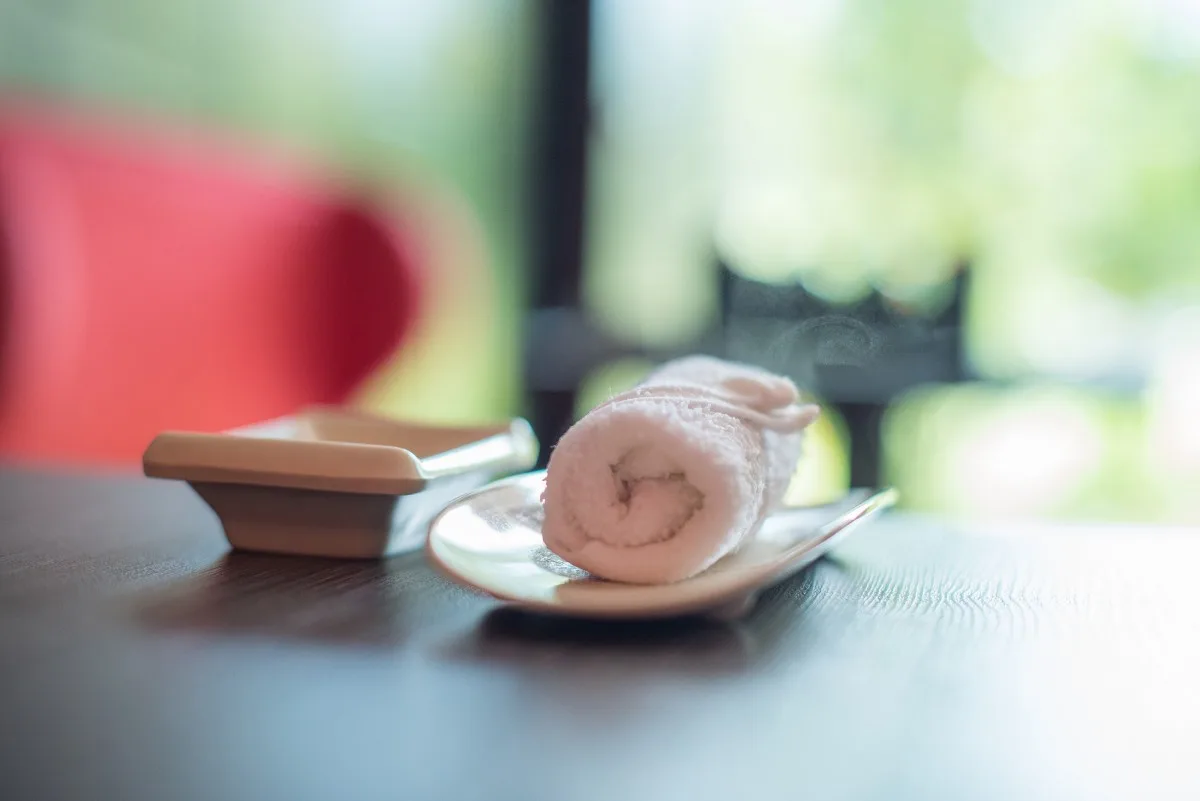
    Oshibori is a traditional Japanese hand towel that is often given to guests in restaurants and other establishments. The towels are usually made of cotton or linen and are often scented with a floral aroma.

    An oshibori can be a cold or hot towel. It is typically provided to customers when they first sit down, being used to clean their hands.

    Hot oshibori are usually used in winter to warm the hands. Providing the wet towel is considered a gesture of hospitality.

    These towels are generally white and square, but can be found in any color or shape.

    Oshibori are usually made from natural materials, such as cotton or linen. However, they can also be made from synthetic materials, such as polyester.

    The term oshibori is quite generic in Japan, and can refer to any type of wet or damp towel.

    We also recommend reading:

    How to make an Oshibori

    There are several ways to make a Japanese towel. The most common method is to use a piece of cotton or linen fabric the size of a napkin.

    The fabric is moistened with water and then wrung out. Once damp, it can be used to clean the hands and face.

    First, get an absorbent fabric in a square shape. The size of the square will depend on the size of the towel you are using.

    Next, fold the square in half, and then again in half. Now, take the pot of hot water and pour it into the bowl. Also add cold water to the bowl.

    Then, take the oshibori towel and dip it in the hot water. Shake it out and then dip it in the cold water.

    Oshibori can be stored in a plastic bag in the refrigerator for up to a week. To use the towel, just wet it and wring it out.

  • What does Ahjumma and Ahjussi mean?

    What does Ahjumma and Ahjussi mean?

    When you visit Korea, you will notice that many people are called Ahjumma and Ahjussi. But what do these terms mean?

    Ahjumma is a term used to refer to an older woman, something equivalent to Mrs. Ahjussi is the male equivalent. These terms are often used in Korea.

    The terms Ahjumma and Ahjussi are used to show respect to someone older than you. In Korean culture, age is respected and these terms are used to show that respect.

    If you are ever in Korea, make sure to use these terms when speaking to someone older than you. It is a sign of respect and will be appreciated.

    We also recommend reading:

    What does Ahjumma mean?

    The word Ahjumma (아줌마) is derived from the Korean word for “aunt” (아주머니). It is used to refer to an older woman, usually married, a middle-aged woman.

    Ahjumma can also be used to refer to a woman who is not related to you but is older than you.

    If you are looking for a more polite and formal term to refer to an older person, without a degree of intimacy, you can use the alternative ajumeoni.

    Since 1910, people began to call any married woman ajumeoni or ajumma. You can use ajumeoni (아주머니) to be more polite in most cases.

    Ajumma can also indicate a relentless woman dedicated to her children, both negatively and positively.

    Also read: How do Koreans find their perfect match? Relationships in Korea

    What does Ahjumma and Ahjussi mean?

    What does Ahjussi mean?

    The word Ahjussi or Ajeossi (아저씨) is derived from the Korean word for “uncle.” It is used to refer to an older man, usually married. Someone middle-aged in their 40s to 50s.

    Ahjussi can also be used to refer to a man who is not related to you but is older than you.

    When used as terms of affection, Ahjumma and Ahjussi are often followed by the person’s name. For example, a wife may call her husband Ahjussi Kim, and a mother-in-law may call her son-in-law Ahjussi Park.

    When children say Ahjussi or Ajumma, it is socially acceptable, but it can be an insult if an adult refers to someone that way.

    We also recommend reading: Korean Alphabet – Introduction to Hangul

    What does Ahjumma and Ahjussi mean?

    Other Korean terms of respect

    You should not always call an older person Ajumma, Ahjussi, or Ajumeoni and variants. There are forms of address for different situations.

    If you are speaking with a middle-aged waitress in a restaurant, the most appropriate term is emo (이모) which means aunt.

    The word Eomeoni is used to refer to an older woman, it can be used to refer to a student’s mother. This word is derived from the Korean word for “mother,” so the term is more appropriate.

    The word Appa is used to refer to an older man. This word is derived from the Korean word for “father,” so its common use is when calling someone’s father.

    The same can be Halmoni for grandmother, Harabeoji for grandfather, these are derived but polite words to refer to older people related to someone else.

    Also read: Origin and Meaning of the Korean Heart

    You can use the person’s name followed by the above titles to talk about someone’s mother, someone’s grandmother, and so on.

    There are some other words used to refer to an older woman or man, but these words are not as commonly used.

    The word Yena derived from wife, the word Jeonja derived from husband. Both words can be used to refer to someone’s wife after the name.

  • 20 Japanese Art and Manga Courses on Domestika

    20 Japanese Art and Manga Courses on Domestika

    Domestika is an international platform for online courses in various languages on various topics related to creativity. I discovered that on this platform there are several introductory and specific courses on Japanese arts as well as on animation and manga drawing.

    In this article, I want to share a complete list of all the courses I found on Domestika that may be interesting for fans of Japanese culture or anime and manga. If you dream of being a mangaka or animator, or if you are simply passionate about traditional Japanese arts, this article is for you.

    We also recommend reading:

    Get to Know the Domestika Platform

    Domestika is an international platform for online courses, we invite you to register on the platform to help Suki Desu and also follow various courses on various artistic areas, design, programming, and much more.

    On our website kevinbk.com we have already written a complete article listing all Domestika courses that have audio in Portuguese. Remember that even if the course does not have audio in Portuguese, it will always have subtitles, and it is likely in Spanish and English. In addition to all the support and community of the course.

    The first courses on Domestika always have discounts, so don’t forget to register and take advantage of your discount or get a course package. You can also subscribe to Domestika PRO and have access to several free courses per month.

    Ink Illustration with Japanese Influence

    I want to give special attention to this ink painting course because it is one of the few that is available with original audio in Portuguese.

    In this course, Mika will guide you through all the steps so you can create a composition with ink from start to finish, exploring the full potential of this material.

    You will learn to work the brush with precision, create contrasts, light and shadow effects to convey emotions through this ancient technique.

    Shodo – Introduction to Japanese Calligraphy

    Calm your mind and find inner peace by understanding the philosophy and art of traditional Japanese writing. Domestika has its own course focused on Japanese calligraphy Shodo taught by Rie Takeda.

    With this course, you will learn everything about Japanese calligraphy, types, styles, utensils, and much more. At the end of the course, you will be able to create a kanji, a piece of Japanese calligraphy, and a stamp with your name in Japanese to sign your work.

    The course has a total of 16 video lessons, 9 practical lessons, 26 additional resources, and a final project for you to complete. For details, just access the Domestika page below:

    We also recommend reading: Shodo – The Art of Japanese Calligraphy

    Japanese Art and Manga Courses on Domestika

    Sumi-e Japanese Illustration in Watercolor

    In this course, Flor Kaneshiro will teach you everything you need to know about Sumi-e and you will learn to create your own illustrations, mixing basic notions of watercolor with brush strokes in the Japanese style.

    In this course, you will have access to 22 video lessons, 17 practical lessons, 24 resources and additional files, and a project to be completed at the end of the course.

    In addition to learning everything about Japanese art with watercolor and sumi-e, you will also be introduced to pixel illustration with digital tools like Photoshop. For details, just access the button below:

    Kintsugi Course – Restore Ceramics with Gold

    In this course, you will learn to restore ceramics using the ancestral Japanese technique kintsugi, which consists of using gold powder, in addition to many philosophical questions.

    The ancestral art of kintsugi has roots in the Japanese wabi-sabi aesthetic, which involves the concepts of imperfection, impermanence, and simplicity.

    This course is taught by ceramicist and kintsugi specialist Clara Graziolino, to learn more about the course, just access the button below:

    We also recommend reading: Kintsugi – The Art of Recovering from Scars and Imperfections

    Japanese Art and Manga Courses on Domestika

    Kawaii Style Character Drawing Course

    In this course taught by Azul Piñeiro and Carlos Higuera, illustrators and designers from Estudio Kudasai, you will get to know all the knowledge and passion for Japanese culture with their kawaii style drawings.

    Azul and Carlos will talk about colors, lines, graphics, and other resources that you can use to define and create your characters. In the end, you will be able to create and design a kawaii character for your projects as an illustrator and designer.

    This is one of the most popular courses on Domestika within this niche, with over 3600 students and more than 350 positive reviews. For details, just access the button below:

    Japanese Art and Manga Courses on Domestika

    Manga Drawing Techniques Course with Markers

    In this course, you will learn to color characters with markers applying the Japanese manga style. Taught by Tania Oksentiuk, you will learn to work with strokes and brush strokes to achieve effects and harmony in your composition.

    You will color all elements of your character, such as skin, hair, eyes, and clothes, down to the final details, making your piece ready to be shared on your social media.

    You will finish the course learning to color an illustration from scratch using techniques from Japanese manga and anime. Using markers, you will have a unique composition to start your artbook or share on social media.

    Japanese Art and Manga Courses on Domestika

    Manga Character Creation Course

    Learn to create and illustrate characters from Japanese comics from the initial idea to their technical sheet. No more copying and drawing repeated characters, create your own from scratch.

    In this course, you will learn, through the hands of Andrea Jen, to create your own aesthetic manga characters, from the idea to the main views and facial expressions.

    At the end of the course, you will be able to create a complete technical sheet of your own manga character, with their main views, expressions, and personality traits.

    Japanese Art and Manga Courses on Domestika

    Kokedama Course – Moss Pot

    In this course, Joan Català, founder of Omotesandō Plants, will teach you how to make Kokedama, modern plant pots made simply with soil and moss.

    The moss is then held together with string, and the plant is left to grow outside the moss ball. It resembles a Bonsai quite a bit, the difference is that it is simpler and easier to care for.

    We recommend reading: Kokedama – Natural Moss Pots

    Kokedama balls with a few plants on a white table

    Online Amigurumi Courses on Domestika

    Domestika also has several courses on creation, craft, and art in crochet such as the traditional Japanese art of amigurumi. If you are not familiar, it refers to those kawaii little dolls made in crochet or knitting.

    On the Domestika platform, I found four courses that fit into this category, one of them is in Portuguese, but it does not fully focus on Amigurumi, but serves to create kawaii plushies in the Japanese style.

    Japanese Art and Manga Courses on Domestika

    Other Courses on Manga and Japanese Animation

    Domestika is full of courses related to manga creation, animation, and Japanese illustration. We cannot list them all in this article, so we will leave some others in a list below:

    If you want to find more specific courses, just search within the Domestika Platform. You will surely find numerous courses on Japanese arts, manga, and animation.

  • What does Chotto Matte Kudasai mean?

    What does Chotto Matte Kudasai mean?

    Chotto Matte [ちょっと待って] is a Japanese phrase that means “Please wait a moment.” It is often used as a polite way to ask someone to wait while you do something or to indicate that you need a moment to think about something.

    The phrase can be used in various situations, but it is most commonly used when someone is asking another person to wait. For example, if you are on the phone and need to put the person on hold for a moment, you can say “Chotto matte Kudasai.”

    If you are in a hurry and someone is taking too long, you can say “Chotto matte!” in a more energetic way to tell the person to hurry up.

    If you find yourself in a situation where you need to use chotto matte, remember that it is a polite phrase and should be used as such.

    We also recommend reading:

    Chotto matte is a Japanese phrase that can be translated to mean “wait a minute” or “wait a bit.”

    Kevinbk
    What does Chotto Matte Kudasai mean?

    Meaning of Chotto Matte

    The word chotto [ちょっと] means a little, while matte [待って] is the imperative form of the verb matsu (待つ), which means to wait. There is no secret behind the word.

    The Kudasai [ください] commonly used means please, and it is a polite way to make a request. Sometimes you can use the particle Ne [ね] equivalent to “isn’t it?” or “right?”.

    Chotto can also be written [一寸] and its other meanings can be:

    • Just a minute;
    • for a moment;
    • briefly;
    • A little;
    • I’m sorry;
    • It’s not feasible;

    Exactly, sometimes the expression Chotto or even Chotto Matte works evasively to avoid some answer or responsibility, to give time to reflect, or to use as an excuse.

    You can also use Chotto Matta [ちょっと待った] to express strongly and urgently. Something like: Wait a minute.

    Chotto Matte Kudasai in Keigo

    We know that saying Chotto Matte is informal, and by adding Kudasai it becomes more polite, but if you want to speak in a more polite way in Keigo, at a high degree of formality, we can use the following expression:

    少々お待ちください
    shou shou omachi kudasai 

    By repeating the kanji for small and little [少], we want to say a little time, and by adding the verb to wait in the form [お], we make it even more polite.

    This form is generally spoken in businesses, shops, and some companies. It can be literally translated as: “Please wait a little.”

    Sentences with Chotto Matte

    Wait a moment, I will check.

    確認するからちょっと待って
    Kakunin suru kara chotto matte.

    Wait a bit until I am ready.

    準備ができるまでちょっと待ってくれ
    jyunbi ga dekiru made chotto matte kure

    Note that the sentence ends with Kure [くれ] which means something like “give” something. In this case, in the sentence, the person is asking to wait.

    ちょっと待ってよ。
    Chotto Matte yo

    We can also use the particle [よ] to end the expression!

  • Japanese Stationery – Vocabulary and Curiosities

    Japanese Stationery – Vocabulary and Curiosities

    Today, I want to talk about Japanese stationery. Let’s also take the opportunity to leave a list of words related to stationery in Japanese. A list of school supplies, office supplies, and stationery items.

    Stationery in Japan is a very important part of the culture, as students often spend the whole day at school and also participate in various artistic activities. Japan is also a country full of offices that have not completely abandoned paper for computers.

    Japan is also famous for kawaii, which makes stationery brands in Japan invest in stickers, colorful tapes, notebooks, and a wide variety of products.

    We also recommend reading:

    Where to find stationery items in Japan?

    In Japan, you can easily buy some stationery item at convenience stores or 100 yen shops. There are specialized stores that sell these products that can be found under the names:

    • Bunbouguya [文房具屋];
    • Bunguten [文具店]

    The words above refer to stores that sell stationery products (the first is more commonly used). The words Bungu [文具] and Bunbougu [文房具] refer to stationery products.

    Brands that manufacture stationery in Japan

    One of my favorite Japanese stationery brands is Midori. They manufacture a wide range of products, from notebooks and pens to tapes and washi planners.

    I love their simple and elegant designs, and their products are always of excellent quality. Another great thing about Midori is that they have a wide range of products at all price points.

    Another Japanese stationery brand that I love is Kamio. They make adorable stickers, washi tapes, and other paper-related products. I especially love their animal-themed designs.

    Kokuyo is one of the most popular stationery brands in Japan, and for good reason. They manufacture high-quality products that are stylish and practical.

    Zebra is another Japanese stationery brand known for its pens and pencils. Their products are high quality and reliable, making them a great choice for anyone who needs a dependable writing tool. Pilot is another well-known Japanese stationery brand for its pens.

    We recommend reading: Discover the amazing Japanese Washi Tape

    Stationery Vocabulary in Japanese

    Below we will see a list of Japanese words related to stationery. Objects and stationery items, school supplies, office supplies, and others.

    We also recommend reading: Classroom objects in Japanese – School objects

    MeaningJapaneseRomanization
    Adhesive / Glue接着剤secchakuzai
    Staplerホッチキスhocchikisu
    Pin / Thumbtack画鋲gabyou
    Eraser消しゴムkeshigomu
    Fileファイルfairu
    Stationery items, box手文庫tebunko
    Notepad用箋yousen
    Notebook / Notepad手帳techou
    Compassコンパスkonpasu
    Notebookノートno-to
    Electronic calculator電卓dentaku
    Calendarカレンダーkarenda-
    Penペンpen
    Pen and ink筆墨hitsuboku
    Ballpoint penボールペンbo-rupen
    Fountain pen万年筆mannenhitsu
    Knifeペンナイフpennaifu
    Stamp / Seal印鑑inkan
    Card段ボールdanbo-ru
    easel画架gaka
    Paper clipクリップkurippu
    Glue / Pastenori
    Box cutterカッターナイフkatta-naifu
    Diary / Journal日記nikki
    Rubber band輪ゴムwagomu
    Binderバインダーbainda-
    Envelope封筒fuutou
    Pencil case / Pencil box筆箱fudebako
    Pen caseペンケースpenke-su
    Label / Receipt付箋fusen
    Writing tool筆記用具hikkiyougu
    Adhesive tapeマスキングテープmasukingute-pu
    Adhesive tape / sticky tapeセロテープserote-pu
    Packaging tapeガムテープgamute-pu
    Fabric tape布テープnunote-pu
    Correction fluid / Liquid paper修正液shuuseieki
    Hole punch穴あけ器anaakeki
    Crayonクレヨンkureyon
    Chalkチョークcho-ku
    Globe地球儀chikyuugi
    Ruler定規jougi
    Stapleホッチキスの針hocchikisu no hari
    Stapleステープルsute-puru
    Image / Drawing / Paintinge
    Pencil鉛筆enpitsu
    Pencil sharpener鉛筆削りenpitsukezuri
    Colored pencil色鉛筆iroenpitsu
    Mechanical pencilシャープペンシルsha-pupenshiru
    Bookhon
    Notebook / Memo padメモ帳memochou
    Markerマーカーma-ka-
    Permanent marker油性ペンyuseipen
    Permanent marker油性マーカーyuseima-ka-
    Painting / Coloring materials絵の具enogu
    Writing materials筆記具hikkigu
    Office supplies事務用品jimuyouhin
    Desktsukue
    Paletteパレットparetto
    Paperkami
    Colored paper色紙irogami
    Copy paper / photocopy paperコピー用紙kopi-youshi
    Drawing paper画用紙gayoushi
    Writing paper便箋binsen
    Folderフォルダーforuda-
    Brush絵筆efude
    Writing brushfude
    Whiteboardホワイトボードhowaitobo-do
    Blackboard黒板kokuban
    Lead refill替え芯kaeshin
    Stamp切手kitte
    Scissorshasami
    Protractor分度器bundoki
    Vermilion朱肉shuniku
  • Kabedon – Is cornering someone against the wall romantic?

    Kabedon – Is cornering someone against the wall romantic?

    Kabedon is a Japanese word that literally means “to hit the wall.” It is often used in reference to a man cornering a woman against a wall.

    Kabedon is when someone slams their hand against the wall in front of someone else, usually to prevent them from leaving; often seen as a romantic gesture.

    This word is often used to describe situations where someone feels frustrated or irritated and expresses their emotions by hitting their hand against a wall.

    It can also be used to describe situations where someone is trying to get another person’s attention by hitting the wall even without cornering them.

    We recommend reading as well:

    Origin of Kabedon

    The origins of kabedon are not clear, but it is thought to have originated in the Edo period in Japan. It is possible that the gesture was originally used as a way to ward off evil spirits.

    The word “kabedon” is derived from the Japanese word “kabe” [壁], which means “wall.” The word “don” [ドン] is a truncated form of the word “dondon” [どんどん], which means “sound.” Therefore, the word “kabedon” literally means “to make a sound on the wall.”

    We recommend reading: What are schools like in Japan? 50 Facts and Rules

    How to know the right time to kiss in Japan?

    Kabedon Romantic Gesture

    Although the gesture is a natural reaction to stress and anger, it is considered a romantic way to get someone’s attention. Kabedon can be used in a variety of situations.

    Kabedon is a way to surprise the loved one and show how much you care about them. It can be scary for a woman, but at the same time, she can be enchanted.

    The existence of a word that defines this gesture makes Japanese girls aware of it, thus reducing any possibility of being offended by the gesture.

    The most that can happen is that the girl does not reciprocate your feelings, feels embarrassed and humiliated. So be aware before using Kabedon.

    Some use this gesture as an opportunity to win the woman’s first kiss. We can see various situations in anime and manga.

    Most girls find this type of gesture romantic because the man displays power and authority, and women like men who take initiative and show authority.

    We recommend reading: 100 Romance Animes – List of the best for you to watch

    How to do Kabedon

    Generally, Kabedon is performed with just one hand, but if the young man wants to show a more extreme feeling, he can use both hands.

    In some anime, we observe raising one of the legs while doing Kabedon, but this gesture is more comedic than romantic.

    Kabedon can be done by both men and women, it can convey different types of ideas and feelings, and can also be performed in various ways, although some presented in anime may be exaggerated or comedic.

    Kabedon in the West

    The word “kabedon” has become popular in recent years outside of Japan, particularly among anime and manga fans.

    It is often used as a descriptor for a scene in which a man tries to assert his dominance over a woman, either through physical intimidation or by using his body to corner her against a wall.

    Some people have criticized the use of “kabedon” outside of Japan, arguing that it is a sexist and outdated way of speaking to women. Be very careful when doing this outside of Japan.

    However, others argue that the word can be used in a non-sexist way, and that it is simply a descriptor for a specific type of physical interaction between people.

    In real life, this gesture can be considered sexual harassment if the person you are doing kabedon with is unaware of it, or if she simply does not find it romantic.

  • What is the difference between Demo and Kedo? [でもXけど]

    What is the difference between Demo and Kedo? [でもXけど]

    Have you ever wondered what the difference is between the expressions Demo [でも] and Kedo [けど]? In this article, I will explain the grammatical function of each of them and their main differences in the Japanese language.

    The expressions, Demo [でも] and Kedo [けど] are used as conjunctions to say “but” in Japanese. It can also be translated as “however” or “although.”

    We have previously written an article showing how to say “but” in Japanese. In that article, you will find some information about these conjunctions, we recommend reading it as well.

    Before we delve deeper, it is important to understand that this “But” used to translate these terms does not always make sense, meaning that depending on the situation, context, and sentence construction, its meaning can change completely.

    Read also: How to Say “but” in Japanese – Demo, Kedo or Shikashi?

    Kedo – けど

    To begin with, let’s start by understanding Kedo. As explained earlier, it means: but, although, despite, however. However, Kedo does not always carry this meaning.

    How should Kedo be used? Initially, it should be used between two different ideas.

    Let’s see an example: I’m sleepy, but since I have homework to do, I can’t sleep.

    眠いけど、まだ宿題があるから寝られません。
    Nemui kedo, mada shukudai ga aru kara neraremasen. 

    Note that Kedo appears to make a contrast between the facts; despite such a fact, another thing occurs.

    If you want to be more formal, you can resort to (Keredomo) けれども, which means the same thing.

    There is also (Dakedo) だけど, which can also be used, but note that: it must be linked to だ Da/だった Datta/なのだ Nanoda/んだ Nda/, etc.

    Expressing openness

    Stepping away from this more usual and known sense of Kedo, it is often used at the end of a sentence, but not necessarily meaning “But” as we learned later; in some situations when a Japanese person uses Kedo at the end of a sentence, they just want to leave an opening for you to say something next.

    Be it by changing the subject, responding to something, etc.

    Expressing politeness

    Moreover, Kedo can be used at the end of a sentence to express more politeness in your speech, so it doesn’t sound too rude or confrontational.

    Expressing uncertainty

    It can also be used to show some uncertainty in your speech, indicating that you are not very sure about what you just said. For example:

     明日だと思うけど…
    Ashita dato omou kedo

    I think it’s tomorrow, but (I’m not sure)

    Besides these meanings, it can also create an opening for someone to explain something to you more deeply once you have used Kedo to express some uncertainty.

    We recommend reading as well:

    woman wearing face mask at train station

    Demo – でも

    There are several situations where demo has an entirely different meaning from kedo.
    To use でも (Demo), it is important to know that it is used to start new sentences or connect two ideas that contradict each other.

    To make it clearer, let’s see it in a sentence.

    I went to the supermarket. However, I had forgotten my wallet.

    スーパーに行きました。でも、財布を忘れました!
    Suupaa ni ikimashita. demo saifu wo wasuremashita!

    Note that unlike Kedo, which continues to be linked to the previous sentence, Demo only comes after, after the period in the previous sentence.

    Just like Kedo has its variations of meanings and significances, Demo also has its own.

    And a very common meaning that Demo has is to separate ideas, which can be translated as: Even if, even when, something like.

    Something like

    The first meaning is: Something like, something of the kind, along those lines.
    To make it clearer, let’s see an example sentence.

    Would you like tea or something like that?

    お茶でも召し上がりませんか?
    O cha demo meshiagarimasenka ?

    Even if

    Your second meaning is: Even if, even when, even in.
    To make it clearer, let’s see another example sentence.

    It’s okay to say that in Japanese.
    Even if you say that in Japanese, it’s okay.

    日本語でも言っていいよ!
    Nihongo demo iiteiiyo!

    Something of the kind

    Don’t even come close, please.
    Don’t come close or something of the kind.

    近寄らないでもください。
    Chika yoranaidemo kudasai. 
  • Football Terms in Japanese – Vocabulary

    Football Terms in Japanese – Vocabulary

    Have you ever wondered how to say Soccer in Japanese? How do you say game terms like penalty, foul, goalkeeper, goal, world cup, and other words related to the most famous game in the world?

    In this article, we will share with you the soccer terms in the Japanese language. Words and vocabulary related to soccer in Japanese, the famous Nippon language known as nihongo [日本語].

    We also recommend reading:

    How do you say Soccer in Japanese?

    The first thing you need to know is that soccer in Japanese is sakkaa [サッカー] and comes from the English word soccer, since football in American English refers to American football.

    There is also the Japanese word shuukyuu [蹴球] to refer to soccer or ball sports. Currently, this word is used more to refer to the predecessor of soccer called Cuju that originated in China.

    A curiosity is the Japanese soccer team, nicknamed Samurai Blue (サムライ・ブルー). We recommend reading: Why does the Japan national team play in blue in soccer?

    - Kamamoto, Nakata, and Nakamura: the legends of Japanese soccer

    How do you say Goal in Japanese?

    Goal in Japanese is gooru [ゴール]. If an own goal happens, it is called oun gooru [オウンゴール]. Other related terms can be seen in the list below:

    • gooru wo yurusu [ゴールを許す] – To concede a goal
    • make [負け] – To lose, defeat
    • haiboku [敗北] – Defeated
    • hikiwake [引き分け] – Draw
    • doroo [ドロー] – Draw
    • douten gooru [同点ゴール] – Equalizing goal
    • douten-san [同点弾] – Equalizer
    • tokushittensa [得失点差] – Goal difference
    • nokku auto [ノックアウト] – Eliminated
    • tensa [点差] – Point difference
    • kikku [キック] – Kick
    • shuutoo [シュート~] – Shot
    • naishuu [ナイシュー] – Beautiful shot

    How to say World Cup in Japanese?

    The Japanese usually abbreviate world cup using W杯 (daburu hai), which can also be written in katakana [ダブル杯]. The ideogram [杯] means cup, often referring to a sake cup.

    The Japanese also often use the English term “World Cup” [ワールドカップ]. To refer to the qualifiers for the cup, the term [ワールドカップ予選] is used.

    The cup can also be called [FIFA ワールドカップ]. There is an interesting term in Japanese which is Whai netsu [W杯熱] which literally means world cup fever.

    The schedule of the World Cup matches is called shiai nittei [試合日程]. The group stages in Japanese are called guruupu riigu [グループリーグ].

    The quarter-finals are called junjun kesshou [準々決勝]. The semi-finals are called jun kesshou [準決勝]. Runner-up in Japanese is jun yuushou [準優勝].

    The final tournament in Japanese is called kesshoo toonamento [決勝トーナメント]. The trophy is called torofii [トロフィー]. Another interesting term is easy victory which can be said rakushou [楽勝].

    soccer ball and trophy on grassy football pitch at stadium

    Positions of Soccer Players in Japanese

    The Assistant Referee in Japanese can be derived from the English ashisutanto referii [アシスタントレフェリー]. There is also a Japanese word to refer to the assistant referee which is fukushin [副審]. The main referee is called shushin [主審], or referii.

    The forward player is called fowaado [フォワード] from the English forward. We also have sutoraikaa [ストライカー] derived from the English striker. The defense in Japanese is difendaa [ディフェンダー] and also derives from English.

    The midfield in Japanese is called middofiirudaa [ミッドフィールダー]. Goalkeeper in Japanese is gooru kiipaa [ゴールキーパー]. Other player positions can be seen in the list at the end of the article.

    - Automatic draft
    automatic draft

    List of Soccer Vocabulary in Japanese

    To conclude the article, let’s see some more soccer words in Japanese:

    • daihyou [代表] – National Team
    • sutaatingu menbaa [スターティングメンバー] – Starting lineup
    • sutaatingu [スターティング] – Starting
    • hikae senshu [控え選手] – Substitute player
    • riido [リード] – Leading
    • koukakuken [降格圏] – Relegation zone
    • tokuten [得点] – Points, Score
    • sukoa [スコア] – Score
    • tokuten suru [得点する] – To score points
    • kachi [勝ち] – To win, victory
    • shouri [勝利] – Victory
    • fauru [ファウル] – Foul
    • hando [ハンド] – Handball
    • reddo kaado [レッドカード] – Red Card
    • ieroo kaado [イエローカード] – Yellow Card
    • penarutii kikku (PK) [ペナルティーキック] – Penalty kick
    • adobanteeji [アドバンテージ] – Advantage
    • booru deddo [ボールデッド] – Dead ball
    • koin tosu [コイントス] – Coin toss
    • keikoku [警告] – Warning
    • baishikuru kikku [バイシクルキック] – Bicycle kick
    A player shooting on goal

    Parts of the Soccer Field in Japanese

    • goorukiipaa guroobu [ゴールキーパーグローブ] – Goalkeeper gloves
    • gooru posuto [ゴールポスト] – Goal post
    • netto [ネット] – Net
    • tacchi rain [タッチライン] – Touch line
    • rokkaa ruumu [ロッカールーム] – Locker room
    • benchi [ベンチ] – Player bench
    • sukoa boodo [スコアボード] – Scoreboard
    • sutando [スタンド] – Stands
    • kankyaku [観客] – Spectators

    Parts of the Players’ Uniforms

    • kitto [キット] – Team kit
    • jaajii [ジャージー] – Shirt, Jersey
    • suneate [すねあて] – Shin guards
    • shin gaado [シンガード] – Shin guards
    • sakka sokkusu [サッカーソックス] – Soccer socks
    • supaiku [スパイク] – Cleats
    • yunifoomu [ユニフォーム] – Uniform

    Other Soccer Terms in Japanese

    JapaneseRomajiPortuguese
    ウィングwinguwinger
    審判がshinpan gato referee
    ウォームアップエリアwōmu appu eriawarm-up area
    観客席kankyaku sekigrandstand
    スローするsurō suruto throw
    スローsurōthrow
    FWefudaburyūforward
    ベンチbenchibench
    シュートするshūto suruto shoot
    VIP席buiaipī sekiVIP box
    グランドgurandofield
    ホームhōmuhome
    シュートするshūto suruto kick
    シュートshūtoshot
    フリーキックfurī kikkufree kick
    フリーキックを蹴るfurī kikku o keruto take a free kick
    センタリングするsentaringu suruto cross
    ディフェンダーdifendādefender
    3位決定戦san-i kettei-senthird place playoff
    ドリブルdoriburudribble
    ドリブルするdoriburu suruto dribble
    予選yosenqualifying
    入り口iriguchientrance
    コーナーキックkōnā kikkucorner kick
    スタジアムsutajiamustadium
    ファウルfaurufoul
    座席の列zaseki no retsurow
    決勝kesshōFinal
    フィニッシュする/ゴールを決めるfinisshu suru/ gōru o kimeruto finish
    フェイントするfeinto suruto feint
    アウェイaweiaway
    ゴールgōrugoal
    ゴールキーパーgōrukīpāgoalkeeper
    ペナルティーエリアpenarutī eriapenalty area
    オフサイドofusaidooffside
    入場券nyūjō kenticket
    ハーフタイムhāfu taimuhalftime
    サイド(バック)saido(bakku)side
    リベロriberolibero
    ラインrainline
    ゴールラインgōru raingoal line
    ゴールラインgōru raingoal line
    センターラインsentā raincenter line
    サイドラインsaido rainside line
    マークするmāku suruto mark
    プレイオフ/勝ち抜き戦purei ofu/ kachinuki-senknockout
    MFemuefumidfielder
    MFemuefumidfielder
    ベスト16決定戦besuto ichi roku kettei-senRound of 16
    パスするpasu suruto pass
    パスpasupass
    PKpīkeipenalty
    ゴールエリアgōru eriagoal area
    sekiseat
    ファーストラウンド/ファーストステージfāsuto raundo/ fāsuto suteijifirst round
    延長enchōextra time
    ベスト8決定戦besuto hachi kettei-senQuarter-finals
    敗者復活戦haisha fukkatsu-senrepechage
    出口deguchiexit
    セカンドラウンド/セカンドステージsekando raundo/ sekando suteijisecond round
    準決勝jun kesshōSemi-final
    チームchīmuteam
    ゴールキックgōru kikkugoal kick
    パスするpasu suruto touch
    応援するōen suruto cheer
    ポストposutopost
    バーcrossbar
    ボランチboranchidefensive midfielder
    ディフェンダーdifendādefender

    Did you learn all the words and terms related to soccer in Japanese? I hope you enjoyed the article.

  • Why is Isekai a trend?

    Why is Isekai a trend?

    Isekai: a word that any anime enthusiast has come across. In recent years, fans have been seeing more and more anime series and franchises that have Isekai as the overall theme.

    It has also reached a point where avid anime watchers can easily distinguish titles and posters of an Isekai genre. So, why is Isekai trending in Japanese media?

    We also recommend reading:

    What is an Isekai anime?

    Isekai, in literal Japanese, means “another world” or “different world.” These plots feature the main characters being transported to another world different from the one they live in. Contrary to popular assumption, Isekai is more of a theme than an official media genre. It was only in recent years that Isekai finally solidified as a recurring genre.

    Isekai also branches into different variations of subplots. While many people generally know that Isekai are just one-way portals, there are also animes with a two-way portal, such as Inuyasha and The Boy and The Beast. Some animes like The Devil is a Part-Timer feature a reverse Isekai plot.

    An anime with an Isekai plot has evolved throughout the history of the industry. In the 90s, characters who allowed fate to transport them to another world carried the burden of surviving and finding a way back to their world. In contrast, modern Isekai is about thriving in a new place. Either way, Isekai is one of the reasons why 2022 seems to be a good year for otakus, so far.

    We also recommend reading: The 25 best fantasy, magic, powers, and Isekai animes

    Overlord – Spoilers 3 – New Season – Curiosities – Manga

    Why is Isekai becoming a mainstream trend?

    The Isekai genre was not a new subgenre in the anime industry, as there were many shows from the 90s. During the 90s, Isekai was a relatively new concept of world transportation, so no one coined the term Isekai until the early 2000s. Thus, the novelty of the concept stapled many classic animes like Inuyasha and “Now and Then, Here and There” in the halls of history.

    So, why has Isekai only recently become a trend? The answer lies in how Isekai has become an easy format for fantasy genres. Basic pop fiction dictates content by consumable media worldwide, specifically in Japan. And because fantasy-based elements and even MMORPGs dominate mainstream media, they need a format where they can unleash story ideas. This explains why anime series feature Isekai genres with homogeneous groups, easy-to-follow plots, and generic themes.

    Chibi and Super Deformed characters and animes

    10 Anime under the Isekai genre

    With that said, for beginners who want to explore the medium, or for avid fans who want to indulge more in the Isekai style, here are 10 animes with an Isekai theme.

    Sword Art Online

    One of the most infamous animes in mainstream media, Sword Art Online has a love-hate relationship in the mainstream. Known for the protagonist’s rant and the obvious plot armor, SAO offers a complex fantasy world with interesting characters. Inspired by virtual technology before its public release, Sword Art Online paved the way for the Isekai game genre.

    No Game No Life

    Imagine a world where games decide fate and outcome. No Game No Life is a popular Isekai anime with fun fantasy and magic mechanics. The show also features Sora and Shiro, two multi-talented siblings with insane gaming skills. These two are great at constantly overcoming all odds against them.

    Curiosities about No Game No Life – NGNL

    Inuyasha

    Nostalgic as it is, many anime fans hailed Inuyasha as a quality Isekai anime during its time. Although it hasn’t aged well by modern standards, Inuyasha retains the charm of well-defined characters like Kagome and Inuyasha. Inuyasha is also one of the animes that features an Isekai plot with characters returning to their old world.

    The Devil is a Part-Timer

    This Isekai show is a fantasy genre anime that features reverse Isekai – that is, characters from another world being transported to Earth. If the reverse Isekai plot wasn’t a clear enough point, the show is also meta with the whole Isekai trend. The setup yields good laughs, an interesting plot to follow, and a fourth wall to break.

    The best fantasy animes – magic, powers, and Isekai

    Re: Zero

    Many consider Re: Zero a modern staple in classic anime. This is due to the mundane elements where characters like Subaru, Rem, and Emilia wander. The action and fantasy Isekai anime is also great in pacing, something that studios struggle to execute. Fans should note that the first season showcases a world-building exposition, while the second season finally gives the show some goal to achieve.

    what does kashira and noyo mean?
    what does kashira and noyo mean?

    The Boy and the Beast

    Coming from the brilliant storytelling mind of Mamoru Hosoda, The Boy and The Beast is an anime film with a serene take on the Isekai genre. While there was plenty of screen time for the action tournament arcs, the central theme focused more on character development and internal monologues.

    Guide to the best fighting animes of all time

    Zero no Tsukaima

    Another anime from the early 2000s, The Familiar of Zero is one of the first Isekai animes that feature ecchi. The Familiar of Zero gains fame by helping fan service dominate a newly defined genre. This introduces a lot of humor into an almost slice-of-life anime genre format.

    100 Romance Animes - List of the best for you to watch

    Drifters

    An underrated action anime in the sphere, Drifters is an immediate A-level anime because of how interesting the show is. While there is the conventional good vs. evil plot, the overall theme proves how unorthodox the program is. The show stays true to its traditional style, from the art style and humorous crossovers of figures to the lack of historical accuracy.

    Isekai Animes - Going to other parallel worlds

    .hack//Sign

    The dot hack series is one of the earliest forms of the Isekai subgenre, MMORPG games. This subgenre follows a formula of transporting main characters into the games they play. Although the animation of the dot hack series hasn’t aged well, it does showcase the evolution of Isekai genres in their early forms.

    - 15 Best MMORPG Animes
    15 best MMORPG animes

    The Rising of the Shield Hero

    “Tate no Yuusha no Nariagari” was one of the most popular shows in 2019. That year, the Isekai genre dominated the charts of well-known anime lists for the first time. This anime is a well-balanced mid-level show, ranging from fantasy to action scenes and even comprehensive world politics.

    We recommend reading: How old is Raphtalia in Shield Hero?

  • Ahoge – Understand the meaning of this hairstyle

    Ahoge – Understand the meaning of this hairstyle

    Have you seen anime characters with a strand of hair defying gravity and pointing upwards? What if I told you it’s a hairstyle called Ahoge?

    The ahoge hairstyle is characterized by a single strand of hair that stands out from the top of the head. This strand of hair is usually longer than the rest of the hair on the head.

    We also recommend reading:

    What does Ahoge mean?

    Ahoge is a Japanese word that means “frizzy” or “tuft.” It can be a single thick strand or a tuft of hair that rises from the center of the head.

    The word describes a hairstyle in which a lock of hair stands out from the rest of the hair. Ahoge comes from the Japanese words “aho” [アホ] which means “fool” or “idiot” and “ge” [毛] which means “hair.”

    This hairstyle is often seen in anime and manga characters, but it is also popular in real life, although it is a bit different from what is presented in anime.

    Ahoge with 2 strands can also be called shokkaku [触角] which means antenna, due to its insect-like appearance. The number of strands can be named by the counter [本].

    Also read: Counting in Japanese – Indicators and Counters

    Hair in Anime – Colors and Hairstyles and their meanings

    Ahoge in Real Life vs Anime

    While in anime the hairstyle is portrayed with few and unique strands of hair pointing above the head, in real life they often go unnoticed because they are very thin.

    If you have a curl or a rebellious strand of hair that stands out even after brushing or combing your hair, you probably have idiot hair.

    Ahoge is a natural characteristic of hair created without the use of tools. They also tend to appear near the top of the head, but can be in any corner.

    Ahoge Personality

    The Ahoge hairstyle is most often seen in young girls. In works, it often represents a childish, innocent, foolish, clumsy, naive, pure, energetic, or lively character.

    Anime or manga characters with Ahoge tend to be a bit more cheerful and oblivious than their peers. Even their personality depends on the author.

    In real life, a person with Ahoge may be a bit careless or just have rebellious hair. A pompadour can end up creating these loose strands.

    We also recommend reading: What Does Kabedon Mean?

    The Origin of Ahoge

    The origin of Ahoge is somewhat uncertain, as having strands of hair standing out from the hairstyle may have been normal since the beginning of humanity.

    We know that in anime, characters with Ahoge began to gain popularity after Love Hina, where its protagonist Naru Narusegawa clearly had this type of hair.

    Of course, there are other older manga and anime characters with Ahoge, one of them is the famous Asari-chan released in 1978.

  • Haori – Traditional Japanese Jacket

    Haori – Traditional Japanese Jacket

    Haori is a traditional Japanese garment worn by both men and women. The haori is often worn over a kimono, like a jacket. Characters from Demon Slayer often wear this outfit.

    The Haori is a very versatile piece of clothing and can be worn in various ways. It can be worn over a kimono or another type of clothing, or it can be worn alone.

    Read also:

    What does Haori mean?

    The word Haori [羽織] is composed of the ideograms [羽] which means feather, plume, and wings and [織] which means fabric. Haori really resembles the wings of a bird.

    The word is derived from the verb Haoru [羽織る] which means to wear a coat or dress.

    There is a rumor that says this garment originated from a coat filled with feathers from waterfowl like Cranes and Swans.

    We also recommend reading: How to Make Tsuru Origami + Legend

    What are Haori like?

    Haori are often worn by Japanese women when participating in formal events or when going out in public.

    Haori come in a variety of colors and patterns, and can be made from a variety of materials. Silk is the most popular material for haori, but they can also be made from wool, cotton, or synthetic materials.

    The Haori is usually tied at the front with two short cords called Haori Himo, which attach to small loops sewn into the garment.

    tokyo, japan - october 10 2020: Traditional Japanese shinto wedding of a couple in black haori kimono and white shiromuku under a lantern ornated of the imperial coat of arm in the Meiji Shrine.

    Different types of Haori

    Some other pieces similar to traditional Haori can be found under different names. Below we will see some of these clothing pieces inspired by or similar to Haori.

    Hanten

    This is a garment very similar to the Haori, its use is more informal and often padded for winter. It also started to be used in the Edo period.

    Hifu

    Hifu is a sleeveless padded vest worn by small children during festivals like Shichi-Go-San over the Kimono.

    We recommend reading: Kodomo no Hi, Hina Matsuri and 753 – Children’s Day in Japan

    Happi

    This jacket is often worn by shopkeepers or employees as a uniform, and is also commonly worn at Japanese festivals with some type of print.

    Jutoku Haori

    This is a long Haori with a unique tailoring, with silk threads, waist stitching, and wide sleeves. It used to be worn by doctors, painters, monks, and Haiku poets, and is now used in tea ceremonies.

    We also recommend reading: Montsuki – The traditional outfit for men

    What is the Origin of Haori?

    The haori dates back to the Edo period in Japan (1603-1868), when it was first worn by the samurai class. Its initial use was only to protect clothing from dust, but it began to be stylized.

    The haori became increasingly popular among the general population during the Meiji period (1868-1912), when it was adopted as a form of national clothing.

    Today, the Haori is still worn on special occasions, such as weddings and funerals, as well as by many women as a stylish everyday clothing piece.

    If you are interested in buying a haori, you can find a wide selection of new and old haori online, in Japanese clothing stores, or in specialized shops that sell traditional Japanese clothing.