

It is widely believed that the Japanese word jutsu (術) comes from manga like Naruto. The kanji is much older, and it sits on far more words than the ones shouted in a fight scene.
In Japanese, 術 rarely walks around alone. It usually arrives as the tail of a compound — a technique, a method, sometimes a trick — which is why the same ending can mean a ninja art or an operating room.
Contents 7
What 術 actually means
The first meaning is the one people notice in Naruto [ナルト]: technique, art, skill, a movement you train until it answers. It points to something acquired, not something you are born holding.
Dictionaries gloss 術 as technique, method, skill, even a spell or a trick. The useful part is the grammar: 術 is a Sino-Japanese piece that likes to live at the end of a word. You will hear it in martial arts, in medicine, in stage magic, and in ordinary office Japanese.
Japanese writes it じゅつ. Hepburn romanization turns that into jutsu. Older spellings write jyutsu because of the ゅ. Listen to 護身術, goshinjutsu, “self-defense technique,” in this clip from Fate/stay night Unlimited Blade Works:

That “jyu” is the same syllable you hear in 柔術 (jūjutsu). English often writes jiu-jitsu or ju-jitsu; the second half is still 術, not a different Japanese word.
Words that really carry jutsu
A nearby word is 技 (waza / gi), a specific move. 学問 (gakumon) is study. Neither of those kanji is 術. Jutsu is the trained method that can sit behind both ideas.
- 手術 (shujutsu): surgery, a medical operation
- 技術 (gijutsu): technology, applied skill
- 芸術 (geijutsu): the fine arts
- 柔術 (jūjutsu): the yielding martial art behind judo and Brazilian jiu-jitsu
- 護身術 (goshinjutsu): self-defense technique
- 剣術 (kenjutsu): sword technique, the older combat sibling of kendo
Once you see the pattern, the suffix stops being a ninja brand and starts looking like a workshop stamp: this is a trained way of doing X.

Method, plan, stealth
Another everyday reading is method: the way something is done. Close Japanese words that live in that neighborhood:
- 方法 (hōhō): method, process, means
- 手だて (tedate): a means, a way to get something done

The same kanji can sit next to words of planning and strategy:
- 策略 (sakuryaku): scheme, tactic
- 謀 (hakarigoto): a plan, a plot
- 企み (takurami): to scheme, to devise
That does not turn every jutsu into a conspiracy. It just shows why a technique can also be a way of arranging the next move.
When the conversation is about shinobi, 術 also rides with stealth. Japanese dictionaries still carry the old gloss 忍者などが用いる忍び込むための方法 — methods ninjas and the like used to slip in quietly.
- 忍びの術 (shinobi no jutsu): stealth techniques; this is the neighborhood of ninjutsu
- 忍術 (ninjutsu): ninja technique — combat, disguise, sabotage, espionage
If you want the historical art rather than the anime shortcut, there is a longer look at ninjutsu on the site, and a map of ten Japanese martial arts that still use this suffix.

Jutsu is not jitsu
Western dojos write jitsu all the time: ju-jitsu, ninjitsu, taijitsu. Two different things get mixed here.
First, romanization. 術 is じゅつ. Hepburn writes jutsu. Jitsu is the older export spelling that stuck in French, English and Brazilian gyms. It is not how a Japanese speaker is reading the kana.
Second, there is a real Japanese word jitsu: 実, as in 真実 (shinjitsu), truth, reality. That kanji is not 術. A fan translation that writes “ninjitsu” is borrowing the gym spelling and accidentally brushing a different word.
Jutsu and dō
In martial arts the other half of the pair is 道 (dō), “way.” 術 is what you can do; 道 is the path you keep walking.
Older battlefield systems wore -jutsu: kenjutsu, jūjutsu, sōjutsu, bajutsu. After the Meiji period, several of those families were rebuilt as educational paths — judo from jūjutsu, kendo from kenjutsu — and took -dō. Kanō Jigorō’s choice of 柔道 was a change of purpose, not a prettier font.
The line is useful and a little leaky. Classical schools were never empty of philosophy, and a modern dō still fails if the throw is sloppy. Some lineages keep both names. The contrast still helps a reader: jutsu leans toward effective method; dō leans toward the practice as a life, the same way tea (sadō) and calligraphy (shodō) already did.
A sensei in that world is not only a schoolteacher. The word follows the art, whether the sign on the door says jutsu or dō.

When jutsu sounds like magic
術 also names acts that sit outside ordinary skill: a trick, a spell, something that looks like it slipped past common sense. Clairvoyance is the old dictionary example.
- 魔術 (majutsu): witchcraft, sorcery, a stage magic trick
- 透視の術 (tōshi no jutsu): clairvoyance
- 呪術 (jujutsu, different first kanji): curse arts — not 柔術
Ninjutsu can lean this way in fiction because the historical ninja already collected a reputation for the uncanny. Kishimoto did not invent the suffix; he turned the mystical reading up until it became a combat system.
Jutsu in Naruto
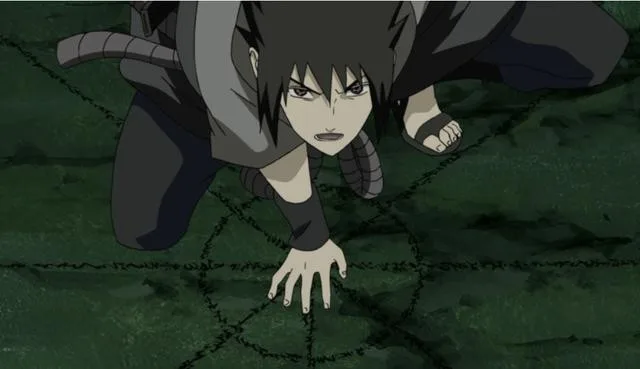
The word became a world export through Masashi Kishimoto’s work. In Naruto, jutsu is how a shinobi pushes chakra out into a named technique. Each style gets its own compound, which is exactly how Japanese already builds 術-words — only the power source changed.
幻術 (genjutsu) are illusion techniques. A fighter locks the opponent inside a false scene. The first kanji is the same family as 幻覚 (hallucination) and 幻想 (fantasy).
体術 (taijutsu) is the body: fist, leg, stance, no hand signs required. 体 is body. Outside the series, taijutsu is also a real blanket term for unarmed method.
忍術 (ninjutsu) in the show is the flashy chakra work. In Japanese it is still “ninja technique.” The names of Naruto’s characters, and even the verbal tic dattebayo, play the same game: a Japanese piece taken seriously enough to become a signature.
If you know another everyday word that ends in 術, drop it in the comments. The list is longer than any fight scene.





Community
Comments
0 comments
There are no published comments in this language yet.
Send comment