
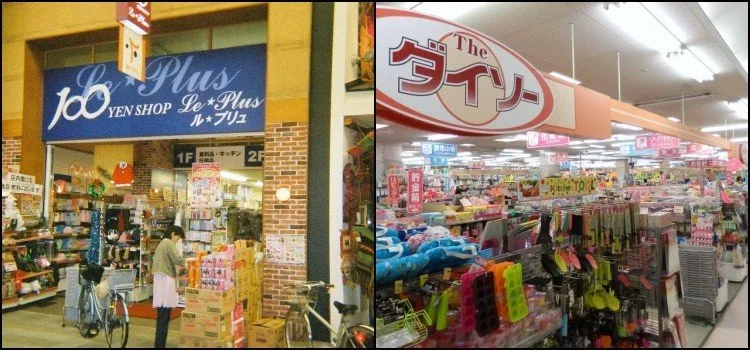
The 100 yen shops, or hyaku-en shoppu (100円ショップ), are typical stores in Japan that resemble the old R$1.99 shops in Brazil. In them, you buy almost everything at a shelf price of 100 yen. Food and drinks usually come to 108 yen at the register, and other goods to 110 yen, well under one US dollar.
In these stores, you can find an enormous variety of products, from household items, stationery, clothing and electronics to food. Normally, everything offered in the store is tagged at 100 yen. However, smaller items are sold in multiples of 2 or 3 for 100 yen. Some stores also sell items for more than 100 yen, but these are clearly marked. Generally, these higher prices are still modest next to other stores.
Contents 6
The 100 yen shops in Japan
The stores can also be nicknamed hyakkin (百均). Most of their products are processed foods, cosmetic accessories, dishes, kitchen utensils, daily necessities, stationery, and others.
Low-priced products, such as small drinks and sweets, are sold several pieces for 100 yen. The store is elaborately designed to encourage impulse buying. A large share of the products is manufactured in China, Thailand and other countries.
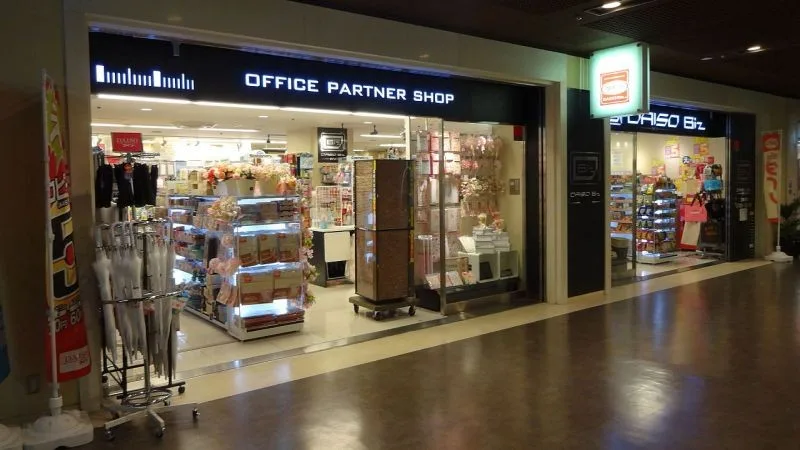
They range from small corners of the city to multi-story stores in shopping malls. There are even chains that adopt certain standards. Four of the main ones are Daiso, Can Do, Seria, and Watts.
In fiscal 2012, these four had about 5,500 stores in Japan and sales of about 550 billion yen.
In 100 yen shops, you can find stationery items, tools, clothing, towels, household items, kitchen and garden utensils, toys, and leisure products. There are thousands of options for you to redecorate your house or apartment!
Daiso, Can Do, Seria and Watts
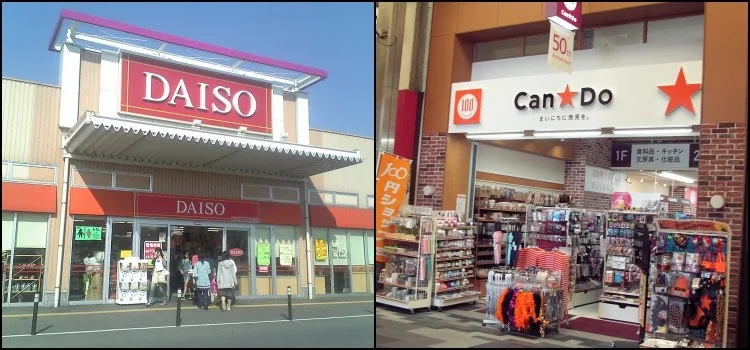
The Daiso (ダイソー) is the largest chain of 100 yen shops in Japan. If you are looking for a wide variety of products in one place, Daiso is the right place. Many even say that everything necessary for human survival can be found in this chain of stores.
Another franchise of stores is Can Do (キャンドゥ). They are well-known for being easy to navigate, greatly facilitating the lives of customers and tourists. The products of the store brand Do! STARS are very popular and praised. Another relevant factor is the elegant atmosphere and the wide variety of new items displayed weekly. Since 2022 the company has been part of the Aeon group.
Seria (セリア) has a strong reputation among 100 yen shops. Much of this is due to its layout, organization, and beautiful products. Its concept is to offer a variety of products aimed at more refined and demanding tastes.
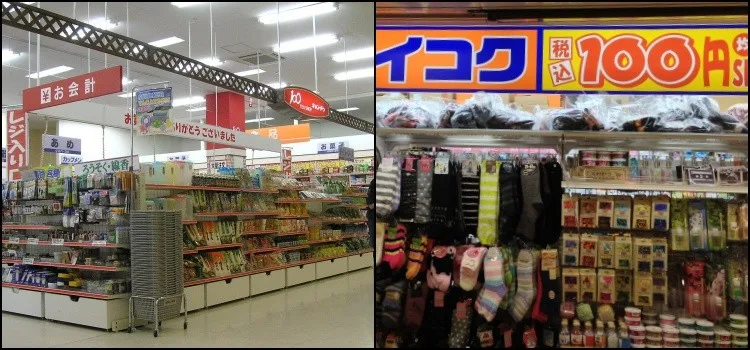
Watts is the fourth of those chains. It also trades as Meets and Silk. Many of its shops are smaller and sit inside supermarkets or drugstores, so you meet them while you are already out.
How the hyaku-en shop came about
Selling at one price is an old habit in Japan. In 1722 and 1723, during the Edo period, Edo filled up with shops called jūku-mon mise (十九文見世). Prices jumped in steps of four mon because of the four-mon coin, so a shop that charged 19 mon, one mon under a round 20, felt like a bargain. Around 1809 and 1810 the same idea returned as 38-mon shops.
Takashimaya's 10-sen store sits closer to the shop we have now. It was modeled on the American 10-cent store. Ten sen was a tenth of a yen. Takashimaya opened an "anything for 10 sen" corner in Osaka in 1926 and a full 10-sen store in 1930, then spread dozens of them. A price-index reading puts 10 sen in 1935 near 180 yen in 2015. The sign later grew to 10, 20 and 50 sen. To understand more about the coins, we recommend the history of the yen.
A 1937 department-store law and the war broke that chain up. What restarted in 1952 under the Marutaka name was a store division, later folded into other supermarket brands, at regular retail prices.
In the 1960s, purchases at 100 yen were limited to special events of about a week inside supermarkets and department stores. These events were successful, in the same way short sales still work in supermarkets. The shop that stayed open all year came later. In March 1985, Akira Matsubayashi, founder of the company Life, opened the first fixed 100 yen shop in Kasugai, Aichi, and named it 100-yen Shop. The Kasugai store itself is gone. The pattern stayed.
Hirotake Yano, founder of Daiso, started Yano Shoten in March 1972 to sell household goods. The firm became Daiso Sangyo in December 1977 and began the "100 yen shop Daiso" format in December 1987. He pushed quality, including items that did not cover their cost, and that reputation helped him keep the trust of the supermarkets that hosted the events. In April 1991 he opened Daiso's first directly operated store, in Takamatsu, Kagawa.
After the bubble, with the recession and deflation, the number of stores increased rapidly. In the 2000s, convenience stores of the 100 yen type centered on groceries emerged. Among them, Kukyu Plus opened SHOP99 in 1996, later absorbed into Lawson Store 100. From the late 2010s, a number of these grocery chains dropped the single price, because the wholesale cost of food kept moving.
Daiso, the largest 100 yen chain
At the end of February 2026, Daiso Sangyo reported 5,891 stores in total: 4,784 in Japan and 1,107 overseas. Inside Japan, the DAISO name accounted for 3,955 of those stores, Standard Products for 228 and THREEPPY for 601. Overseas, the DAISO name was on 1,051 stores. Consolidated sales for the year ending that February were 771 billion yen. It is quite popular among tourists because the shops are easy to find. At Daiso, you can find utensils, tools, stationery, and food.
The business began with household goods in 1972, before there was a shop you could visit on a normal weekday. The Takamatsu store in 1991 is that shop. Daiso gained a reputation for quality inside the one-price line.
Other 100 yen stores
There are several other hyaku-en shops besides the four famous ones above. The convenience chain Lawson has its Lawson Store 100.
Some signs sell at a higher fixed price. 3COINS is a 300 yen shop that still stands on its own. THREEPPY and CouCou belong to Daiso Sangyo: THREEPPY since 2018, and CouCou since 2020, when Daiso took over that business. Le Plus, once the Crystal 100 yen shop, joined Can Do in the spring of 2007. Daiso has also shared shops with Aoyama and with Speed, and the Orange 100 yen shops joined Daiso Sangyo in October 2015.
Outside those names, smaller signs still use the 100 yen name. Japanese references keep mentioning Tokutoku-ya (得得屋), Lemon (レモン) and Hyakuemon (ひゃくえもん).
What to buy in a 100 yen shop?
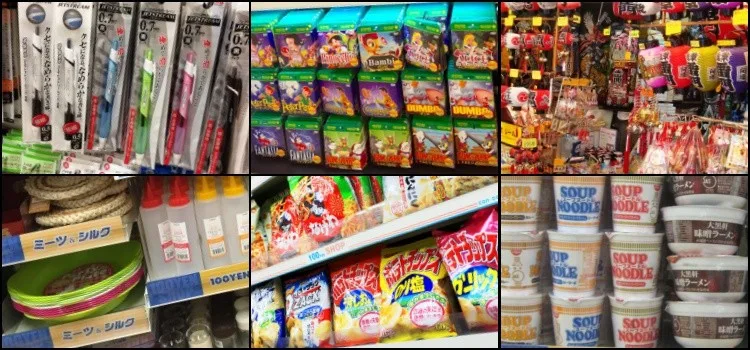
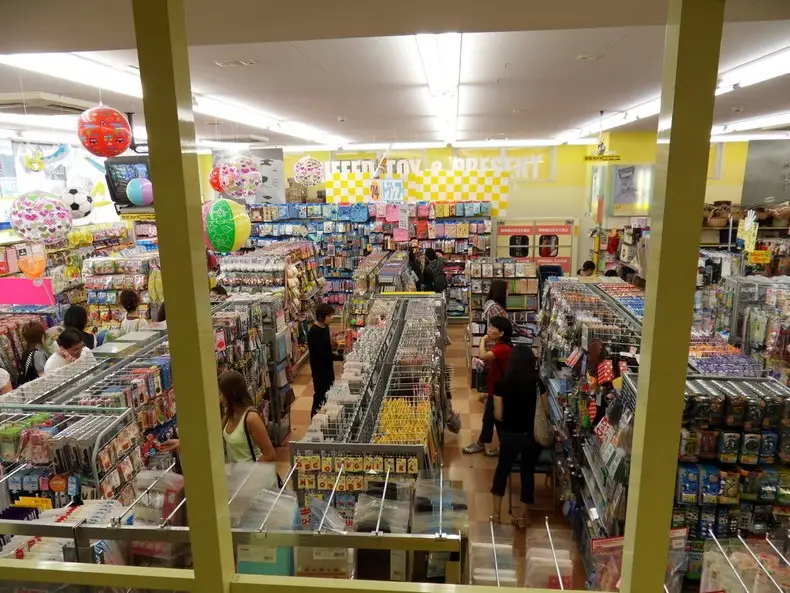
The stores have an enormous variety of craft supplies, gift packaging, household items, confectionery, and many other practical things. So many products for the home, to make daily life easier, or to fill your bag with souvenirs.
By Kevin: When I was in Japan, I visited several 100 yen shops and can recall some things I bought or that caught my attention:
- Headphones;
- Phone cases;
- Sweets and snacks;
- Stickers, stamps, and seals;
- Socks, ties, and belts;
- Shoes, envelopes, and containers;
- Spices, hats, and bags;
- There are so many things that I even got confused trying to make this list.
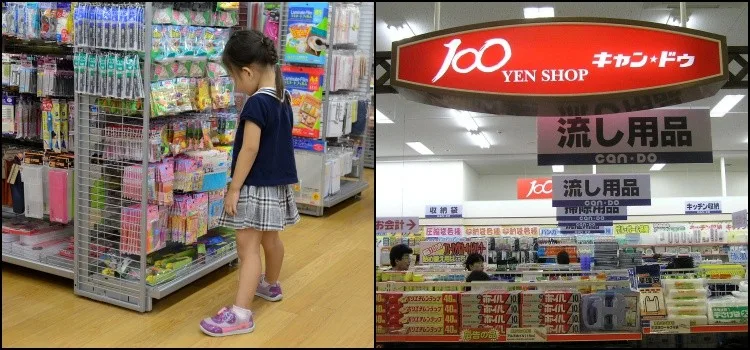
The stores presented in this article offer similar products, but each has a different style, so it is worth visiting more than one if you are taking a stroll around Japan. There are many, many other stores distinct from these. When you visit a 100 yen shop, you can feel completely lost about what to buy. You will spend hours choosing products and will quickly empty your wallet. A konbini is the other place in Japan that will do the same to a visitor.




Community
Comments
0 comments
There are no published comments in this language yet.
Send comment