
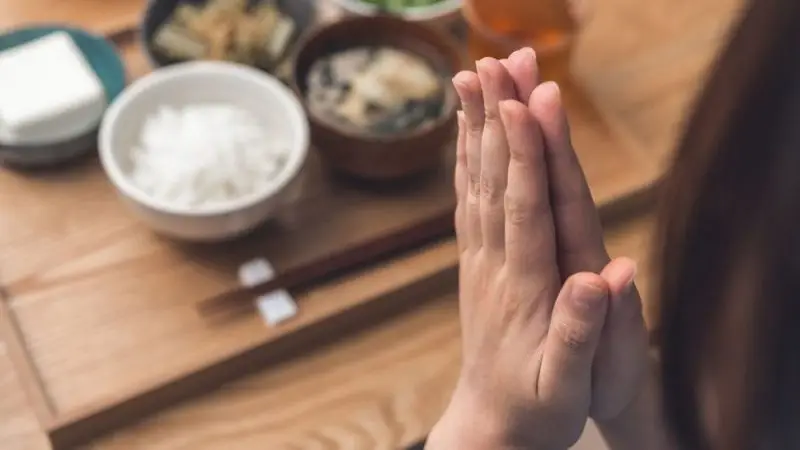
Itadakimasu (いただきます) is said before a meal, while gochisōsama deshita (ごちそうさまでした) is said after it. English translations such as “let’s eat” and “thank you for the meal” are useful shortcuts, but the expressions carry a stronger sense of receiving food with gratitude and recognizing the effort behind it.
They are ordinary Japanese meal greetings, heard at home, at school and in restaurants. Knowing when to use them matters more than trying to turn them into a rigid ceremony.
Contents 8
What does itadakimasu mean?
Itadakimasu comes from itadaku (頂く), a humble verb meaning “to receive.” Before eating, it expresses appreciation for the meal, its ingredients and the people whose work brought it to the table. “I humbly receive” is closer to its literal sense than “let’s eat,” although both can describe its role at mealtime.
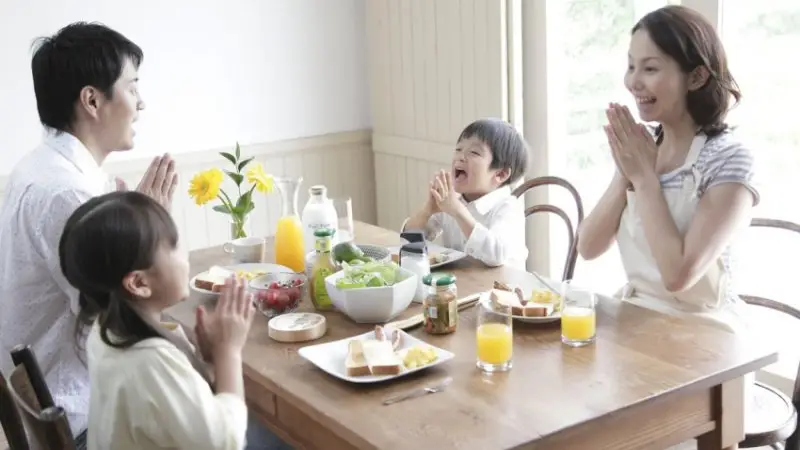
Say it after the food is ready and before the first bite. It works whether you are eating with family, visiting someone, dining alone or sitting in a restaurant. The phrase marks the beginning of the meal; it is not a command for everyone else to start eating.

Do you need to put your hands together?
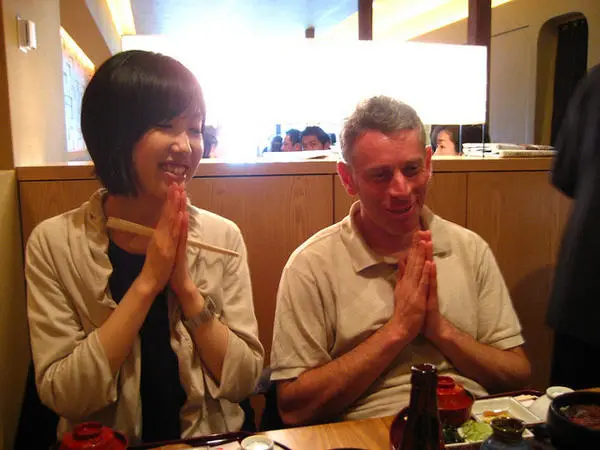
Many people briefly place their palms together and give a small nod when they say itadakimasu. The gesture is commonly called gasshō (合掌). It is a familiar part of meal etiquette, but it is not a test of correctness: people vary in how visibly they do it, and some only say the words.
The safest approach for a visitor is uncomplicated. Wait until you are ready to eat, say itadakimasu naturally, then begin. Do not treat the gesture as a required prayer or assume that every diner gives it the same religious meaning.
Why is gratitude part of the expression?
In everyday use, itadakimasu thanks more than the cook. It can acknowledge farmers, fishers, producers, the person who prepared the meal and the plants or animals that became food. This wider sense of gratitude is often discussed alongside Japanese ideas about respect for life, food and shared effort.
That does not make the phrase a formal religious declaration. It is a conventional greeting used by people with different beliefs. Its meaning becomes clearest in the situation: someone is about to receive a meal and pauses to recognize it.
Respect at the table also appears in smaller habits. For example, chopstick etiquette has its own rules, especially when sharing dishes with other people.
Can itadakimasu be used outside meals?
The verb itadaku is used in humble Japanese for receiving something. As a standalone expression, itadakimasu can be heard when accepting a tangible gift, a snack or a drink. Still, learners will encounter it most often at the table, so that is the context worth mastering first.
Do not stretch the meal phrase to every situation where someone helps you. Japanese has other forms built from itadaku for receiving favors, guidance or assistance; those are different grammatical expressions, not a reason to say itadakimasu after any kind gesture.
What does gochisōsama deshita mean?
After eating, say gochisōsama deshita. It is commonly translated as “thank you for the meal” or “that was a feast.” The expression thanks the meal and acknowledges the care involved in providing it, whether you are speaking to a host, a cook or restaurant staff.
Gochisō (馳走) now suggests a feast or special meal. Its kanji carry older associations with galloping and running, which helps explain the familiar interpretation of a host going to great effort to gather food for guests. Deshita is the past form of desu, fitting a meal that has ended.
When to say gochisōsama deshita
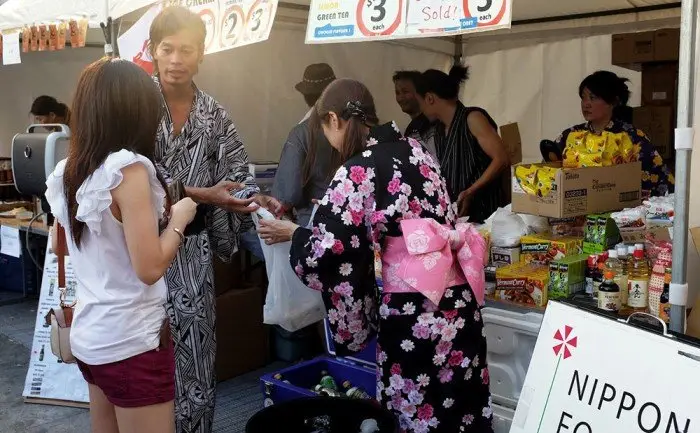
Use it when you finish eating at home, after being served at someone else’s house or as you leave a restaurant. In a small restaurant, it is common to direct the phrase toward the counter or kitchen; a quiet, polite delivery is enough. If someone paid for your meal, it can also thank that person for the treat.
At home, gochisōsama without deshita sounds more casual. Gochisōsama deshita is a dependable polite choice for a host, a restaurant or a meal bought by someone else. If you want to add that you enjoyed the food, oishikatta desu (美味しかったです) means “it was delicious.”
How to read the phrases
Read itadakimasu as i-ta-da-ki-ma-su. For gochisōsama deshita, break it into go-chi-sō-sa-ma de-shi-ta. The macron in Gochisōsama marks a long o sound; you may also see the same word written as gochisousama in English-language material.
Quick guide for a Japanese meal
- Before eating: say itadakimasu (いただきます).
- After eating: say gochisōsama deshita (ごちそうさまでした).
- At home with close family: gochisōsama is a common casual alternative.
- At a restaurant: a polite gochisōsama deshita can be directed to the staff when you finish or leave.
These phrases are small, but they make a meal feel shared rather than automatic. Use them with attention to the moment, not as a performance, and they will sound natural.


Community
Comments
0 comments
There are no published comments in this language yet.
Send comment