
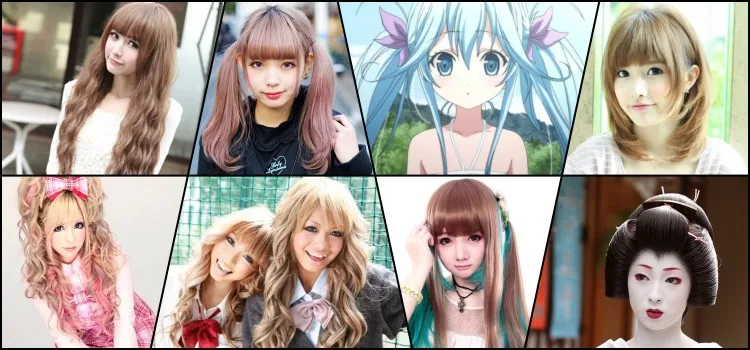
Unlike real life, anime characters have colorful hair, strange shapes and unusual cuts. Have you ever wondered why anime characters have brightly colored hair and what the hair colors in anime actually mean? In this article, we will look at the colors, hairstyles and shapes of hair in the Japanese anime world.
You will see where the tradition of colorful hair came from, what symbolic meaning each color tends to carry, and which hairstyle tropes you keep running into across countless series — from Sailor Moon to Naruto and Bleach, all the way to Re:Zero and Evangelion.
Contents 23
Why do anime characters have colorful hair?
Colorful hair in anime is, above all, a practical design tool: a vivid shade lifts a character clearly out of the crowd and sticks in your memory. In series with many characters, hair color helps the audience tell figures apart at a glance — even in scenes drawn in a very simple style or in frames where the silhouettes blur together.
Tradition plays a role too. Once a few series set strong color conventions, others followed the pattern. Over the decades, brightly colored hair has quietly become a kind of signature of the genre.
Where colorful hair came from: black-and-white manga
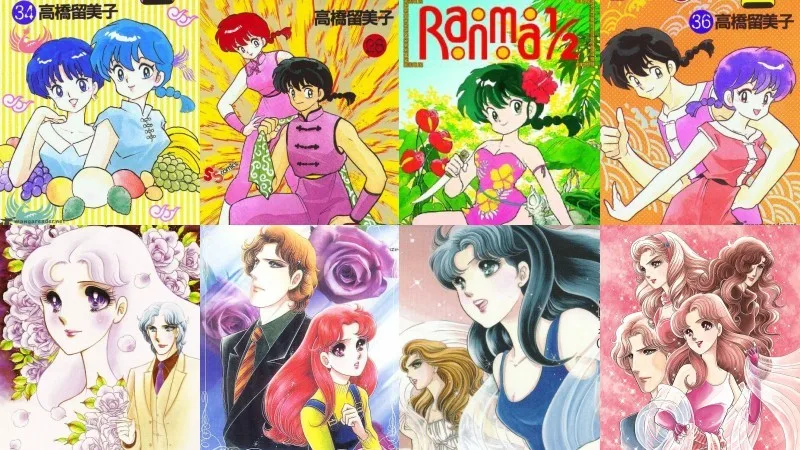
The tradition of bold hair colors has its roots in the history of Japanese manga. Deep into the second half of the 20th century, manga was printed in black and white to keep production costs down. Only the most popular series occasionally got one or two color pages, or a colored magazine cover.
Mangaka therefore had very few chances to draw their characters in color. In the 1970s, they experimented in those rare color illustrations with strong tones — the same figure would show up in different editions and covers with different hair colors. Over time, the convention of assigning a character one fixed hair color took hold, and the shifting palettes faded out.
That early practice still shapes what you see in modern anime: characters have a clearly assigned hair color that sets them apart from the real world.
Meanings of hair colors in anime
In everyday life we already connect colors with traits: red with passion, blue with calm, green with nature. In anime, something similar happens — but as a deliberate convention. Hair color is a visual cue meant to tell you at first glance which way a character tends to lean: angry, naive, mysterious, arrogant or caring.
That said, you should not overread hair color. It is a hint, not a final diagnosis. Some series break the pattern on purpose, and not every redhead is automatically a tsundere. Once you know the convention, though, you can use it as a reading lens and watch how individual works play with it.
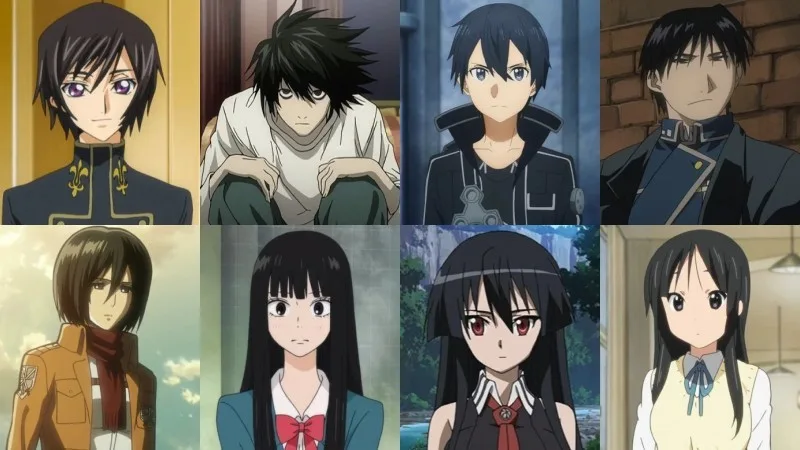
Black hair
Black hair reads as grounded, reserved and sometimes hard to approach. It fits characters drawn as realistic, serious, determined or mysterious. A black mane can also look threatening, hinting at an anti-hero or a darker figure.
- Levi Ackerman — Attack on Titan
- Vegeta — Dragon Ball
- Kirito — Sword Art Online
- L — Death Note
White and silver hair
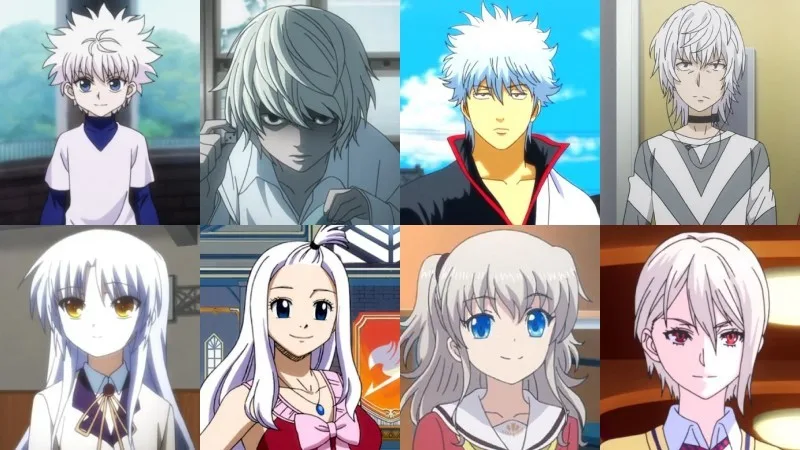
White or silver hair carries an almost otherworldly aura in anime. Female characters with this shade are often magically gifted; male characters tend to come across as calm, analytical or unconventional — or as the classic anti-hero. When the tone is closer to gray or silver, the figure also feels balanced, logical and sometimes guarded.
- Kaneki Ken — Tokyo Ghoul
- Shiro — Deadman Wonderland
- Ginko — Mushishi
- Killua Zoldyck — Hunter x Hunter
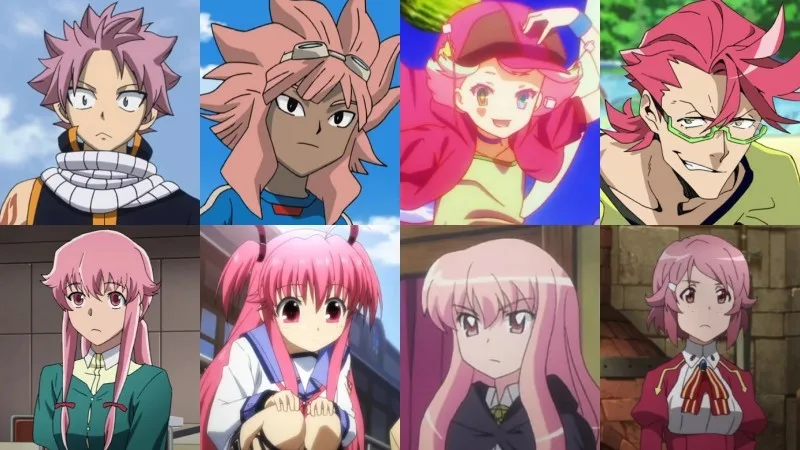
Pink and rose hair
In Japan, pink traditionally signals youth, innocence and playfulness. Many young, cute, childlike idol characters therefore wear pink hair or matching accessories. The color stands for caring, softness, spontaneity and sometimes naivety. Male characters with pink hair break the pattern on purpose and often come across as a little quirky or mischievous.
- Sakura Haruno — Naruto
- Yuno Gasai — Mirai Nikki
- Mirai Kuriyama — Kyoukai no Kanata
Purple hair
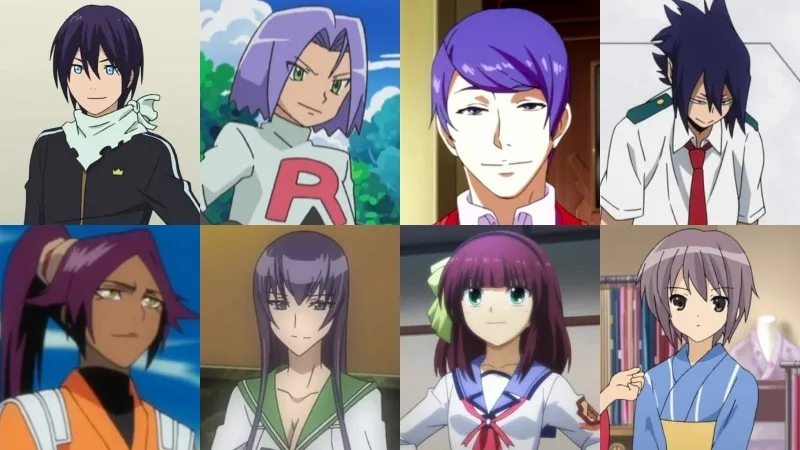
Purple stands for power, elegance and a touch of arrogance. Characters with purple hair are often privileged, noble or at least style-conscious, but they can also read as moody, scheming and vain. Lighter purples feel gentler and more reserved; darker shades come across as cool, confrontational and sometimes aggressive.
- Yato — Noragami
- Saeko Busujima — Highschool of the Dead
- Yuri Nakamura — Angel Beats!
- Yuki Nagato — Suzumiya Haruhi
- Rikka Takanashi — Chuunibyou demo Koi ga Shitai!
Red hair
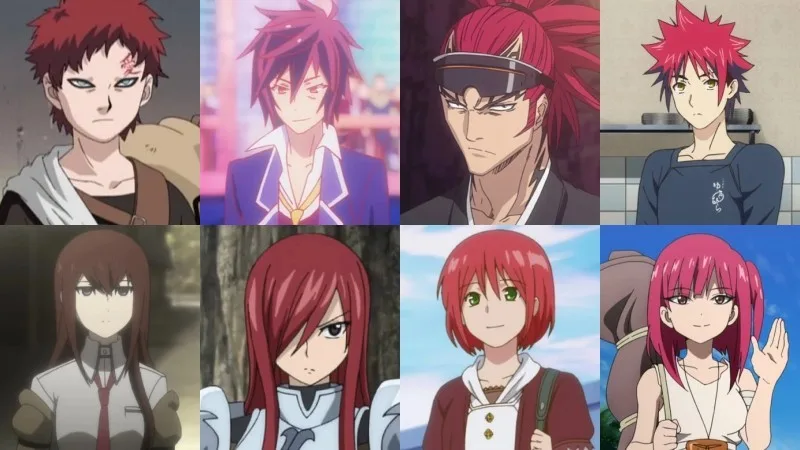
Red is the color of emotion: passion, temper, a taste for adventure. Red-haired characters are often hot-headed, impulsive and loud — classic candidates for the tsundere role. In female characters this image intensifies; in male characters, red often reads as calmer and more disciplined.
- Gaara — Naruto
- Sora — No Game No Life
- Erza Scarlet — Fairy Tail
- Makise Kurisu — Steins;Gate
Blonde and yellow hair
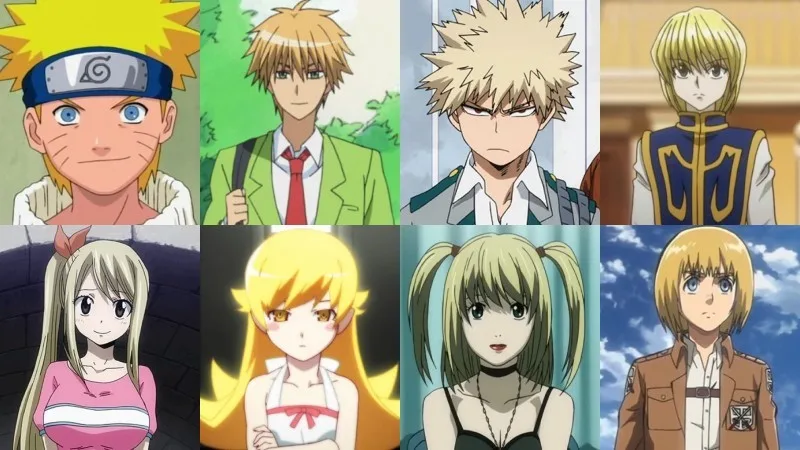
Blonde is tightly tied to the "foreigner" image in anime. Many blonde characters are inspired by Europeans or Americans, but they tend to be drawn as naive, stubborn or cheerful. Blondes are often shown as flighty, childish or self-centered — and that is meant as a deliberate cliché. Blonde men usually come across either as charming troublemakers or as the quiet, clean-cut "prince" type.
- Misa Amane — Death Note
- Usagi Tsukino — Sailor Moon
- Tsumugi Kotobuki — K-On!
- Usui Takumi — Kaichou wa Maid-sama!
- Kurapika — Hunter x Hunter
- Armin Arlert — Shingeki no Kyojin
Green hair
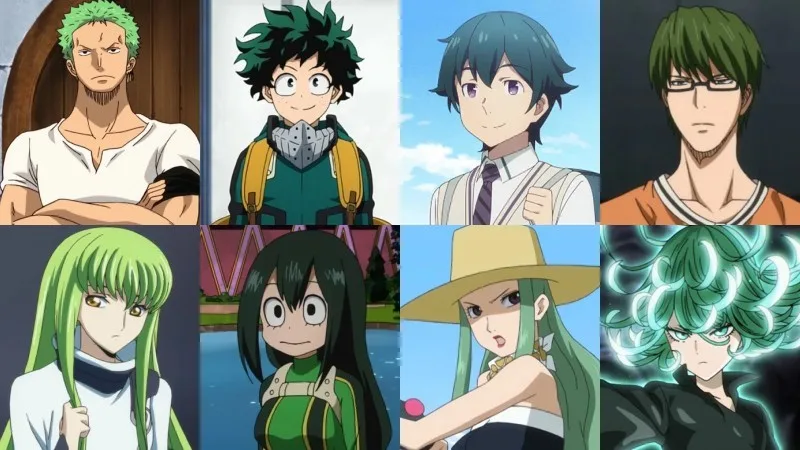
Green is the color of range in anime: green-haired characters can be relaxed, friendly and loyal, but just as easily toxic, jealous and reckless. The shade creates a calm, almost motherly atmosphere — or the exact opposite. Green figures sometimes make a bad first impression but tend to side with the protagonist as the story goes on.
- Shintarou Midorima — Kuroko no Basket
- Roronoa Zoro — One Piece
- C.C. — Code Geass: Lelouch of the Rebellion
- Amaimon — Ao no Exorcist
- Envy — Fullmetal Alchemist
- Eto Yoshimura — Tokyo Ghoul
- Izuku Midoriya — Boku no Hero Academia
- Tatsumaki — One Punch Man
Blue hair
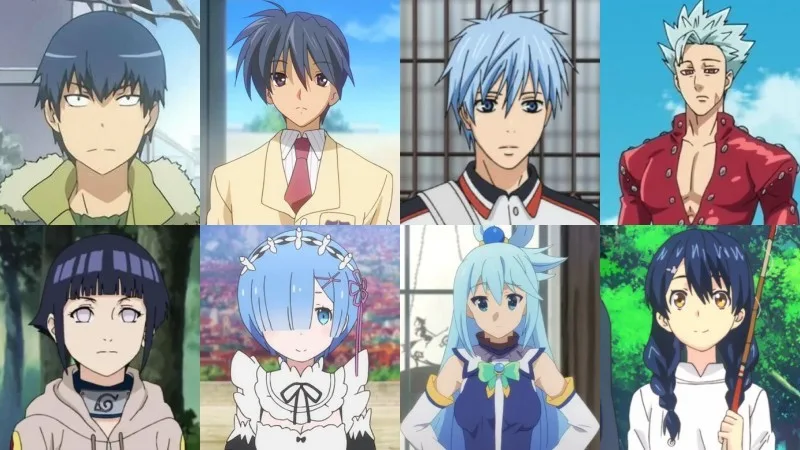
Blue-haired characters read as composed, mature and a little out of reach. They are often reserved, rational and carry hidden potential that only comes out as the series progresses. The darker the blue, the more responsible and cool the character feels; the lighter the blue, the more playful.
- Shino Asada — Sword Art Online
- Nagisa Shiota — Assassination Classroom
- Rem — Re:Zero
- Rin Okumura — Ao no Exorcist
- Tenya Iida — Boku no Hero Academia
Brown and chestnut hair
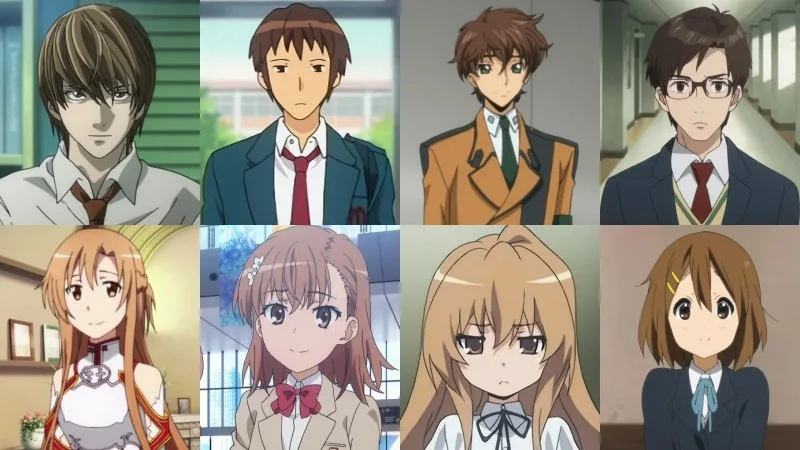
Brown is the most common hair color for protagonists. It reads as down-to-earth, likable, honest and reliable — which makes it perfect for leads the audience is meant to identify with. Brown-haired characters often end up at the center of everyday, school or slice of life series.
- Light Yagami — Death Note
- Shinichi Izumi — Kiseijuu
- Kyon — Suzumiya Haruhi
- Asuna Yuuki — Sword Art Online
- Taiga Aisaka — Toradora!
- Suzaku Kururugi — Code Geass
Hairstyles and hair shapes in anime
Hair color is only half the story — the shape matters just as much. So that the main characters are recognizable at a glance, they often get wild tips, an unusual cut or a signature accessory. A few of these hairstyles have turned into real standards and keep showing up in newer series.
Hime and ojousama cut
The hime or ojousama cut means long, straight hair with two clearly separated strands in front of the ears. It is the standard hairstyle of the courtly women of the Heian period, and in anime it usually signals an "aristocratic" or "princess" look.
Ponytail and pigtails
The ponytail is the most unremarkable option in anime: a bit of everyday life, a bit of "normal schoolgirl". Pigtails and twintails lean more toward childlike and are often handed to tsundere characters. A ponytail on a male character usually points at the samurai era and a certain traditional touch.
Short hair
Female characters with short hair in anime are often tomboys — active, combative, sporty, and sometimes the clever scientist of the group.
Drill hair and spirals
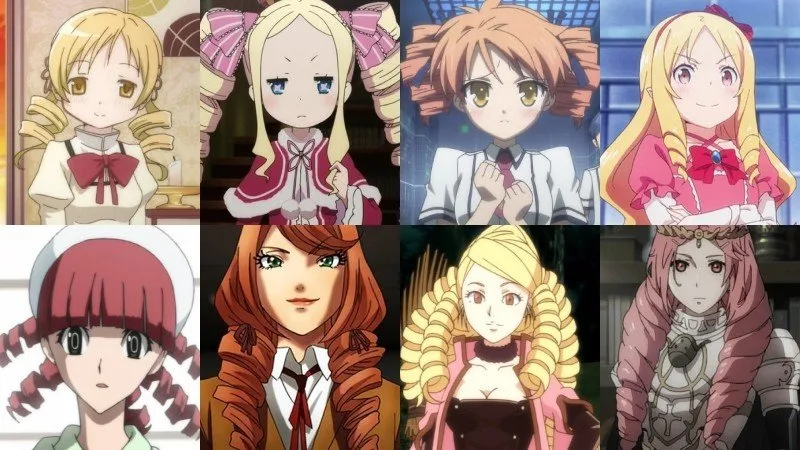
Some characters wear hair that looks like little drills or spirals — on the side of the head, above the ears or as a full braid. The look is laborious to animate, which is exactly why it stands out. You see it on Mami Tomoe in Puella Magi Madoka Magica, Beatrice in Re:Zero or Yamada Elf in Eromanga Sensei.
Spiky hair that defies gravity
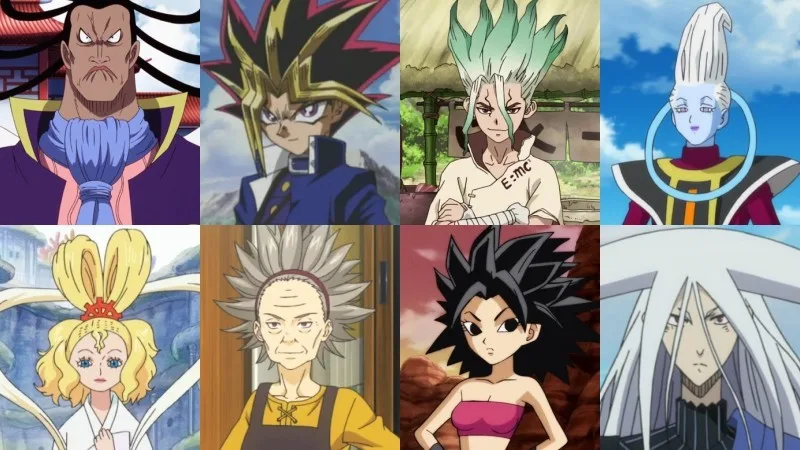
The famous, seemingly gravity-free spikes are a real classic. They are meant to make the character look wild, cool and full of energy, even if physics clearly takes a back seat. You meet them on Senku in Dr. Stone, Yugi in Yu-Gi-Oh!, Kenpachi Zaraki in Bleach, Son Goku in Dragon Ball and All Might in Boku no Hero Academia.
Ahoge and antennas
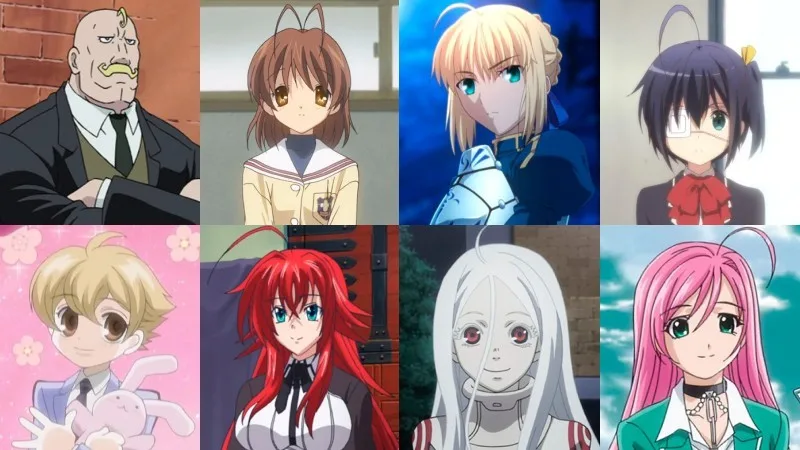
When a single strand of hair sticks up, the Japanese call it ahoge [アホ毛], literally "idiot hair". A single ahoge usually signals a naive, cheerful or slightly chaotic character. Two symmetrical strands that poke out of the bangs like antennas are often just called antenna hair. You see the look on Edward Elric in Fullmetal Alchemist, Saber in Fate, Nagisa in Clannad, Konata Izumi in Lucky Star and Meliodas in Nanatsu no Taizai.
Hair buns and odango
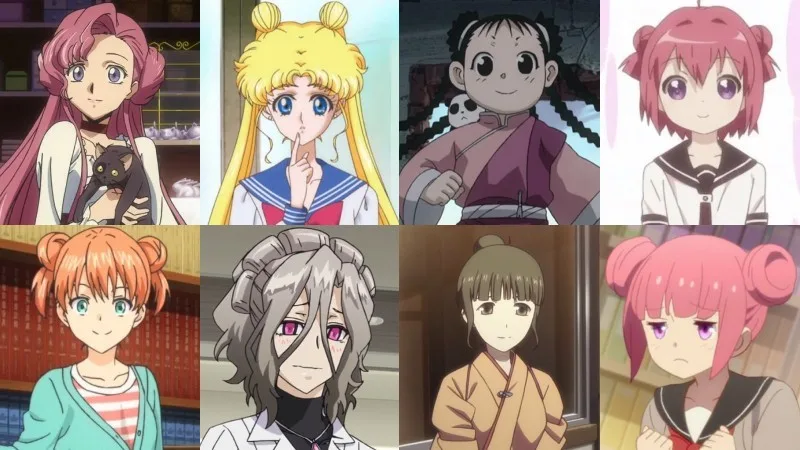
One or two round buns on top of the head are called odango in Japanese, named after a round sweet. They are often associated with characters inspired by Chinese tradition and are a popular "cute" marker. Classic examples are Usagi Tsukino in Sailor Moon, Tenten in Naruto, Mei Chang in Fullmetal Alchemist and Himiko Toga in Boku no Hero Academia.
Ribbons and bows
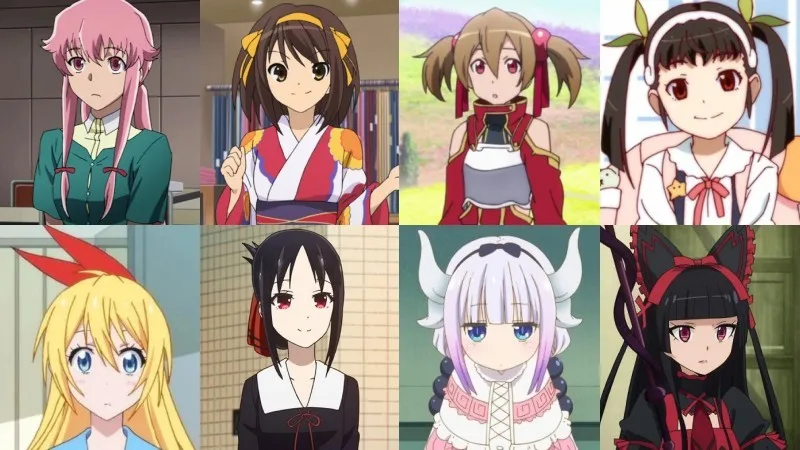
Many anime characters wear one or more ribbons in their hair — as a headband, tied around a ponytail, as a big bow or hanging loose. The effect is playful and cute, or, depending on the color, a little ominous. You see it on Gasai Yuno in Mirai Nikki, Suzumiya Haruhi, Silica in Sword Art Online or Chitoge in Nisekoi.
Rapunzel hair
A few characters wear hair so long it reaches past the knees, the feet or further. Long, loose hair was historically read — especially on male characters — as a symbol of freedom, nobility and strength. Well-known examples are Shiro in No Game No Life, Chi in Chobits, Hatsune Miku and Mimi Usa in Kodomo no Jikan.
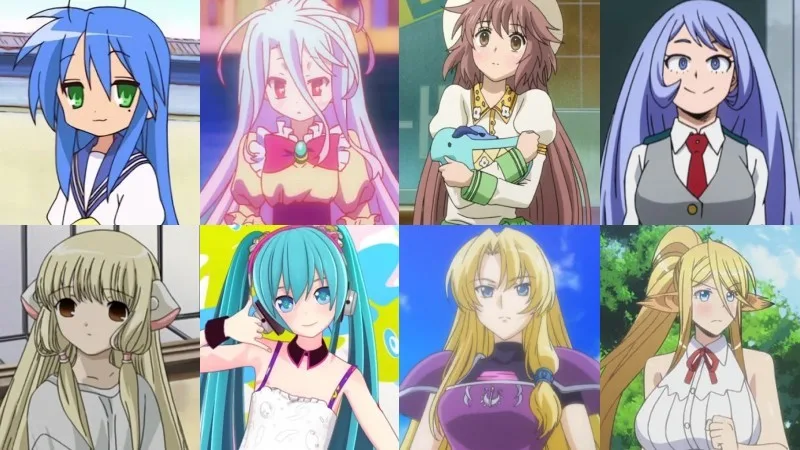
Are anime hairstyles unrealistic?
Even if the wildest anime hairstyles look exaggerated, there is a grain of truth in them. Japanese hair has a texture that, once styled, holds its shape longer than many other hair types. A few strands sticking up or out to the side are therefore not pure fantasy — they do appear in real life, only in a much more discreet form.
In everyday Japan, the convention of straight, dark hair still holds — not least because school and workplace rules often require it. In subcultures, on stage or in the cosplay scene, the appetite to experiment with color and shape is much larger. Anime picks up that freedom, exaggerates it and turns it into a visual signature.
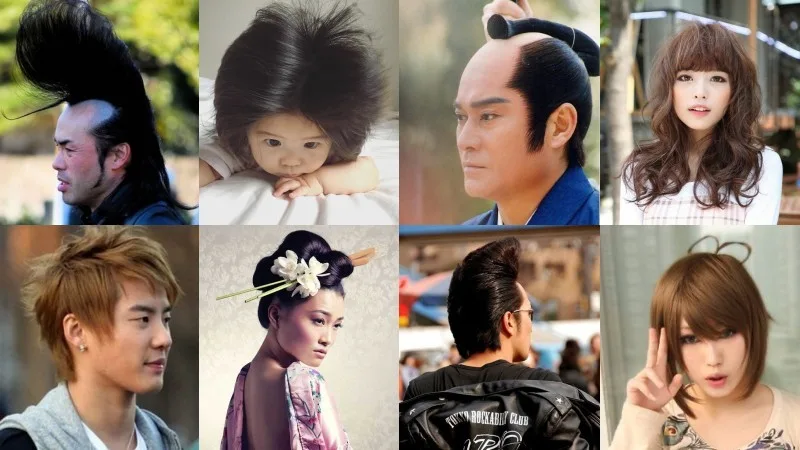
In the end, it pays to look at hair color and hairstyle in anime on two levels: as a design choice that helps you sort characters fast, and as a deliberate stylization that plays with reality rather than copying it. Next time you start a new series, you can test right away whether a fresh face fits the usual pattern — or quietly breaks it.



Community
Comments
0 comments
There are no published comments in this language yet.
Send comment