
A Japanese crepe may begin with the same thin batter as its French cousin, but the moment it is folded into a paper-wrapped cone, it belongs to a different kind of snack culture. In Harajuku, cream, fruit and chocolate turn a simple crepe into something made to carry between shop windows and crowded side streets.
That is why Japanese crepes feel so different from the crepes many of us know at home. They can be sweet or savory, but the iconic version is generous, handheld and unapologetically playful with its fillings.
Contents 5
How crepes found their place in Japan
Crepes come from Brittany in France, where thin pancakes may be served sweet or savory. A basic batter uses flour, milk and eggs, cooked in a wide, thin layer on a hot surface. Japan did not invent the crepe, but it gave the snack a recognizable street-food form.
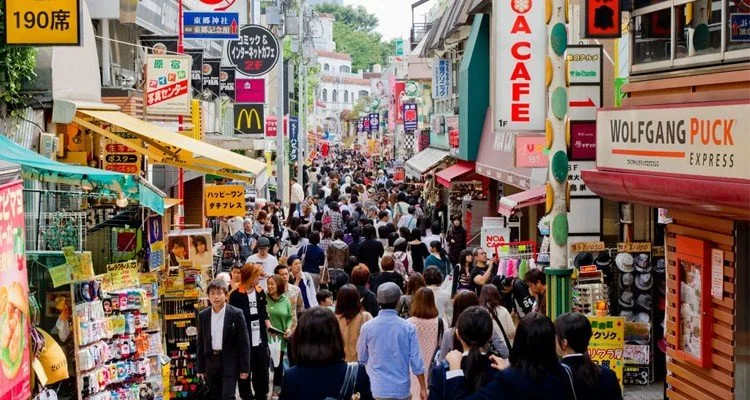
Marion Crepes opened its first shop on Shibuya Park Avenue in 1976 and opened on Takeshita Street in Harajuku the following year. The paper-wrapped style made a freshly cooked crepe easy to eat while walking, and Harajuku's youth culture helped turn cream-filled cones into a familiar sight.
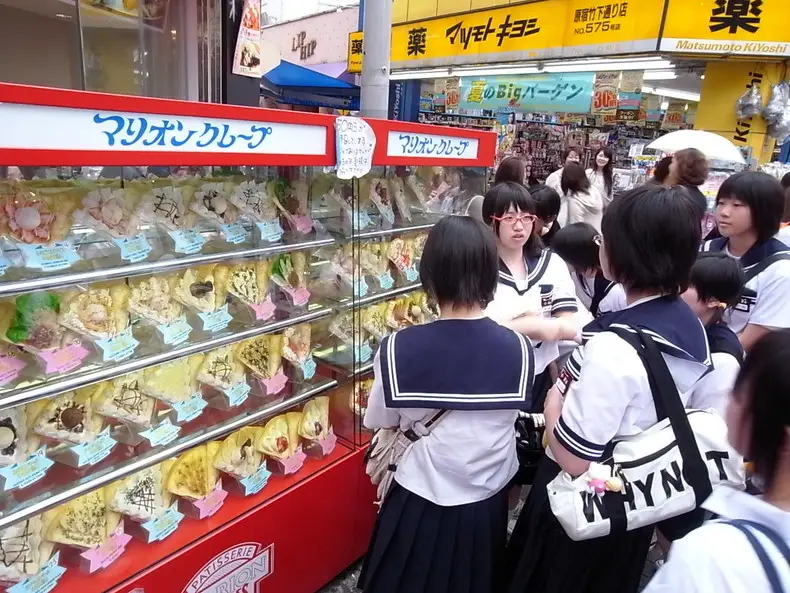
The appeal is not only the cone. A Japanese crepe shop often puts the filling on display: fruit, whipped cream, chocolate sauce, custard, cake pieces or ice cream for sweet options, and ingredients such as chicken, tuna, egg or cheese for savory ones. If you are visiting the neighborhood, this snack fits naturally alongside the fashion and color of Harajuku.
What makes Japanese crepes different?
The batter is still thin, but Japanese crepes are usually built for the filling. Instead of arriving flat on a plate, they are rolled into a cone so the cream and fruit sit near the top while the warm crepe holds everything together.
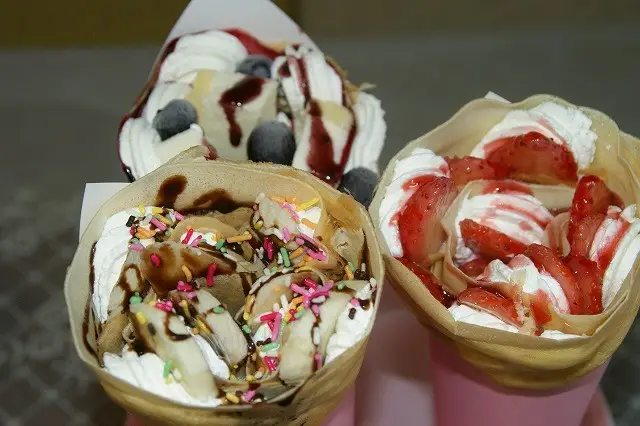
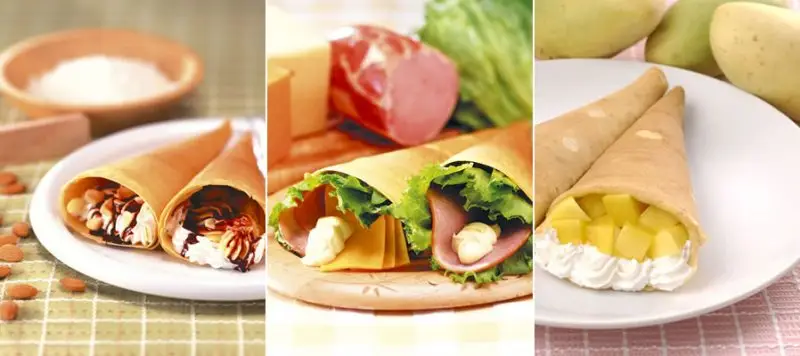
Sweet combinations often pair banana or strawberry with whipped cream and chocolate. Other shops lean into custard, cheesecake, matcha, azuki, ice cream or seasonal fruit. Savory crepes offer a lighter meal, with choices such as ham and cheese, tuna, chicken or egg.
Another small but memorable detail is the window full of food replicas. These samples let you compare fillings before ordering and are part of the same visual food culture explored in Japan's food displays. They are especially helpful when the menu is written in Japanese.

Crepes, pancakes and Japanese savory dishes
Crepes and pancakes share a few pantry ingredients, but their texture and use are different. A crepe batter is thin and spread across the pan in a delicate layer. A typical American-style pancake uses a thicker batter and a leavening agent, which gives it more height.
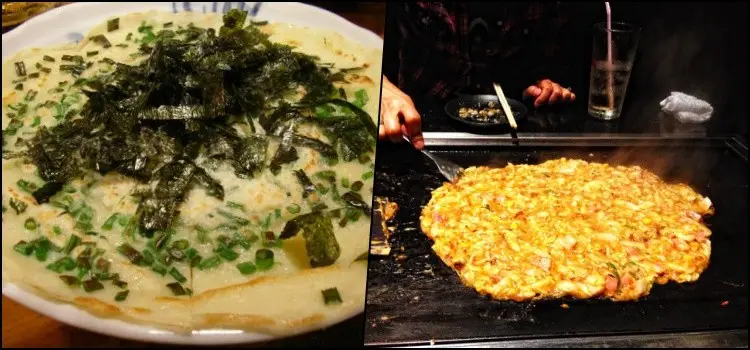
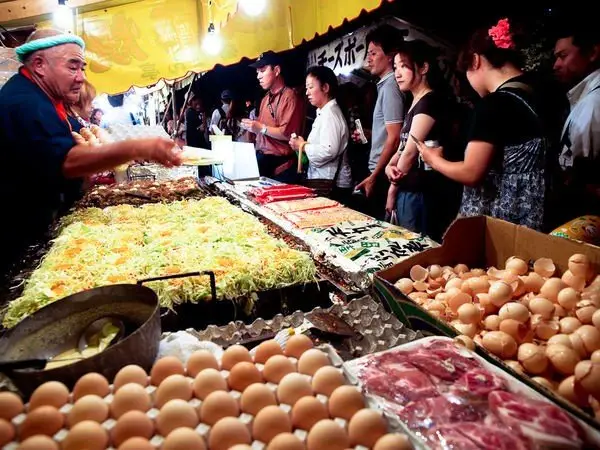
It is also easy to confuse a crepe with dishes that are sometimes translated as Japanese pancakes. Okonomiyaki is a savory Japanese dish cooked with a flour-based batter and ingredients such as cabbage, meat or seafood. It is not a Japanese version of a French crepe; the cooking method, thickness and role at the table are different.
Monjayaki is another Tokyo-area dish often mentioned beside okonomiyaki. It is its own savory dish rather than a crepe, even when a translation makes the names sound similar.
Japanese cone crepe recipe
This simple batter is a starting point for sweet or savory fillings. For a sweet crepe, leave out the salt if you prefer; for a savory one, reduce the sugar and choose a filling that is not overly wet.
- 500 ml milk
- 3 eggs
- 250 g plain flour
- 40 g sugar
- 1 tablespoon vanilla extract, optional
- 1 tablespoon melted butter
- A pinch of salt for savory fillings
- Whisk the flour, sugar and salt, if using, in a bowl.
- Whisk the eggs with half of the milk, then gradually add the remaining milk and melted butter until the batter is smooth.
- Let the batter rest for 15 to 30 minutes while you prepare the fillings.
- Heat a non-stick pan over medium heat and brush it lightly with butter or oil.
- Pour in a small amount of batter and quickly tilt the pan to make a thin round.
- Cook until the surface is set, then turn briefly if needed.
- Place the filling over one quarter of the crepe, fold it into a cone and wrap the base in paper or a napkin before serving.
Keep the filling balanced. Too much cream or sauce makes the cone difficult to hold, while a little fruit, chocolate or custard lets the crepe stay crisp at the edges.
Choosing a crepe in Japan
For a first sweet crepe, a familiar pairing such as banana and chocolate or strawberry and whipped cream is an easy choice. If you want something less sweet, look for a savory menu with cheese, egg, chicken or tuna. The photo menu and food samples are usually the quickest way to decide.
Japanese crepes are best eaten soon after they are made, when the edge still has some crispness and the filling is cold. In busy places such as Takeshita Street, step aside before opening the wrapper and keep the paper until you find a bin. A small bit of care makes the snack easier to enjoy without blocking everyone else.
Japanese crepes are a good example of how a borrowed dish can become local without losing its roots. The batter is familiar; the paper cone, extravagant fillings and Harajuku setting are what give it its own personality.



Community
Comments
0 comments
There are no published comments in this language yet.
Send comment