
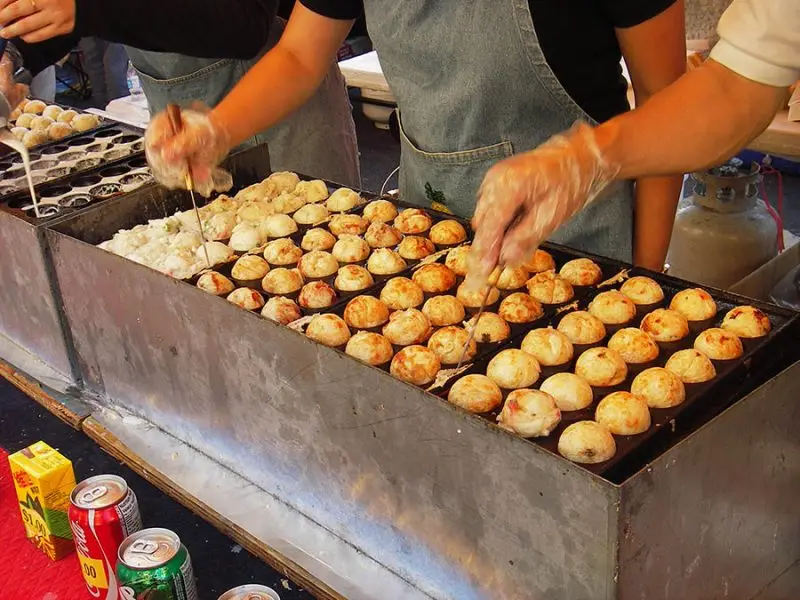
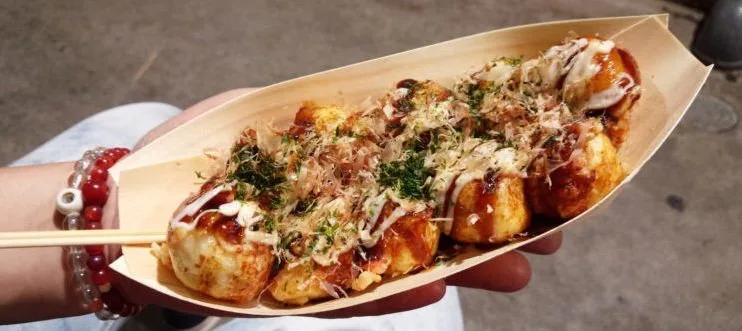
Takoyaki is one of Osaka's best-known street foods. These round bites are cooked in a special molded pan, crisp on the outside, creamy in the center, and usually finished with sauce, Japanese mayonnaise, aonori, and katsuobushi. If you walk through Kansai markets, festivals, or food streets, there is a good chance you will see them being turned on a hot plate right in front of you.
Contents 11
What is takoyaki?
Takoyaki [たこ焼き] is a savory ball made from a thin wheat-flour batter seasoned with dashi. A small piece of cooked octopus goes into the middle along with tenkasu, chopped green onion, and beni shoga, which is Japanese pickled red ginger. Once the batter starts to set, each piece is turned little by little until it becomes round.
The name combines tako (octopus) and yaki, a word used for grilled or pan-cooked dishes. In practice, takoyaki is less about a literal translation and more about a very specific texture: lightly golden outside, soft and almost custardy inside.
If you enjoy this side of Kansai cooking, it is also worth reading about okonomiyaki and the atmosphere of Japanese street food stalls.
Why is takoyaki linked to Osaka?
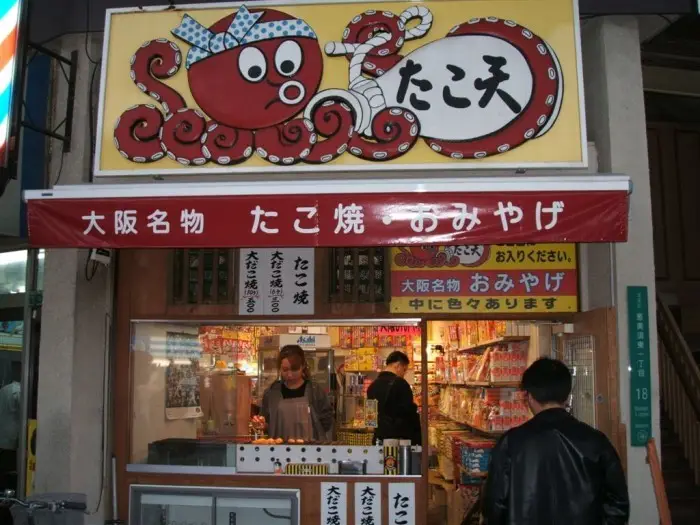
Takoyaki is strongly associated with Osaka and the wider Kansai region. Sources about Osaka food culture trace its rise to the 1930s, and Tomekichi Endo is commonly credited with popularizing the dish in 1935. The idea is usually connected to older flour-based snacks such as choboyaki and radioyaki, while octopus-filled batter dishes from nearby Akashi are often mentioned as part of the story behind its development.
That background helps explain why takoyaki feels so local. It belongs to the same everyday food culture that made Osaka famous for affordable, satisfying flour-based dishes. Today it is sold across Japan, but many travelers still treat Osaka as the place where takoyaki makes the strongest first impression.
What goes into traditional takoyaki?
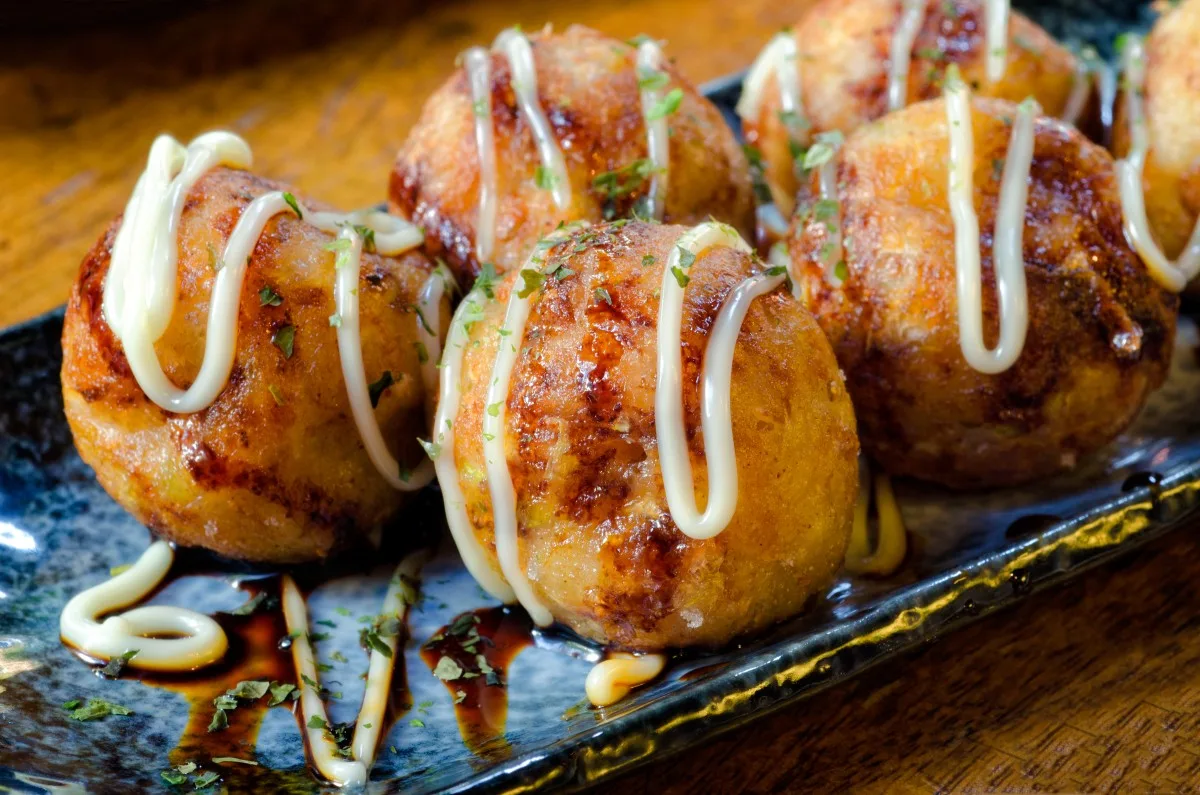
The classic version is simple, but every ingredient matters. The batter is usually made with flour, eggs, dashi, a little soy sauce, and salt. The filling is centered on octopus, then supported by crunchy tenkasu, green onion, and pickled ginger. On top, the usual finish is takoyaki sauce or okonomiyaki sauce, Japanese mayonnaise, aonori, and katsuobushi.
Some shops and home cooks change the filling with cheese, shrimp, bacon, or kimchi, but those are variations. If you want the taste most people associate with takoyaki in Japan, the octopus, dashi, and sauce combination is the reference point.
Why do you need a takoyaki pan?
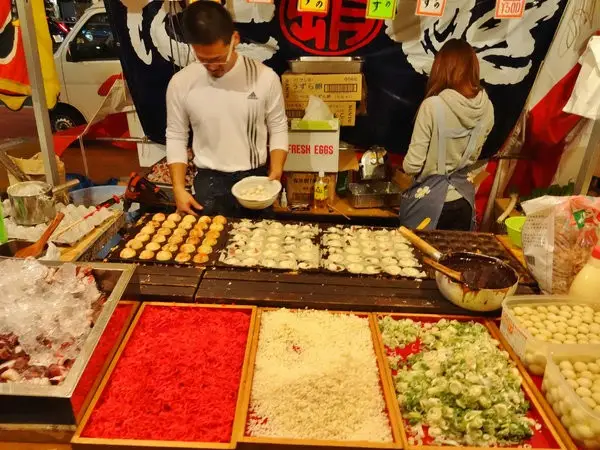
The shape comes from a dedicated takoyaki pan or electric maker with half-sphere molds, often 16 or more at a time. The batter is poured almost to the edge, the filling is added quickly, and then each piece is turned with skewers or chopsticks while the loose batter continues cooking into a round form.
Without this pan, you can imitate the flavors but not the same texture or shape. That is why the tool matters so much. If you are looking for one, you can check a model here.
Easy takoyaki recipe for home
This version keeps the ingredient list simple and works well for about 4 servings.
Batter
- 200 g flour
- 700 ml water
- 2 eggs
- 2 teaspoons soy sauce
- 1 teaspoon dashi seasoning or dashi stock powder
- 1 pinch of salt
Filling
- 200 g cooked octopus, cut into small pieces
- 1 cup tenkasu
- Chopped green onion to taste
- Beni shoga to taste
Toppings
- Takoyaki sauce or okonomiyaki sauce
- Japanese mayonnaise
- Aonori
- Katsuobushi
How to make it
- Mix the water, eggs, soy sauce, dashi, and salt. Add the flour and whisk until the batter is smooth and very loose.
- Heat and lightly oil the takoyaki pan. Fill each mold almost to the top with batter.
- Add octopus, tenkasu, green onion, and beni shoga to each piece while the batter is still wet.
- When the bottom starts to set, use skewers or chopsticks to turn each piece a little at a time so the uncooked batter folds inward and forms a ball.
- Keep turning until the outside is lightly browned and the center stays soft.
- Serve immediately with sauce, mayonnaise, aonori, and katsuobushi.
Where to eat takoyaki in Japan
Osaka remains the city most closely tied to takoyaki, especially around food-heavy areas such as Dotonbori and Namba. That said, the best experience is not only about a famous address. Good takoyaki should arrive hot from the griddle, with a delicate crust and a center that is still creamy.
You can also find it at festivals, food courts, and specialty snack shops in other parts of Japan. For readers exploring more dishes, this guide to popular Japanese foods is a useful next stop.
Why takoyaki stays popular
Takoyaki lasts because it combines speed, comfort, and a strong regional identity. It is easy to eat on the go, easy to share, and memorable enough that many people try to recreate it at home after visiting Japan. Few dishes say Osaka as quickly as a tray of fresh takoyaki.


Community
Comments
0 comments
There are no published comments in this language yet.
Send comment