
Some people like to brag that Portuguese is the only language that has the word saudade. In most translations, you do find other terms for absence, nostalgia, or missing someone. Still, saudade is not uniquely Portuguese: it comes from Latin and shows up in several Romance languages, sometimes with slightly different meanings.
And Portuguese is not the only language with such exclusivities. Japanese is full of verbs, expressions, and words that cannot be literally translated into other languages. For what Portuguese speakers call saudade, however, Japanese does not offer a single word.
So if there is no direct word for this feeling in another language, how do you say that you miss someone in Japanese? There are several ways, and in this article we will look at the main ones.

Japanese is remarkably precise when it comes to feelings. There are many ways to say "I love you" or to express that you like someone or something. The same thing happens when you want to capture the feeling of saudade or missing someone. Japanese often combines verbs to form new ones, and many verbs carry different meanings depending on context, which can be confusing at first.
Contents 7
What is Saudade?
Saudade describes a quiet, often wistful feeling that arises when someone or something is missing: a person, a place, a past time, a flavor. Whoever feels saudade is not only longing for something in the future, but also looking back at something that is already gone.
The word comes from Latin (solitate) and became a fixed term in Portuguese with no real equivalent in other languages. Many languages fall back on combinations like "painful longing" or "wistful missing," which only approximate the original.
Interestingly, Japanese shows a comparable range of nuances without having one key word for it. Instead, different words carry their own emphasis: longing for a person, longing for a past time, quiet loneliness, or deep, literary homesickness.
恋しい – Koishī (longing for a person)
This expression conveys longing, desire, and the feeling of missing someone, but it should be used with care, because the kanji 恋 carries the meaning of love and passion. It is most common to use koishī with a girlfriend, boyfriend, or spouse. It can also be used with people you have not seen in a long time, or even with food and objects, although there are better words for that and koishī usually signals a closer, more intimate relationship.
Examples:
- 私は恋しい – watashi wa koishī – I miss you (literally: I feel longing);
- 私はあなたが恋しい – watashi wa anata ga koishī – I miss you;
- あなたが恋しい – anata ga koishī – I miss you;
- 私もあなたが恋しいです – watashi mo anata ga koishī desu – I miss you too;
- アメリカのピザが恋しいな〜 – amerika no piza ga koishī na – I miss American pizza.
会いたい – Aitai (I want to see you)
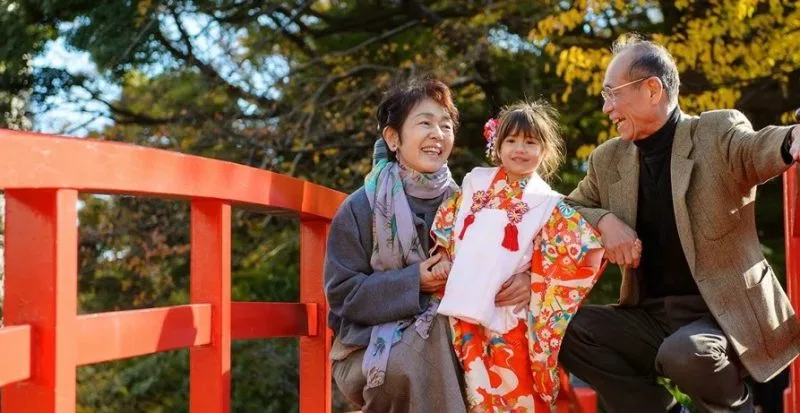
This may be the most common expression for saying you miss someone. Its literal translation, though, is "I want to meet you" or "I want to see you." Saying aitai is really expressing the wish for a meeting, which comes very close to the meaning of saudade.
It is easy to see that many words and kanji in Japanese that share a pronunciation also share similar meanings or radicals. Of course, there is no official etymological bridge between 会 and 愛, even though the overlap makes the connection feel natural.
- 久美子さんにすっごく会いたいよ。 – Kumiko-san ni suggoku aitai yo. – I really want to see Kumiko / I miss Kumiko a lot. (すっごく can be rendered as "very," "incredibly," or "terribly.")

寂しい – Sabishī (loneliness from missing someone)
The word sabishī literally means "alone, lonely, desolate," but Japanese speakers often use it to mean that they feel alone because they miss someone or sense their absence. In everyday sentences expressing "I miss you," sabishī actually turns up more often than aitai.
One useful distinction: sabishī can also be written with the ideogram 淋 (淋しい), in which case the loneliness sounds heavier. If you simply want to say that you miss someone, stick with the kanji 寂.
- 彼女は彼がいなくて寂しい。 – Kanojo wa kare ga inakute sabishī. – She misses him.
- 君がいなくて寂しいよ。 – Kimi ga inakute sabishī yo. – I miss you / I feel saudade.
- あなたが日本を離れたら、私たちはとても寂しく思うでしょう。 – Anata ga Nihon o hanaretara, watashitachi wa totemo sabishiku omou deshō. – We will miss you a lot if you leave Japan.
懐かしい – Natsukashī (nostalgia and remembering)
The expression natsukashī can be translated as something dear, nostalgic, longed-for, and half-forgotten. It is often used to say that you miss a time from the past, an old phase of life, or a trip. It also works when you miss a person tied to those memories, as in the examples below:
- この歌を聞いたら、あなたについて思って、懐かしむんだ。 – Kono uta o kiitara, anata ni tsuite omotte, natsukashimu nda. – When I hear this song, I think of you and miss you.
- 小学校の先生達のことが懐かしい。 – Shōgakkō no sensei-tachi no koto ga natsukashī. – I miss my elementary school teachers / I feel saudade for my elementary school teachers.
Further expressions: Kyōshū, Shibō, and more
Japanese has additional words that come close to the Portuguese saudade, especially in more formal or literary registers:
- 郷愁 – kyōshū: homesickness, longing for home. The word shows up most in literary writing, such as when someone reflects on childhood or a distant village, and it also appears occasionally in sports coverage of home matches.
- 思慕 – shibō: a tender, almost reverent longing, often for someone who has passed away or for an unanswered love. Shibō sounds rare in everyday chat but turns up regularly in poems, novels, and biographies.
- 物思い – mono'omoi: literally "thoughts of something." A quiet, inward reflection on what is past.
- 惜別 – sekibetsu: the painful feeling of parting from someone who matters to you.
What ties these words together is their precision. Each one describes its own shade of longing: intimate, nostalgic, wistful, or quiet. To express saudade in Japanese, you pick not a single word but the mood that fits.
Cultural nuances: which word when?
Choosing the right expression depends a lot on the relationship and the tone:
- Koishī feels intimate and is used mostly with a partner, close friends, or family. In the office or with a boss it sounds too personal.
- Aitai fits friendships and looser relationships. If you miss a coworker, aitai is a safer pick than koishī.
- Sabishī describes your own inner world. It works when you want to show how much the absence weighs on you, and it also fits reflective or lyrical moments.
- Natsukashī points to the past: places, eras, experiences. It always carries a warm, faintly wistful remembrance.
- Kyōshū and shibō belong to more formal or literary contexts, such as essays, speeches, or fiction.
This kind of fine-tuning is typical of Japanese. Feelings are not bundled into a single word; they are sorted by tone, relationship, and occasion. That is exactly why it pays, when expressing saudade, to choose the word that fits the situation rather than the one that seems closest at first glance.





Community
Comments
0 comments
There are no published comments in this language yet.
Send comment