
Japanese Kit Kats are much more than a local spin on a familiar chocolate bar. In Japan, they grew into a snack culture of their own, mixing seasonal releases, regional souvenir boxes, and flavors that many travelers never see outside the country.
Older roundups often promised a fixed list of 86 flavors, but that number no longer reflects the reality of the market. Nestle Japan has released hundreds of varieties over time, and the lineup changes constantly. A better question today is not “what is the final complete list?” but “what kinds of Japanese Kit Kat flavors actually matter, and which ones are worth trying?”
If you enjoy classic Japanese snacks, it is also worth comparing Kit Kat with Pocky, browsing our guide to Japanese sweets, and understanding the culture of omiyage, because that mix of everyday candy and thoughtful souvenir is exactly what made these flavors so famous.
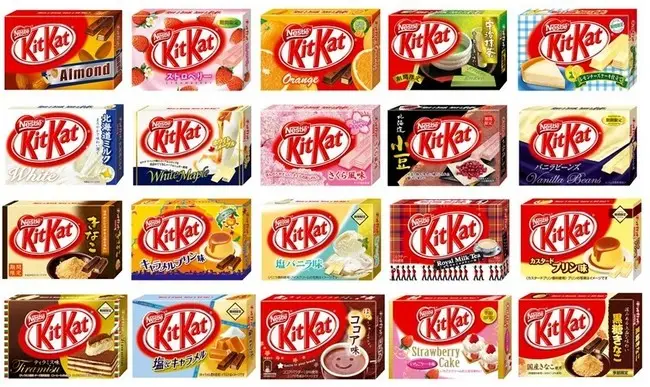
Contents 7
Why does Japan have so many Kit Kat flavors?
There are a few reasons behind the boom. Japanese snack culture loves limited editions, seasonal packaging, and products tied to local identity. Kit Kat also gained an extra cultural layer because its name sounds close to kitto katsu, a phrase associated with “you will surely win.” That made it a natural good-luck gift during exam season and other important moments.
Regional flavors also fit perfectly into Japan's souvenir economy. Many boxes are sold as gotouchi products, meaning they reflect the character of a place through a local ingredient, dessert, or food memory. That is why the Japanese lineup feels far more varied than the standard versions sold in many other countries.
Popular classic Japanese Kit Kat flavors
Not every Japanese Kit Kat is bizarre or ultra-rare. Some of the most successful flavors are simply familiar ideas adapted to Japanese tastes and packaging styles. The ones most people recognize include:
- Matcha and dark matcha: grassy, slightly bitter, and still among the most iconic Japanese Kit Kats.
- Strawberry: sometimes creamy, sometimes bright and fruity, often linked to spring gift seasons.
- Strawberry cheesecake: one of the best-known souvenir-style dessert flavors.
- Milk tea: mellow and comforting, especially popular in colder months.
- Sweet potato: a very Japanese dessert note that shows up often in autumn editions.
- Tokyo Banana collaborations: crossover flavors built around one of Tokyo's most recognizable souvenirs.
Many of these flavors return in new packaging or slightly updated recipes, which is why old flavor lists work better as snapshots than as permanent catalogs.
Regional Kit Kat flavors in Japan
The most interesting flavors for many travelers are the regional ones. These versions usually borrow from local ingredients, famous sweets, or destination branding, and they are often sold in train stations, airports, and souvenir shops. A few representative examples include:
| Region or idea | Flavor example | Why people remember it |
|---|---|---|
| Kyoto | Uji matcha | Built around one of Japan's best-known prestige tea regions. |
| Yokohama | Strawberry cheesecake | A dessert-style souvenir flavor with wide tourist appeal. |
| Shizuoka | Wasabi | One of the most famous “curious” flavors associated with a real local ingredient. |
| Fukuoka | Amaou strawberry | Highlights a premium strawberry variety strongly linked to the region. |
| Okinawa | Beni imo | Purple sweet potato gives the bar a flavor profile tourists instantly connect with Okinawa. |
| Tokyo | Tokyo Banana | Turns one famous Tokyo gift into another. |
That is the real magic of Japanese Kit Kat: you are rarely buying only chocolate. You are buying a small edible postcard from a place.
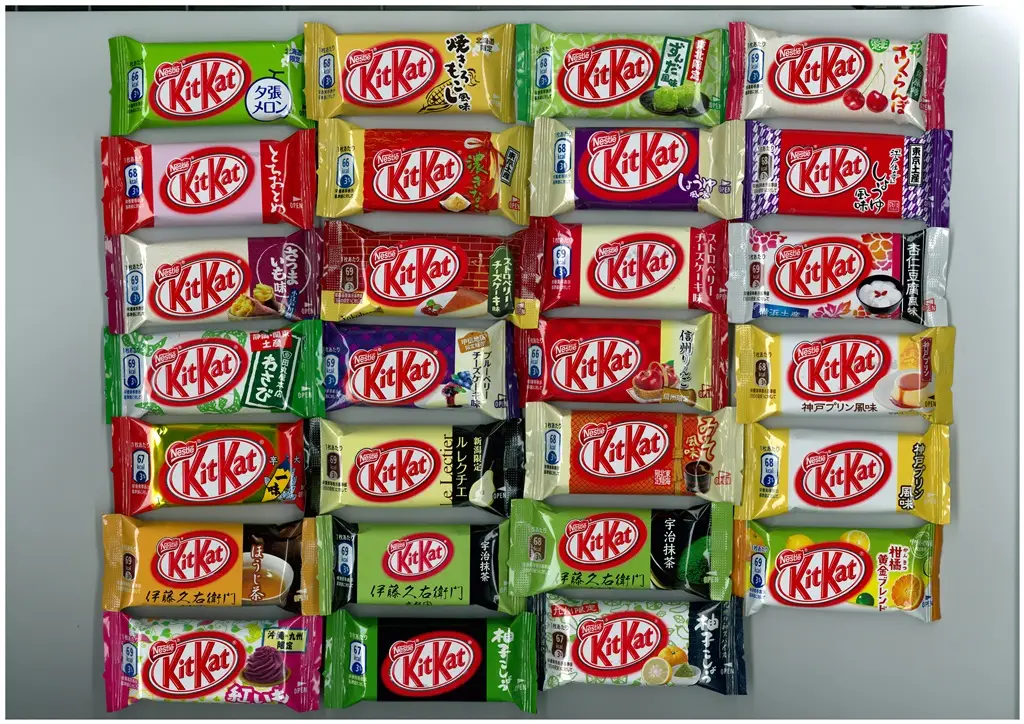
Seasonal and limited-edition Kit Kats
A huge part of the catalog only exists for a short time. Spring often brings sakura or sake-inspired editions. Autumn leans toward chestnut, sweet potato, and warmer dessert flavors. Other releases come from collaborations with well-known brands, cafes, or seasonal campaigns that disappear after a few weeks.
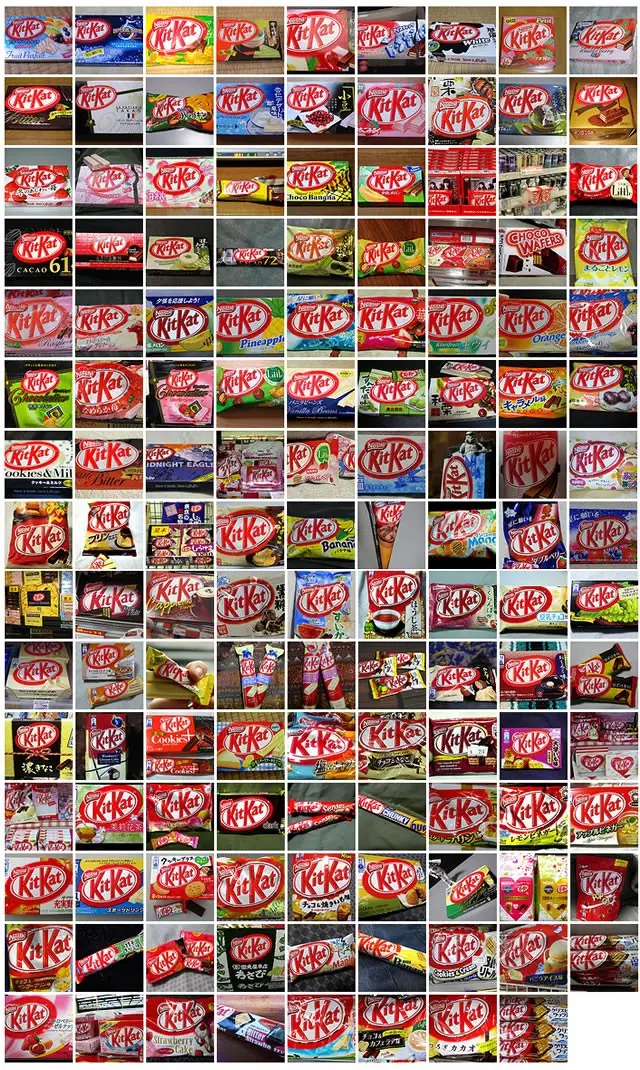
That makes Kit Kat especially fun for collectors, but it also explains why so many older articles feel outdated. A flavor name from a 2014 list may have vanished, returned in a new box, or survived only as a memory in travel photos and resale listings.
Which Japanese Kit Kat flavors feel the most “Japanese”?
If you only want a short tasting list, these are usually the best introductions:
- Matcha: still the flavor most people associate with Japan.
- Strawberry cheesecake: sweet, accessible, and widely loved as a souvenir flavor.
- Tokyo Banana: a clever crossover that tourists remember immediately.
- Wasabi: not for everyone, but one of the best-known novelty flavors.
- Sweet potato: soft, dessert-like, and very tied to Japanese seasonal tastes.
- Sakura or sake editions: perfect examples of how Japanese Kit Kats lean into spring and gift culture.
If your taste runs toward everyday flavors, start with matcha, strawberry, milk tea, and dark chocolate. If you want the more eccentric side of the brand, go for wasabi, regional citrus flavors, and local souvenir boxes.
Where can you buy Japanese Kit Kat flavors?
Standard flavors are easy to find in supermarkets, convenience stores, and drugstores across Japan. Regional flavors are more likely to appear in airport gift areas, major train stations, department store food halls, and souvenir counters. Limited releases can sell out quickly, so airport and station shops are often the best places to spot flavors tied to travel.
If you are buying from abroad, remember that many lists online mix current products with retired ones. That is normal. Some flavors return after years away, others only survive in collector photos, and some were always intended to be short-lived.
Final thoughts
The real story behind Japanese Kit Kat flavors is not a rigid number like 86. It is the way the brand keeps reinventing itself through regional identity, gift culture, and limited releases. Some flavors become long-term favorites, others vanish quickly, and that constant movement is exactly why people keep talking about them.
So if you are searching for the best Kit Kat flavors from Japan, think in three groups: dependable classics, regional souvenirs, and seasonal surprises. That is the simplest way to understand why Japanese Kit Kats still feel special today.


Community
Comments
0 comments
There are no published comments in this language yet.
Send comment