
Have you ever wondered why Japan uses the left-hand traffic system? What is the reasoning behind it? In this article, we will try to answer this question clearly and also understand how the left-hand traffic system originated and why some countries use it.
For those who don't know, left-hand traffic is when traffic and cars drive on the left. Thus, the driver's steering wheel is on the right side of the car, and the person needs to shift gears with their left hand. Some might imagine that this is a nightmare for right-handed people.
Additionally, traffic coming from the opposite direction is from the right, overtaking is done on the right, and pedestrians should look first to the right. Roundabouts are navigated in a clockwise direction, bus stops and signs are usually located on the left.
My goal is to clarify everything regarding the left-hand traffic system. Therefore, we will provide a summary to facilitate your navigation through the article.
Contents 5
How did the left-hand traffic system originate?
In the beginning, the steering wheels of cars were in the center of the vehicle. Soon they tried to place the steering wheel on the side that faced the sidewalk to avoid hitting pedestrians and crashing into walls. Finally, they realized that it was better for the steering wheel to be on the side where cars circulate.
The left-hand traffic system was created because medieval knights wielded swords with their right hand and kept to the left to attack opponents more easily. This idea was spread worldwide by knights, soldiers, and coachmen.
On the other hand, the right-hand traffic system that we use in Brazil was influenced by Napoleon Bonaparte, who was left-handed and believed that driving on the right was better for having a distant view of enemies. There was a significant rivalry between the English and the French.
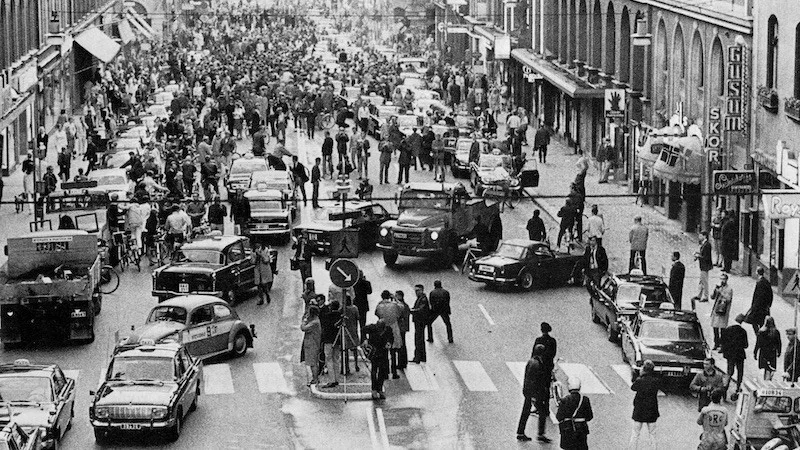
This circulation direction created by the rivalry between France and England was applied not only on the streets but also on stairs, sidewalks, railways, and other things that involve some circulation.
Until 1936, most countries in the world used the left-hand traffic system. The United States was one of the major contributors to spreading the right-hand traffic system, as they wanted to be different from the English and switched to the right-hand system.
Another explanation for the popularization of the right-hand traffic system is that most agricultural carts circulated on the right side. This happened because the driver sat on the last horse on the left side to whip the others (old-fashioned driving, haha).
Influenced by American cars, Brazil adopted the right-hand traffic system in 1903 and officially established it in 1968. The popularization of vehicle manufacturers in the past also helped spread the right-hand traffic system worldwide.
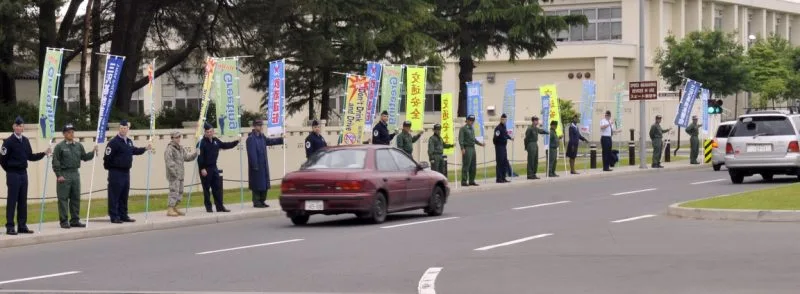
Currently, most countries use the right-hand traffic system; only 76 countries use the left-hand traffic system, and Japan is one of them. Now it's time to understand why Japan continues to use the left-hand traffic system, even being a mascot of the USA (just kidding).
Why does Japan use left-hand traffic?
Japan is one of the few countries that is not part of the British Commonwealth that uses left-hand driving. Japan was also never colonized by England, so why use the left-hand traffic system?
It is believed that since the Edo Period (1603-1869), Japan already circulated on the left. Samurai, like English knights, hung their swords on the left side of their waist and walked on the left side of the roads.
Read also: Katana - The legendary swords of Japan
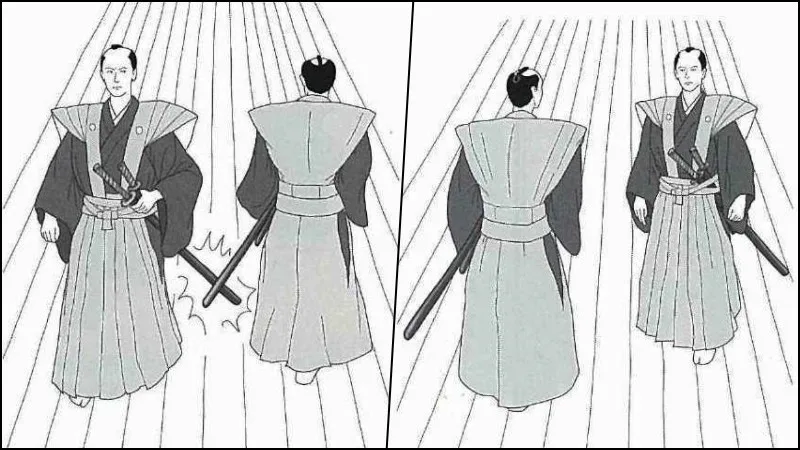
One of the reasons was to avoid swords colliding accidentally when passing by another Samurai. This practice was used in feudal castles that spread throughout the country in villages.
There is a theory that says a British prime minister visited Japan in 1859 and convinced the Japanese to adopt the left-hand traffic system. Indeed, the British provided technical support in the construction of Japan's railways in the 19th century, which began operating in 1872.
Both the United States and the French tried to get close to Japan to help in the construction of railways, but it was the British who succeeded. Soon, Japan's electric trams and horse-drawn vehicles adopted the left-hand traffic system.
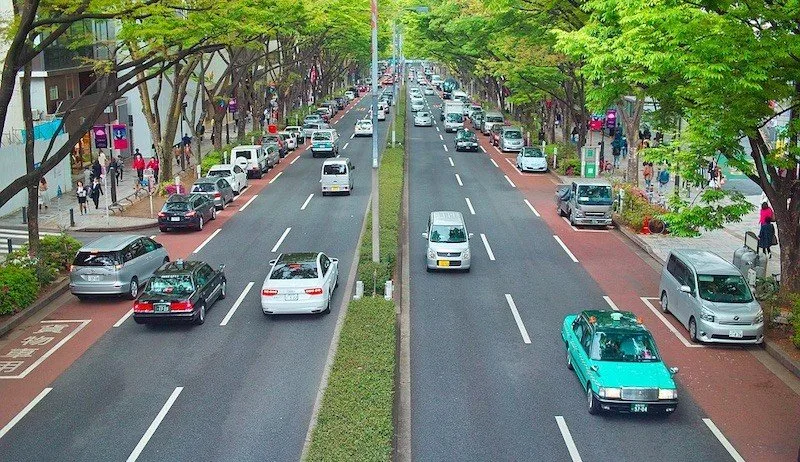
It was around 1900 that automobiles began to appear. In 1902, the Tokyo police ordered pedestrians to stay on the left side of the roads, but it was in 1924 that driving on the left was mandated as official law.
Curiosities involving the left-hand traffic system and Japan
In Okinawa, where they have always driven on the left. However, with the defeat in World War II, the USA made the province change its circulation direction. Fortunately, on July 30, 1978, Okinawa returned to the “left-hand traffic system.”
The Japanese government had to spend 150 million dollars, replacing 1,000 buses, 5,000 taxis, and relocating signs and bus stops due to this confusion created by the USA.
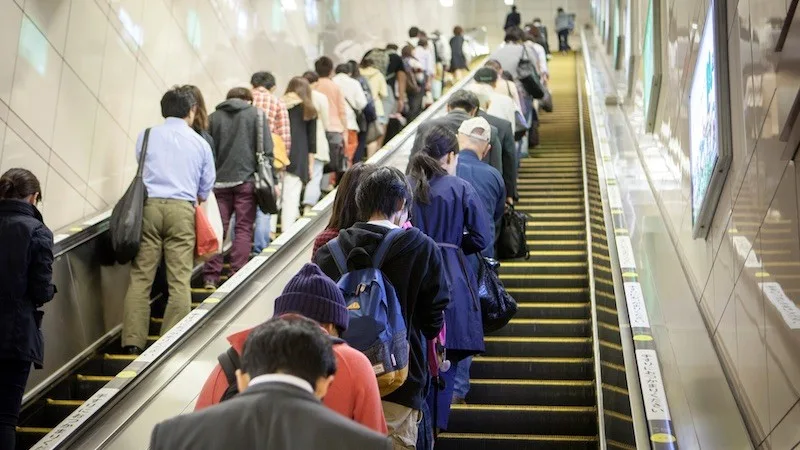
The left-hand traffic system is also used on the escalators of train stations, where fast traffic circulates on the right and people who are standing on the escalator stay on the left. Ironically, the Osaka region does exactly the opposite. Of course, not all provinces follow this rule.
Did you know that in North Korea and some other countries, they drive on the right, but most cars are imported from countries that have the steering wheel on the right side like Japan?
In Japan, there are imported cars with the steering wheel on the left side. They drive normally without any difficulty; the only thing the driver needs to remember is that instead of the opposite side, they need to drive on the side where the steering wheel is.
Other countries that use the left-hand traffic system
Currently, left-hand driving in Europe is present in: the United Kingdom, Ireland, the Isle of Man, Guernsey, Jersey, Malta, and Cyprus. All were part of the British Empire and do not share borders with countries that use the right-hand traffic system.
Other countries that drive on the left in Asia are Thailand, Indonesia, Bhutan, Nepal, East Timor, and Japan. In South America, only Guyana and Suriname drive on the left, as well as most countries in Oceania like New Zealand and Australia.
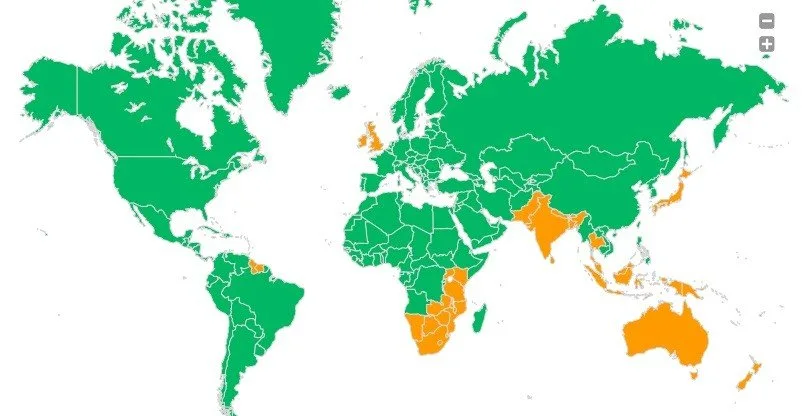
We also have India, South Africa, and a total of 75 countries that use the left-hand traffic system. Many other countries used the left-hand traffic system for a long time but ended up abandoning it due to pressure from the rest of the world.
Which do you prefer? The left-hand traffic system or the right-hand traffic system? It really seems easier to shift gears with the right hand, but is it really? If you liked the article, don't forget to share and leave your comments. Thank you and see you next time!
Did you know that in Brazil there is a crossing at the border with Guyana that converts the directions? Since in Guyana, cars circulate using the left-hand traffic system on the left side of the road.






Community
Comments
0 comments
There are no published comments in this language yet.
Send comment