
Washi Tape is a decorative Japanese paper tape that goes back to a traditional Chinese production method and was brought to Japan around the year 610 by a Korean Buddhist priest.
The name Washi Tape combines a Japanese word with an English one. Washi comes from [和], which means harmony, peace, Japanese style, and the character for paper. Tape simply means tape.
In the beginning, this tape was mainly made from rice. Rice was not the only material that could be used, though, because bamboo, hemp, wheat, and other materials could also be part of the process.
With its wide variety of colors, patterns, and sizes, Washi Tape is widely used in crafts and for decorating different objects. It is also used to create personalized items, and the possibilities depend mostly on the creativity of the person using it.
Contents 3
Washi Tape and industrial production
Of course, Washi Tape is no longer made by hand in most cases. Some handcrafted versions may still exist, but the vast majority is produced by industry. The first Japanese company to bring this product into industrial production was Kamoi, founded in 1923.
According to the company itself, they offer a wide variety of tapes, including a handmade adhesive tape that uses handmade paper as its base material, a long-lasting sealing tape called Kamoi, a heat-resistant tape for painting that uses crepe paper as its base, and even the Kabuki, an adhesive tape for automobiles.
In 2006, a group of Kamoi customers contacted the company. They were buying the tapes and then customizing and decorating them directly on the roll. That led the company to study a possible new product that would already include this kind of pattern and decoration from the start.
Kamoi realized that this was possible and created a new company in 2008 called Masking Tape Kamoi Kakoshi Co. Ltd., better known as MT. From that point on, Washi tapes started to be referred to as masking tapes. Today, several other factories and brands produce them worldwide, which keeps expanding the variety of washi styles, designs, textures, and accessories available for these tapes.
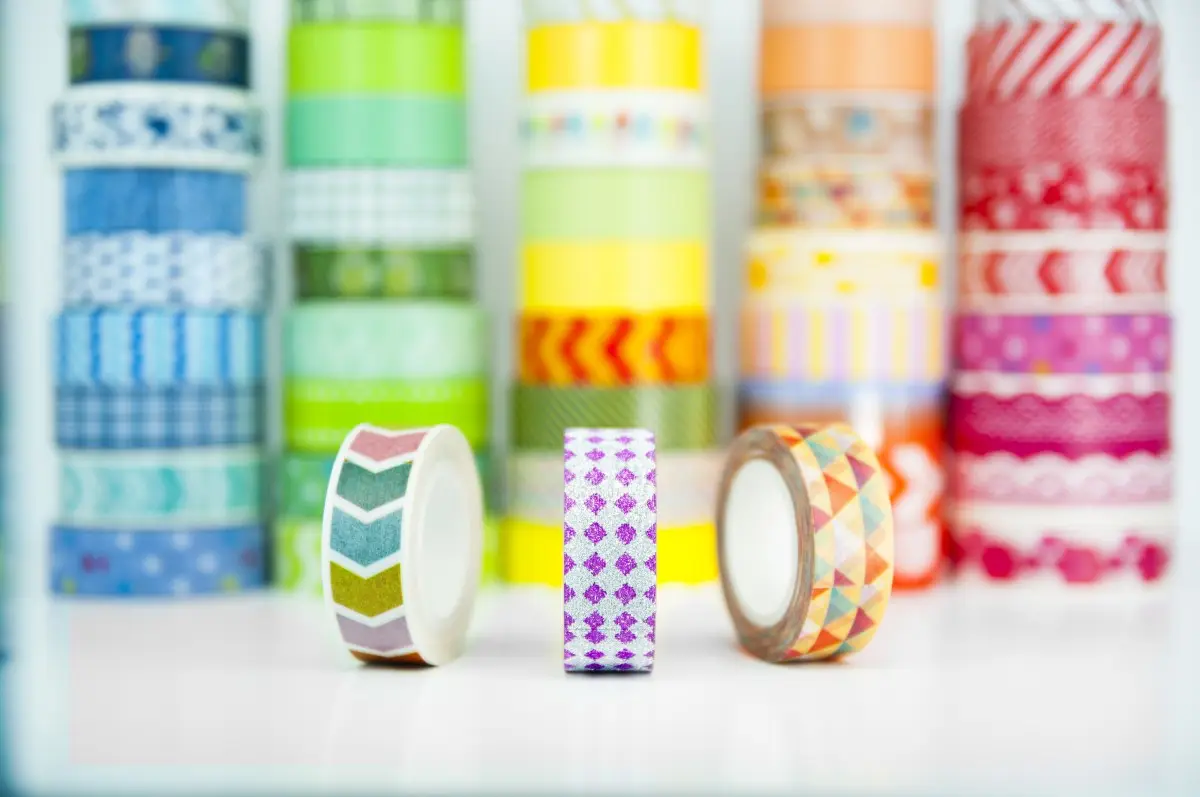
The many uses of Washi Tape
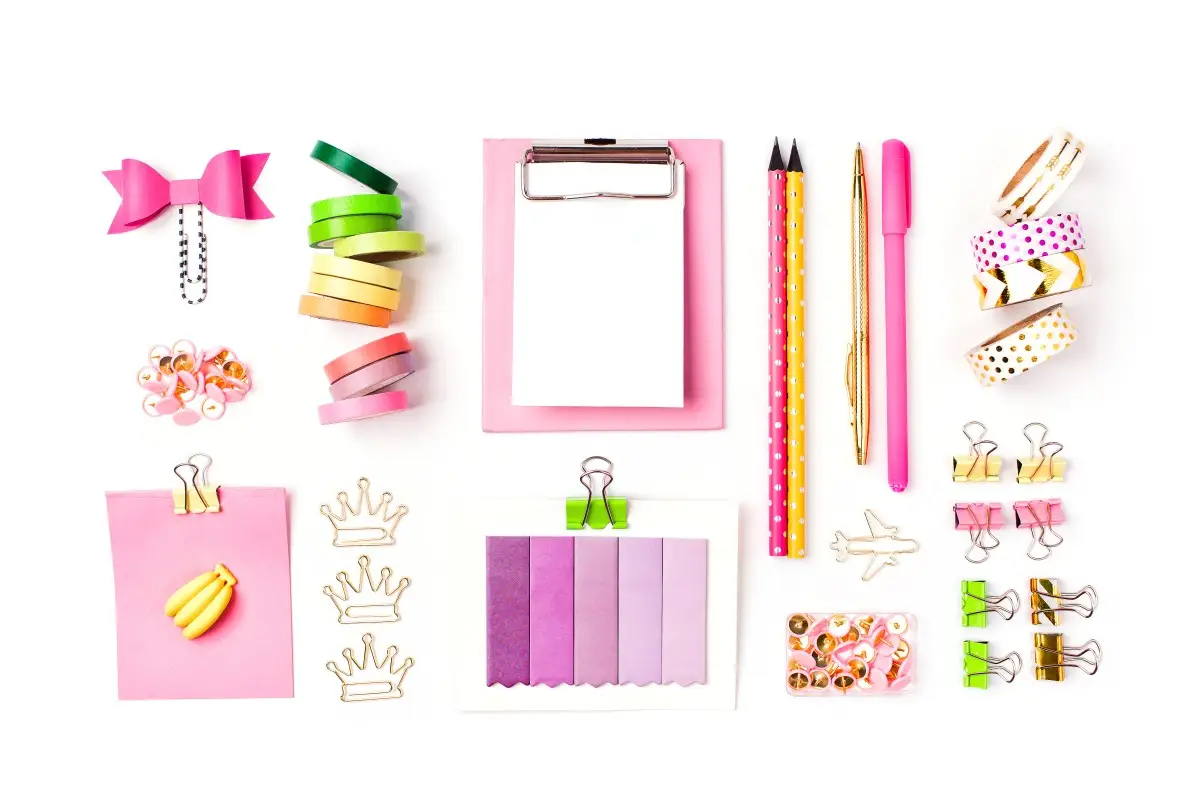
There are endless ways to use Washi Tape. It is mainly used in decoration and, because it is paper-based, it resembles the tapes found in stationery, notebooks, planners, diaries, and the famous bullet journals.
These tapes are also popular because they are removable. They have an adhesive that comes off without leaving residue, and they can often be repositioned several times depending on the quality of the adhesive and the product.
Another feature of this tape is that it does not always need scissors. Depending on where and how it is used, many people prefer to tear it by hand. Scissors are still common when a straight cut is needed, usually before sticking it to paper, an object, or a wall.
Washi Tape is also closely tied to paper because it is made of paper itself and belongs to the stationery world. Beyond paper, it can also be used to decorate packaging, cards, gifts, pencils, jars, cans, bottles, cups, wooden clips, straws, vases, mirrors, glass, tables, furniture, frames, walls, ceilings, party decorations, and much more. As mentioned above, the possibilities are endless and depend heavily on the creativity of the user.
Washi Tape variations
With the rapid rise in popularity of Washi Tape, many variations started to appear. Some of the most popular ones are:
Fabric tape is also used for handmade creations and can even help with finishing touches, although its grip is not as strong and may need reinforcement, such as sewing or a little glue.
Plastic tape, or decotape, is a decorative variation with similar uses, but it does not tear easily and usually needs scissors to come off the roll.
Paper tape is the closest to the original Washi Tape. It is easy to tear, you can write on it, and it is usually easy to remove from most surfaces.
In recent years, Washi Tape has taken up more and more space in the stationery world, and it has become much easier to find it in Brazil as well.
Until a few years ago, it could mostly be found in import stores or bought abroad, such as in the United States or in countries in Europe and Asia. Today, there are already Brazilian brands making these small tapes, and they continue to gain ground in more and more countries.


Community
Comments
0 comments
There are no published comments in this language yet.
Send comment