
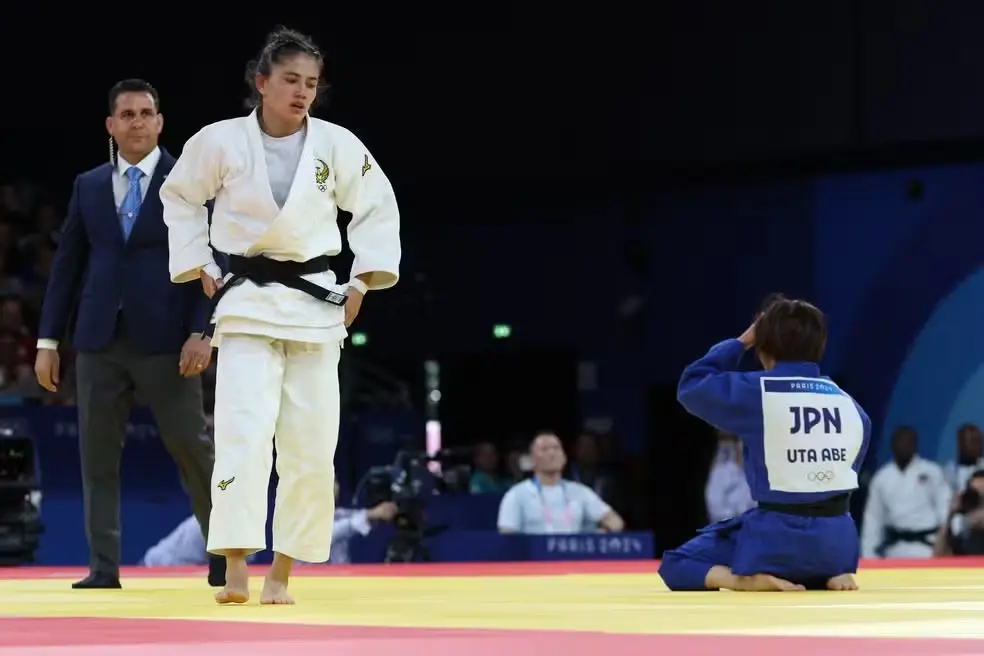
Judo is a sport practiced globally, known for its rich history and cultural values. The term "judo" means "gentle way" in Japanese, and it was created in the late 19th century by Jigoro Kano, who developed a self-defense technique that combined strength and balance, using them against the opponent. Since then, judo has become one of the most popular sports, especially in Brazil, which stands out in international competitions.
Contents 9
The History of Judo
Judo was created based on jiu-jitsu, a traditional Japanese martial art. Jigoro Kano founded the Kodokan Institute in 1882 for the study and practice of judo. The name "Kodokan" means "institute for the study of the way," reflecting Kano's vision of judo as a practice that goes beyond fighting, including a strong philosophy based on the concept of ippon-shobu (the fight for the perfect point) and a moral code for practitioners.
Kano incorporated various fighting styles into his creation, allowing judo to be accessible to everyone, regardless of physical strength. Over time, the sport gained worldwide popularity. In 1918, the first judo club was founded in Europe, and in Brazil, judo arrived in 1922, brought by Japanese immigrants.
In the 1930s, immigrants began organizing martial arts in Brazil, including judo, which was initially practiced mainly in Japanese colonies. With the growth of the practice, judo was integrated into the Brazilian Confederation of Boxing, until the foundation of the Brazilian Judo Confederation in 1969.
The martial art officially entered the Olympic Games program in 1964, during the Tokyo Games, solidifying its status as one of the most important sports on the international stage. Since 1984, Brazil has stood out in judo, winning Olympic medals in every edition of the Games.
Basic Rules of Judo
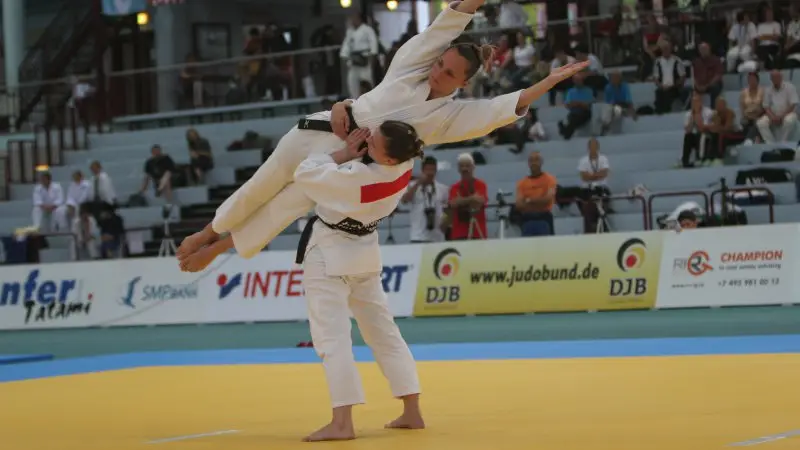
In judo competitions, the main objective is to win the match, which has a maximum duration of four minutes. However, the match can be ended at any moment if one of the competitors applies an Ippon, considered the perfect strike.
In addition to Ippon, competitors can also score points with a Waza-ari, which is half a point. A judoka who accumulates two Waza-ari automatically wins the match. In case of a tie, the dispute goes to the golden score, where the first to score wins.
Infractions, known as shidos, are applied for unsportsmanlike behavior or lack of combativeness. A competitor who accumulates three shidos is disqualified. In the golden score, shidos are not counted as a tiebreaker criterion.
Main Movements of Judo
- Ippon: Considered the perfect strike, it is applied when the opponent is thrown with their back completely on the mat or immobilized for 25 seconds.
- Waza-ari: Half a point, awarded when the opponent falls sideways or with half their back on the ground. It can also be applied with immobilizations of at least 10 seconds.
These are the only movements that count for scoring since 2018, when the Koka and Yuko were removed from official competitions.
Equipment Used in Judo
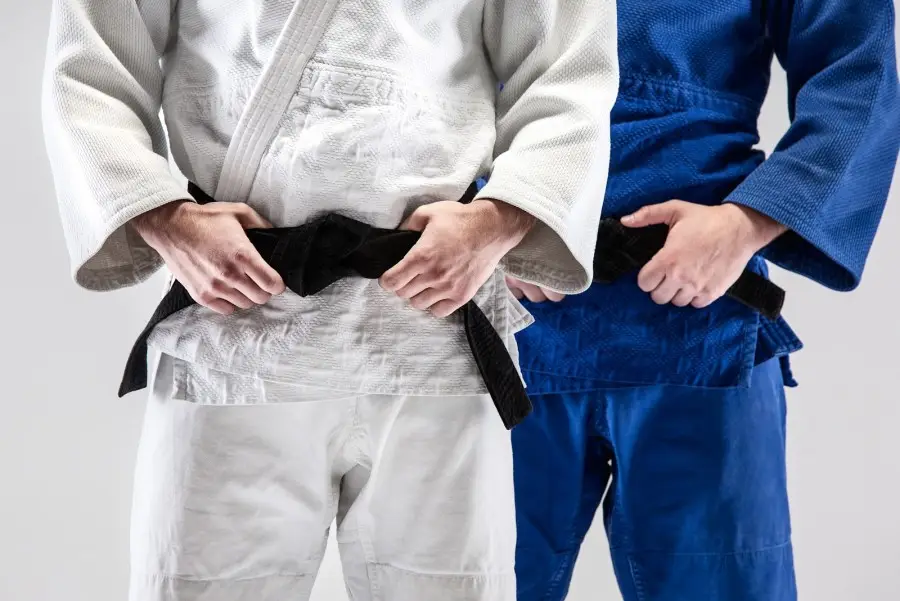
The main equipment used in judo is the judogi (judo uniform), which must adhere to strict standards in official competitions. Each competitor must check their judogi before matches to ensure it complies with the rules.
1. Wagi
The wagi is the upper part of the judogi and must completely cover the buttocks, with the sleeves reaching the wrists when the arms are extended. The lapels of the wagi also need to be properly adjusted to avoid disqualifications.
2. Shitabaki
The shitabaki is the pants of the uniform and must cover up to 5 centimeters above the ankle. This piece needs to allow freedom of movement, without being too tight or too loose.
3. Obi
The obi is the belt that indicates the judoka's rank. Although the black belt is widely recognized, the highest levels in judo are represented by the red and white belts and, finally, the red belt, which symbolizes mastery in the sport.
4. Women's Shirts
For female competitors, it is mandatory to wear a plain white shirt under the judogi, which must be unmarked, ensuring that the attire is appropriate for competition.
Final Considerations
Judo is a martial art and sport that requires discipline, technique, and respect. Its practice goes beyond physical combat, also involving a philosophy of life that values balance and self-control. In Brazil, judo continues to grow, with new practitioners joining schools and academies to learn and develop their skills.
Despite the challenges faced by athletes, such as the lack of public and private incentives, judo continues to bring significant results in international competitions. Brazilian success in the sport is proof of the commitment and dedication of judokas to achieve excellence.





Community
Comments
0 comments
There are no published comments in this language yet.
Send comment