

Have you ever been curious about what “yamete kudasai” really means or laughed at the “yamero” meme? If you follow anime or Japanese culture, you’ve probably come across these words — and you’re not alone: every month, tens of thousands of people search for this!
In this article, we will try to understand the literal and popular meanings of the terms yamete kudasai, yamero, dame, and yada. Ready to dive into popular terms in embarrassing situations?
Contents 8
The meaning of Yamete and Yamero
The word yamete [止めて] literally means stop and can convey the sense of: stop it; please stop; I can’t take it anymore; it hurts. Both yamete and yamero are forms of the verb yameru [止める] which means to stop, cease, discontinue, finish, leave, cancel, abandon, give up, abolish, and refrain.
The word yamete is a bit more feminine and is used in extreme cases, such as when a woman is about to be attacked. On the other hand, yamero is usually used by men in moments of action, fighting, and frustration, when trying to prevent something from happening.
Both derive from the kanji [止] (to stop), but don’t confuse them: Japanese has several verbs for “to stop,” like tomeru (止める) which is used when you stop a car, for example. Meanwhile, yameru is more related to stopping an action, abandoning, or giving up on something.
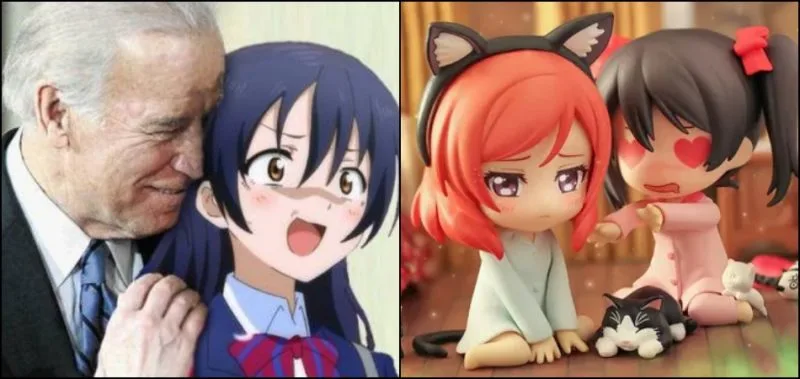
The expression yamete kudasai [止めてください] is generally seen in adult anime in spicy scenes, as if the girl is begging to stop, asking please, but in some cases, she wants it to continue.
What does Dame mean?
The word dame [駄目] is often written in katakana [ダメ] and means that something is not good, should not be done, cannot, must not, or is not allowed. This word can be used in various tones to reject an offer, to scold children, and also in more extreme cases like yamete kudasai in adult animations.
Women often use dame [ダメ] during sexual relations, as if they are asking to stop. In this case, they are trying to say something like: I’m too innocent to accept this kind of embarrassing situation; you’re turning me into a naughty girl; we shouldn’t do this, but it’s amazing.

What does Yada mean?
The word yada [やだ] literally means "no way, unlikely, failure, and weak point." This expression conveys denial, rejection, or simply “no way!”. Sometimes it can be used lightly when the person is about to give in.
Some people use this word when something goes wrong or to reject an offer or someone trying to do something like grab or kiss you.
The yamero meme
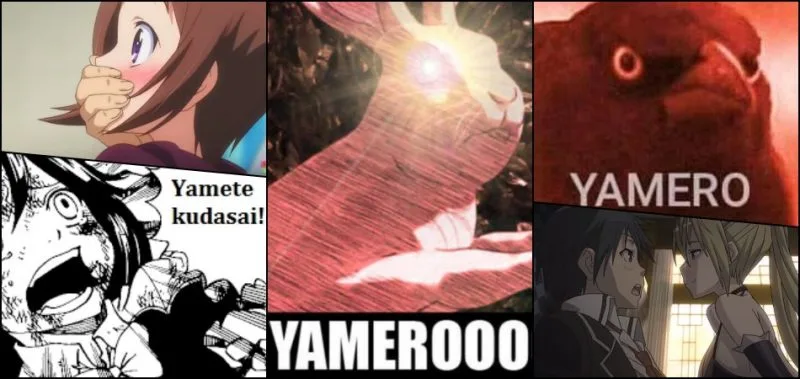
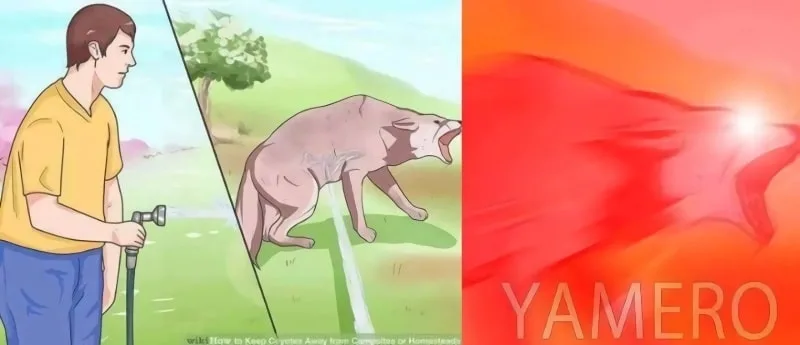
At the end of 2016, a comic started circulating of someone splashing water on a dog until it gets annoyed, its eyes shine, and the caption says yamero! Soon after, thousands of images of animals, characters, and other things with this caption went viral on the internet.
As we can see in the image below, apparently someone took an illustration from WikiHow, made the montage, and posted it on Tumblr. Over time, various similar montages appeared and exceeded 100,000 counts just on Tumblr.
- Omae wa mou Shindeiru - Nani? - Meaning and origin
- VRChat - The experience that all otakus will want
Phrases related to yameru and dame
Now that you know the verbs yameru [やめる] and the words dame and yada. Let’s conclude this article with some example sentences and related words for you to understand more about the topic. If you liked the article, don’t forget to share. Any questions or suggestions, just leave them in the comments.
| Portuguese | Japanese | Romaji |
| Cannot | ダメです | damedesu |
| Completely useless | 駄目駄目 | damedame |
| Stop it. He is our friend. | やめろよ。あいつは俺たちの友達だろ。 | yamero yo. Aitsu wa oretachi no tomodachidaro. |
| Stop procrastinating and get a job | 仕事探しを先延ばしにするのはやめなさい。 | shigotosagashi o saki nobashi ni suru no wa yame nasai. |
| I gave up on following trends. | 流行に付いて行くことはやめた。 | ryūkō ni tsuite iku koto wa yameta. |
| He said the trip is canceled | 旅行はやめにすると言った。 | ryokō wa yame ni suru to itta. |
| You should definitely invite him out. | 彼を誘わなくちゃだめよ | kare o sasowanakucha dame yo |
| It’s all over! | もうだめだ。 | mou dameda |
| I didn’t like the atmosphere. | 雰囲気がいやだった。 | fun'iki ga iyadatta. |
| I don’t want to be alone | 一人はいやだ。 | hitori wa iyada |
Variations of Yamete
There are other variations of the Japanese word. Below we will study some of them:
What does Yamete Kure mean?
Adding "kure" to the end of "yamete" does not change the meaning, but it changes the tone of what is being said. Using "yamete" conveys a tone of reprimand, as this is generally how parents tell their children to stop whatever it is they shouldn’t be doing.
Using "yamete kure" emits a tone of an order because it adds more feelings to the statement. As if being angry about something, upset, or giving some reprimand.
What does Yamete yo mean?
Unlike kure, "yamete yo" conveys a tone with less emotion, a friendlier tone that does not convey anger or reprimand. It is common to hear women using this tone.




Community
Comments
0 comments
There are no published comments in this language yet.
Send comment