
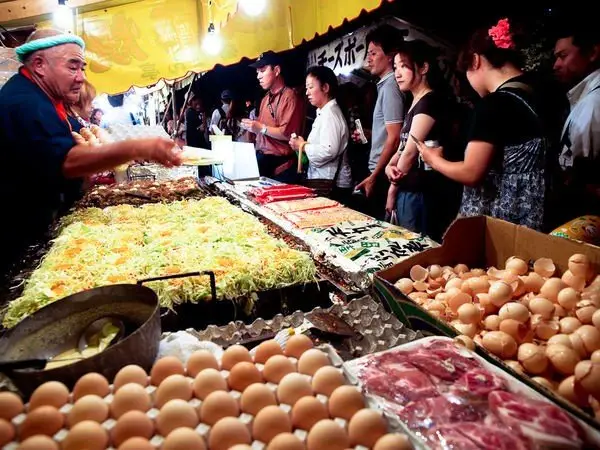
Okonomiyaki is a savory Japanese pancake built around cabbage, batter, and whatever fillings suit the cook. If you only need the short answer, think of it as one of Japan's most adaptable griddle dishes: comforting, fast to customize, and worth knowing beyond the tired “Japanese pizza” comparison.
The version most travelers meet first comes from Osaka, where the ingredients are mixed into the batter before hitting the hot plate. Hiroshima has its own famous style, stacked in layers with noodles and a fried egg. Both are delicious, but they feel completely different once they land on the table.
Contents 9
What does okonomiyaki mean?
The name explains the spirit of the dish. Okonomi means “as you like it,” while yaki means “grilled” or “cooked on a hot plate.” That is why okonomiyaki welcomes pork belly, shrimp, squid, cheese, mochi, green onions, kimchi, or whatever combination makes sense for the person cooking it.
That flexibility also helps explain why okonomiyaki spread so widely after the war. It was affordable, filling, and easy to adapt with whatever ingredients were available, which made it ideal both for home kitchens and for casual stalls.
Why people love it in Osaka and Hiroshima
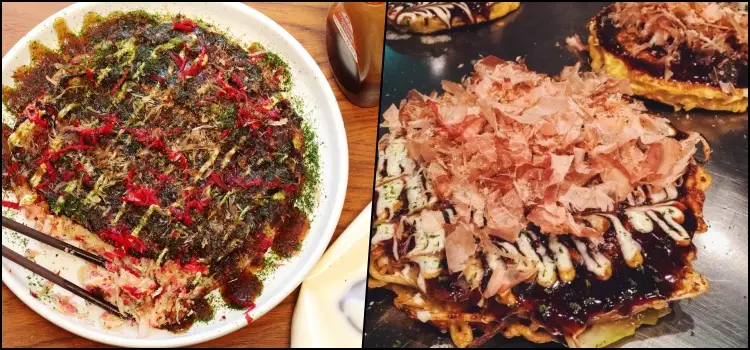
In Osaka and the wider Kansai region, okonomiyaki is usually mixed before cooking. The batter, cabbage, egg, and add-ins become a single pancake with a soft center and crisp surface. It is the version most home cooks outside Japan try first because it is easier to manage in one frying pan.
Hiroshima-style okonomiyaki follows another logic. Instead of mixing everything together, the cook builds layers: thin batter, a generous mound of cabbage, pork, and usually yakisoba noodles, then a fried egg. The result is taller, heartier, and more textural.
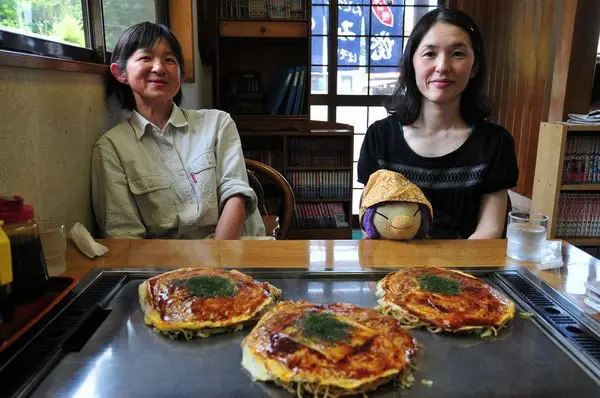
- Osaka style: mixed batter, softer interior, easier for home cooks.
- Hiroshima style: layered structure, noodles included, bigger contrast between crisp and tender parts.
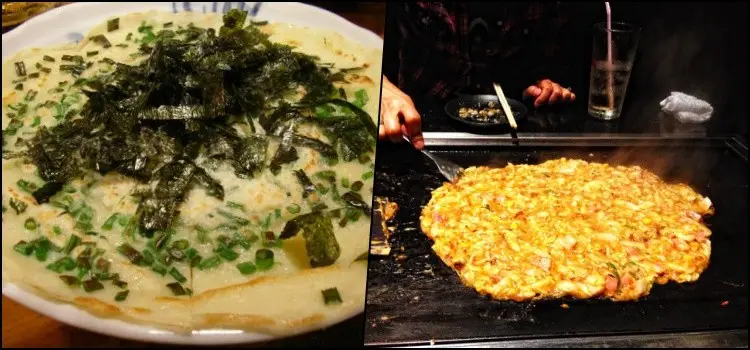
- Tokyo monjayaki: related flour-and-dashi griddle dish, but much runnier and eaten straight from the hot plate.
If you enjoy comparing Japanese griddle foods, it also makes sense to explore takoyaki, another Osaka favorite with a completely different texture.
Common fillings, toppings, and sauce
A classic base starts with flour, egg, dashi or water, and plenty of finely shredded cabbage. From there, the usual additions include sliced pork belly, shrimp, squid, chopped green onions, pickled red ginger, and tenkasu, the crisp little tempura bits that give the batter extra lift.
The finishing touches matter just as much as the pancake itself. A proper okonomiyaki usually gets a brush of sweet-savory sauce, Japanese mayonnaise, aonori seaweed, and katsuobushi bonito flakes that seem to move from the heat. That combination is one reason the dish feels so satisfying at a Japanese street food stall as well as at home.
A simple okonomiyaki recipe to make at home
This home version follows the Osaka style because it is more forgiving and does not require juggling noodle layers on the pan.
Ingredients
- 2 cups finely shredded cabbage
- 1 cup all-purpose flour
- 2 large eggs
- 1/2 cup water or light dashi
- 2 tablespoons chopped green onions
- 4 thin slices pork belly or bacon
- 2 tablespoons pickled red ginger, chopped
- 2 tablespoons tenkasu, if available
- Neutral oil for the pan
Toppings
- Okonomiyaki sauce or tonkatsu sauce
- Japanese mayonnaise
- Aonori
- Katsuobushi
How to cook it
- Mix the flour, eggs, and water or dashi until the batter is smooth.
- Fold in the cabbage, green onions, pickled ginger, and tenkasu.
- Heat a lightly oiled frying pan over medium heat and shape the mixture into a thick round.
- Lay the pork belly or bacon on top and cook until the bottom is golden, about 4 to 5 minutes.
- Flip carefully, cover if needed, and cook the other side until the center is set and the pork is fully cooked.
- Brush with sauce, drizzle mayonnaise, then finish with aonori and katsuobushi.
If you want a lighter texture, grated mountain yam is a common addition in many Japanese recipes, but the version above still works well with ingredients that are easier to find outside Japan.
Video: see the texture before you cook
Watching the batter consistency and the flip makes the first attempt much easier than reading a recipe cold:
Final thoughts
Okonomiyaki works so well because it sits between home cooking and street food. It is casual enough for a weeknight meal, but once you get the sauce, cabbage, and toppings right, it still feels unmistakably Japanese. Start with the Osaka style, then move on to Hiroshima when you want the layered version with noodles.





Community
Comments
0 comments
There are no published comments in this language yet.
Send comment