
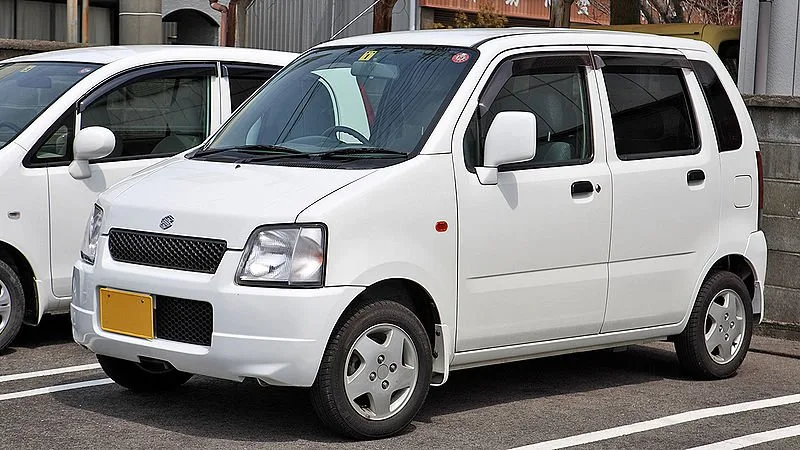
In Japan, there is a whole vehicle class built around something most markets treat as a novelty: the kei car (軽自動車, keijidōsha) — an ultra-compact car with a tiny engine, strict exterior limits, and a legal status that changes taxes, parking, and everyday ownership. If your idea of a “small car” starts at a 1.0-liter hatchback, kei cars still shrink the scale: they are engineered for narrow streets, tight lots, and running costs that stay deliberately low.
Brands such as Daihatsu, Honda, Mazda, Mitsubishi, Nissan, Subaru, and Suzuki have treated the class as serious business for decades. What looks like a toy from the outside is, on Japanese roads, a practical answer to density, regulation, and daily life — not a fashion stunt.
Contents 9
Why kei cars are so common in Japan
Taxes, fuel, and parking that favor the smallest class
Ownership cost is the quiet engine behind kei popularity. Engines stay under 660 cc, so fuel use in city driving is typically thrifty — efficient models can approach roughly 30 km per liter under careful use, though real numbers vary by model, load, and traffic. Purchase taxes, weight tax, and insurance are usually lower than for ordinary passenger cars, and maintenance stays modest because the mechanical package is small by design.
Size also wins space. Many garages and paid lots mark dedicated kei spots, and the cars fit alleys and multi-story lifts that reject wider vehicles. In much of rural Japan, kei buyers can also skip the strict shako shōmeisho (車庫証明書) parking-space certificate that ordinary cars often require before registration — one more reason the yellow plate thrives outside big cities as well as inside them.
Technical limits that define the class
To count as a kei jidōsha under current rules (stable since 1998), a vehicle must stay within hard caps:
- Maximum length: 3.4 meters
- Maximum width: 1.48 meters
- Maximum height: under 2.0 meters
- Engine: under 660 cc, with power commonly held to about 64 PS (around 63 hp) by a long-standing industry agreement rather than a single horsepower law alone
Within those walls, makers still pack modern kit: turbochargers, CVT gearboxes, all-wheel drive, climate control, navigation, and safety systems that would have looked absurd on a 1950s microcar. Crash performance has improved with the generations; the class is small, not automatically fragile, though physics still favors patience on highways shared with full-size SUVs.
More shapes than a two-seat microcar
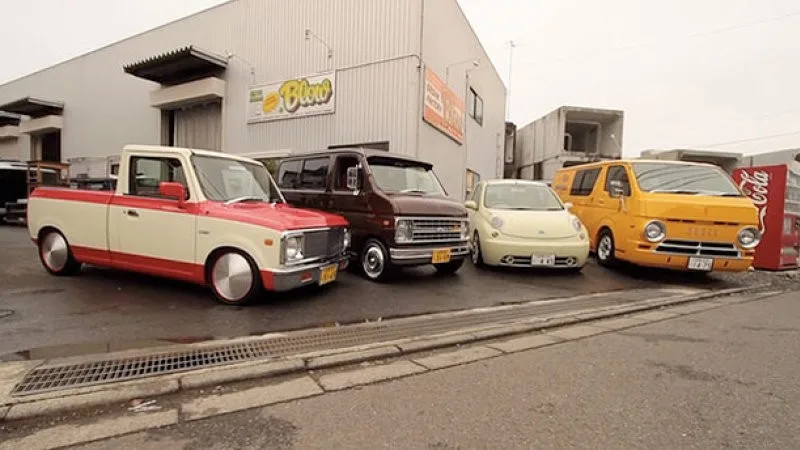
Passenger boxes, work pickups, and family tall wagons
Kei is a legal box, not a single body style. The same rules cover:
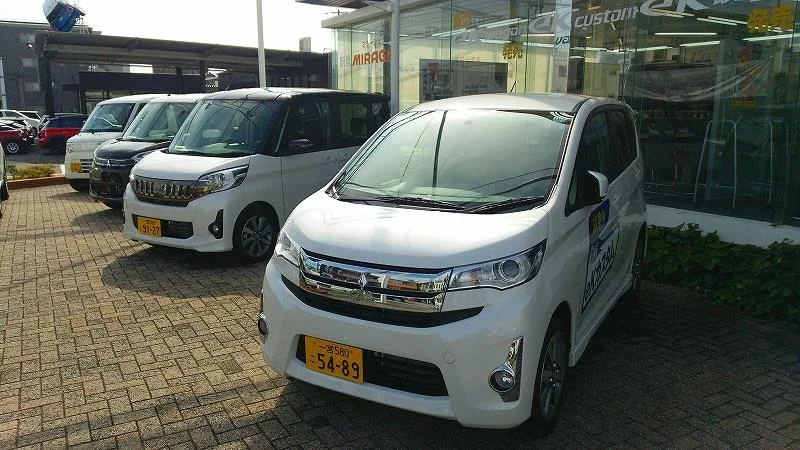
- Tall wagons and microvans — sliding doors, four seats, and surprising cargo for grocery runs or kids’ gear (think Honda N-Box style packaging)
- Kei trucks (keitora) — open beds for farms, shops, and light construction work
- Compact hatchbacks — daily runabouts for one or two people who still want a full cabin
That range is why the category still claims a large share of new-car sales in Japan: the same tax code funds both a rural work truck and a high-roof city people-mover. Engineering is squeezed into the envelope, but the use cases are not limited to “two seats and a joke.”
Yellow plates, prices, and how to spot one
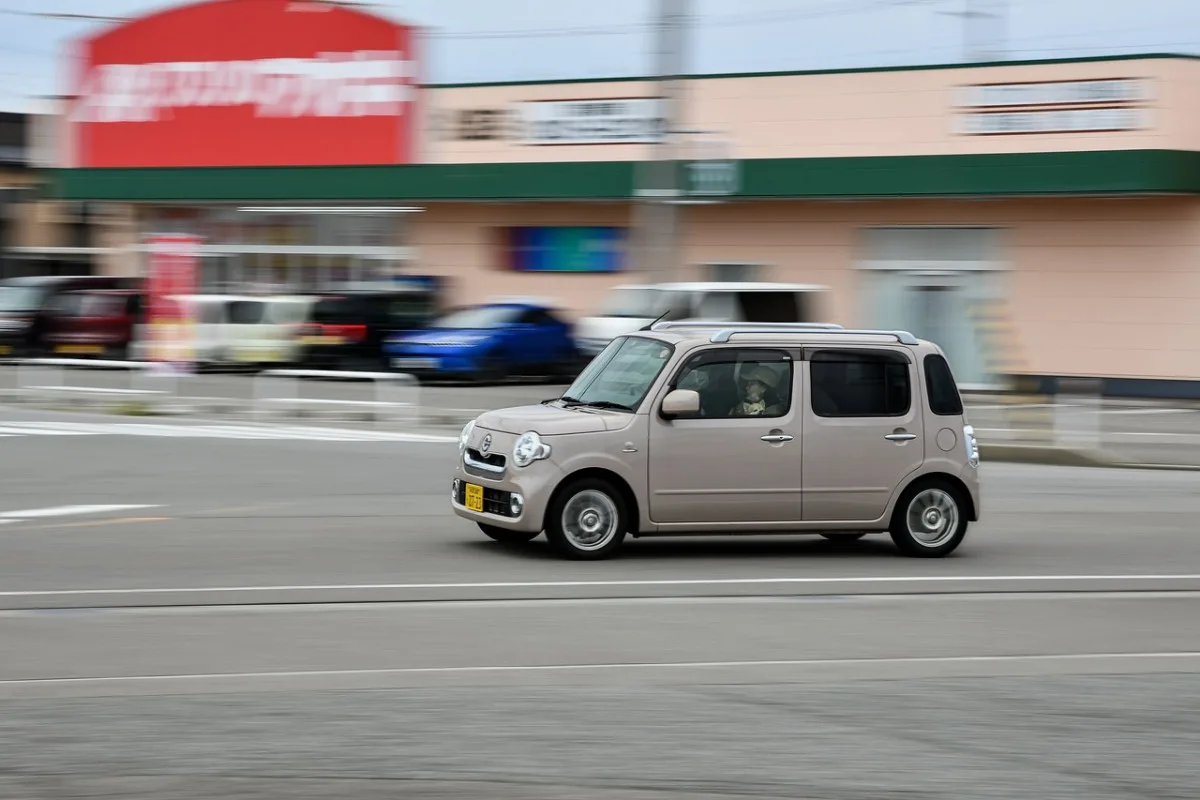
Private kei cars wear the famous yellow license plates with black characters; commercial kei plates reverse the colors. Once you notice them, Japan’s streets read differently — yellow plates are everywhere from convenience-store lots to mountain villages.
Price is another reason the class feels approachable. Entry-level new kei models often start in a band around ¥1.5–2.5 million depending on brand, grade, and options (popular tall wagons can sit near the upper part of that range). Used examples span a wide band: older, high-mileage cars can be cheap; clean late-model units cost more. Exact numbers move with the market, so treat any single figure as a snapshot, not a forever sticker.
If you are comparing ownership rules more broadly, it helps to read how Japanese driver’s licenses and traffic signs in Japan frame the same roads these cars use every day.
Why kei cars rarely feel “normal” outside Japan
Rules, roads, and expectations that do not travel
Exporting the idea wholesale is harder than shipping a single car. Abroad, the tax and parking advantages that justify a 660 cc engine often disappear. Streets may be rougher, average speeds higher, and buyers may expect more mass and power for highway work. Small wheels and light curb weight that feel agile in a Tokyo alley can feel fragile on broken asphalt or in aggressive multi-lane traffic.
Import reality also varies by country: some places allow older kei models under age-based exemptions, others make registration or safety approval painful, and insurance may price the car as an oddity rather than a thrift choice. Even when a kei truck becomes a cult import, it is usually a lifestyle vehicle — not a replacement for the local tax system that made the class rational at home.
Built for Japanese streets and habits
Kei cars make the most sense where space is expensive, parking certificates are real paperwork, and careful driving is the social default. Narrow residential lanes, multi-level parking machines, and short daily trips reward the yellow plate. Japanese housing and city layout amplify that fit; a wide Western suburb with long highway commutes usually does not.
Love the class from afar if you want — the design puzzle of squeezing four seats, sliding doors, and modern safety into 3.4 meters is genuinely clever. Living with one day to day is still easiest in Japan, where the law, the plates, and the parking spots all agree on what a kei car is for. For more road culture context, see also Japanese car stickers such as wakaba marks that share the same streetscape.






Community
Comments
0 comments
There are no published comments in this language yet.
Send comment