
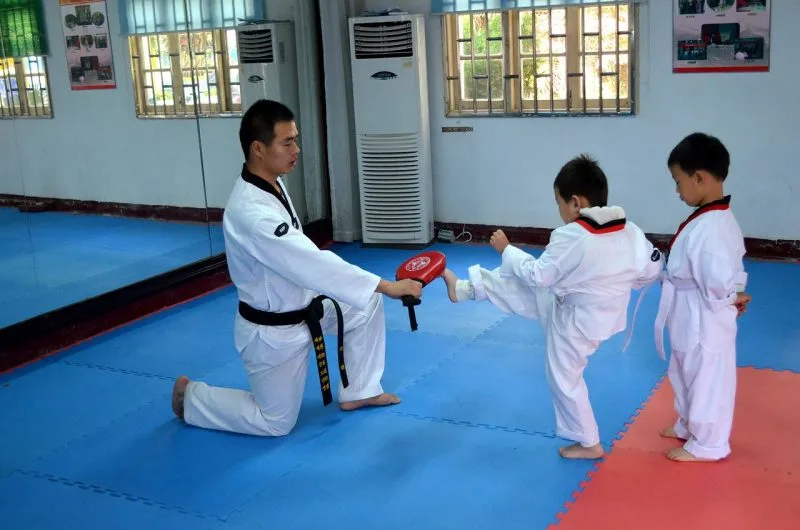
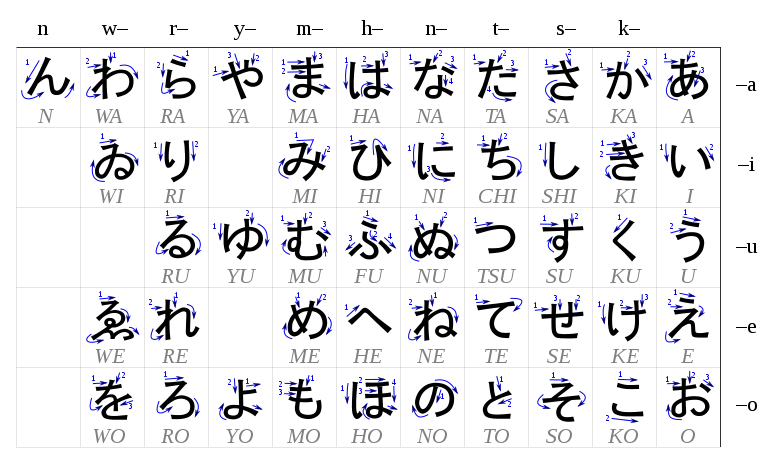
In this article I share a list of words related to karate: the strikes, the commands, and the other terms you hear around the training. The copy I started from had been passed around the internet for years, and I never found the author. It also arrived without kanji or kana, so I added the Japanese script beside each reading.
Karate-dō means the way of the empty hand: the hands, the feet and the body, without a weapon. I keep the longer account of karate on its own page and stay here with the words you hear in class.
Contents 6
Commands you hear before anyone moves
Class usually starts and stops with a short set of orders. Rei is the bow, hajime tells you to begin, and yame tells you to stop. Yoi is ready, and yasume is the order to relax. Seiza means kneel and sit. Mokuso is the quiet moment at the start or the end of practice. Kiritsu means stand up, and kamaete means take your stance.
The bows have their own lines. Otagai ni rei is the bow to each other. Sensei ni rei is the bow to the teacher. Shomen ni rei is the bow toward the front of the dojo. In WKF kumite the referee opens the bout with shobu hajime and stops it with yame, so the class words and the competition words meet.
The tables run wide. On a phone, swipe sideways to read the kana and the English.
| Kanji | Kana | Rōmaji | English |
|---|---|---|---|
| 礼 | れい | rei | bow |
| 始め | はじめ | hajime | begin |
| 止め | やめ | yame | stop |
| 用意 | ようい | yoi | ready |
| 休め | やすめ | yasume | relax |
| 正座 | せいざ | seiza | kneel and sit |
| 黙想 | もくそう | mokusō | quiet sitting before or after practice |
| 起立 | きりつ | kiritsu | stand up |
| 構えて | かまえて | kamaete | take your stance |
| お互いに礼 | おたがいにれい | otagai ni rei | bow to each other |
| 先生に礼 | せんせいにれい | sensei ni rei | bow to the teacher |
| 正面に礼 | しょうめんにれい | shomen ni rei | bow to the front |
| 勝負始め | しょうぶはじめ | shōbu hajime | start the match |
The main techniques
These names follow the first list I kept, with the spellings put back into ordinary Japanese. A punch is zuki in a compound, and tsuki when the word stands alone. A kick is geri in a compound, and keri on its own. Age-zuki rises toward the head. Gyaku-zuki is the reverse punch, the fist on the opposite side from the front leg. Gyaku-zumi is the misspelling that was circulating for that same punch. Oi-zuki steps in with the punch. Choku-zuki travels straight. Kizami-zuki is the short punch from the lead hand. Kagi-zuki hooks. Tate-zuki holds the fist vertically.
Empi-uchi is the elbow strike, and some classes still call the same hit hiji-ate. Shuto-uchi uses the knife edge of the hand. Teisho-uchi uses the heel of the palm. Tettsui-uchi is the hammer fist. Uraken-uchi is the back fist. Nukite uses the fingertips.
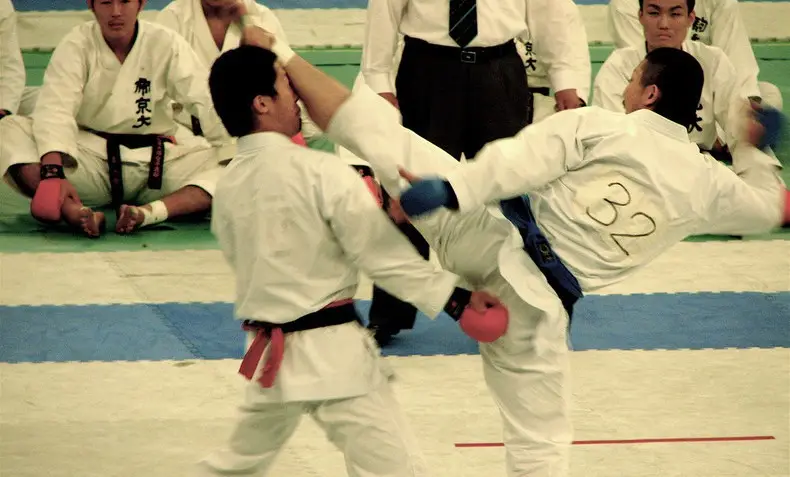
Mae-geri is the front kick, mawashi-geri the round kick, mikazuki-geri the crescent, ushiro-geri the back kick, and hiza-geri the knee. Yoko-geri keage snaps upward. Yoko-geri kekomi drives through. The spelling kekoge missed that split. Fumikomi-geri stamps in. Tobi-geri leaves the floor. Nidan-geri puts two kicks into one jump. Ashi-barai sweeps the leg. Nami-gaeshi, the returning wave, is a name you will meet on some sweeps and returning kicks.
Suri-ashi is the short sliding step. Yori-ashi slides both feet and keeps the stance while the distance changes. Ashi-waza groups the leg techniques, keri-waza the kicks, tsuki-waza the punches, and uchi-waza the strikes. Tsouki was a misspelling of tsuki.
| Kanji | Kana | Rōmaji | English |
|---|---|---|---|
| 上げ突き | あげづき | age-zuki | rising punch |
| 足払い | あしばらい | ashi-barai | foot sweep |
| 足技 | あしわざ | ashi-waza | leg techniques |
| 直突き | ちょくづき | choku-zuki | straight punch |
| 猿臂打ち | えんぴうち | empi-uchi | elbow strike, also called hiji-ate |
| 踏み込み蹴り | ふみこみげり | fumikomi-geri | stamping kick |
| 逆突き | ぎゃくづき | gyaku-zuki | reverse punch |
| 膝蹴り | ひざげり | hiza-geri | knee strike |
| 鉤突き | かぎづき | kagi-zuki | hook punch |
| 蹴り技 | けりわざ | keri-waza | kicking techniques |
| 刻み突き | きざみづき | kizami-zuki | lead-hand punch |
| 前蹴り | まえげり | mae-geri | front kick |
| 回し蹴り | まわしげり | mawashi-geri | round kick |
| 三日月蹴り | みかづきげり | mikazuki-geri | crescent kick |
| 波返し | なみがえし | nami-gaeshi | returning wave |
| 二段蹴り | にだんげり | nidan-geri | two kicks in one jump |
| 貫手 | ぬきて | nukite | spear hand |
| 追い突き | おいづき | oi-zuki | lunge punch |
| 手刀打ち | しゅとううち | shuto-uchi | knife-hand strike |
| すり足 | すりあし | suri-ashi | sliding step |
| 縦突き | たてづき | tate-zuki | vertical-fist punch |
| 底掌打ち | ていしょううち | teisho-uchi | palm-heel strike |
| 鉄槌打ち | てっついうち | tettsui-uchi | hammer-fist strike |
| 飛び蹴り | とびげり | tobi-geri | jumping kick |
| 突き技 | つきわざ | tsuki-waza | punching techniques |
| 打ち技 | うちわざ | uchi-waza | striking techniques |
| 裏拳打ち | うらけんうち | uraken-uchi | back-fist strike |
| 後ろ蹴り | うしろげり | ushiro-geri | back kick |
| 横蹴り蹴上げ | よこげりけあげ | yoko-geri keage | side snap kick |
| 横蹴り蹴込み | よこげりけこみ | yoko-geri kekomi | side thrust kick |
| 寄り足 | よりあし | yori-ashi | sliding step that keeps the stance |
Targets, distance and where the technique stops
Jōdan is the head and neck. Chūdan runs from the neck down to the belt. Gedan is below the belt. Schools draw those lines a little differently, so follow the line your own class teaches. Hidari is left, migi is right, mae is the front, yoko is the side, and ushiro is behind.
Maai is the distance between the two people. In a lot of traditional partner work the punch stops about one sun short of the target, roughly three centimetres. That habit is called sun-dome. WKF kumite uses another measure. The rules in force from 1 January 2026 allow skin touch, a touch that does not drive energy into the head or the helmet. Athletes under 14 still wear a helmet, and a score for them is given when a hand technique stops 5 cm short or a foot technique 10 cm short. The draw assigns aka, the red side, and ao, the blue side. A grade belt stays off during the bout. On that scoreboard yuko is one point, waza-ari is two, and ippon is three.
| Kanji | Kana | Rōmaji | English |
|---|---|---|---|
| 上段 | じょうだん | jōdan | head and neck |
| 中段 | ちゅうだん | chūdan | neck down to the belt |
| 下段 | げだん | gedan | below the belt |
| 間合い | まあい | maai | distance |
| 寸止め | すんどめ | sun-dome | stop about one sun short |
| 左 | ひだり | hidari | left |
| 右 | みぎ | migi | right |
| 前 | まえ | mae | front |
| 横 | よこ | yoko | side |
| 後ろ | うしろ | ushiro | behind |
| 赤 | あか | aka | red competitor |
| 青 | あお | ao | blue competitor |
| 有効 | ゆうこう | yuko | one point in WKF kumite |
| 技あり | わざあり | waza-ari | two points in WKF kumite |
| 一本 | いっぽん | ippon | one technique in class; three points on a WKF scoreboard |
| 引き分け | ひきわけ | hikiwake | draw |
| 判定 | はんてい | hantei | decision when the score is level |
Training words, rank and the people in the room
A class at the Japan Karate Association is built from three parts. Kihon is the basics. Kata is the form, a set sequence practiced alone, written 形 and also seen as 型. Kumite is the work with a partner. Bunkai is the study of what a movement in the kata is for. Kime is the finish, the moment the body and the attention arrive together. Kiai is the short shout that goes with that moment. Zanshin, 残心, is the mind that stays after the technique, still aware of the other person. Some printouts write 斬新 there. That word means novel, so it cannot stand in for zanshin.
Embusen, 演武線, is the line the kata travels. Ki, 気, is the dojo word for spirit or energy. The same idea is called qi in Chinese, which is why older lists sometimes say chi. Dōjō, 道場, is the training hall. The uniform is a dōgi, also called a karategi: jacket, trousers and the obi, the belt. Kamae is the guard. Hanmi turns the body halfway. Ai-hanmi means both people have the same leg forward. Shomen is the front of the room. Kamiza is the seat of honor, and shimoza is the lower side. The wall you bow toward is the one your teacher uses, because dojos do not all set those seats on the same compass point.
Tori is the person who performs the technique. Uke is the person who receives it, and the same word names a block. Reigi is the courtesy those bows belong to. Kyu is a grade below dan. In the JKA a new student starts at 9th kyu, and the black belt begins at shodan. Dan then continues through nidan, sandan, yondan and godan. Yūdansha, 有段者, names a person who holds a dan. The black belt is how that grade shows in the room. Mudansha, 無段者, names a person who has not reached dan yet. Dangai, and the characters 油断者, do not name that group. 油断 is carelessness, so 油断者 reads as a careless person.
Sensei is the teacher. Senpai is the senior student, and kōhai is the junior. Shihan is a title for a senior teacher. Organizations attach it to different grades, so the word by itself does not tell you the dan. Gohon kumite is five-step partner work, sanbon kumite is three steps, and ippon kumite is one attack and one reply. Jiyū ippon kumite keeps that single attack inside a freer exchange. Jiyū kumite is free sparring. In class, ippon still means one. The three-point meaning belongs to the WKF scoreboard.
| Kanji | Kana | Rōmaji | English |
|---|---|---|---|
| 基本 | きほん | kihon | basics |
| 形 | かた | kata | form |
| 組手 | くみて | kumite | partner work, sparring |
| 分解 | ぶんかい | bunkai | application of a kata movement |
| 極め | きめ | kime | focused finish |
| 気合 | きあい | kiai | short shout with the technique |
| 残心 | ざんしん | zanshin | awareness that remains afterward |
| 演武線 | えんぶせん | embusen | line of the kata |
| 道場 | どうじょう | dōjō | training hall |
| 道着 | どうぎ | dōgi | training uniform |
| 帯 | おび | obi | belt |
| 構え | かまえ | kamae | guard, posture |
| 半身 | はんみ | hanmi | half-facing body |
| 相半身 | あいはんみ | ai-hanmi | same leg forward on both sides |
| 上座 | かみざ | kamiza | seat of honor |
| 下座 | しもざ | shimoza | lower side of the room |
| 取り | とり | tori | person who performs the technique |
| 受け | うけ | uke | person who receives; also a block |
| 礼儀 | れいぎ | reigi | courtesy |
| 級 | きゅう | kyū | grade below dan |
| 段 | だん | dan | dan grade |
| 初段 | しょだん | shodan | first dan |
| 二段 | にだん | nidan | second dan |
| 三段 | さんだん | sandan | third dan |
| 四段 | よんだん | yondan | fourth dan |
| 五段 | ごだん | godan | fifth dan |
| 有段者 | ゆうだんしゃ | yūdansha | person who holds a dan |
| 無段者 | むだんしゃ | mudansha | person who does not yet hold a dan |
| 先生 | せんせい | sensei | teacher |
| 先輩 | せんぱい | senpai | senior student |
| 後輩 | こうはい | kōhai | junior student |
| 師範 | しはん | shihan | title for a senior teacher |
| 五本組手 | ごほんくみて | gohon kumite | five-step partner work |
| 三本組手 | さんぼんくみて | sanbon kumite | three-step partner work |
| 一本組手 | いっぽんくみて | ippon kumite | one attack and one reply |
| 自由組手 | じゆうくみて | jiyū kumite | free sparring |
Kata names that travelled with the list
Some of the words in that copy were kata names, not techniques. Bassai, 抜塞, is often translated as breaking into a fortress. Shotokan calls the peace series Heian, 平安. Several Okinawan lines still say Pinan. Empi the kata, 燕飛, is the flying swallow, a different word from the elbow. Gankaku, 岩鶴, is the crane on the rock. The characters 眼科 belong to an eye clinic, so they never named this kata. The table below keeps the rest of those names: half moon, sky, ten hands, iron horse, cloud hands, the step counts, jion and the bright mirror.
| Kanji | Kana | Rōmaji | English |
|---|---|---|---|
| 抜塞 | ばっさい | bassai | kata; breaking into a fortress |
| 平安 | へいあん | heian | peace; Pinan in several Okinawan lines |
| 燕飛 | えんぴ | empi | flying swallow, the kata |
| 岩鶴 | がんかく | gankaku | crane on a rock |
| 半月 | はんげつ | hangetsu | half moon |
| 観空 | かんくう | kankū | looking at the sky |
| 十手 | じって | jitte | ten hands |
| 鉄騎 | てっき | tekki | iron horse |
| 雲手 | うんす | unsu | cloud hands |
| 二十四歩 | にじゅうしほ | nijūshiho | twenty-four steps |
| 五十四歩 | ごじゅうしほ | gōjūshiho | fifty-four steps |
| 慈恩 | じおん | jion | compassion and gratitude |
| 明鏡 | めいきょう | meikyō | bright mirror |
The body words inside the technique names
The strikes are built from ordinary words for the body. Te is the hand, shutō the knife edge, teishō the palm heel, tettsui the hammer fist, uraken the back of the fist, and nukite the fingertips. Hiji is the elbow and hiza the knee. Kakato is the heel, sokutō the outer edge of the foot, and chūsoku the ball of the foot, the part a lot of front kicks use. Koshi is the hip. The longer list of body words sits on its own page, and the shapes of characters like these are the subject of the pictographic kanji guide.
| Kanji | Kana | Rōmaji | English |
|---|---|---|---|
| 手 | て | te | hand |
| 手刀 | しゅとう | shutō | knife edge of the hand |
| 底掌 | ていしょう | teishō | palm heel |
| 鉄槌 | てっつい | tettsui | hammer fist |
| 裏拳 | うらけん | uraken | back fist |
| 肘 | ひじ | hiji | elbow |
| 膝 | ひざ | hiza | knee |
| 踵 | かかと | kakato | heel |
| 足刀 | そくとう | sokutō | outer edge of the foot |
| 中足 | ちゅうそく | chūsoku | ball of the foot |
| 腰 | こし | koshi | hip |
I hope the script makes this easier to use than the copy I first found. When a spelling from an old printout looks strange, the kanji settles it. Gyaku-zuki is 逆突き. Yoko-geri keage snaps up, and yoko-geri kekomi drives through. Yūdansha is 有段者. Zanshin is 残心. Those four are the ones I most wanted written correctly.


Community
Comments
0 comments
There are no published comments in this language yet.
Send comment