
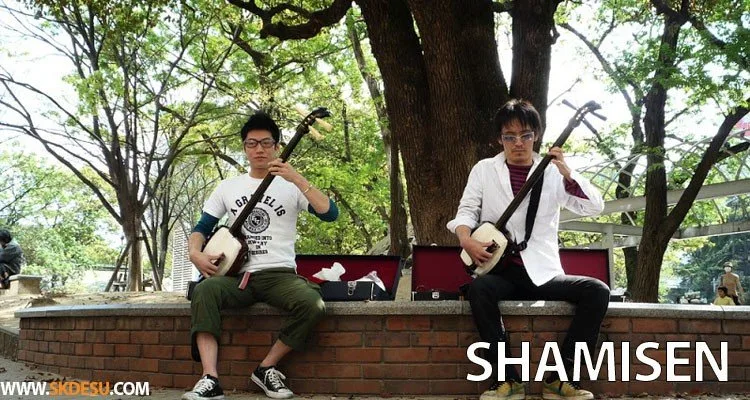
The shamisen (三味線) looks almost too simple for the weight it carries: three strings, a drum-like body, and a large plectrum called bachi. Yet that dry, bright attack is the sound behind kabuki, bunraku narration, folk songs, and the fierce drive of Tsugaru playing. It is a traditional Japanese instrument that never stayed locked in one room of culture.
What most people hear first is the snap of the bachi against skin and string. What stays is the buzz under the lowest string — a timbre players call sawari — and the way the same three-string outline can sound intimate in a chamber song or almost percussive on a festival stage.
Contents 9
Origin and history of the shamisen
The shamisen did not appear fully formed in mainland Japan. Its lineage runs through the Chinese sanxian, which reached the Ryukyu Islands and became the Okinawan sanshin before a related three-string form took root in Japan in the late 16th century — often linked to the port of Sakai, near Osaka. Early players included biwa minstrels who already knew long-necked lutes; over time the body, skin, and playing style shifted into what we now call shamisen.
During the Edo period (1603–1868), the instrument settled into urban entertainment: theater pits, narrative song, and popular short pieces. From Kansai stages to Edo theaters, the shamisen became less a borrowed curiosity and more a working voice of Japanese performing arts.
Theater, narrative song, and musical styles
In kabuki, a thin-necked shamisen often supports the agile lines of nagauta (“long song”). In bunraku puppet theater, the heavier sound of gidayū narration rides a thick-necked instrument and a massive bachi. Chamber and regional styles such as jiuta, kouta, and min’yō use the same basic layout with different necks, bridges, and touch.
That is the practical secret of the instrument: one silhouette, many dialects. The player’s right hand strikes with the plectrum (or, in some short songs, plucks with the fingers), while the left hand slides along a fretless neck — no frets to “catch” the pitch the way a guitar does.
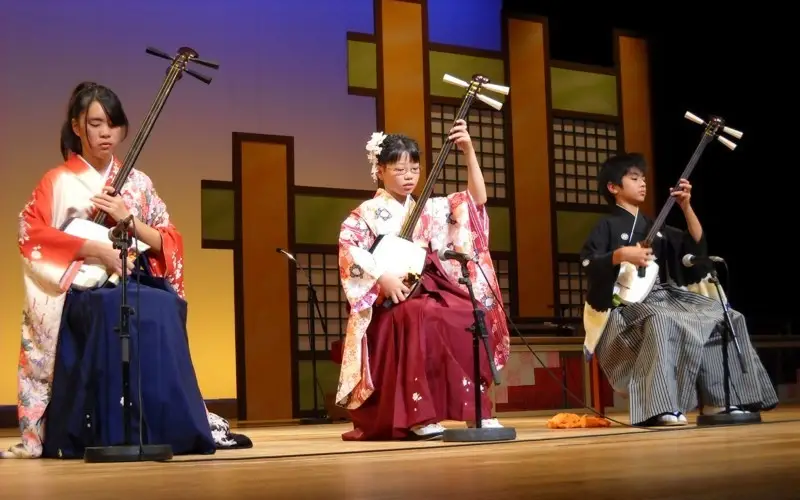
From Edo stages to modern stages
Western music flooded Japan in the Meiji era and after, but the shamisen did not vanish into museum cases. It stayed in theaters and folk circuits, then spilled into recordings, festivals, and fusions with jazz, rock, and other global styles — especially through the virtuoso tradition of tsugaru-jamisen from northern Honshū.
How a shamisen is built
At a glance the shamisen resembles a banjo more than a guitar: a long neck, three strings, and a hollow body covered with a taut membrane that amplifies every strike. The craft is in how those parts meet — wood grain, skin tension, bridge height, and the slight “imperfection” that creates sawari.
Main parts
- Dō (body): a wooden box, often mulberry or other hardwoods, covered front and back with a membrane (kawa). Historically many instruments used animal skin (cat or dog, depending on genre and period); many modern instruments use synthetic skins for ethics, climate stability, and availability.
- Sao (neck): long, thin, and fretless, usually made to come apart in sections for transport. Players slide between pitches rather than fretting fixed frets.
- Ito (strings): traditionally silk; students and many modern setups use nylon or similar synthetics that last longer and cost less.
- Bachi (plectrum): size and material change by genre — from broad nagauta or jiuta plectra to the smaller, sharper tools preferred in Tsugaru.
- Koma (bridge): a removable bridge that sits on the skin and sets height, resistance, and projection.
Sawari is not a separate gadget bolted on for show: the lowest string sits so it can lightly buzz against a contact near the nut, giving the shamisen its characteristic edge — often compared, loosely, to the buzz of a sitar’s jivari, though the instruments are unrelated.
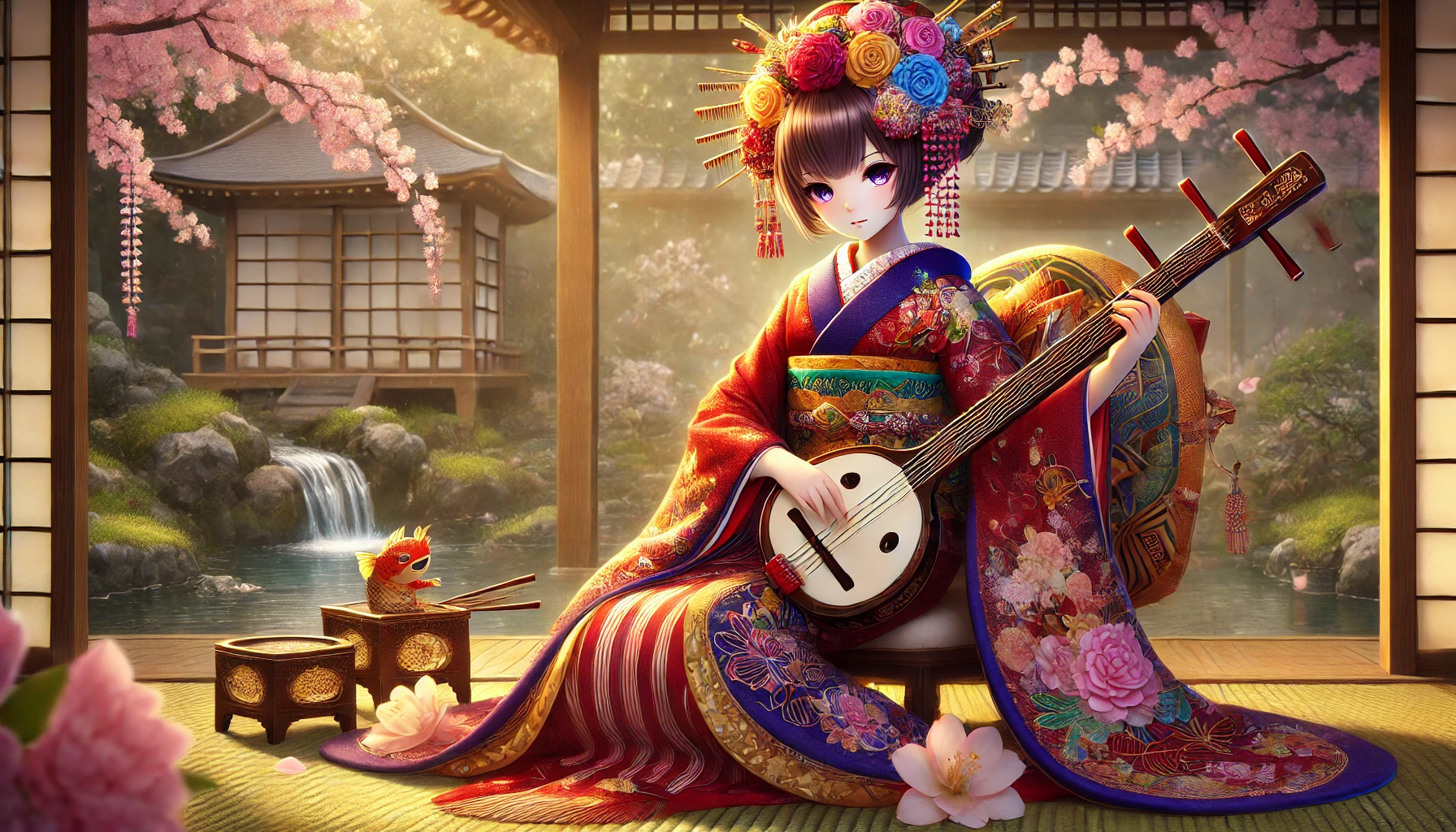
Neck types: hosozao, chuzao, futozao
Shamisen are commonly grouped by neck thickness, not by “brand models”:
- Hosozao (thin neck): agile and compact; closely tied to nagauta for kabuki, and also to short song forms such as kouta.
- Chuzao (medium neck): a middle path with a fuller, mellower voice; common in jiuta and useful across several folk and classical settings.
- Futozao (thick neck): built for force and projection — gidayū for bunraku and the hard-driving Tsugaru style both favor thick necks and strong attack.
Style and size often travel together, but they are not a prison: folk repertoires may sit on more than one neck type, and modern learners sometimes start on whatever instrument they can obtain. The Okinawan sanshin remains a cousin on the family tree — related history, different body covering and cultural home — not a “small shamisen” rebranded for sale.
The shamisen in Japan today
You still hear shamisen in festival streets, theater seasons, school clubs, and concert halls. Tsugaru players treat the instrument almost like a solo rock lead: speed, improvisation, and percussive hits on the skin. Elsewhere, geisha and professional song traditions keep shorter, more intimate repertoires alive in rooms where volume is not the point.
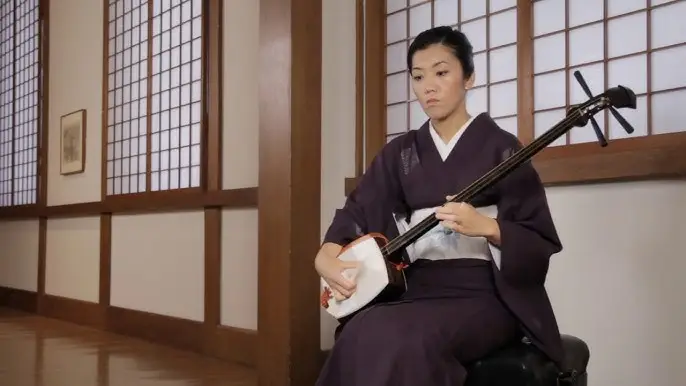
Learning, preservation, and new ears
Teaching lines still run through specialized schools and individual masters. Synthetic skins, nylon strings, and online lessons have made practice less fragile and less expensive than pure silk-and-hide setups, without erasing the older aesthetic where silk still rules professional stages. Meanwhile, anime scores, game soundtracks, and international tours keep putting the silhouette of the shamisen in front of people who may never have stepped into a kabuki theater.
What the sound is really doing
The shamisen is not “the Japanese guitar.” It is a theater and storytelling machine that also learned to stand alone. Three strings force economy: every pitch bend, every scrape of the bachi, every silent gap between notes has to earn its place. That economy is why the same instrument can underscore a puppet tragedy at noon and cut through a festival crowd at night.
If you get the chance to hear one live — traditional ensemble or solo Tsugaru set — listen first for the attack of the plectrum, then for the low-string buzz that never quite sits still. That restless edge is not a flaw in the setup. It is part of how the shamisen learned to speak.





Community
Comments
0 comments
There are no published comments in this language yet.
Send comment