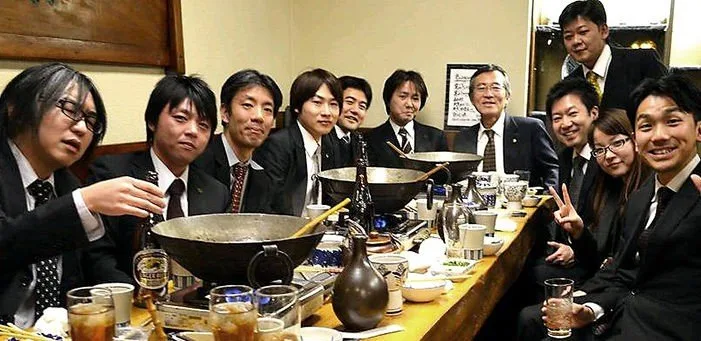
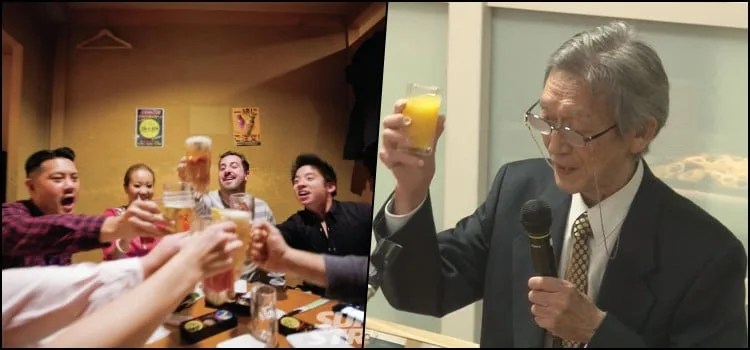
The word kanpai is a Japanese expression used to toast glasses equivalent to “cheers” in Portuguese. Few know, but this word has a long history and a much deeper meaning that we will examine in this article.
For some reason, they write kampai (with M) in the Portuguese language… This is nothing more than a transliteration from Japanese to Portuguese, but I find it ugly and prefer to write the original form kanpai a thousand times more.
Kanpai is written [乾杯] where the ideogram (乾) means dry or drink and the ideogram (杯) means wine glass. Literally speaking, it means to empty the glass, a very literal and appropriate expression to say when we are going to drink. This word can also be used as the verb to toast or to drink a toast. In Chinese, it is written with the same ideograms and pronounced Gānbēi.
Where and when to say kanpai?
In the past, kanpai literally meant to empty the glass. In other words, you would have to drink everything at once, but nowadays you don’t have to worry too much about that.
Nowadays, it is a mandatory etiquette to make a toast in Japan. If you start drinking before saying kampai, you are being rude. And it is not used only for sake, but for any alcoholic beverage.
There are no secrets; it is like the word cheers or saúde in English. It is common to hear this word a lot at year-end events called bounenkai, where people gather.
This expression is also used in any gathering of friends where they will drink, especially if it is a lot. When making the kanpai greeting, make sure your glass is lower than the glass of someone who is superior to you, like your boss.
We must show respect to the elders and bosses in Japan. For this reason, when you meet with your boss or someone older, unless they say kanpai, you can use the formal expression otsukare-sama. This word does not have the same meaning as kampai, but it is used to appreciate the work they have done.
Be careful with kenpai
At funerals, it is common to use the word kenpai (献杯) to toast the deceased with respect. When you are at a funeral and if there are drinking glasses, you can raise them and say kenpai without toasting with other glasses.
So be careful not to say kenpai instead of kanpai at drinking gatherings with friends. Another word that some may end up confusing due to its similar pronunciation is banzai.
What do you think of this expression? Have you had the opportunity to use it? We appreciate comments and shares! We also recommend reading:
We are living in a time full of discussions involving nudity, sexuality, gender, and mainly how our children fit into all of this. How does Japan view these issues? Some people end up finding Japan a sexually bizarre country due to certain cultural events and also the animation and sex industry.
I have already encountered Brazilians in their controversial discussions using arguments from Japan to defend ideas such as exposing children to sexual topics. In this article, I will try to delicately address a bit of this subject.
While the Christian religion dominates Brazil suggesting an idea of morality and ethics, Japan is quite open to sex since less than 5% of Japanese people are Christians. Still, Japan does not allow same-sex marriage and also does not engage in absolutely any issues involving sex or gender.
The Japanese are reserved, so they do not engage in controversial issues; they believe that everyone does what they want with their lives. Of course, there will always be movements and discussions on the subject, but on a small scale compared to other countries.
The minimum age for sexual consent in Japan is 13 years, according to the Japanese penal code. This can change depending on the province. However, another law prohibits minors under 18 from having sexual relations with adults.
Even dating can be complicated during school years because the law requires parental approval. Some private schools in Japan try to prevent students from engaging in romantic relationships for fear of police intervention.
Exposure to sex in Japan
Something that sparked numerous discussions on the internet was the artistic performance of a naked man. Children were exposed to this event, which generated countless controversies and discussions online. I personally think it is an extreme exaggeration to relate pedophilia to this performance.
On the other hand, I cannot see absolutely any sense in this presentation, much less art! There are laws that prohibit a person from walking naked; the guy probably had to chase after permissions for such a performance. Besides this event, some information networks are addressing the topic of gender and sexuality with children.
Because of these events, thousands of discussions take place. How can Japan serve as an example for us? Culturally, it is common for children and adults to bathe naked in an onsen (hot spring); it is something quite cultural and innocent. Of course, the baths are separated by sex, but there are still some mixed baths scattered throughout Japan, which probably do not allow children.
Another very popular event is the Kanamara Matsuri, a fertility festival where various giant penises, objects, and even foods in the shape of the male penis can be found. Nevertheless, Japanese children did not end up becoming perverted; in reality, some only discover or have an interest in sex in adulthood.
It is believed that it was due to the influence of Westerners who were shocked to see men and women bathing naked together without any desire or sexual act that led the Japanese to separate baths by sex.
Talking about sex is a taboo in Japan among some, precisely because of shyness or because it is a very personal subject. So much so that culturally it is not common to use expressions with sexual connotation as we do in Brazilian slang.
The influence of sexual media
The exposure of sexuality in the media is quite visible. Some do not mind buying or reading erotic material in public. This is due to the fact that there is no concept of sin involving sex in Japanese religion.
A highly controversial subject is the sexual exposure of minors in media involving Japanese animation. Many believe that this can encourage pedophilia, but with the help of the law, the number of abuses is low. The culture makes it so that perverted Japanese only have the courage to at most steal a pair of panties or chase after perverted products.
It is not just adult content for children; anime for the teenage audience also has a lot of sensuality. Even lolis appear in a very sensual way in various animations; it is almost a tradition to have bouncing breasts and poses with panties showing. In Japan, sensual animation is seen more as an art, so much so that almost half of women consume this type of media.
The Japanese government has tried to prohibit adult content involving minors in Japanese manga and animations, but there is a significant gap. First, because animators can very well give an older age while maintaining the appearance of a child.
Others argue that it is thanks to this type of material that the rate of abuse of minors remains low in Japan. The great innocence and carefree nature of the Japanese make various issues considered controversial in the West irrelevant in Japan.
Pornographic media in Japan is quite different from Western media, to the point that there is even censorship on intimate parts. To conclude, let’s leave some articles below that can help you understand more about sex in Japan.
The characters in anime often have strong personalities, making the existence of psychopathic characters increasingly common. But do you know what a psychopathic character is? They are characters with behaviors and personality disorders, but most of the time they tend to be egocentric, dishonest, irresponsible, and take pleasure in the suffering of others. They do not feel guilt, are insensitive, and hate commitments.
Many anime characters have quite disturbed personalities. It is common to find yandere girls who have a strong obsession with their beloved to the point of being sick and psychopathic. Other psychopaths love to manipulate things. The Japanese word for psychopath is 精神病質 (seishinbyou-shitsu) which literally means sick mind and temperament. In this article, we will look at the most psychopathic characters in anime.
Most Psychopathic Characters in Anime – Male
Johan Liebert
The psychopath from the anime Monster is even worse than Adolf Hitler and is often compared to the Devil. The entire anime focuses on him and his intelligence in manipulating and killing people for no reason.
Hisoka
One of the favorite characters from Hunter x Hunter, he is a true psychopath who kills without reason or mercy. He manipulates and does everything to have a good fight; his humor and personality are quite presentable.
Alucard
(Hellsing) Always looking for a good fight, but most of the time his opponent disappoints, and then he is killed in the blink of an eye.
Shou Tucker
One of the most hated characters in the anime world, he seems like a nice person but was able to turn his wife and daughter into a monster. Another quite psychopathic character from the anime FullMetal Alchemist is Soft J Kimblee. We can also mention Envy and other homunculi.
Jason
The very name of the character from Tokyo Ghoul is self-explanatory; this character is a true psychopath and killer who loves to see the suffering of his victims with his macabre games. Another psychopathic character from Tokyo Ghoul is Juuzou Suzuya.
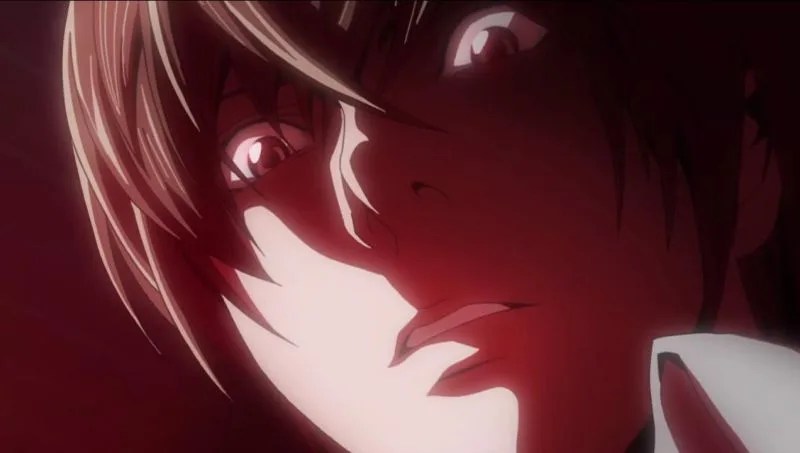
Light
The protagonist of the anime Death Note appears to have good intentions but ends up losing his humanity and his way, becoming a true psychopath.
Alois Trancy
This character from the anime Kuroshitsuji appears to be innocent but is eccentric and loves to manipulate people. Although most characters in this anime are a bit psychopathic. – A character from the anime Fate/Zero has a psychopathic appearance. He has no remorse and even kills children.
Minaka Hiroto
This character from the anime Sekirei takes pleasure in watching people kill each other.
Let’s list other psychopathic characters below:
King Hamdo – Ima, Soko Ni Iru Boku;
Yura Yamato – Stella Jogakuin Koutou-ka C³-bu;
Accelerator- Toaru Majutsu No Index;
Caster – Fate/Zero
Broly and Janemba – Dragon Ball Z;
Hidan and Orochimaru- Naruto;
Graham Specter and Lad– Baccano!;
Kumagawa Misogi – Medaka Box;
Shuu Tsukiyama – Tokyo Ghoul;
Donquixote Doflamingo – One Piece;
Psychopathic Characters in Anime – Female
Enoshima Junko
The main antagonist of Danganronpa, a great psychopath who loves to cause despair in the entire world. Another character present in this anime is also a psychopath, her name is Fukawa/Genocider. This anime is perfect for those who want to see something full of psychopaths and with a lot of psychological thriller.
Gasai Yuno
The main character of Mirai Nikki is a great yandere and at the same time a psychopath who kills without any remorse or necessary reason. Most characters in this anime are crazy; we can also mention Reisuke Houjou.
Higurashi no Naku Koro ni
Most of the characters in this anime are female and psychopathic; this anime is really bizarre. One of them is Rena Ryuugu, who seems sweet but is a true bloodthirsty. Another iconic character is Shion Sonozaki with her famous sick laugh.
Lucy/Nyu
The main character of Elfen Lied is a great assassin and psychopath; she is very cold and full of bitterness due to her tragic childhood. She has invisible arms that she uses to easily cut living beings.
Other female psychopathic characters:
Hibana Daida – Deadman Wonderland;
Seryu Ubiquitous – Akame Ga Kill;
Roberta – Black Lagoon;
Hansel and Gretel – Black Lagoon;
Beatrice – Umeneko no naku koro ni;
Katsura kotonoha – School days;
Kyouko – Kore wa zombie desu ka;
Minatsuki takami – Deadman wonderland;
Valkyria – Gokukoku no Brynhildr;
Byouinzaka Yamane – Dansai Bunri no Crime Edge;
I hope you enjoyed this article; don’t forget to share it with your friends! To finish, we recommend reading other articles below:
Have you ever tried “Unagi”? This is the Japanese word for freshwater eels. This ingredient is quite common in Japanese cuisine, and we will talk a little about these eels, their various dishes and preparations in Japanese cooking, which are so appreciated by characters like Genta from Detective Conan. For saltwater eels, their name is Anago (穴子).
Eels usually migrate long distances and can live up to 30 years. Although they are called freshwater eels, they spend a lot of time in the sea before migrating to rivers. Unfortunately, the production of Japanese eels is low, and a large part ends up being imported from countries like China and Taiwan. Unagi is rich in proteins, vitamins A, B1, and calcium, being a popular dish in summer due to the belief that its proteins help combat fatigue during this season.
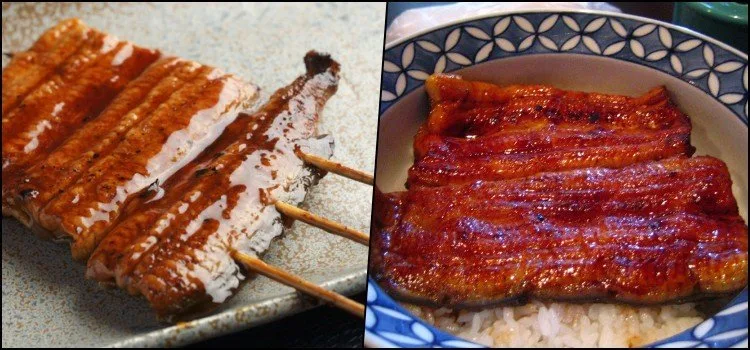
For some, it may be difficult to like eels due to their sliminess. Fortunately, the Japanese manage to prepare Unagi deliciously, just as they do with other dishes. There are several ways to eat these eels, one of the most popular being grilled with a special sauce on a skewer. The eel surprises with its flavor and texture that melts in the mouth and creates unique sensations. Another common way for Westerners to try Unagi is through sushi.
Different ways to eat Unagi
We talked about the grilled version of the eel, usually served with pickles and rice. Another very popular way to enjoy Unagi is through “Unadon,” which consists of a bowl of rice topped with Unagi. The eel is not consumed raw, as raw freshwater fish are not considered safe. The term “Unakyu” is used for sushi made with cooked Unagi and cucumber.
There are various preparation and cooking techniques for Unagi. When it is filleted, deboned, and grilled, it is called kabayaki. If it is cooked only with salt, without sauce, it is known as shirayaki. Another popular preparation is Umaki, which consists of slices of Unagi rolled in omelets.
The Japanese even consume the bones of the eels in a dish called Hone Senbei. Using the long backbone of Unagi, it is possible to create something crunchy, light, and salty. In addition, they enjoy the grilled eel liver, known as Kimoyaki, or in soup form, called Kimosui.
There are thousands of other ways to eat unagi, whether as a specialty or as an ingredient present in some other dish. Not to mention the regional differences!
Curiosities about Japanese eels
Unagi is often served over rice and is something expensive. It is not something we can eat daily without feeling the pinch, probably due to the difficulty of finding unagi and preparing it. You cannot just go to a market and buy fresh eel and prepare it without the necessary experience.
Unagi is a special food consumed mainly in summer. There is even a special date called “Doyo ushi no hi” (土用丑の日). On this date, which usually falls on a Saturday, the Japanese have the tradition of eating eel since the Edo period.
Unazen is a popular restaurant specializing in Unagi, which cooks the eels fresh to order. Other popular restaurants in Tokyo are called Ishibashi, Ikeunagi no mise, Godaime Nodaiwa, Unagi Uomasa, and Miyoshi.
If you are in Japan, take the opportunity to try these Japanese freshwater eels! If you have already tried them, comment below and share with friends. We also recommend reading:
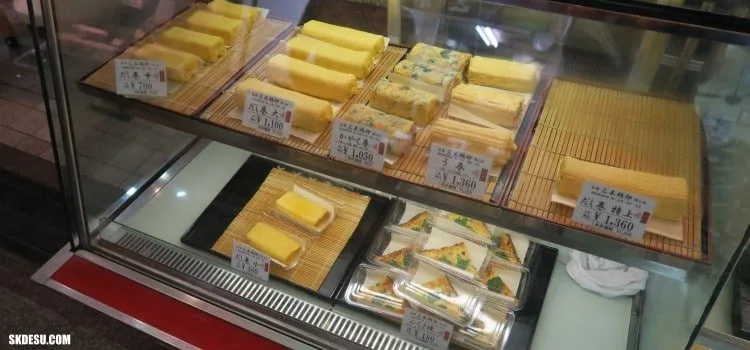
Do you know the famous Japanese omelet? In Japan, it is called tamagoyaki (卵焼き or 玉子焼き), which literally means grilled egg. It can also be called dashimaki tamago (出し巻き卵) because of its shape and the dashi in its recipe. In this article, we will talk a little about the famous Japanese omelets that are quite different and very popular.
The Japanese omelet is made of fried eggs in different layers and then rolled up. They are usually prepared in a specific rectangular-shaped frying pan called makiyakinabe. There is an infinite variety of tamagoyaki, in the batter they make combinations with eggs, dashi, rice vinegar, soy sauce, and even sake. It is often filled with whatever the person desires, from savory things to sweet things.
Tamagoyaki is usually served with other dishes, but it is also popular as breakfast and brunch. Some people use it in the preparation of obento (bento box), it helps in various combinations to create culinary art. This recipe is very simple, and you can add the seasoning or filling you want. The big difficulty is trying to make an omelet with dashi, because the texture becomes thinner and more fragile, but it is much more delicious.
Different types of Japanese omelets
There are thousands of variations and different types of tamagoyaki or other Japanese omelets. Let’s see some below:
Iri Tamago – These are scrambled eggs forming flakes that are usually used as a topping for other dishes.
Usuyaki Tamago – A thin sheet-cooked omelet that is often used to wrap temari sushi or also to cut and create a Kinshi Tamago, a kind of shredded omelet resembling noodles that is also often used in sushi or as a topping for other dishes.
Omuraisu – A dish that consists of a fried omelet filled with fried rice and usually topped with ketchup. Very popular in maid cafes.
There are many other types of tamagoyaki that are defined according to their ingredients, thickness, and method of preparation. They usually take the name of the ingredients in the composition.
Recipe – How to make a Tamagoyaki?
3 eggs
1 teaspoon of mirin sake;
1/2 teaspoon of shoyu (soy sauce);
1 tablespoon of sugar;
3 tablespoons of dashi;
1/2 tablespoon of oil;
Filling and other optional ingredients;
First, beat the eggs with sake, shoyu, and dashi. Heat the non-stick frying pan with oil, and pour a little of the beaten eggs in an attempt to make a kind of thin pancake. Gently roll the omelet from one side to the other and leave it in the corner of the frying pan. Now you repeat the process, letting the next batter go underneath the already rolled omelet. Roll the next omelet over the already rolled omelet (you can do everything with chopsticks or a spatula).
After you have made and rolled all the omelets, you can place it on a bamboo mat to roll it better and make it firmer. Now just wait for it to cool, cut it into several pieces, and eat! You can see the whole process and different ways to make a tamagoyaki by watching the final videos below:
This dish is delicious and made with accessible ingredients. The way to make this dish is taught by Soma himself in the first episode of the anime. Here we leave it written down with some explanations so you won’t get lost and can prepare the delicious (Pork) Bacon roasted.
Yield: 4 servings Preparation time: 3:30h to 4 hours
Ingredients
For the mashed potatoes
8 small potatoes or 6 medium (can be English potato or asterisk);
100g of dried shitake cut into small cubes;
2 medium onions cut into small cubes;
Salt and black pepper to taste;
2 tablespoons of olive oil;
To cover the mash
2 packages of 250g of bacon sliced into strips
Sprigs of rosemary to taste
For the final sauce
1/2 cup of dry red wine
40g of salted butter
1 teaspoon of sugar
Necessary utensils
Aluminum foil
String
Toothpick (if necessary)
Baking tray
How to make
Preheat your oven to 200°C
Start with the mash
Wash the potatoes using a brush;
Cut the potatoes into 4 parts. And steam until soft but firm;
Remove the skin by hand. Mash the potatoes using a potato masher. Set aside;
In a pan, sauté the onion and shitake in olive oil until the onion is slightly transparent. Add salt and pepper to taste;
Mix the sautéed mixture and the potatoes. It should become a firm dough. If your potato is too soft, add one to two tablespoons of flour or breadcrumbs;
Open a piece of aluminum foil, place the potato dough and make a cylinder;
Assembly with bacon
Open the foil with the potato dough. Wrap with bacon on top. Turn upside down and continue covering
Tie everything with string, along with the rosemary sprigs;
Cover with aluminum foil. Bake for 1 hour;
After 1 hour, remove the aluminum foil and continue baking until the surface is golden;
When it’s almost ready, start making the final sauce;
For the sauce
In a pan, place the wine and sugar;
When it starts to boil, add the butter. Turn off the heat;
Remove your bacon from the oven and drizzle with the sauce. Serve immediately!
You can try other anime recipes in the articles below:
If you are learning Japanese or planning to visit Japan, it is essential to know the different ways to greet people. In this article, we will explore ways to say ‘hi’ and ‘hello’ in Japanese and how to use them correctly.
Japan is an ancient country with more than 47 provinces, each with its own culture and dialect. Additionally, Japan has a formal and respectful language. This allows for the existence of various ways to greet in Japanese. In this article, you will discover 50 ways to say hi or hello in Japanese.
Let’s start with the most common ways to say hi in Japanese. The greetings we will see below are used in everyday situations when meeting someone. We will not go into detail on expressions like good afternoon and good night.
“Konnichiwa” is the most common greeting in Japanese, which can be used at any time of the day. This word is a combination of two Japanese words: “Konnichi,” which means “today,” and “wa,” which is a particle that indicates the end of the sentence.
Together, “Konnichiwa” means “hello” or “good afternoon.” It is appropriate to use “Konnichiwa” when meeting someone for the first time or when you meet friends, colleagues, or acquaintances on different occasions.
“Ohayou” is used to say “good morning” in Japanese. It is generally used until lunchtime. It is a casual form of greeting, suitable for friends, family, or coworkers you know well. It is important to note that the “o” in “Ohayou” is an honorific particle added to express respect for the person you are speaking to.
“Konbanwa” is used to say “good evening” in Japanese. It is generally used after dinner or when meeting someone at night. It is a casual form of greeting but can be used in more formal contexts, such as in business meetings. As with “Konnichiwa,” the particle “wa” is added at the end to indicate the end of the sentence.
おっす (Ossu)
“Ossu” is a casual form of greeting that is often used among friends or male colleagues. It is important to note that “Ossu” can be considered a bit rude or aggressive in some situations, and it is best to use it only with people you know well.
お元気ですか (Ogenki desu ka)
“Ogenki desu ka” is a formal greeting in Japanese that means “how are you?” or “how have you been?”. It is a polite way to start a conversation and shows that you care about the other person’s well-being. “Ogenki” means “well-being” or “health,” while “desu ka” is a formal expression used to ask questions in Japanese.
もしもし (Moshi moshi)
“Moshi moshi” is mainly used when you answer the phone in Japanese. It is a casual form of greeting, which can be translated as “hello” or “hi.” It is also used in informal contexts, such as when you meet friends or family in a public place.
4 – Konbanwa – こんばんは – Good evening (when meeting);
5 – Moshi moshi – もしもし – Hello on the phone;
6 – Ossu – おっす – Used among close male friends;
7 – Yo – よぉ! – A super casual hello used by young people;
8 – Yahho! – やっほ~ – A cute way to say hello, used by girls;
9 – Yah! – やぁ! – Similar to the expression yo;
10 – tadaima! – ただいま! – I’m back – Used only when arriving home or somewhere;
11 – saikin dou? – 最近どう – Any news? How have you been lately? (informal);
12 – (o)hisashiburi – お久しぶり – Long time no see? Some say this directly;
13 –(o)genkidesuka – お元気ですか? – All good? How are you? Can be used directly;
14 – dou yo – どうよ? – How’s it going? – Don’t say this during an action, as it may refer to it;
15 – Ooi – おーい – Equivalent to Hey, often used when calling someone from a distance;
16 – Doumo – どうも – A way to say thank you, but also means hello or goodbye;
17 – Otsukare – お疲れ – A way to thank for work, but can be a greeting when you haven’t seen a coworker at the end of the workday;
18 – Maido – 毎度 – A way to say welcome to my store (Kansai) or thank you for coming (maido ari);
19 – Irasshai – いらっしゃい – Welcome – Greeting used by shopkeepers;
20 – Dore Dore – どれどれ – An expression that means “What do we have here?”, but loosely used as hello;
[trp_language language=”pt_BR”]
In addition to the article, we also recommend watching our video below:
[/trp_language]
Hi and Hello in other Japanese dialects
Haisai – ハイサイ – Hi and Hello in the Ryuukyuu and Okinawa dialect;
Niihaou – ニーハオ – Equivalent to Hello in Chinese;
Haroo – ハロー – Equivalent to Hello in English;
Uissu – ういっす – An alternative way to say ossu;
Hayaina – はやいな(も) – A way to say ohayou in the Mie, Wakayama, and Aichi dialect;
Haeno – はえのー – Good morning in the Miyazaki dialect;
Chuusu – チュース – Popular in the 90s, adaptation of the word Tschuss from the German language;
Onroo – おんろー – Hello from the Tsugaru dialect;
Eetenkidee – ええてんきでぇ~ – Greeting from the Fukui dialect
Tasshanaka – たっしゃなか – Greeting from the Wakayama dialect;
Haenou – はえのう – Greeting from the Miyazaki dialect;
Chiwa – ちわっ – Abbreviation of konnichiwa, used by men, gives an idea of hey;
Chiwassu! – ちわっす! – Alternative to Chiwa, used by men;
Chuu wuganabira – 今日拝なびら – Hello in the Okinawa dialect;
Haitai – はいたい – Hello in the Okinawa dialect, used by women;
Ukimisoochii – 起きみそーちー – Good morning in the Okinawa dialect;
Ohayousan – おはようさん – Good morning in the Kansai region and dialect;
Ohayougansu – おはよがんす – Good morning in the Iwate dialect;
Koncha – こんちゃ – Abbreviation of konnichiwa;
ncha – んちゃ – Another abbreviation of konnichiwa;
Ohayou in the 48 regions of Japan
Hokkaido
おはよー
Aomori
おはよーごし
Iwate
おはよがんす
Miyagi
おはよー
Akita
おはよー
Yamagata
はやえなっす
Fukushima
はやえなっす
Ibaraki
おはよー
Tochigi
おはよー
Gunma
おはよー
Saitama
おはよー
Chiba
おはよー
Tokyo
おはよー
Kanagawa
おはよー
Niigata
おはよー
Toyama
おはよー
Ishikawa
おはよー
Fukui
おはよさん
Yamanashi
おはよーごいす
Nagano
おはよーござんす
Gifu
おはよー
Shizuoka
いあんばいです
Aichi
はやいなも
Triplo
はやいなー
Shiga
おはよーさん
Kyoto
おはよーさん
Osaka
おはよーさん
Hyogo
おはよーさん
Nara
おはよーさん
Wakayama
はやいのー
Tottori
おはよーござんす
Shimane
おはよ
Okayama
おはよー
Hiroshima
おはよーがんす
Yamaguchi
おはよーごぁんす
Tokushima
おはよーがーす
Kagawa
おはよーござんす
Ehime
おはよー
Kochi
おはよー
Fukuoka
おはよーござす
Saga
おはよーござんした
Nagasaki
おはよー
Kumamoto
おはよーござるます
Oita
おはよー
Miyazaki
はえのー
Kagoshima
こんちゃらごあす
Okinawa
っうきみそーちー
The video in English below shows 10 ways to say hi and greet:
I hope you enjoyed this article. Do you know another different way to say hi, hello, or good morning in Japanese? We appreciate comments and shares. We also recommend reading:
Japan is dominated by kawaii culture, which is why we always find cute things in anime. There are some anime that exaggerate in cuteness, in this article we will make a recommendation list of these kawaii anime.
It is worth clarifying that most of these kawaii anime tend to be too cute or nonsense (meaningless). We will try to separate these cute anime by category, recommending kawaii anime from various different genres.
Diverse things can define whether an anime is cute or not. Some think that for an anime to be cute, it needs to have chibi, moe, and loli characters. Others believe that it is enough to have shy and romantic characters, but that can follow a realistic line and story.
If we take into account each criterion of cuteness, it will take an eternity to make the list of kawaii anime. I will strive to deliver the best! I hope you enjoy these cute anime!
Kawaii, moe, and cute everyday life anime
The anime below are clearly defined as kawaii and moe, by their format, direction, and art. Most of these anime tend to be made for an audience of girls under 16 years old or address light and everyday life themes.
Himouto! Umaru-chan – Tells the story of a girl who is beautiful and exceptional in studies and sports. When she gets home, she becomes a lazy girl who only wants to play and eat. (Comedy)
Lucky Star – A kawaii anime that shows a lazy girl addicted to video games and anime along with her friends. The anime is full of references and nonsense comedy.
Ichigo Mashimaro – Four little girls who live with their older sister face various silly and funny adventures full of cuteness and unusual things.
Azumanga Daioh – Another everyday comedy anime full of cuteness, focused on the school life of 6 girls with different personalities.
Nichijou – One of the craziest nonsense and kawaii everyday life anime that exists. There isn’t much to explain about it, just watch!
Tamako Market – Another everyday life anime that shows a girl who manages her family’s mochi shop.
In addition to these, we can complete the list of everyday and cute anime with:
Mikakunin de Shinkoukei;
Love Live and other idol anime;
Hanamaru Youchien;
Acchi Kocchi;
Yuyushiki;
Minami-Ke;
Hetalia Axis Power;
Yuru Yuri;
Gochuumon wa Usagi Desu ka?
Cute and kawaii exciting anime
Usagi Drop – An exciting anime that radiates cuteness! It tells the story of a single man who, at his grandfather’s funeral, meets an illegitimate child of his. He decides to adopt this child, and the anime shows the daily life of the two in a kawaii way.
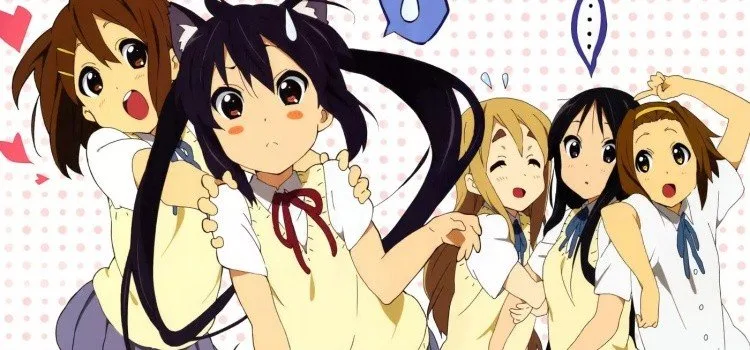
K-On – A music anime almost mandatory for anyone who wants to watch something cute and moe. It tells the story of a band of cute girls who are in a light music school club.
Cardcaptor Sakura – An anime that marked the childhood of many with its kawaii art style and still has a lot of action and adventure. The anime shows a high school girl who needs to gather magical cards with the help of her guardian Kero. Another anime that marked the childhood of many and is also cute is Sailor Moon (just a tip)!
Suzumiya Haruhi no Yuuutsu;
Non Non Biyori;
Hibike! Euphonium;
Shinryaku! Ika Musume;
Hibike! Euphonium;
Shinryaku! Ika Musume;
Romance anime considered cute and kawaii
There are a ton of romance anime, most of them feature cute and beautiful characters. Shyness is a major highlight for cuteness in these anime. We think it’s better for you to read our article on romance anime by clicking here. However, we will mention a few more famous romance anime full of cuteness to finish this article. I will bold the ones I think are the cutest.
Sukitte Ii na yo;
Clannad;
Shigatsu wa kimi no uso;
Nana;
Romeo x Juliet;
Bokura ga Ita;
Golden Time;
Toradora;
Ore Monogatari;
Zero no Tsukaima;
Kaichou wa Maid-sama!;
Lovely Complex;
Ao Haru Ride;
Kimi ni Todoke;
Akagami ga Shirayuki Hime;
The cutest, moe, cute, and kawaii mangas
To finish the article, we will recommend some mangas that are cute, kawaii, moe, or cute. They will be listed and can be purchased on Amazon Brazil.
We recommend that you read our other related articles:
Senso-ji (浅草寺), located in the Asakusa district of Tokyo, is one of the oldest and most iconic Buddhist temples in Japan. Dedicated to the bodhisattva Kannon (Avalokiteśvara), this temple is a true window into Japan’s rich cultural heritage, serving not only as a place of devotion but also as a vibrant tourist attraction that draws millions of visitors each year. Its history, architecture, and surroundings offer a unique experience for those seeking to understand the essence of Tokyo and its past.
The origin of the temple dates back to a fascinating legend. In 628, two fisherman brothers found a statue of Kannon in the Sumida River. Recognizing the spiritual importance of the statue, the village chief transformed his home into a small temple. In 645, Senso-ji was officially founded, becoming one of the first Buddhist temples in the capital. This article explores the rich history of the temple, its unique rituals, and the attractions in the surrounding area, including the famous Nakamise-dori street and the Sanja Matsuri festival.
The History of Senso-ji and Its Cultural Relevance
The history of Senso-ji is filled with symbolism and resilience, starting with its foundation over 1,300 years ago and going through periods of destruction and rebirth.
From Foundation to Current Relevance
The Senso-ji temple was established to honor Kannon, the bodhisattva of compassion, whose worship is widely popular in Japan. During the Edo period (1603-1868), Senso-ji solidified its status as a spiritual and cultural center, attracting both devotees and tourists.
After the devastation caused by World War II bombings, the temple was meticulously rebuilt, symbolizing peace and Japan’s recovery post-war. Today, it stands out as a living monument to Japanese history and culture.
Architecture and Art of the Temple
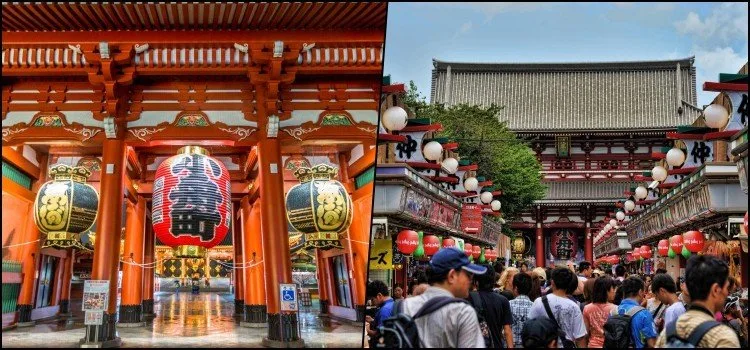
The entrance to Senso-ji is marked by the Kaminarimon (Thunder Gate), which boasts a huge red lantern and is one of the most photographed spots in Tokyo. Upon crossing the Hozomon gate, visitors find the main building of the temple, rebuilt in traditional Japanese style. Additionally, the complex houses a five-story pagoda, various halls, and sacred statues.
Connection to Shintoism
Although it is a Buddhist temple, Senso-ji incorporates Shinto elements, such as the Nishinomiya Inari shrine located within the complex. This integration reflects the harmonious coexistence between Buddhism and Shintoism in Japan, which is a unique cultural hallmark of the country.
sensoji temple
Experience at Senso-ji: Traditional Rituals and Practices
Visiting Senso-ji is an immersion in traditional rituals and spiritual practices that enchant both devotees and tourists.
Purification Ritual
Right at the entrance of the temple, you will find a large incense cauldron. Spreading the smoke over oneself is considered a purifying act that brings luck and health. Another ritual is the temizu, performed at a sacred fountain, where visitors wash their hands and mouth to purify themselves before entering the temple.
Prayer and Offering
At the main altar, visitors can perform the Omairi, a traditional Buddhist prayer. It is common to throw a coin into the offering box, make a wish, and clap to attract the attention of the deities. Additionally, you can consult your fortune through Omikuji, a fortune slip that can be tied at the temple if the result is unfavorable.
Festivals and Events
Senso-ji is the stage for the Sanja Matsuri, one of the largest festivals in Tokyo, which takes place in May. During the event, colorful processions and traditional dances fill the streets of Asakusa, attracting crowds. Additionally, other smaller festivals and ceremonies throughout the year celebrate the rich cultural heritage of the temple.
Nakamise-dori and the Attractive Surroundings of Senso-ji
In addition to its spiritual importance, Senso-ji is surrounded by attractions that enrich the experience of any visitor.
The Nakamise-dori Shopping Street
The street Nakamise-dori, which connects the Kaminarimon gate to the temple, is filled with over 100 traditional shops selling souvenirs, typical sweets, and Japanese crafts. With a length of 250 meters, it is a perfect place to buy kimonos, fans, and try delights like ningyo-yaki, cakes filled with sweet bean paste.
Nearby Tourist Attractions
Senso-ji is strategically located in Asakusa, close to other iconic points, such as:
Tokyo Skytree: The tallest tower in Japan, with impressive panoramic views.
Sumida River: Ideal for boat rides or relaxing walks.
Ueno Park: A historic site with museums, a zoo, and a beautiful setting, especially during cherry blossom season.
Gardens and Smaller Temples
In the surroundings of Senso-ji, you will find beautiful gardens, small temples, and historical monuments, perfect for exploring and reflecting. These places complement the visitor’s experience, providing a tranquil contrast to the hustle and bustle of Nakamise-dori.
Senso-ji is much more than a temple; it is a journey through the history, spirituality, and culture of Japan. Whether to appreciate its architecture, participate in rituals, or explore the vibrant surroundings, a visit to Senso-ji is an experience that no traveler should miss.
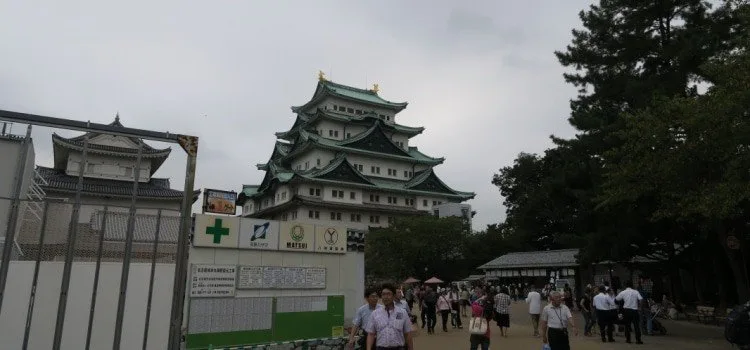
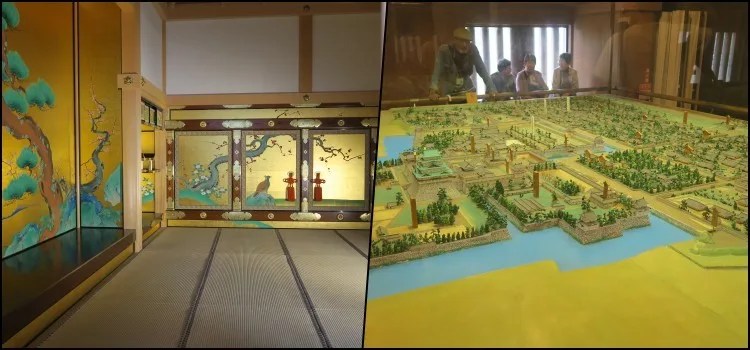
The Nagoya Castle is one of the most iconic landmarks in Japan, located in the city of Nagoya, in Aichi Prefecture. It combines a rich historical heritage with impressive architecture, making it a must-visit tourist destination for those who wish to immerse themselves in Japanese culture. With well-maintained gardens, historic buildings, and fascinating exhibitions, the castle offers an immersive experience that delights visitors of all ages.
In addition to the beauty of the castle itself, the complex includes the magnificent Hommaru Palace, traditional gates, serene rivers, century-old trees, and a landscape that reflects the essence of feudal Japan. All of this can be explored for just 500 yen, making it an accessible destination rich in cultural significance.
History of Nagoya Castle
Nagoya Castle has a history that dates back to the 16th century. Initially built in 1525 by Shiba Yoshimune, it was later conquered and abandoned until, in 1610, Tokugawa Ieyasu ordered the construction of a new castle on the site. This monumental effort aimed to strengthen control over the central region of Japan, symbolizing the power of the Tokugawa family.
The work was completed in 1612 and quickly became a symbol of authority and prosperity. Unfortunately, like many Japanese castles, Nagoya Castle was destroyed during World War II. Its reconstruction was completed in 1959, using concrete and modern techniques, while preserving the essence and original design. Many historical artifacts and works of art have been recovered and are on display at the site, providing a window into the past.
Highlights of Nagoya Castle
Golden Dolphins (Kinshachi)
One of the most well-known symbols of the castle is the pair of golden dolphins, known as Kinshachi, that adorn the top of the main castle. Representing protection and prosperity, these solid gold figures are a must-see attraction and a landmark of the city.
Hommaru Palace
The Hommaru Palace is a stunning example of traditional Japanese architecture. Accurately reconstructed, it features interiors decorated with hand-painted panels by renowned artists, depicting scenes from nature and Japanese legends.
Kaya-no-Ki Tree and Kiyomasa Stone
The castle houses a rare tree called Kaya-no-Ki, over 600 years old, and the imposing Kiyomasa stone, which was essential in the construction of the castle walls. Both are living testimonies of time and impress visitors with their history and significance.
Gardens and Towers
The gardens of Ninomaru, which surround the castle, offer a tranquil environment, perfect for relaxing and admiring nature. Additionally, the restored towers and gates around the castle add a special charm to the site.
Exploring the Castle Floors
Each floor of the castle offers a unique experience:
First floor: Introductory exhibitions about the history of the castle and the city of Nagoya, featuring historical objects and artifacts.
Second floor: Temporary thematic exhibitions exploring various aspects of Japanese culture and history.
Third floor: A recreation of a city from the Edo period, with fascinating details that transport visitors back in time.
Fourth floor: Exhibition of armor, swords, and helmets used by samurai.
Fifth floor: An observation deck where you can admire the famous golden dolphins up close and take memorable photos.
Plan Your Visit to Nagoya Castle
If you are planning a trip to Japan, including Nagoya Castle in your itinerary is essential. The city of Nagoya offers many other attractions, such as the Science Museum and the Nagoya Public Aquarium, making it a complete destination for tourists.
For just 500 yen, you will have access to an enriching tour, full of history, culture, and natural beauty. And for those who cannot visit in person, there are online resources, such as videos and virtual tours, that allow you to explore the castle in an interactive way.
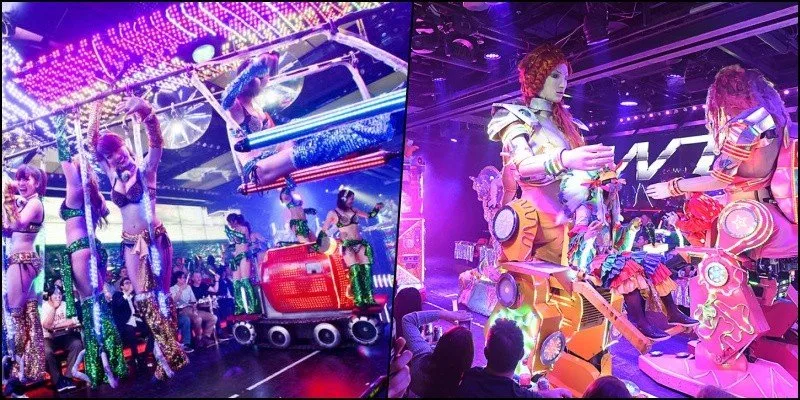
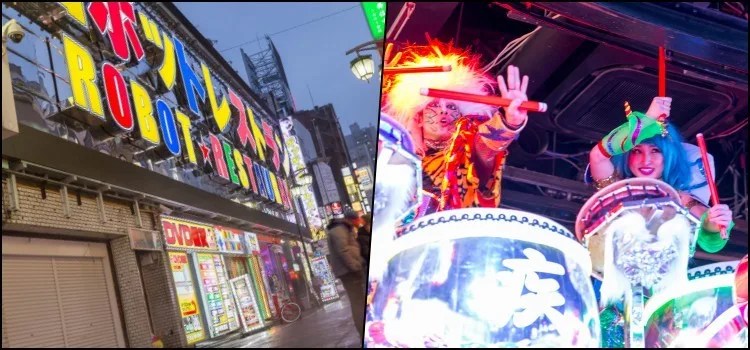
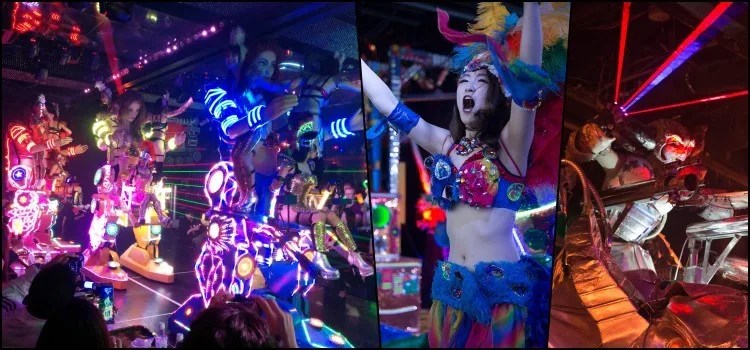
One of the most striking points of Kabukicho in Shinjuku is a bar called Robot Restaurant. A place full of lights, neon, and flashing signs, where they offer shows filled with luminous robots, girls dressed in character with lots of dancing and vibrant music. An interesting place, but expensive!
Upon entering the Robot Restaurant, you are taken to a “waiting room” where there is actually a restaurant with a menu of food/snacks and drinks. When the show starts, you are directed to a room where the performances will take place. You can choose to buy a meal to eat during the show.
The show surprises and pleases visitors, mainly due to the nostalgia of the 90s. The place is very colorful, psychedelic, and despite being located in an adult neighborhood, the robot restaurant is open to children and teenagers. They even offer ear protectors because of the sound.
The big problem is that people get too excited before going. I heard many disappointments from people who expected something different. Before visiting the place, it is necessary to know it and see if it is really worth visiting. Instead of just mentioning that it is a colorful and lively place, in this article we will really get to know the Robot Restaurant.
What to expect from the Robot Restaurant?
Some simply expect the restaurant to be something technological with real robots serving customers. These so-called robots are, in reality, large machines controlled by a remote control or pushed by people. At no point did the restaurant promise high technology and real robots.
If you are familiar with carnival, the show is basically that. Something colorful full of girls in costumes with lots of music and lights. It may seem common to many Brazilians, but for the Japanese, it becomes a very popular and unique destination.
If you are going to enter this restaurant, be prepared to spend 10,000 yen or more. Buy the tickets online, because at the door the price doubles. There are long breaks during the show for the sale of souvenirs and drinks.
The restaurant is actually a show house, which serves ready-made food on trays. The show is very different and interesting, but it is not for everyone. Visiting the Robot Restaurant can provide a fun, funny, and bizarre night. If you are interested in the show, I think it is worth visiting once.
You can watch the video below to learn more about this restaurant. There are other more interesting and cheaper themed options scattered throughout Japan, maybe you would prefer them. Thank you for reading our little article. We appreciate the comments and shares.
See which animes were released in January 2018 in the Winter season in Japan. This seasonal anime guide will help you choose the best animes to follow. The list is separated by genres, continuations, original works, and adaptations.
In this seasonal anime guide, you will find information such as author, studio, number of episodes, a brief synopsis, and a personal comment about the work. The list may be updated according to the announcements made.
If you want a super detailed list with the entire team, voice actors, episode list, name in Japanese, world opinion, images, trailers, and other information, we recommend visiting the site myanimelist which has all the information about each anime. This article is just a quicker guide for those who do not want to waste time.
Seasonal Anime Guide – Continuations
The animes from the October 2017 season that continue in January 2018 are:
Sangatsu no Lion 2;
Black Clover;
Shokugeki no Souma 3;
Mahou Tsukai no Yome;
Dies Irae;
Ku Pao Ying Xiong;
GARO Vanishing Line;
Osomatsu-san 2;
Pingu in the City;
Mahoutsukai no Yome;
Below we will list the animes that gain continuations or a new season in January and their release date. If you are not familiar with the anime, research and see the previous seasons.
Nanatsu no Taizai 2: Imashime no Fukkatsu – 06/01 – Saturday;
ReLIFE: Kanketsu-hen – Finally the conclusion of the anime (March);
Overlord 2;
Dagashi Kashi 2;
Cardcaptor Sakura – 07/01 – Sunday:
Clear Card-hen;
Gin no Guardian 2;
Touken Ranbu: Hanamaru 2;
Yowamushi Pedal 4 – Glory Line;
Fate/Extra Last Encore;
Saiki Kusuo no Ψ-nan 2;
Basilisk: Ouka Ninpouchou;
Sait Seiya: Saintia Shou;
Nanatsu no Bitoku (spin-off);
Devilman:
Crybaby;
Hakyuu Houshin Engi (old anime from 1998);
Below we will leave a list of other animes that will premiere, but we will not go into details:
Itou Junji: Collection – A compilation of various horror stories;
Hakumei to Mikochi – Slice of life that follows the daily life of 2 girls a few centimeters tall;
Mitsuboshi Colors – Daily life of 3 little girls protecting the city;
Yuru Camp – Everyday comedy about girls who love camping in Japan;
25-sai no Joshikousei – Those short animes with a hentai version, involving a history teacher;
Poputepipikku – WTF?
Sanrio Danshi – Yaoi fan service from the tough guys;
Hataraku Onii-san! – A random anime following Western and childish traits;
Miira no Kaikata – Young people need to take care of a supernatural being;
Dame x Prince Anime Caravan – Based on an otome game;
Ramen Daisuki Koizumi-san – An anime about girls involving food;
Takunomi – An anime with women drinking a lot;
Action and Adventure Animes – January 2018
Below we will follow the action and adventure animes premiering in January 2018. Some may include comedy and ecchi.
Grancrest Senki: In a world dominated by lords, Shiruka, a mage who hates these lords for not maintaining peace, joins a knight on a journey to save her war-torn continent.
Studio: A1-Pictures (Sword Art Online);
Director: Mamoru Hatakeyama (Rakugo, Sankarea);
Notes: It was based on a Light Novel, seems quite promising;
Expectation: 7/10 – Not my style;
Toji no Miko – A group of girls with special powers, whose government allows them to carry swords to exorcise evil spirits.
Studio: Gokumi (Tsurezure Children);
Director:
Notes: Another anime about girls fighting for the world;
Expectation: 5/10 – Not my style;
Day/Premiere: 5/01 – Friday;
Beatless – A boy who meets a combat android that changes his life forever.
Studio: Diomedia (Fukka);
Director: Seiji Mizushima (Fullmetal Alchemist);
Notes:
Expectation: 7/10 – Let’s see what comes out;
Day/Premiere: 13/01 – Saturday;
Hakata Tonkotsu Ramens – A city dominated by crime and violence, characters living in the underworld, a detective, a professional assassin, informants, and avengers were just a few problems until a worse assassin of assassins appears.
Killing Bites – Girls mixed with animals fight in betting games, a lot happens where a guy ends up getting involved in all of this.
Studio: Liden Films (Terra Formars, Arslan Senki
Director: Yasuto Nishitaka (Nanatsu);
Notes: Based on a Manga, the anime seems to have a lot of action and ecchi;
Expectation: 6/10
Day/Premiere:
Darling in the FranXX – A ruined land where humanity lives in a mobile fortress. Trained pilots control mechas to fight against mysterious and giant creatures known as Kyoryu.
Studio: A1-Pictures (SAO, Kimi no Uso);
Director: Atsushi Nishigori (The iDOLM@STER);
Notes: Looks like Evangelion;
Expectation: 6/10
Day/Premiere:
Kokkoku – Moment by Moment – Juri Yukawa lives with her father, NEET brother, grandmother, and her sister who is a single mother. One day her nephew and brother are kidnapped, Juri receives a stone that allows her to freeze time.
Studio:
Director:
Notes: It’s more psychological, based on a finished manga;
Below we will follow the everyday life, drama, slice of life animes that may have a bit of adventure, action, and comedy.
Death March kara Hajimaru Isekai Kyousoukyoku – Based on a Light Novel, a 29-year-old programmer ends up in an RPG world. He ends up at the age of 15 with high powers and level.
Studio: Silver Link (Kokoro Connect, Baka to Test);
Director: Shin Oonuma (Baka to test);
Notes: The anime is quite focused on comedy and slice of life.
Expectation: 7/10
Day/Premiere:
Uchuu yori mo Tooi Basho – A group of girls embark on an expedition to the South Pole (Antarctica).
Studio: MadHouse (Hunter x Hunter, Kiseijuu, Death Note);
Director: Ishizuka Atsuko (Sakurasou, No game No Life);
Notes: Based on a manga, Slice of Life, Comedy and school life;
Violet Evergarden – A girl loses her arms in a war and now passes as an autonomous android, doing services for different people in a world where these doll machines caused a stir.
Studio: Kyoto Animation (Clannad, K-On);
Director: Taichi Ishidate (Kyoukai no Kanata, Chuunibyou);
Notes: The art is beautiful, it has everything to be a great Drama!
Citrus – A girl who goes to a school, fights with the student council president and discovers that she is her sister, then unexpectedly kisses her. It’s not enough to be Yuri, there has to be incest.
Studio: Passione (Rokka no Yuusha);
Director: Katsugaki Nago (Yosuga no Sora);
Notes: Romance and Yuri
Expectation: Not my style, but it’s famous in the genre;
Day/Premiere: 06/01 – Saturday;
Koi wa Ameagari no You ni – Based on a manga of romance, tells the story of a girl who falls in love with her 45-year-old divorced boss who has a child.
Studio: Wit Studio (Shingeki no Kyoujin);
Director: Ayumu Watanabe (Uchuu Kyoudai);
Notes: Seems promising, from the same director as my favorite anime;
Märchen Mädchen – A girl full of problems and very fanciful ends up entering a world of magic through a book, where she begins her new life.
Studio: Hoods Entertainment (Drifters, Seikon no Qwaser);
Director: Shigeru Ueda – Worked on the StoryBoard of Bleach;
Notes: Based on a Light Novel;
Expectation: Not my style, but give it a chance;
Day/Premiere:
Gakuen Babysitters – A boy loses his parents in a plane crash, now he needs to take care of his brother alone. He will live with the principal of his school who also lost a child in that accident, with the condition of working at the daycare.
Studio: Brains Base (Durarara);
Director:
Notes:
Expectation: 7/10 A different proposal
Day/Premiere:
Slow Start – A 16-year-old girl who is one year behind in school realizes that everyone is a year younger.
Studio: A1 Pictures (SAO, Kimi no Uso);
Director: Hiroyuki Hashimoto (Ikusei Keikaku);
Notes: Seems like a slice of life;
Expectation: 5/10 I hope it’s not too childish;
Day/Premiere: 07/01 – Sunday;
Comedy + Romantic Comedy
Below we will follow the everyday life, drama, slice of life animes that may have a bit of adventure, action, and comedy.
Ryuuou no Oshigoto! – A comedy that tells the story of a 16-year-old teenager who is the champion of Shogi history. One day a 9-year-old girl appears and asks him to be her master.
Studio:
Director:
Notes:
Expectation:
Day/Premiere:
Karakai jouzu no Takagi-san – The story focuses on a student who suffered humiliations and was teased by a girl named Takagi. He promises that he will take revenge!
Studio: Shin-Ei Animation (Doraemon);
Director: Hiroaki Akagi (Hina Logic);
Notes:
Expectation: 8/10 – They say the manga is very good;
Day/Premiere:
Butlers: Chitose Momotose Monogatari – A comedy that follows 2 students with supernatural powers, traveling through time to face enemies;
Studio: Silver Link (Baka to Test);
Director: Ken Takahashi – Usually a key animator;
Notes:
Expectation:
Day/Premiere:
Movies and OVAs
Below we will briefly list the movies and OVAs of animes released in the winter season of 2018:
Sayonara no Asa ni Yakusoku no Hana wo Kazarou – 24/02;
Shingeki no Kyojin Movie 3: Kakusei no Houkou – 13/01;
Bungou Stray Dogs: Dead Apple – 03/03;
Macross Δ Movie – 09/02;
Code Geass: Hangyaku no Lelouch II – Handou – 10/02;
Infini-T Force Movie – 24/02;
Chuunibyou demo Koi ga Shitai! Movie: Take On Me – 06/01;
Fate/kaleid liner Prisma☆Illya Movie: Sekka no Chikai Special;
Boku no Kanojo ga Majimesugiru Sho-bitch na Ken OVA – 26/03;
This was our seasonal guide for the animes of January 2018. I hope you liked this list and share it with friends. Which anime are you looking forward to the most? Is there any detail about a certain anime that was missing from this list? We would love to hear your comments. We recommend:
People have always had the habit of defining nations and creating stereotypes about things. Some think the Japanese are polite, humble, and kind, while others find them prejudiced, shy, and antisocial.
However, reality is much more complex and varied. Japan is a country with a rich diversity of personalities and behaviors, and the Japanese cannot be defined by a single label. In this article, we will explore 11 different types of Japanese people you may encounter, from the more extroverted and social to the more reserved and introspective. Each with their unique characteristics that help paint a more complete and realistic picture of the Japanese people.
The Helpful Japanese – Helpful Hito
In English known as“Helpful Hito” where the word hito (人) means person. This type of helpful Japanese person tries to do their best to assist foreigners, especially tourists. They will appear, eager to help you in any way and ensure that your impressions of Japan are positive.
If you have lived in Japan for a long time, you must have noticed that being distracted in public can attract the attention of a Japanese person who is willing to help. They ask if you are lost or need to find an address.
The Helpful Hito is basically the best friend of a tourist, as they can help and guide you at the train station, bus stop, or simply help you understand a restaurant or hotel menu.
The King of Time
Foreigners often believe that the Japanese work themselves to death. The truth is that lazy, idle, and foolish Japanese people can be found everywhere like weeds. Some live with sleepiness, messy or dyed hair, speak differently, and wander the streets aimlessly doing nothing.
Some work in businesses that do not require much effort. Others do not work or earn a lot of money without doing anything. They live traveling around Japan and the world; just walk any day in the middle of the week and you will find tons of people who should be working but are enjoying themselves in parks and tourist spots.
Besides these, there are students who skip classes and wander the streets, while others even sleep in the classroom. Still, others live idly out of fear of society and are called hikikomori.
The Gaijin Hunter
Many know about gaijin hunters; they can be divided into several categories. Some appear super generous and attentive, but they have an interest in something. It can be difficult to detect a gaijin hunter since Japanese people are naturally attentive and generous.
Many gaijin hunters are women looking for foreign men to showcase as trophies in public. Some are interested in marriage to find a partner or leave the country. The fact is that you become special just for being a foreigner, making it really hard to differentiate interest from true love.
There is nothing wrong with wanting to marry a foreigner; I think many readers of our site are interested in marrying a beautiful Japanese woman and also getting a spouse visa for Japan. For some, foreign hunters are not a danger; the hunter ends up becoming the prey.
The big problem with foreign hunters is that they likely do not genuinely care about your culture, likes, dislikes, and personality. Their interest can disappear suddenly if love or friendship is not cultivated. Those who have lived in Japan for a long time can quickly identify a foreign hunter with their spider senses.
The Pervert
By nature, the Japanese avoid slang with sexual connotations or sexual topics like in Brazil. But just walk a little in stores to see thousands of bizarre things like posters of perverted cartoons, erotic product stores, and another ton of things that show the true human nature.
Some go overboard when it comes to anime characters, buying related products like dolls and pillows. Others go too far and steal panties and follow schoolgirls on the street to take pictures or see through some opening. Women are not spared; some spread their legs on the train.
There are also the famous older men known as ero oyaji (perverted old man) who engage in stalking. They tend to be scruffy and try to approach girls on the street with different proposals and ideas. Some do not achieve much success and resort to arranged dates, hostesses, or something bigger.
Shy and Antisocial
This is quite common; most Japanese people have a bit of shyness. For this reason, a large part of the Japanese population is single, relating through mobile apps. Some struggle to say simple words to express feelings or gratitude to an innocent girl.
Others seem like normal people but avoid human contact for fear of doing something wrong or not knowing how to help. This is why many Japanese people move away from foreigners on the train; sometimes they fear that we might say something and they won’t understand.
Shyness causes many Japanese people to become antisocial, which makes it difficult for many to fit into society and school. Some even suffer bullying and commit suicide.
The Suicide Robot
Some Japanese people do not have their own opinions; they live obeying orders and working overtime to earn money and never enjoy it. Some work so much that they end up committing suicide, which is why we call them suicide robots.
Some are robots not because they work in factories but simply because they follow orders in school, the office, and even at home. They do not know how to contradict or simply end up overexerting themselves on a task that is unnecessary. Some work so hard to pass the entrance exam that they end up failing and self-destructing.
The majority of robot-like Japanese people have a normal, calm, and pale appearance. An ordinary person who spends the day working, eating instant ramen, and doing some hobby. They are fearful and cannot face adversities, impose rules, or create something original.
The International Ninja
Many Japanese people are super discreet and do not talk about their personal lives. They work with you, talk to you, become your friends, but you end up knowing absolutely nothing about their lives. Although they do not talk much about themselves, they are as normal as miso soup in Japan.
Until one day, they finally reveal some curious and interesting information that you really have no idea why they never mentioned it before. Sometimes the Japanese person knows how to speak fluent English or Portuguese, but you only find out after a long time when the opportunity finally arises.
These Ninjas may end up hiding their knowledge for various reasons. Japanese people do not like to draw attention or show off; unless you ask, you will never know what they are truly capable of until the right moment arrives. Many unknown secrets circulate among the Japanese.
The Aspiring Westerner
We love it when Japanese people are interested in foreign countries and cultures, especially when it is our country and culture. Learning a second language, traveling, and expanding their cultural horizons are amazing things for any human being on the planet; we cannot discourage them. However, some go overboard and try to become Westerners.
Some go too far and become a pain, thinking that Japan is terrible and eager to travel abroad. They frequent bars with foreign themes (and sometimes become Gaijin Hunters) and often talk about how rigid and inflexible Japanese society is. They will refuse to speak to you in Japanese or talk about Japan. They only want to talk about where you came from.
Some really do not fit into the culture of the country they were born in, but there are many attitudes that can be annoying. You yourself must hate a guy who keeps praising Japan and thinking it is perfect, and with all the hatred in his heart, lives criticizing Brazil. These aspiring people from other countries can become really annoying.
The English Vampire
It doesn’t matter if you speak Portuguese or even Japanese; there will always be some English vampire appearing to suck your blood. These people love to approach foreigners with the sole purpose of practicing their English. Some may feel disappointed if you do not know how to speak English.
Others think it is the obligation of Western foreigners to know English. Even if you are speaking Japanese, they will insist on speaking in English. The English Vampire tends to be a subset of the Aspiring Westerner. They have no idea that not everyone aims to have a conversation in English.
Fortunately, you do not need to talk much; most of them like to talk endlessly about their personal lives, age, hobbies, and experiences abroad; just stay quiet and listen. Whether you know English or not, prepare to encounter these people on the street or in stores.
The Foreigner Reminder
It is inevitable, but unfortunately, sooner or later, some Japanese person will remind you that you are a foreigner. Some people insist on responding to you in English or tend to gossip and exclude you from Japanese conversations. Some will offer you a fork and knife at a restaurant, imagining that you do not know how to use chopsticks.
Many times, Japanese people remind you that you are a foreigner in the greatest innocence. They believe they are making it easier for the foreigner by providing alternative options to what Japanese people do. If you say you are Brazilian, sooner or later, they will drop the words: Neymar, Football, Samba, Rio de Janeiro, and if you joke, they might even mention capybaras.
The Prejudiced
These tend to be a big reminder of foreigners. Most of them are traditional factory older men who do not like to see their country being invaded by foreigners. Some may insult you, gossip badly about you to friends, or exclude you and show no respect. They ask stupid questions like why are you here? Why don’t you go back to your country?
Many Brazilians end up having terrible experiences because of this type of Japanese person, who, although few, end up being the most noticeable. The best thing to do is to keep your distance from this type of person and ignore everything they say. Be careful not to catch their disease and start being prejudiced against the Japanese.
I hope you enjoyed this article; have you ever encountered these Japanese people? We appreciate your comments and shares.
Shokugeki no Souma (食戟のソーマ) is a cooking manga written by Yuto Tsukuda and illustrated by Shun Saeki. Its great differential is that it conveys emotion and fighting spirit, to the point that it was one of the pillars of Shonen Jump. Shokugeki no Souma became so popular that it received more than 3 seasons of anime and a light novel.
The work tells the story of a young man named Yukihira who needs to go to an elite culinary school, doing things the way he thinks is best and always facing the impossible. This work is indescribable; I never imagined that a simple cooking anime with a pinch of ecchi and exaggerations would be so good.
In this article, we will see some secrets, easter eggs, and curiosities about Shokugeki no Souma (Food Wars!). Remember that this article may contain spoilers. PS: Did you notice that the level of ecchi dropped significantly in the second and third seasons?
The First Dish
Curiosities about the work of Shokugeki no Souma
Shokugeki (食戟) is present in the name of the anime and in the academy battles, but its ideograms do not literally mean food war. The ideogram (食) means food and (戟) is a halberd or a type of Chinese spear. The ideogram (戟) is also used to represent words involving wars and sword fights.
In the first season of the anime, more than 70 types of different dishes were made. There is even an official recipe book for Shokugeki no Souma, some of these recipes can be found on our website.
Have you ever wondered why Shokugeki no Souma has exaggerated ecchi? This probably happens because the illustrator of the manga, Shun Saeki, works with hentais. The work also had collaboration from Yuki Morisaki, a model and culinary chef who provides the recipes for the series.
In the one-shot of Shokugeki no Souma, the protagonist has shorter black hair. There is a spin-off manga of the character Shinomiya Kojiro, and its name is Shokugeki no Souma L’étoile. Another release related to Shokugeki no Souma was a limited drama CD for volume 11.
At Totsuki Academy, there are two mascots named Dog-kun and Chef-kun, both characters dressed in chef uniforms. The events that take place at the academy are: Shokugeki, Training Camp, Autumn Election, Stagiaire, Autumn Exhibition, Moon Banquet Festival, and Promotion Exams.
It took 117 chapters for the elite of 10 to be formally introduced. In the one-shot, the elite of ten is composed of the best students from each specific culinary field. The only member shown was Julio Rossi Saotome, specialized in Italian cuisine.
There is a game for Nintendo 3DS called Shokugeki no Soma: Yūjō para Kizuna no Hitosara. Another game was released for mobile phones named Shokugeki no Soma: Saikyō no Recipe.
About the characters of Shokugeki no Souma
The name Souma (創真) uses the kanji for creation (創) and true (真), his name means true creation. His surname Yukihira means blessing (幸) of the common (平), representing his humility. Volume 23 revealed that Souma likes to do laundry and enjoys spacious bathtubs.
The name Megumi (恵) literally means grace and kindness, reflecting her personality. Tadokoro (田所) literally means farmland, a reference to her region Touhoku.
The name Erina comes from Eleanor, a common name among women of high nobility during the High Middle Ages. The name Nakiri (薙切) uses 2 ideograms that mean to cut and also a Japanese knife for cutting vegetables. According to volume 23, Erina’s favorite song is Amaryllis, and she also enjoys card games.
Risa Taneda, the original voice actress of Nakiri Erina, had throat problems and was replaced by Hisako Kanemoto after the second season.
Takumi is a common Japanese name, but his Italian surname, Aldini, means wise and experienced. The name Hisako is a pun on the word hisho which means secretary. Alice teases Hisako by calling her Hishoko, which later became her nickname. Although Hisako appeared in chapter 2 of the manga, her name was only revealed in chapter 52.
The elite of ten are more powerful than the teachers and administration of the school in various aspects. We can notice this power during the great revolution of Azami and the Central.
Quotes from Shokugeki no Souma
Some notable quotes can be found throughout the anime:
The path is not fun if you know where you are going – Yukihira;
A strong talent brings the shadow with the light it emits;
When I try to create a new dish, it’s always half confidence and half gamble;
Although I am mediocre, I want to be at the peak of geniuses! – Zenji Marui;
As a chef, the only battle I care about is satisfying my customers;
You need to interact correctly with your ingredients to create the perfect dish;
I hope you enjoy these little curiosities about Shokugeki no Souma. We appreciate comments and shares! We also recommend reading:
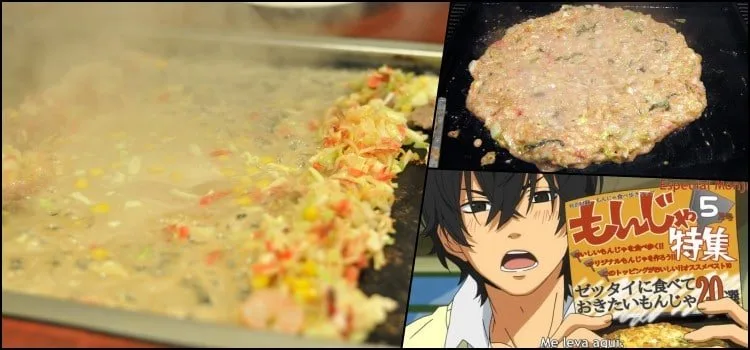
Learn how to make the monja that Haru called Shizu to eat! Monjayaki (or simply “monja”) is a liquid pancake very similar to okonomiyaki. It is a typical dish from Tokyo and very popular in the Kanto region. It is known for being a dish to enjoy with friends made in a size for several people.
This dish appeared and became popular after World War II, when rice production was scarce. To make the monja, just mix the ingredients and fry them in a skillet. It is poured and eaten with a small spatula directly on the hot griddle. It is a very free recipe… it even resembles our free way of making omelets of various flavors.
While okonomiyaki is a pancake for one person, monjayaki is prepared as a giant pancake for a table. It tends to be more consistent and crispy with a pancake texture resembling melted and burnt cheese. The batter of Monjayaki is usually more liquid than that of Okonomiyaki.
Monjayaki is a calorie-rich nightmare, only in anime for Haru to stay slim.
Monjayaki Recipe
400ml of water;
5 tablespoons of wheat flour (or rice flour);
300g of chopped Swiss chard;
1 onion sliced;
Chopped green onion to taste;
300g of ground meat;
Salt and pepper to taste;
Oil for frying;
Preparation Method – Mix the ingredients and fry until golden. You can add things like cheese.
I hope you enjoyed this little recipe. We also recommend learning how to make the traditional Okonomiyaki, we have a very complete article talking a little more about this Japanese pancake. We will leave some links below, we appreciate the comments and shares.
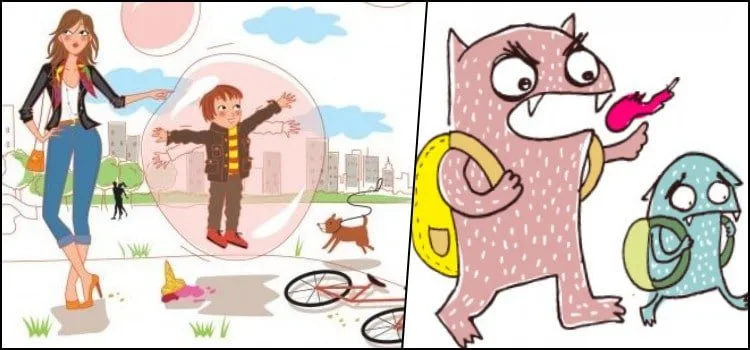
In Japan and other Eastern countries, there is a term called “Monster Parents (モンスターペアレント)” that characterizes irrational parents. These monster parents are known for raising their children with authoritarianism and overprotection. Teachers face many problems with these types of parents, who make various complaints and irrational requests.
This term originated in Japan and gained significant fame in Hong Kong. The word derived from English was created by the Japanese educator Yoichi Mukoyama in 2007. This term gave rise to a dorama on Japanese TV that bears the same name as Monster Parents.
The dorama showed various real-life situations where parents of students frequently interfered in school matters and in the teaching of teachers. A manual was even created to deal with monster parents, which was delivered to over 60,000 teachers in Tokyo.
It is believed that these types of authoritarian and overprotective parents have been increasing for decades. Many parents end up gathering, arguing with teachers, or even participating in online forums.
What are Monster Parents like?
Monster Parents often force children to follow tight schedules. They restrict and control their children’s lives by prohibiting them from doing certain things and ordering unnecessary tasks. Other parents pressure their children to follow the same career as the parents or something they desire.
Parents often have extremely high expectations for their children, which causes great pressure on the kids. Some parents do not accept their children’s failures, demand high grades and good academic performance. Other parents end up becoming true monsters and causing physical or psychological harm to their children.
Monster Parents generally interfere in their children’s personal lives and try to control them. As a result, these children often end up developing anti-social personality traits and attitudes and tend to be excessively dependent on their parents.
Other monster parents only want what is best for their child. They end up worrying too much and treating their children like gods or princes, which annoys and disrupts other people involved.
Complaints from monster parents
Some monster parents are practically crazy; they question the school and teachers about things that are beyond their reach. Some parents do not want their children to participate in school cleaning. Others become furious over a simple burn or injury to their children.
Some even demand that the school pay medical expenses for a simple injury. Others complain about the fact that the child was bitten by an insect. And don’t think that this type of personality accompanies children only in elementary school. Some overprotective parents act this way even after adulthood.
Some parents are truly unbelievable. Overprotective and authoritarian parents are common in all countries, but today we learned a great term and also some absurd things we never imagined.
This may be a major culprit of social problems in Japan. Parents should not pressure their children into anything; they should let them be independent. There are constant movements and criticisms about these types of overprotective parents.
I thought about writing this article after seeing Erina’s father in the anime Shokugeki no Souma. That is a great example of a Monster Parent! Have you ever met a parent like that? We would love to see your opinion and possible comment.
While some believe that parasols are for blocking the sun and umbrellas are for protecting from the rain, the truth is that parasols are for women and umbrellas are unisex. In Japanese, there is no distinction between parasol and umbrella; it is called kasa [傘].
In Japan, umbrellas have many more uses than simply protecting from rain and sun. We know that Japan is famous for its numerous inventions and variations of things. In this article, we will see some umbrellas and parasols that you had no idea existed, but only exist in Japan.
It is interesting to highlight that the word kasa is also written (笠) and refers to ancient hats that have a similarity to modern umbrellas. We can start by mentioning a type of umbrella that I saw a lot while I was in Japan during the summer.
Transparent umbrellas were so easy to find; I even bought one, but unfortunately, I left it in Japan T.T This really serves to protect only from the rain, but its material was good and durable.
Wagasa – Traditional Japanese Parasol
Let’s start by talking about the traditional Japanese parasol – wagasa! It is traditionally made with bamboo ribs and washi (Japanese paper). It came from China and was a sacred instrument used in Buddhist ceremonies.
They entered Japan in the Heian period (794-1185) and became popular in the Edo period. They were often associated with geishas, and nowadays they are used on special occasions.
The wagasa have different traits, colors, designs, and symbols. Purple parasols are often used by geishas and symbolize longevity. Dancers usually wear pink, middle-aged people green or red, the elderly dark blue, and white are used in funerals.
Currently, traditional umbrellas from Japan are often used in events, tea ceremonies, weddings, festivals, and traditional dances. Nowadays, wagasa is seen as a work of art and culture.
Japanese Creativity in Umbrellas
We know that Japan loves to invent things, so we can expect various umbrellas with different prints. Here are some themed and special umbrellas that have gone beyond the limit. Not all of them on this list are easy to find, much less popular.
Some umbrellas have hidden designs that only appear with contact with water. Others have a visor to completely cover the head while still being able to see. There are even umbrellas that open and close in the opposite way.
The Japanese have tried to make life easier for people by creating umbrellas that you can tie to your arms without needing to hold them. They have also created a type of umbrella hat and even a hat that allows you to sit on it like a chair.
Samurai Umbrella – They even invented a regular umbrella that resembles a katana;
Kokeshi Umbrella – The name is self-explanatory; it has a kokeshi on its handle;
Vegetabrella – This one went beyond the limit and turned into a salad;
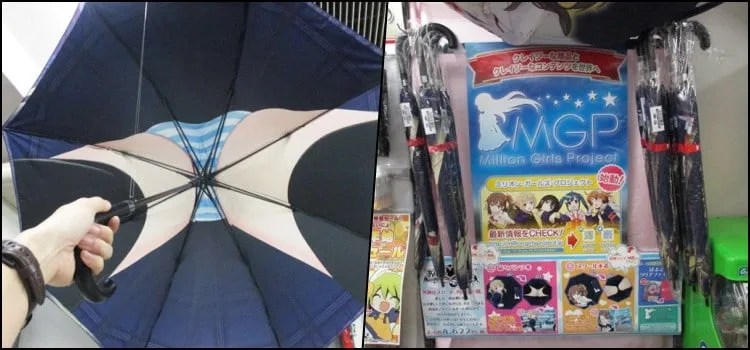
Perverted Umbrellas – A project called The Million Girls, aimed at promoting the concept of bizarre Japan, created an umbrella called Upskirt Umbrella. On its lower part, you find the view of the legs and the underwear of a Japanese schoolgirl in anime.
Have you ever encountered someone using these bizarre umbrellas? Do you have the courage to buy one of these parasols? We appreciate your comment and sharing. I hope you enjoyed it; don’t forget to read our article about aiaigasa.
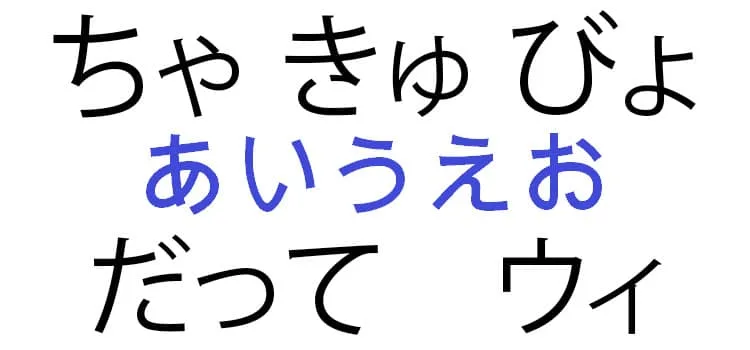
Have you ever tried to write the small hiragana or katakana and couldn’t? For some, even writing the correct syllable, no option with small hiragana appears. In this article, I will help you learn once and for all how to write these small hiragana on any computer or mobile phone.
We rarely use these small kana, the most used of them is the tsu (つ /っッ) which can easily appear when typing two consonants together like “tt” and “ss”. The small tsu is called Sokuon (促音) which indicates a doubled sound of a consonant or a pause or cut in pronunciation.
This small tsu can be present both in hiragana and in katakana words like Football which in Japanese can be called futtebooru [フットボール] or sakkaa [サッカー].
Other small katakana and hiragana that we use a lot are (ゃゅょ) which are usually used to combine a consonant with the sounds ya yu yo. By using these small kana you can form sounds like ちゃ (cha), ピュ (pyu), びょ(byo), きゅ(kyu) and others. To type them, just write the letters to form the syllable.
How to Use and type the small ぁぃぇぉ
Other small kana that are not usually used are the sounds ぁぃぇぉ. They used to be used in syllables like wi (うぃ), we (ウェ), vi (ヴィ), ve (ヴェ), je (じぇ), fa (ファ) and others. Currently, most of these syllables can be written more simply like vi(ヴィ) can write bi(び). If you want to write these small hiragana or katakana, you can type things like va, vi, ve and vo.
There is a simple way to write any small hiragana or katakana in isolation. To do this, just type the X before the kana you want to write small. Another alternative is to type the 1, but it does not work on all devices.
It is worth remembering that the syllables wi and we have their own kana that have become obsolete. If you write currently it will be ウィ and ウェ, but if you navigate with the arrow through the other options and writing suggestions you will find the hiragana ゐ and ゑ.
Unfortunately, only the kana アイウエオあいうえどうつやゆよ can be small. I hope you liked these little tips. We appreciate the comments and shares. We also recommend reading:
Have you heard of Unit 731? If you have an interest in Japanese history and have researched it, you must have heard of the infamous Unit 731 that existed during World War II (1939 – 1945) and the Second Sino-Japanese War (1937 – 1945).
Unit 731 (Nana-san-ichi Butai) was the unit where the Epidemic Prevention and Water Purification Department of the Kwantung Army was located in the Pingfang district, in the former puppet state of Manchukuo, northeastern China.
However, despite the official name, the Department that provided health-related services was actually a facade to hide the real activities of Unit 731, carried out underground in the district.
The activities were based on human experiments on civilians and prisoners of war from China, Russia, Mongolia, Korea, and even Allies. Additionally, other subjects were selected. Common criminals, captured enemies, and anti-Japanese partisans. The unit was commanded by the general and surgeon of the Kwantung Army, Shiro Ishii.
Inside Unit 731
The horrific activities of Unit 731 included:
Infection of prisoners with venereal diseases to study the effects of diseases on the human body;
Vivisection of prisoners without anesthesia to study the effect of diseases on organs;
Subjecting prisoners to rape by the unit’s guards;
Exposing prisoners to cold temperature tests to study the effects of freezing cold;
Testing firearms such as grenades and flamethrowers and biological weapons using prisoners as human targets;
Deprivation of water and food to determine how long it took for prisoners to die;
Unit 731 after the war
Eventually, after the end of World War II and Japan’s surrender, Unit 731 was deactivated, putting an end to its activities. However, those involved in the experiments were not tried for the war crimes committed and were granted immunity by the Americans in exchange for the data collected during the experiments conducted at the unit.
As a result, the existence of Unit 731 went unnoticed by the public. Thus, it remained out of popular knowledge until 1989, when human remains were discovered buried in pits in Shinjuku by workers who were working there.
Subsequently, the Japanese government had to admit the existence of Unit 731 and the experiments conducted during that time.
We have included a video below as a supplement:
Unit 731 is yet another one of the atrocities committed by the Empire of Japan during World War II. Thus, Japan had to apologize to its Asian neighbors. This is something that will be marked in Japan’s history.
Despite the official apology, countries like China and Korea still maintain a relationship of distance and distrust towards Japan. This is due to the inadequate approach to such atrocities committed by the Japanese during wartime.
Did you know about Unit 731? What is your opinion on the subject?
Tokyo Ghoul (東京喰種) is a seinen manga series written by Sui Ishida and published in Yong Jump in 2011. The success resulted in a Light Novel and several seasons of anime. In today’s article, we will try to share approximately 25 curiosities about Tokyo Ghoul (I won’t number them).
The story revolves around Kaneki, a normal young man who ends up encountering a deadly romance that transforms him into a monster that feels the urge to eat humans. You should know this, as this article contains several spoilers, and we recommend that you have watched the anime or read the manga beforehand.
Curiosities about the work of Tokyo Ghoul
Tokyo Ghoul was based on a novel called metamorphosis written in 1915 by Franz Kafka. The Ghouls are originally monsters from Arab mythology associated with cemeteries and that eat human flesh. It is believed that the characters of Tokyo Ghoul reference Tarot cards.
Tokyo Ghoul was a success in 2014, both in manga and animation. The manga became the 4th best-selling of the year, while the anime had a disappointing second season that displeased most fans.
The manga author Sui Ishida has never appeared in public, nor has he posted photos on his social media. He is a complete unknown, even his gender is something questionable. People only believe he is a man because he let something slip in a post. The mangaka claims to have read every chapter of the works of Dragon Ball and Bleach.
The Anteiku Cafe is based on a real café, near the author’s house;
In Tokyo, there are actually districts that are like neighborhoods, there are only 23 of them while in the anime there are 24;
Touka was supposed to take Rize’s place until she was implemented;
Kaneki’s last name is a reference to the famous writer Osamu Dazai, who was born in Kanagi famous for his novel “No Longer Human”;
December 20 is the same birthday as Kaneki and Arima Kishou. Kaneki was tortured on his birthday;
The only known living members of Kaneki’s family are his uncles and a cousin;
Curiosities about the characters of Tokyo Ghoul
About Kaneki – His name is derived from the kanji for gold and tree (金木), which are also the days of the week Thursday and Friday. (金曜日/木曜日). His last name ken (研) derives from the word study, indicating his intellect. Kaneki has the habit of twisting his jaw with his left hand every time he lies or feels uncomfortable, he got that from his mom.
The Tsukiyama was destined for another work until the author decided to add him to Tokyo Ghoul. There are several speculations that Tsukiyama is bisexual, which was confirmed in an interview. After Kaneki lost his memory, Tsukiyama went on a hunger strike for 3 years.
Amon, the CCG investigator has the same name as the Egyptian god “Amon Ra,” which translates to “God of all gods.” The tattoo on Uta‘s neck is written in Greek and means: “I cannot live with you, nor without you.” Uta was raped by Mutsuki.
Touka suffers from ornithophobia (fear of birds), due to a bird that hurt her right eye (the eye she covers with her bangs). Touka likes school and rabbits. She hates classic literature, and in reality, she wants to study the biology of Ghouls and not run a café as the anime says.
Juuzou does not feel any kind of physical or emotional pain, due to the suffering of childhood at the hands of the Female Ghoul Big Mama. That is why she keeps cutting and sewing herself, to feel alive.
I hope you enjoyed these little curiosities. Do you know another interesting fact? Comment and share with friends. We also recommend reading:
Between 1868 and 1947, after the fall of the feudal system (shogunate) and the establishment of a new government, Japan transformed into the largest Asian power thanks to the industrialization and militarization of the country that placed the Japanese in a position of sovereignty compared to the rest of the Asian continent.
During the conflicts fought with China during the Sino-Japanese wars, the invasions of Korea, the Russo-Japanese War, World War I, and the Pacific War, Japan achieved military success. However, Imperial Japan went into decline after suffering several defeats during World War II, which resulted in military weakening and defeat in the Second World War, leading to Japan’s surrender to the Allied Forces in 1945.
After the surrender, Imperial Japan was dissolved in 1947 and the constitution in force at the time (Meiji Constitution) was replaced by the Constitution of 1947, giving rise to Modern Japan.
Fall of the Shogunate and Meiji Restoration
After Emperor Meiji (1852 – 1912) ordered the dissolution of the Tokugawa Shogunate, samurai forces supported by daimyos who were dissatisfied with the shogunate, along with the government that aimed to build economic relations with foreigners, the feudal military government that ruled Japan for six centuries finally dissolved, thus bringing a new era to the country with a constitutional government model that provided a more democratic government for the Japanese people.
However, Japan’s opening to foreign trade was not peaceful even after the end of the shogunate, as there were still political forces opposing the “Westernization” of Japan and the trade relations established with foreigners.
However, over the years, Western influences in Japan’s politics gave rise to militarization ideas and nationalist ideology that influenced Japanese society until the end of World War II.
World War, Sino-Japanese and Russo-Japanese Wars
Before World War I, Imperial Japan fought in two significant wars following its establishment after the Meiji Revolution. The first was the First Sino-Japanese War (1894 – 1895). The war revolved around the issue of control and influence over Korea under the rule of the Joseon Dynasty, which resulted in a Japanese victory.
The second was the Russo-Japanese War (1904 – 1905) fought over the dispute for control of Korean lands, resulting in another victory for the Japanese empire.
Japan entered World War I in 1914, taking advantage of Germany’s distraction with the European War to expand its sphere of influence in China and the Pacific. Along with England, France, and the United States, Japan managed to win World War I.
Do you know the history of Imperial Japan? How did it fall and what were the events during World War II? In this article, we will answer all these questions. We recommend that you read our article about Imperial Japan by clicking here.
In 1929, with the Great Depression caused by the stock market crash, Japan, like several other countries, was affected by the economic crisis and, to continue its industrialization, Japan had to import the necessary materials since there was a great shortage of these materials in the Japanese lands.
By importing iron, rubber, and oil from the Americans, Japan was able to recover economically and, to maintain this during an economic depression, the Japanese saw an opportunity to obtain such materials from China (more specifically in the Manchuria region).
The Second Sino-Japanese War
Under the pretext of liberating the Manchu people of that region, Japan invaded and conquered China in 1931, establishing a puppet state called Manchukuo.
In 1937, the Second Sino-Japanese War broke out, which was a terrible time for China to enter into war as the Chinese were already dealing with their own internal conflict, with nationalists and communists vying for control of the country.
During this conflict, the Empire of Japan committed an atrocity on December 13, 1937, which is still not well recognized by the Japanese themselves today, known as the Nanjing Massacre.
The episode occurred in the Chinese capital of Nanjing where the troops of the Imperial Japanese Army murdered a total of 300,000 soldiers and civilians and also committed rape and looting throughout Nanjing.
Pacts with the Soviet Union, Germany, and Italy
During the years 1938 and 1939, Japan attempted to invade and take the lands of the Soviets; however, the Red Army managed to prevent the Japanese troops from advancing further and defeated the 7th Division and 23rd Division of the Imperial Japanese Army.
Seeing that invading the Soviet Union was futile and unfeasible, the Japanese signed a neutrality pact with the Soviets in 1941 to avoid future conflicts.
After the invasion of China and the atrocities committed by the Japanese in the country, the Americans began to turn against the Japanese and public opinion became unfavorable to Japan.
In 1940, Imperial Japan signed the Tripartite Pact with Nazi Germany and Fascist Italy, and thus, the three countries became the Axis powers.
The Fall of the Japanese Empire
In 1941, with the attack on Pearl Harbor and hoping to destabilize the Americans, the Japanese saw an opportunity to extend their empire throughout Asia.
However, this proved to be the opposite as the Americans managed to recover from the attack in a short time and decided to declare war on Japan. As a result, Germany and Italy declared war on the United States.
In 1942, Japan began to suffer significant losses in battles on air, land, and sea. Japanese military strategists became aware of the unfavorable difference between the industrial potential of the Empire of Japan and that of the United States.
In 1943, Japan began to fight defensively and remained so for the rest of the war. By 1944, Allied forces had neutralized all Japanese strategic bases, leaving the Japanese economy in shambles and the country no longer able to supply its armies. Then, the Americans launched a bombing campaign against Japan, starting with incendiary bombs.
In 1945, with the intention of forcing the Japanese to surrender, the Americans dropped two atomic bombs on Hiroshima and Nagasaki on August 6 and August 9, respectively. With the war already lost, on August 15, 1945, the Empire of Japan surrendered to the United States, thus recognizing its defeat in World War II.
Post-war Japan
After Japan’s surrender, the United States occupied the country, initiating a process of reconstruction and demilitarization of Japan. As a result, the Empire of Japan was dissolved in 1947 and a new constitution was established, abolishing the Meiji Constitution of 1889, giving rise to Modern Japan.
Did you like the article? Then comment and share it with your friends. We also recommend reading:
Have you ever thought about visiting the place where an atomic bomb fell? Hiroshima, a city devastated in World War II, has become a major tourist spot with a beautiful Peace Memorial Museum and Park. In this article, we will learn some details about this park and museum in the city of Hiroshima that transformed from ashes into a beautiful city.
The Hiroshima Peace Memorial Park, in Japan, was designated a World Heritage Site by UNESCO in 1996. In the Park, you will find the famous atomic bomb dome (genbaku dome), a structure that survived the bomb. In addition, the park is filled with monuments and a peace museum where you can travel through time.
The ruin serves as a memorial for the people who were killed in the atomic bombing on August 6, 1945. More than 70,000 people died instantly and another 70,000 suffered fatal radiation injuries.
Bombs at Dawn in Hiroshima
At 8:15 am, on August 6, 1945, Little Boy, the first atomic bomb, was used in the war. It was dropped by the United States Army Air Forces from a B-29 bomber. The force of the atomic bomb effectively obliterated the city of Hiroshima, Japan.
Within 43 seconds of falling, Little Boy detonated the city, missing its target by 240 meters. Intended for the Aioi Bridge, the bomb exploded directly over the Shima Hospital, which was very close to the Genbaku Dome. Since the explosion was almost directly overhead, the building managed to maintain its shape. The vertical columns of the building were able to withstand the vertical force of the explosion, and parts of the external concrete and brick walls remained intact.
The center of the explosion occurred 150 meters horizontally and 600 meters vertically from the Dome. Everyone inside the building was killed instantly. In December 1996, the Genbaku Dome was registered on the UNESCO World Heritage List, based on the Convention for the Protection of the World Cultural and Natural Heritage.
Its inclusion on the UNESCO list was based on its survival from a destructive force (atomic bomb), the first use of nuclear weapons on a human population, and its representation as a symbol of peace. The dome was originally built in 1915 by Czech architect Jan Letzel, where it was the Hiroshima Prefectural Commercial Exhibition.
The Statue and the Legend of the Tsuru
A girl named Sadako Sasaki was hit by radioactive rain from the atomic bomb in Hiroshima, resulting in leukemia. On August 3, 1955, Chizuko Hamamoto, a friend of Sadako, visited her in the hospital and made her an origami of a Tsuru.
Her friend told her a Japanese legend that whoever makes a thousand origami Tsurus is granted a wish by the gods. Sadako began making Tsurus every day with the wish to heal and return to life, and she also wished for peace for humanity.
Sadako managed to make 646 paper Tsurus, and after her death, her friends made another 354, to reach a total of 1000. Sadako died on October 15, 1955, and her friends erected a monument in her memory. In the Peace Memorial Park, you can find inscribed on the monument: “This is our cry, this is our prayer. Peace on Earth!” This legend and story moved and reached the whole world!
Throughout the year, you will find many people visiting this monument in her memory and bringing various origami Tsurus. This statue was made not only in memory of Sadako but for all the children who died as victims of the atomic bomb.
Hiroshima Peace Memorial Museum
Despite all the sadness from the death of so many people, the reconstruction of the City of Hiroshima is impressive. The Museum helps us understand the total devastation caused by the atomic bomb. You will find objects and belongings of people affected by the bombs and even pieces and the capsule of the bomb.
In addition, the museum offers an accessory for you to follow through audio in Portuguese, all the objects in the museum. The museum also has other exhibitions, 3D films, testimonies from survivors, and photos of the event. The scenes are strong and cause knots in the throat, be well prepared.
In addition to photographic records, there are wreckage, models, and explanations about the bomb and the effects of radiation on the human body. The various recordings are personal accounts from survivors, stories of the victims in detail with name, surname, age, where they were at the moment of the explosion, and the complications that occurred.
Other Points of the Peace Memorial Park
In addition to the dome, main museum, and the statue of the children mentioned in this article, there are numerous monuments and inscriptions in memory of those who died as a result of the atomic bomb. There is a monument that contains the ashes of more than 70,000 unidentified dead.
The park reflects all the effort to restart the city and its deep respect for the lives lost and lessons from the tragedy. The purpose of this Park is to remember the horrors caused by the atomic bomb so that this never happens again, in addition to being a memorial to the victims of this war, which total more than 166,000 people.
The park is filled with gardens, sculptures, tombs, and small memorial buildings that concentrate the memory of one of the fateful dates in World History. The park also has some cenotaphs, the flame of peace, the gates of peace, and the bells of peace. On the morning of August 6, the lantern ceremony takes place on the Motoyasu River.
The Hiroshima Peace Memorial Park Rest House is another bombed building located in the park. Originally, it was the Taishoya Kimono Shop in March 1929. The only thing that survived was the basement and a 47-year-old man.
When visiting Hiroshima, you must know this peace memorial park and its beautiful museum. It is amazing to see the recovery of the city and to be moved by all the recorded events. Have you had the chance to visit the Hiroshima Peace Memorial Park? What was your experience? We appreciate your comments and shares.
Traveling on Japan’s trains is a unique and interesting experience; for some, it is a daily routine. You have probably noticed distinct groups of people with notable characteristics. With that in mind, in this article, we will talk about some types of people you encounter on Japan’s trains.
The sleepers on the trains – Inemuri
We can start by talking about the most notable ones, the beautiful sleepers. It is part of the culture to sleep on the trains, but some end up lying down and taking up several seats. The Japanese can sleep both standing and sitting, so someone might end up resting their head on your shoulder.
They sleep in all sorts of ways, in various strange and funny positions; some sleep with their mouths open, and rarely does anyone end up on the floor. The most interesting thing is that they always wake up at the correct station and continue on their way home or to work. This practice is called inemuri.
The sumimasens
It doesn’t matter if you are on a train or not; you will always encounter them. Even if the train is spacious and empty, they find some way to bump into you, whether by grabbing the door when getting on and off.
Every now and then, because of their respectful etiquette, sometimes the person doesn’t even touch you and already says sumimasen, which means excuse me, pardon me, or may I pass.
They catch you by surprise and discreetly make you move from your spot. On the other hand, there are those who do not move from their place, waiting for you to ask for permission.
The phone addicts on the trains
You won’t find anyone talking on the phone on Japan’s trains, but they never let go of their cell phones. They are constantly looking at the screen, browsing websites, watching anime, reading, and chatting on Line.
You might bump into them, give them a nudge, and some don’t even notice. Whether standing, sitting, or sleeping, the cell phones never leave the hands of these Japanese. The painful part was seeing several watching anime on anitube, the precious site that was banned in Brazil and is only functioning in Japan. T.T
The perverts on Japanese trains
The famous perverts do everything to see a panty, even if they don’t need to make much effort. They take advantage of the crowded train to grind against schoolgirls, and unfortunately, the victims do nothing or say nothing.
Every now and then, someone gets arrested for being inappropriate. There are not only male perverts; I don’t know if it’s innocence or naughtiness, but some schoolgirls with their short skirts open their legs in front of us as if there were no tomorrow.
The loud ones on Japan’s trains
Some imagine that since you can’t use your phone on the train to avoid making noise, the journey must be silent. Unless you come across a group of schoolgirls or a loud clique. They don’t talk discreetly; they shout! They talk non-stop and don’t care about anyone.
If someone tries to get the attention of these young people, they end up getting even angrier. The situation only becomes more awkward, and no one does anything. Every now and then, you will see people talking loudly on the train; not everyone realizes they are speaking loudly; this is something natural.
This seat is mine
It is normal to find pregnant women or elderly people standing on the train. Despite there being priority seats, when a Japanese person sits down, it is difficult for them to get up before their station arrives. Some even think about giving up their seat, but the embarrassment of both parties hinders that.
When someone thinks about getting up to let the elderly person sit, she simply remains standing. And another young person ends up sitting in the spot; I have tried to do this discreetly, but elderly women prefer to stand to imagine they are young.
The anti-socials on Japanese trains
The vast majority of Japanese people on the trains do not communicate; shyness predominates during the journeys and the possibility of meeting unknown people. No one takes the initiative, and even if you start a conversation, it usually doesn’t flow easily.
In reality, the Japanese are afraid of socializing, especially if you are a foreigner; they are afraid of being near you and not knowing how to communicate and help due to the language barrier. Although no one says anything, the Japanese often stare at each other, and it’s not just foreigners; they stare, especially at the opposite sex.
These were some types of people you find on the trains. There are other types and interesting characteristics that we can encounter during our lives traveling on Japan’s trains; if you remember any, comment! Thank you for sharing, we also recommend reading: