
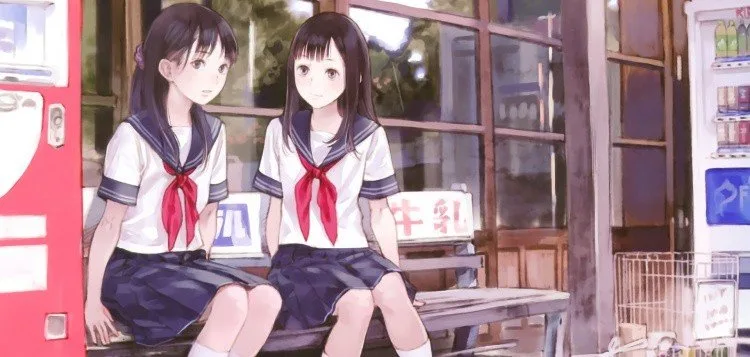
Are the schools in Japan the same as the schools in anime? A surprising amount of the furniture is real. You change shoes at the locker. Sports day is not a plot device. And that four-note bell between classes has a name: the Westminster chime.
What the shows rarely tell you is how much of the rest is a stage trick — and how much is just an ordinary Monday that happens to look familiar.
Contents 5
Where school anime actually gets it right
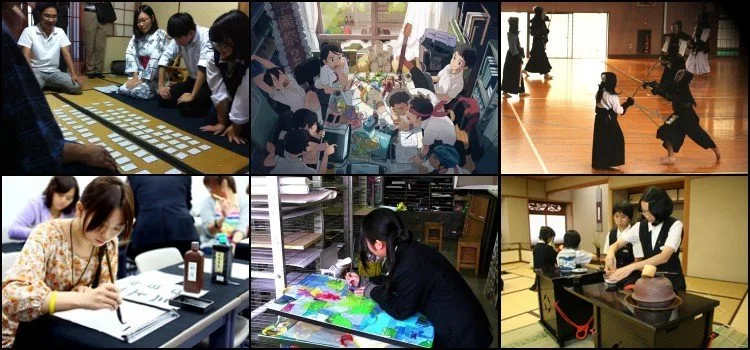
Clubs — The first thing you notice in a school anime is the club board: sports, reading, even games and IT. That part is true. After-school clubs, or bukatsu, split into sports clubs and culture clubs, and they can swallow evenings and weekends. A baseball or kendo club is a real timetable. A host club or an SOS brigade is the part that belongs to the storyboard.
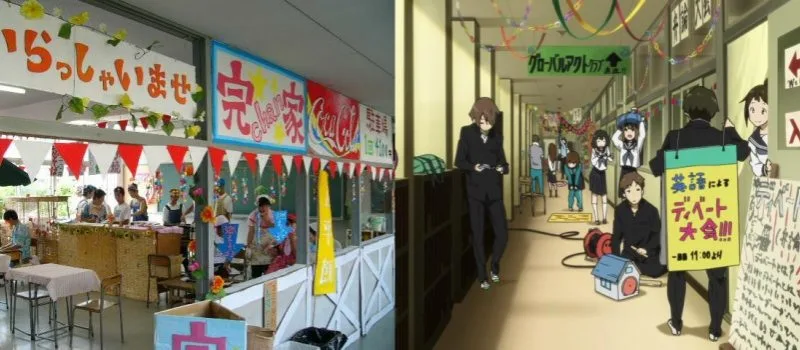
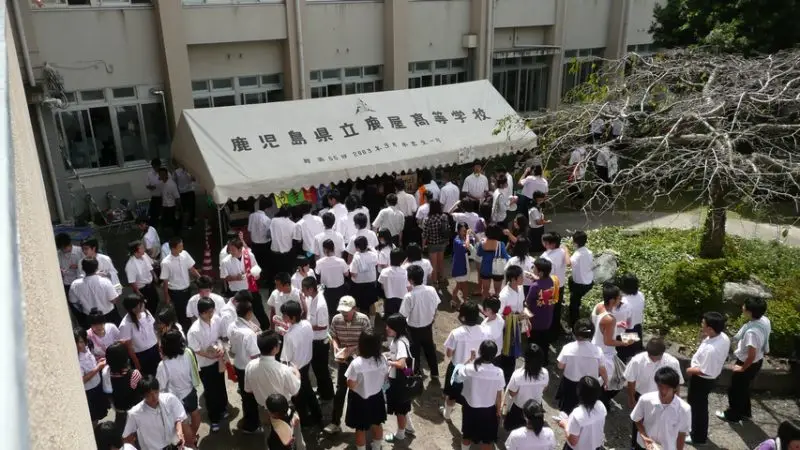
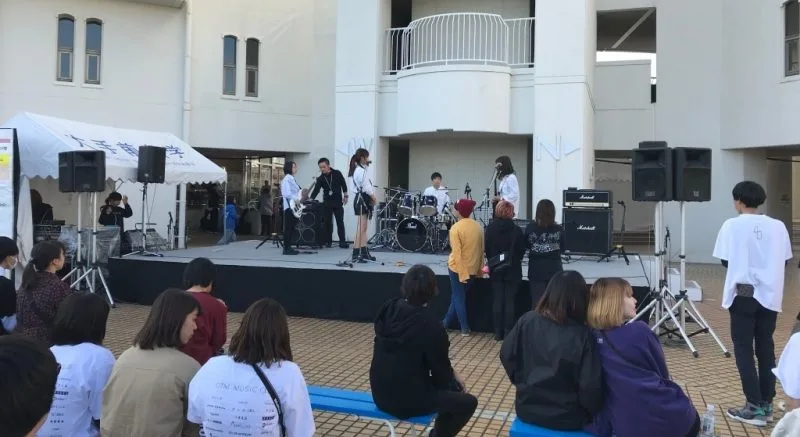
Festivals and events — Those human pyramids and relay races keep showing up because they already exist. They belong to undōkai, the school sports day. Cultural festivals, or bunkasai, are the other big stage: classes run food stalls and themed cafés, and a maid café sometimes appears as a class joke for the weekend. It is a stall, not the school's secret second job.
Shoes — Japanese schools really do make you swap outdoor sneakers for indoor shoes at a locker wall. The indoor pair is there to keep the floors clean, not to look cute in a hallway shot.
Senpai and kōhai — This is not anime-only vocabulary. Older students and younger students really do live inside that pair of words, especially inside a club. A senpai is the one who already knows the drill. A kōhai is the newcomer expected to watch, help, and not skip the hierarchy.
The Westminster chime — That is the name of the famous, slightly nostalgic bell that rings in schools across Japan. Once you notice it in one school anime, you start hearing it in almost all of them.
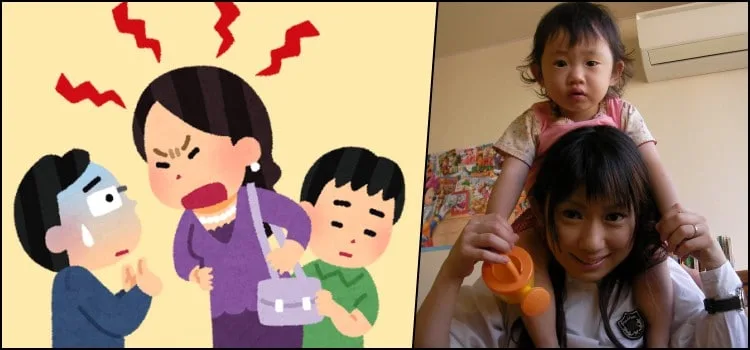
Ijime: bullying — People sometimes assume anime only sells the cute version of Japanese school. It does not. School series and live-action dramas based on manga go straight at ijime, the bullying that can sit inside a class that barely changes rooms. Great Teacher Onizuka (GTO) follows cases that push a student toward a suicide attempt, and that is not a fantasy the writers pulled out of nowhere. Girls bully too. Boys get targeted too. A closed homeroom makes it harder to walk away.
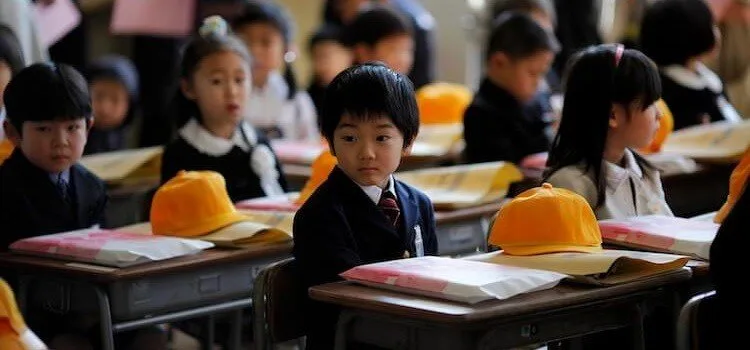
One detail the camera almost never bothers to label: in elementary, junior high, and high school, the class usually stays in one room and the teachers rotate in. Students leave for gym, music, or art. That is why a homeroom can feel like a sealed little country for a whole school year — and why a transfer student lands like a plot event even in real life.
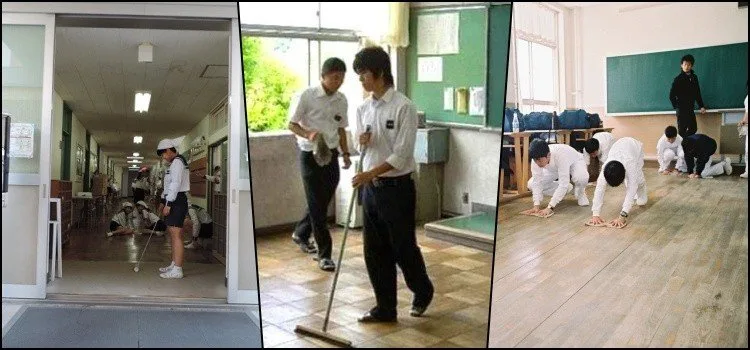
Another thing anime gets right without making a speech about it: cleaning time, or sōji. Students sweep the classroom, wipe desks, and take a toilet or hallway zone. There is no hidden janitorial army waiting after the last bell.
Uniforms: gakuran, sailor, and blazer
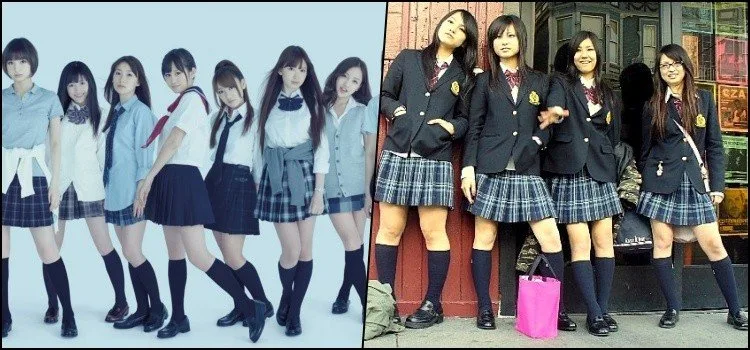
The uniform is the first thing a foreign viewer thinks they already understand. Real schools do wear uniforms. They are just much less of a fashion catalog than the opening credits suggest.
Three silhouettes keep coming back. The boys' gakuran — a dark, high-collared jacket with metal buttons — is the old-school look. Girls' sailor uniforms, sērā-fuku, still appear, especially in junior high. A lot of schools have moved toward a blazer, tie or ribbon, and a skirt or trousers in navy, black, or beige. Summer and winter sets are normal. Pastel miniskirts and wild plaid pants belong to character design.
Schools can be strict about the rest of the look: hair length, accessories, even how you walk in the door. Some have asked for a “natural hair” certificate when a student's hair is not straight and black. Other boards have started reviewing those rules. Either way, the average hallway is not a rainbow of dye jobs.
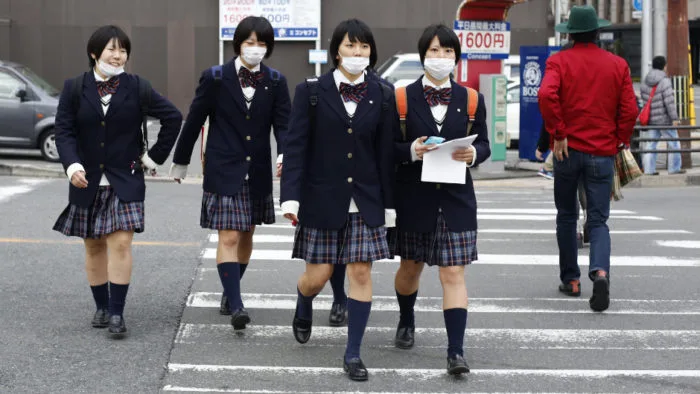
The skirts are not that short on the rack. In anime, most girls wear a skirt that stops on the thigh. In real Japan you will see short skirts too — often because students roll the waistband after they leave the gate. The factory hem is usually closer to the knee. Some schools ignore the roll; plenty of others call it a uniform violation. Manga authors kept the short version because it reads clearly in a panel and, bluntly, because it sells.
Lunch, exams, and the rest of the week
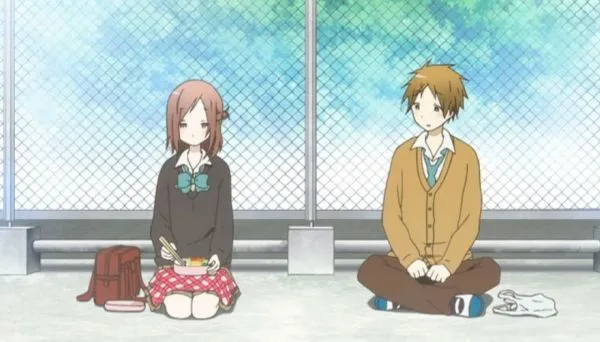
Lunch is not one system. Public elementary schools and most junior highs serve kyūshoku: a set hot meal eaten in the classroom, often plated by students on rotation. High school is a different country. Many high schoolers bring a homemade obento, buy bread or onigiri at a school shop, or use a cafeteria. Vending machines show up. The anime that treats every lunch as a cute bento on the rooftop is usually drawing high school — and skipping the part where the roof is locked.
Snack rules vary by school. Some ban eating on the commute or at the convenience store in uniform. That is a local school rule, not a national snack police.
All-girls schools — They exist. Some have later opened the door to boys. Kaichou wa Maid-sama! turns that into a comedy premise, with one boy walking into a building that used to be girls-only. The show is not a documentary of a specific school, but the setting is not invented either.
Entrance exams — The last year of high school really does squeeze students toward university entrance exams. Cram schools, mock tests, career talks with teachers: that pressure is not an anime-only plot. It is just less likely to resolve with a sudden burst of friendship power.
School trips — Class trips can be impressive in real life too. Okinawa, a distant prefecture, a string of tourist spots. Some schools even go to Korea. The overnight trip is a calendar item, not a miracle reserved for the main couple.
What school anime stretches
Colored hair — Japan is not a prison of fashion, but a student with bright red or silver hair is still unusual in a real classroom. Plenty of schools restrict dye, perms, and loud cuts. Anime uses hair color as a name tag. Real schools often want the opposite: nobody standing out.
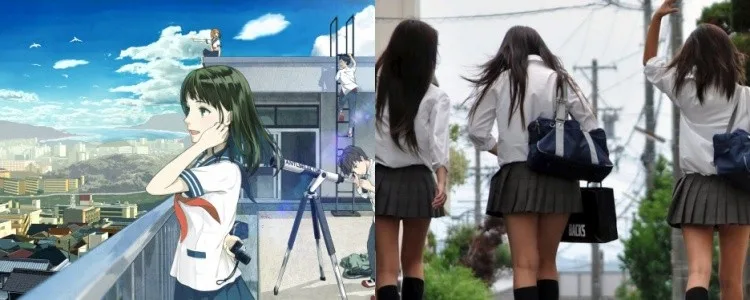
The rooftop — Almost every school anime parks someone on the roof for a confession, a fight, or a quiet bento. A large number of real schools keep that door locked. Students still sneak up; the rule is still a rule. Why do artists love it? A rooftop is an easy isolated stage with a sky behind it. You do not have to draw thirty extras.
Grades posted in class — Some schools have displayed rankings. Many do not. When the top students get a prize, it is often quieter than a full-class scoreboard.
Student council — Anime likes to treat the student council as the head of the school, complete with a throne and a budget for schemes. Real councils help teachers plan festivals, announcements, and trips. They do not usually run the building.
Japanese school or anime?
School anime is good at the furniture and sloppy with the volume. Clubs, festivals, indoor shoes, senpai, the chime, even ijime — those have a real floor. Hair dye, unlocked rooftops, a council with superpowers, and a building full of people who never look tired are the exaggeration. Japanese school is stricter than the average episode, and also more ordinary: people study, break rules, make friends, fall in love, and skip class when they can get away with it. During my trip to Japan I ran into students doing exactly that, uniforms on, nowhere near a classroom.
If you want a watchlist that still teaches the texture of a Japanese school — without pretending it is a documentary — start with this list of school anime:
- Toradora;
- Another;
- K-On;
- Suzumiya Haruhi;
- Hyouka;
- Kimi ni todoke;
- Yahari Ore no Seishun Love Comedy wa Machigatteiru;
- Kokoro Connect;
- Great Teacher Onizuka (GTO);
- Gin no Saji;
- Angel Beats!
- Sakurasou no Pet na Kanojo;
It should not need saying, but real life also skips the part where a boy falls onto a girl's chest by accident, and the part where monsters, magical girls, time travelers, and school massacres share the same timetable. Enjoy the cliché. Just do not pack a rooftop bento as if the door will be open.

alfa
W explaination
Reply