
Do you know the meaning of the word Banzai? Why do people in Japan shout this expression, when do they shout it, and where does it come from? And what is the so-called Banzai charge of the Pacific War? In this article, you will find a clear answer to each of those questions.
Is Banzai simply a Japanese exclamation used to greet someone and wish them long life and prosperity? Before we get into the details, here is a quick summary: Banzai [万歳] literally means "ten thousand years" and is heard in Japan today at joyful, celebratory moments. Its history, however, goes back much further than the Second World War.
Contents 5
The meaning of the word Banzai
The word Banzai [万歳] is built from two kanji: 万, meaning "ten thousand," and 歳, meaning "years" or "age." Taken literally, it translates to "ten thousand years," which is the same idea behind the English "Long live the king!" or the French "Vive le roi!"
Even so, in the West the word is still often mistaken for a war cry. That misconception comes mainly from the late stages of the Pacific War, when the term became associated in the Allied press with the so-called kamikaze attacks. From that wartime image grew the "desperate battle cry" reading that still sticks to the word in popular culture.
In modern Japan, however, Banzai simply means "Long live!" or "Hooray!" In daily life the word has nothing to do with war or with greeting the Emperor. It has always meant, first and foremost, long life, or ten thousand years of life.
Origin of the word Banzai
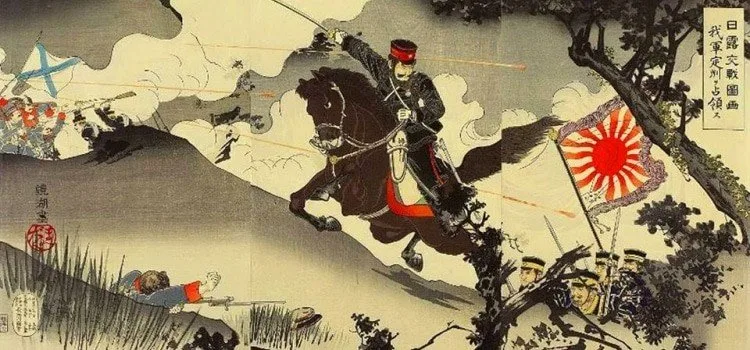
Banzai became especially popular in Japan during the Meiji period. When Japanese troops marched off to war, they shouted banzai as a salute to the Emperor. The word was originally part of the longer formula "Tennōheika Banzai" (天皇陛下万歳), which means "Long live the Emperor."
Most countries carry their own version of Banzai, or some other cheer tied to the same wish for long life. If you trace the origin of 万歳 itself, the roots lie in classical Chinese. From there, the expression spread into several East Asian languages: Mandarin uses "wànsuì," Cantonese "maan6 seoi3" (萬歲), Korean "mansé" (만세 / 萬歲), and Vietnamese "vạn tuế."
So although the expression is best known today through its Japanese use, it did not actually originate in Japan. It is a shared East Asian blessing formula that exists in parallel in several languages, each with its own cultural overtones.
Banzai attack — the frontal assault of the Japanese infantry
The term Banzai attack — in Japanese also called gyokusai [玉砕, "shattered jewel"] or banzai totsugeki [バンザイ突撃] — was coined by the Allied forces to describe a mass frontal charge by Japanese infantry. The word "gyokusai" literally captures the idea of choosing an honorable death over the shame of surrender.
The tactic grew out of the same war cry we just covered. In the traditional Japanese armed forces, the shout was used as troops launched an attack, often aimed at seizing a position.
The Banzai attack referred specifically to a tactic used by Japanese soldiers during the Pacific War, and earlier during the Second Sino-Japanese War. On several occasions, the sheer weight of a concentrated rush took Allied troops by surprise.
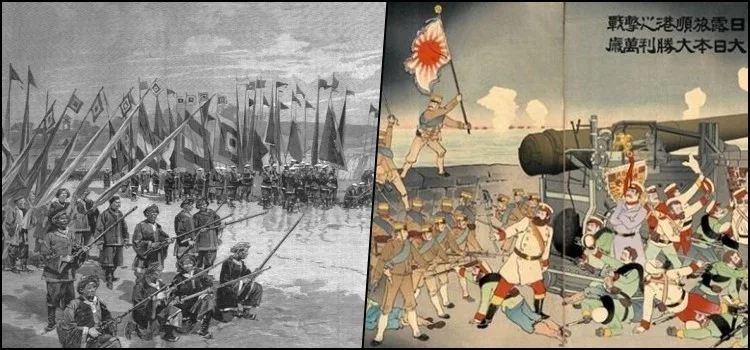
Strategically, the Banzai charge is now considered one of the least efficient tactics of the Pacific War. The high ratio of casualties to the ground gained makes it, in hindsight, a clear example of a doctrine that put the human factor above tactical rationality.
The tactic became especially visible to the Allies during the Battle of Guadalcanal, where Japanese soldiers rushed Allied positions under the Banzai shout, often in nearly hopeless circumstances.
Why do people in Japan shout Banzai?
In modern Japan, Banzai is a joyful shout, usually called out three times at festive moments. Other occasions when you might hear it include:
- A wedding.
- Acceptance into a prestigious university.
- Some birthday parties.
- A colleague's promotion at work.
Some people throw their arms up with a small jump as they shout, while others simply raise their hands. Banzai in everyday use is less a war cry than a shared cheer that rings out at celebratory moments in Japan, and increasingly in the West as well.

Over the years, Banzai has also become a popular word in company names, product labels and stores that want to nod to East Asia — from restaurants and martial arts schools to fashion labels.
Next time you watch a Japan-set film, see a wedding scene in an anime, or hear a toast in a documentary about Tokyo, pay attention to how naturally Banzai appears in those moments — almost always with no connection at all to war or to the Emperor.
Alternatives to Banzai
If you are looking for other Japanese expressions to convey joy, success or admiration, here is a small set worth knowing:
- Yatta! (やった!): an outburst of joy and relief, the Japanese equivalent of "I did it!" or "We did it!".
- Ganbaru (頑張る): means "to give it your best" or "to keep going," often used as encouragement.
- Sugoi! (すごい!): an exclamation of awe or admiration, similar to "Wow!" or "Incredible!".
- Katsu! (勝つ!): simply means "to win" and fits naturally into competition or challenge settings.
- Saikou! (最高!): translates as "the best" or "absolutely brilliant," used to express pure enthusiasm.
Have you ever come across the word Banzai in an anime, a film, or at a celebration of your own? In what context did you hear it, and what did you think it meant at the time? Tell us your story in the comments — we are curious about the moment that made the word click for you.



Community
Comments
0 comments
There are no published comments in this language yet.
Send comment