
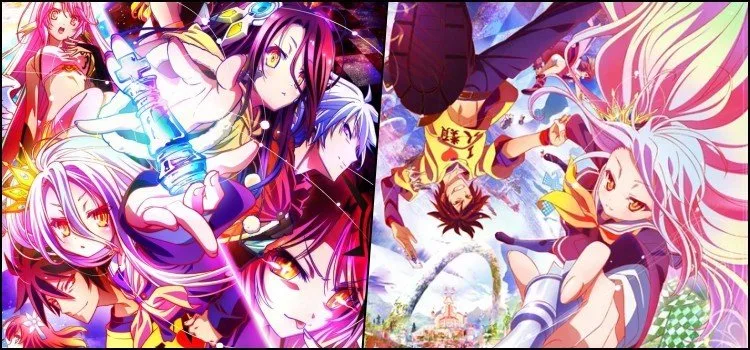
No Game No Life began as a light novel by Yuu Kamiya before becoming a 2014 television anime and the film No Game No Life: Zero. Its central idea is simple and unusually strict: Sora and Shiro, the undefeated gaming duo known as Blank, enter Disboard, a world where games decide everything.
This guide collects the most interesting facts about the anime and light novel, including the meaning behind the protagonists' names, the 16 Exceeds, the word Aschente, and the connection between the main story and Zero. It contains spoilers for the anime and film.
Contents 17
15 curiosities about No Game No Life
1. The story started as a light novel
Yuu Kamiya wrote and illustrated the original light novel. The first Japanese volume was published in April 2012, two years before the television adaptation. Kamiya is the pen name of Brazilian creator Thiago Furukawa Lucas, which gives the series an unusual link to Brazil from its very beginning.
The light novel is the best place to continue after the anime. The English edition is published by Yen Press, while the manga adaptation credits both Yuu Kamiya and Mashiro Hiiragi.
2. The anime is only one part of the story
The television anime has 12 episodes and aired in 2014. It introduces Disboard, the Ten Covenants, Elkia, the Eastern Union, and several important species, but it does not finish Sora and Shiro's goal of uniting all 16 Exceeds.
That is why the novels matter to readers who want more games, political maneuvering, and rules that reward careful wording. The series treats a game less like a sporting match and more like a contract full of loopholes.
3. Sora and Shiro are Blank
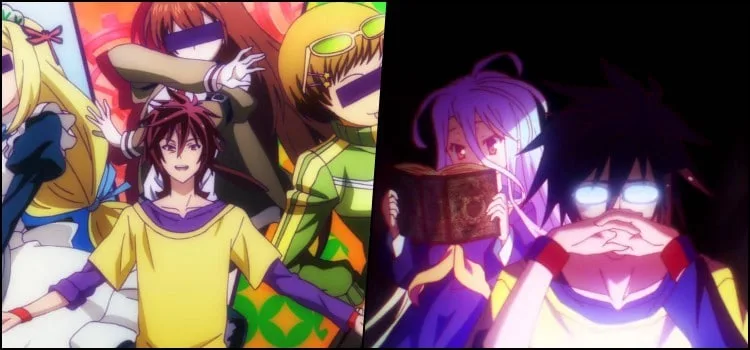
Sora and Shiro play online under the name Blank, written as 『 』 in Japanese. The name is not only a reference to their winning record. It also describes how they complement one another: Sora reads people and builds strategies, while Shiro excels at calculation and pattern recognition.
In real life, the two are hikikomori stepsiblings who avoid ordinary society. Their isolation is part of the setup, not a claim that gaming skill alone solves every problem. In Disboard, they still need allies such as Stephanie Dola and Jibril.
4. Tet challenges them to chess
Before reaching Disboard, Sora and Shiro receive a chess challenge from Tet, the One True God. They win the match and are invited to a world where games replace war. The opening matters because Tet does not choose them for physical strength; he notices the way they refuse to accept a losing position.
5. The Ten Covenants make games legally binding
The Ten Covenants are the rules that keep Disboard from returning to ordinary warfare. They forbid killing and force disputes to be settled through games. The wager can involve territory, authority, information, or even the future of an entire species.
This rule is the engine behind the plot. A weak player can still win by identifying what the opponent assumes, what the rules actually say, and what prize will make the other side accept the challenge.
6. Immanity is the 16th race
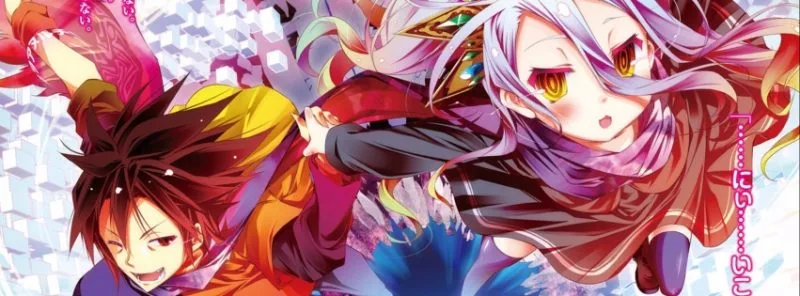
The humans of Disboard are called Immanity in the official English localization. They occupy the 16th position among the Exceeds and have no natural magic, which makes their survival look impossible beside species such as the Flügel and the Old Deus.
Sora and Shiro turn that disadvantage into the series' central argument: information, cooperation, and strategy can matter more than raw power when the rules are understood.
7. The 16 Exceeds have a fixed order
The Exceeds are the 16 sentient races of Disboard, ranked by their affinity for magic. The order below follows the names used in the series and helps explain why Immanity begins at the bottom.
| Rank | Race | Japanese name |
|---|---|---|
| 1 | Old Deus | 神霊種 |
| 2 | Phantasma | 幻想種 |
| 3 | Elemental | 精霊種 |
| 4 | Dragonia | 龍精種 |
| 5 | Gigant | 巨人種 |
| 6 | Flügel | 天翼種 |
| 7 | Elf | 森精種 |
| 8 | Dwarf | 地精種 |
| 9 | Fairy | 妖精種 |
| 10 | Ex-Machina | 機凱種 |
| 11 | Demonia | 妖魔種 |
| 12 | Dhampir | 吸血種 |
| 13 | Lunamana | 月詠種 |
| 14 | Werebeast | 獣人種 |
| 15 | Siren | 海棲種 |
| 16 | Immanity | 人類種 |
8. Sora and Shiro's names form a wordplay
Sora is written with 空, a character that can refer to the sky or emptiness. Shiro uses 白, meaning white. Together, 空白 can mean a blank or empty space, which gives the name Blank an extra layer without requiring a separate surname explanation.
9. Aschente is a game oath
Aschente is the declaration associated with accepting a game under the pact of Disboard. It appears with the Japanese phrase 盟約に誓って, “on my oath to the covenant,” in the series. The striking term is a fictional expression tied to No Game No Life, not ordinary Japanese vocabulary that should be translated word for word.
10. No Game No Life: Zero goes back 6,000 years
The film No Game No Life: Zero is based on the sixth light novel volume and takes place roughly 6,000 years before Sora and Shiro arrive in Disboard. Instead of following the gamer siblings, it focuses on Riku Dola and Schwi during the Great War.
That change of period explains why the film feels more tragic than the television series. It shows the cost of the world that later seems so playful and orderly.
11. Riku and Schwi mirror the main duo
Riku is an Immanity survivor who must rely on planning rather than magic. Schwi is an Ex-Machina who studies human behavior. Their partnership echoes Sora and Shiro, but the circumstances are radically different: the older pair is trying to survive a real war, not win a wager in a world protected by the Ten Covenants.
12. Jibril belongs to the sixth-ranked race
Jibril is a Flügel, the sixth-ranked Exceed. Her enormous power makes her seem unbeatable when she first appears, yet Sora and Shiro defeat her by exploiting the rules of a game rather than overpowering her. The encounter captures the series' favorite contrast between strength and cleverness.
13. The Japanese voice cast also sings
Yoshitsugu Matsuoka voices Sora and Ai Kayano voices Shiro in the anime. Kayano also performs “Oracion,” the television ending theme as Shiro. Matsuoka and Kayano later hosted No Radio No Life, an internet radio program connected to the series.
14. The manga was adapted by the original creators
Yuu Kamiya and Mashiro Hiiragi worked on the manga adaptation. That connection matters because the manga is not an unrelated spin-off using the name: it comes from the same creative team behind the light novel, with the story and visual identity carried into another format.
15. The games are built around information
The most memorable matches in No Game No Life are rarely decided by luck alone. Sora and Shiro study the opponent, test the wording of the rules, hide their intentions, and choose wagers that change the other player's incentives. That is the real reason the premise still works: each game reveals a piece of Disboard's politics and character relationships.
Why these details matter
No Game No Life is more than a list of references to games and anime. Its world is organized around one question: what happens when intelligence and cooperation become the only accepted form of power? The light novels expand that question through new species, older conflicts, and increasingly complicated games, while the anime and Zero provide two very different entry points into the same world.
For a broader introduction to the format, see our explanation of what a light novel is. Readers interested in the series' isolated protagonists can also compare them with our guide to hikikomori.

Community
Comments
0 comments
There are no published comments in this language yet.
Send comment