
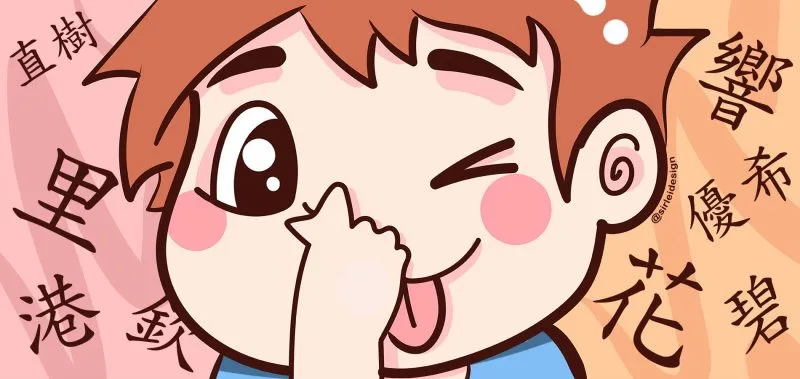
苺 is the kanji for strawberry, and it is also read ichigo. In Bleach, Ichigo Kurosaki's name uses different characters: 一護, "one protection." The sound is the same, but the kanji changes the meaning. That is the first thing to know about anime character names: the writing decides the meaning, and the author decides the writing.
This guide looks at how names work in four popular series and collects more than 110 names with the kanji or kana used in the source material. Each entry gives the reading and the literal meaning of the characters. Names written only in katakana, such as Rukia or Mikasa, are discussed in the guide and series sections because they have no fixed kanji meaning.
If you are looking for a name for a character, a pet, or a story, the lists are a starting point. Check the kanji before you use a name, since a different character with the same sound can change the tone completely.
Contents 9
How Japanese names work
Japanese names usually put the family name first, followed by the given name. Most are written in kanji, but hiragana and katakana are also common. Kanji carry meaning, and the same kanji can have more than one reading. Parents can choose a reading that is not the most common one, which is why a name written on paper may be pronounced in a way that is not obvious.
Anime authors use that freedom in different ways. Some choose kanji that describe a character's personality or powers. Others use ateji (当て字), choosing characters for their sound rather than their meaning. Many names are written in katakana because they are foreign, invented, or meant to sound modern. Rukia, Mikasa, and Levi are examples: their names work by sound and reference rather than by kanji. In those cases, there is no kanji meaning to find, and a meaning invented from the sound is usually wrong.
Family names matter too. Kurosaki, Kuchiki, Uchiha, Hatake, and Yagami are surnames, not given names. A character may be called by the surname for most of a series, so the meaning of that name is the one readers see most often.
My Hero Academia
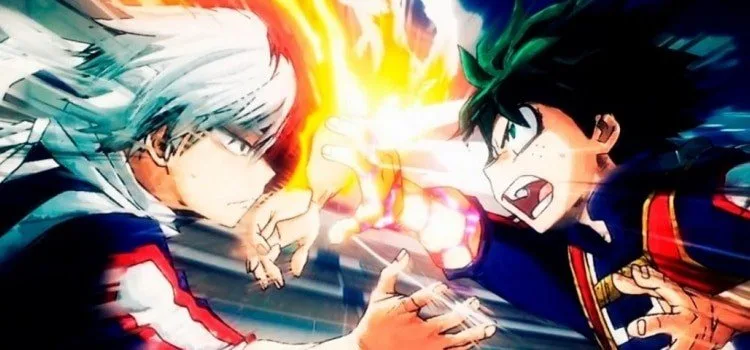
Kōhei Horikoshi's series is full of descriptive names. Izuku Midoriya (緑谷出久) combines 緑 (green), 谷 (valley), 出 (to come out), and 久 (a long time). The family name suggests a green valley; the given name suggests someone who takes a long time to emerge, which fits a protagonist who starts without a Quirk and grows slowly.
Ochaco Uraraka (麗日お茶子) has a name that sounds gentle and bright. 麗日 (reijitsu) means a glorious spring day, while お茶子 (ochako) combines 茶 (tea) and 子 (child). Katsuki Bakugo (爆豪勝己) is less subtle: 爆 means explosion, 豪 means great or overpowering, 勝 means victory, and 己 means self. Shoto Todoroki (轟焦凍) carries his powers in his name: 轟 means roar, 焦 means scorch, and 凍 means freeze.
The names often work as small clues to the Quirk or the personality. For more on the series, see the curiosities of My Hero Academia.
Bleach
Ichigo Kurosaki (黒崎一護) is the clearest case of kanji changing a familiar word. 一護 means "one protection": 一 is one, 護 is to protect. The surname 黒崎 combines 黒 (black) and 崎 (cape or promontory). The name also sounds like the numbers 1 and 5 (ichi-go).
Rukia Kuchiki (朽木ルキア) is different. Her given name is written in katakana, so it has no kanji meaning. The surname 朽木 means decayed tree. Renji Abarai (阿散井恋次) and Byakuya Kuchiki (朽木白哉) follow the same pattern: the surnames are written in kanji, and the given names may be kanji or katakana. 恋次 combines 恋 (love) and 次 (next), while 白哉 combines 白 (white) and 哉, a classical particle.
The contrast is useful when you read a name for the first time. If the spelling is in katakana, look for the sound and the reference. If it is in kanji, read each character before you decide what the name means.
Dragon Ball
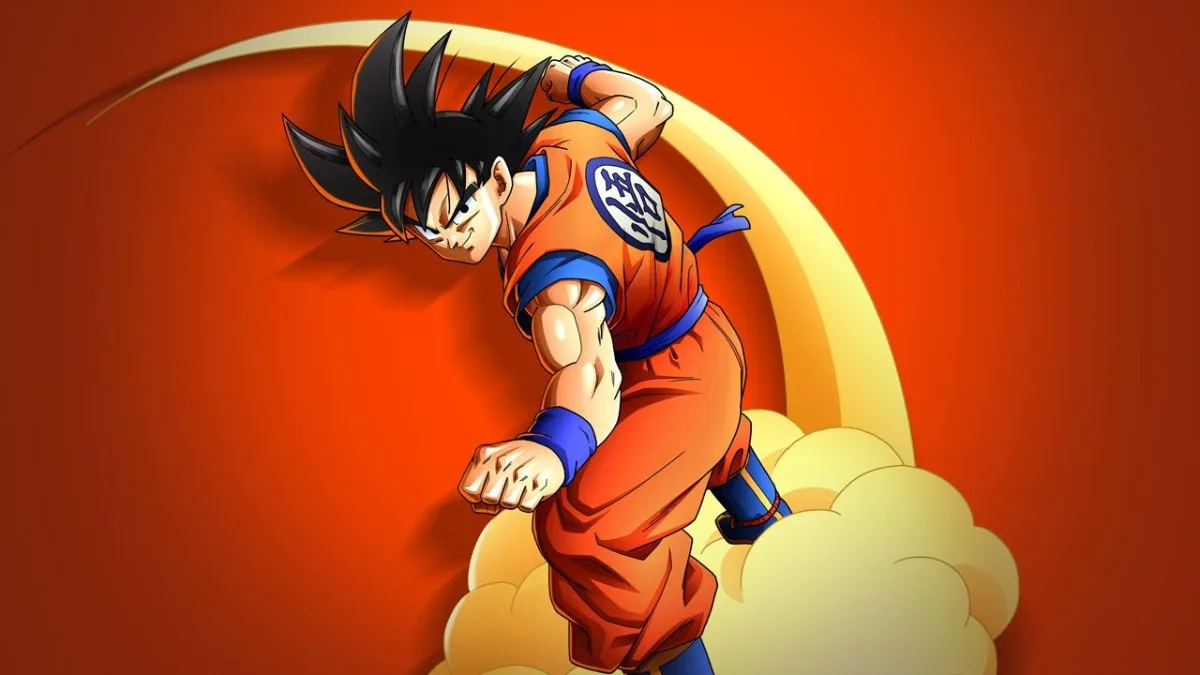
Akira Toriyama's Dragon Ball borrows from Chinese and Japanese name traditions. Son Goku (孫悟空) is the Japanese reading of Sun Wukong, the Monkey King of Journey to the West. 孫 means grandchild or descendant, 悟 means enlightenment, and 空 means sky or emptiness. His son, Son Gohan (孫悟飯), replaces the last character with 飯 (rice or meal), so his name suggests "enlightenment meal" or "one fed by understanding."
The family name Son is shared by Goku, Gohan, and Goten. Other characters use katakana names that work by sound, such as Vegeta (ベジータ) and Bulma (ブルマ). The series began in Weekly Shōnen Jump in 1984.

Naruto
Masashi Kishimoto's Naruto gives several names a clear meaning. Naruto Uzumaki (うずまきナルト) has a surname written in hiragana: うずまき means whirlpool or spiral. The given name is in katakana, and narutomaki (naruto) is a fish cake with a pink spiral. Sasuke Uchiha (うちはサスケ) is written in hiragana and katakana, so the name has no fixed kanji meaning.
Sakura Haruno (春野サクラ) is a good example of a mixed name. 春野 means spring field, while サクラ is katakana for cherry blossom. Hinata Hyuga (日向ヒナタ) has a surname written 日向, which means a sunny place; the given name is the same word written in katakana. Kakashi Hatake (はたけカカシ) has a surname that means field or farm and a given name that is the word for scarecrow.
The series ran from 1999 to 2014 and follows Naruto's attempt to become Hokage. The names often point to nature, folklore, or a character's role, which makes them a useful bridge between Japanese vocabulary and anime characterization. For the meaning of Naruto's catchphrase, see the guide to Dattebayo.
Male anime character names
The table below collects male names with a kanji or kana spelling that can be checked in the source material. Most entries use kanji; a few use kana, and the meaning column gives the word rather than a kanji gloss. Names that exist only as a sound or a handle, such as Rukia or Mikasa, are discussed in the guide and series sections instead.
| Name (series) | Kanji or kana | Literal meaning |
|---|---|---|
| Ichigo (Bleach) | 一護 | one protection |
| Goku (Dragon Ball) | 悟空 | enlightened emptiness |
| Gohan (Dragon Ball) | 悟飯 | enlightenment meal |
| Yato (Noragami) | 夜ト | night |
| Kirishima (My Hero Academia) | 霧島 | mist island (family name) |
| Zenitsu (Demon Slayer) | 善逸 | goodness and excellence |
| Katsuki (My Hero Academia) | 勝己 | victory and self |
| Inuyasha (Inuyasha) | 犬夜叉 | dog yaksha |
| Tamaki (Ouran High School Host Club) | 環 | ring |
| Haruka (Free!) | 遙 | distant |
| Yuuri (Yuri!!! on Ice) | 勇利 | courage and profit |
| Kageyama (Haikyuu!!) | 影山 | shadow mountain (family name) |
| Akira (Devilman Crybaby) | 明 | bright |
| Shinichi (Detective Conan) | 新一 | new first |
| Gintoki (Gintama) | 銀時 | silver time |
| Rei (Free!) | 怜 | wise |
| Jotaro (JoJo's Bizarre Adventure) | 承太郎 | inheriting eldest son |
| Todoroki (My Hero Academia) | 轟 | roar (family name) |
| Tanjirou (Demon Slayer) | 炭治郎 | charcoal-healing son |
| Kaneda (Akira) | 金田 | golden field (family name) |
| Izuku (My Hero Academia) | 出久 | long emergence |
| Yagami (Death Note) | 夜神 | night god (family name) |
| Soma (Food Wars!) | 創真 | true creation |
| Akio (Revolutionary Girl Utena) | 暁生 | dawn life |
| Kamijou (Toaru Majutsu no Index) | 上条 | upper line (family name) |
| Tatsuya (The Irregular at Magic High School) | 達也 | to reach |
| Kira (JoJo's Bizarre Adventure) | 吉良 | good luck and good (family name) |
| Kiryu (Yakuza) | 桐生 | paulownia life (family name) |
| Kenshin (Rurouni Kenshin) | 剣心 | sword heart |
| Takao (Kuroko no Basket) | 高尾 | high tail (family name) |
| Seiya (Saint Seiya) | 星矢 | star arrow |
| Koyomi (Monogatari) | 暦 | calendar |
| Akabane (Assassination Classroom) | 赤羽 | red feather (family name) |
| Shun (Saint Seiya) | 瞬 | moment |
| Kiyomaro (Zatch Bell!) | 清麿 | pure Maro |
| Masaomi (Durarara!!) | 正臣 | righteous retainer |
| Riku (Kingdom Hearts) | 陸 | land |
| Tsubasa (Captain Tsubasa) | 翼 | wing |
| Hyakkimaru (Dororo) | 百鬼丸 | hundred demons |
| Daisuke (Digimon Adventure) | 大輔 | great helper |
| Jiraiya (Naruto) | 自来也 | coming by oneself |
| Kakashi (Naruto) | はたけカカシ | scarecrow (given name); field (family name) |
| Itachi (Naruto) | イタチ | weasel |
| Byakuya (Bleach) | 白哉 | white (with a classical particle) |
| Renji (Bleach) | 恋次 | love and next |
| Uryu (Bleach) | 雨竜 | rain dragon |
Female anime character names
The same method applies to female names. Some are written in kanji, some in hiragana, and some in katakana. The table gives the literal meaning of the characters when a kanji spelling is used, and the meaning of the word when the name is written in kana.
| Name (series) | Kanji or kana | Literal meaning |
|---|---|---|
| Sakura (Naruto) | 桜 | cherry blossom |
| Aoi (Ai Yori Aoshi) | 葵 | hollyhock |
| Sango (Inuyasha) | 珊瑚 | coral |
| Kagura (Gintama) | 神楽 | god music |
| Rin (Fate/stay night) | 凛 | dignified |
| Yoruichi (Bleach) | 夜一 | night one |
| Ritsu (K-On!) | 律 | law |
| Misaki (Kaichou wa Maid-sama!) | 美咲 | beautiful bloom |
| Kyoko (Puella Magi Madoka Magica) | 杏子 | apricot child |
| Tsubaki (Soul Eater) | 椿 | camellia |
| Kyouko (Skip Beat!) | 恭子 | respectful child |
| Riko (Love Live!) | 梨子 | pear child |
| Hinata (Naruto) | 日向 | sunny place |
| Nagisa (Clannad) | 渚 | beach |
| Minori (Toradora!) | 実乃梨 | fruit of the pear |
| Tsukino (Sailor Moon) | 月野 | moon field (family name) |
| Hinami (Tokyo Ghoul) | 雛実 | young bird and fruit |
| Hikaru (Magic Knight Rayearth) | 光 | light |
| Maki (Love Live!) | 真姫 | true princess |
| Kyou (Clannad) | 杏 | apricot |
| Ino (Naruto) | いの | boar |
| Mashiro (Sakurasou no Pet na Kanojo) | ましろ | pure white |
| Tsumugi (K-On!) | 紬 | pongee silk |
| Kirie (Uzumaki) | 桐絵 | paulownia picture |
| Chitoge (Nisekoi) | 千棘 | thousand thorns |
| Momo (My Hero Academia) | 百 | hundred |
| Ryuko (Kill la Kill) | 流子 | flowing child |
| Satsuki (Kill la Kill) | 皐月 | May |
| Shinobu (Demon Slayer) | しのぶ | to endure |
| Hiyori (Noragami) | ひより | fine weather |
| Nami (One Piece) | ナミ | wave |
| Misa (Death Note) | 海砂 | sea sand |
| Chie (Persona 4 the Animation) | 千枝 | thousand branches |
| Eri (School Rumble) | 愛理 | love and reason |
| Tomoyo (Cardcaptor Sakura) | 知世 | knowing the world |
| Aya (Ayashi no Ceres) | 妖 | spirit |
| Kirari (Kakegurui) | 綺羅莉 | beautiful silk and jasmine |
| Mio (K-On!) | 澪 | waterway |
Unisex anime character names
Some names work for any gender. The table below uses kanji and readings that appear in anime and manga. The same reading can have more than one kanji, so the meaning changes with the writing.
| Name | Kanji or kana | Literal meaning |
|---|---|---|
| Aki | 明 / 秋 | bright / autumn |
| Akira | 明 / 亮 | bright / clear |
| Aoi | 碧 | blue |
| Haru | 春 | spring |
| Hikaru | 光 | light and radiance |
| Hinata | 向日葵 / 陽向 | sunflower / facing the sun |
| Hiro | 寛 | generous |
| Jun | 順 | obedient |
| Kaede | 楓 | maple |
| Kaoru | 薫 | fragrance |
| Kohaku | 琥珀 | amber |
| Kyo | 協 | cooperation |
| Madoka | 円 | circle |
| Makoto | 誠 | sincerity |
| Masa | 正 / 真 | correct / true |
| Masumi | 真澄 | true clarity |
| Michi | 道 | path |
| Minori | 実 | truth |
| Mitsuru | 満 | full |
| Nao | 直 | honest |
| Natsu | 夏 | summer |
| Ren | 蓮 / 恋 | lotus / love |
| Shinobu | 忍 | endurance |
| Sora | 昊 / 空 | sky |
| Yasu | 康 | peace |
| Yoshi | 吉 / 義 | luck / righteousness |
| Yuki | 幸 / 雪 | happiness / snow |
| Yuu | 優 | gentle |
| Yuuki | 優希 | gentle hope |
How to find the kanji and meaning of a name
If you only have an image, a reverse image search can help you find the source. Once you know the series and the character, a wiki or fan database usually lists the Japanese spelling. For the meaning, enter the kanji in a dictionary such as Jisho. Look up each character separately and then read the combination, since a name can use a meaning that is not the most common one.

Do not rely on a translator for the kanji of a character's name. A machine translation may give a common word with the same sound, not the characters the author used. If the name is written in katakana, the dictionary will not give a kanji meaning, and that is the correct answer.
For a deeper look at how Japanese names are built, see the guide to discovering the meaning of Japanese names. If you want to create a nickname from a name, the article on Japanese nicknames explains the common patterns.
A name in anime is a small piece of characterization. The kanji can point to a power, a personality, a place, or a joke that only makes sense in Japanese. When a name is written in katakana, the sound and the reference matter more than a dictionary definition. Before choosing a name for a character or a pet, check the writing, read it aloud, and make sure the meaning fits the story you want to tell.


Community
Comments
0 comments
There are no published comments in this language yet.
Send comment