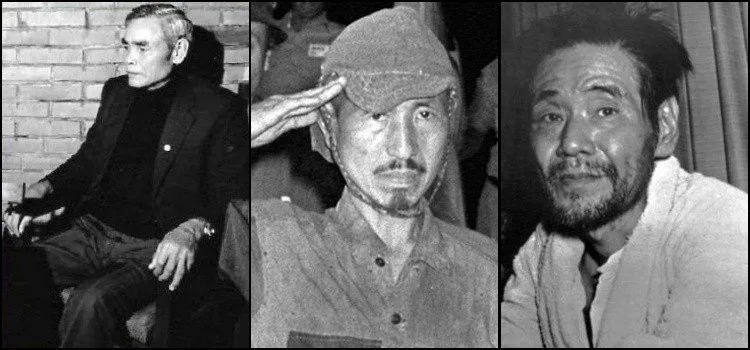
In 1974, a cabin was discovered in Indonesia, occupied by a Japanese soldier who was still fighting in World War II. He was called Nakamura Teruo (中村輝夫), but his Amis name was Attun Palalin. He was born in 1919 and came from the Amis people of eastern Taiwan, then under Japanese rule. He enlisted because the army promised food and money for his family.
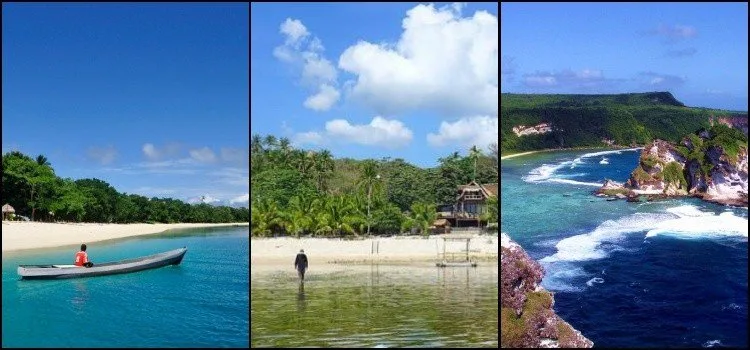
At 24 years old, he was sent to Morotai, an island in Indonesia. Allied forces invaded it in 1944 during the Battle of Morotai, and the army later listed him as dead. A pilot spotted Nakamura's hut in mid-1974, and an Indonesian search party found him on December 18, 1974. He spoke little Japanese and wanted to return to Taiwan, but he was saddened to find out that his wife had already remarried.
Because he was a Taiwanese private, Japan first paid him only 68,000 yen in back pay and the press gave him far less attention than it gave ethnically Japanese officers. After public pressure, the compensation was raised. Five years after returning to Taiwan, he died of lung cancer, on June 15, 1979.
Contents3
Japanese Found in the Philippines in 1974
Nakamura Teruo was not the only one to fight in World War II after it had ended. The case that received the most attention was that of Hiroo Onoda, who during the war was sent to Lubang Island in the Philippines. He and his companions were on the island when American forces took it in 1945, and many died while Onoda and a few companions hid in the jungle.
He went into the mountains with three companions. One surrendered in 1950, and the other two were later killed in clashes with Philippine forces. Onoda stayed on Lubang for 29 years, the last stretch alone, even with attempts to convince him that the war had ended with the Emperor's surrender. In 1959, Onoda was declared legally dead in Japan. To survive, Onoda stole rice and bananas from local residents and slaughtered cows for meat.
Even after Onoda met a Japanese traveler, Norio Suzuki, in February 1974, he refused to accept that the war was over unless he received official orders from his commanding officer to lay down his arms. Suzuki returned to Japan with photographs to prove the encounter and found Major Yoshimi Taniguchi, who flew to Lubang to relieve Onoda of duty.
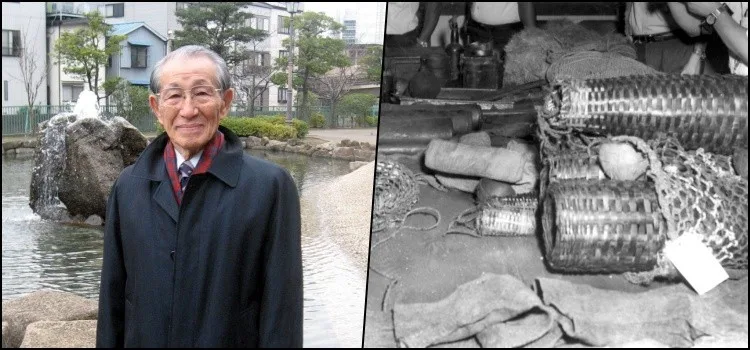
Lieutenant Onoda was thus relieved of his duty without ever surrendering. He accepted the official order wearing his uniform and sword, with a working Arisaka Type 99 rifle, 500 rounds of ammunition, several hand grenades, and a dagger his mother had given him in 1944 to use if he was captured. About 30 people on Lubang were killed during the holdout, and Philippine President Ferdinand Marcos later pardoned him.
He went to Brazil!
After leaving Lubang, Onoda moved to Brazil, where he became a cattle farmer in the agricultural colony of Jamic in Terenos, Mato Grosso do Sul. On December 6, 2004, the Brazilian Air Force awarded him the Santos-Dumont Merit Medal. In February 2010, the Legislative Assembly of Mato Grosso do Sul conferred upon him the title of "Citizen of Mato Grosso do Sul." Unfortunately, Hiroo Onoda passed away on January 16, 2014.
Shoichi Yokoi Fought Until 1972
Shoichi Yokoi was born in 1915 and became world-renowned when he was found hiding on the island of Guam, at the southern end of the Mariana Islands in the Pacific Ocean. When the Americans recaptured the island in 1944, Yokoi hid in the jungle to avoid surrendering to enemy troops.
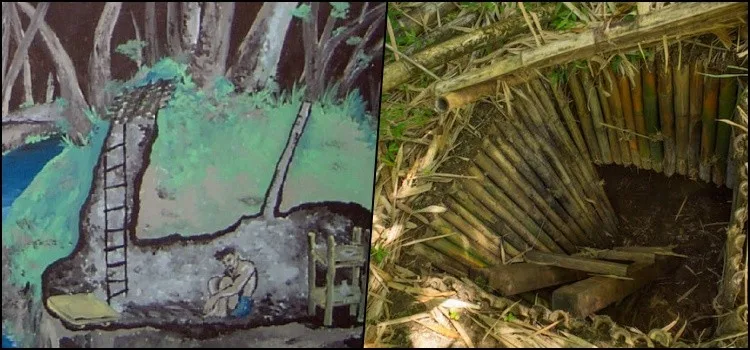
For nearly 28 years he remained hidden in a shelter he had dug, hunting at night. He used native plants to make clothes, bedding, and the rest of what he needed. He was afraid of being killed by the inhabitants of Guam and did not come out even after seeing leaflets announcing the end of World War II.
On January 24, 1972, he was rescued by Jesus and by the Grace of God. That's right, he was found by two local hunters named Jesus Duenas and Manuel De Gracia. Yokoi attacked them near their shrimp traps. They overpowered him and brought him out of the jungle.
"It was very embarrassing for me to have returned alive," Yokoi said upon returning to Japan, a phrase that became a popular saying. He later explained that Japanese soldiers had been taught to prefer death to the disgrace of capture, and that he had known for years the war was over. He became a celebrity in Japan, got married, and moved to rural Aichi. In 1991, he received the greatest honor of his life when he was received in an audience by Emperor Akihito. Shoichi Yokoi died of a heart attack on September 22, 1997, at the age of 82.
Nakamura, found in December 1974, was the last confirmed holdout of the three. He went home to Taiwan with little of the ceremony that met Onoda and Yokoi, and for him the war Japan had already lost in 1945 ended only then.
Kevin Henrique has written about the Japanese language, culture, anime, games, and travel since founding Suki Desu in 2014. He first visited Japan in 2016.
Community
Comments
0 comments
There are no published comments in this language yet.

 Lieutenant Onoda was thus relieved of his duty without ever surrendering. He accepted the official order wearing his uniform and sword, with a working Arisaka Type 99 rifle, 500 rounds of ammunition, several hand grenades, and a dagger his mother had given him in 1944 to use if he was captured. About 30 people on Lubang were killed during the holdout, and Philippine President Ferdinand Marcos later pardoned him.
 On January 24, 1972, he was rescued by Jesus and by the Grace of God. That's right, he was found by two local hunters named Jesus Duenas and Manuel De Gracia. Yokoi attacked them near their shrimp traps. They overpowered him and brought him out of the jungle.
"It was very embarrassing for me to have returned alive," Yokoi said upon returning to Japan, a phrase that became a popular saying. He later explained that Japanese soldiers had been taught to prefer death to the disgrace of capture, and that he had known for years the war was over. He became a celebrity in Japan, got married, and moved to rural Aichi. In 1991, he received the greatest honor of his life when he was received in an audience by Emperor Akihito. Shoichi Yokoi died of a heart attack on September 22, 1997, at the age of 82.
Nakamura, found in December 1974, was the last confirmed holdout of the three. He went home to Taiwan with little of the ceremony that met Onoda and Yokoi, and for him the war Japan had already lost in 1945 ended only then.
On January 24, 1972, he was rescued by Jesus and by the Grace of God. That's right, he was found by two local hunters named Jesus Duenas and Manuel De Gracia. Yokoi attacked them near their shrimp traps. They overpowered him and brought him out of the jungle.
"It was very embarrassing for me to have returned alive," Yokoi said upon returning to Japan, a phrase that became a popular saying. He later explained that Japanese soldiers had been taught to prefer death to the disgrace of capture, and that he had known for years the war was over. He became a celebrity in Japan, got married, and moved to rural Aichi. In 1991, he received the greatest honor of his life when he was received in an audience by Emperor Akihito. Shoichi Yokoi died of a heart attack on September 22, 1997, at the age of 82.
Nakamura, found in December 1974, was the last confirmed holdout of the three. He went home to Taiwan with little of the ceremony that met Onoda and Yokoi, and for him the war Japan had already lost in 1945 ended only then.




Community
Comments
0 comments
There are no published comments in this language yet.
Send comment