
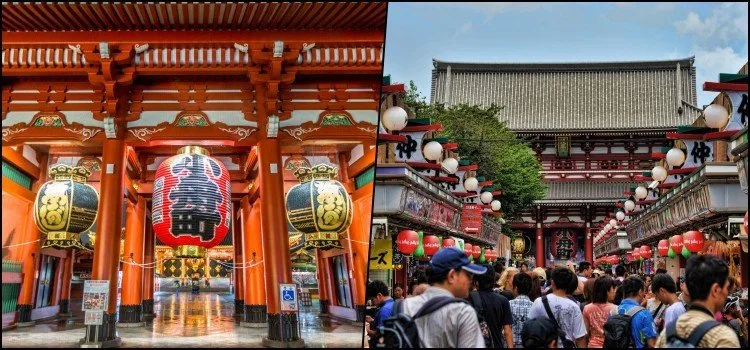
Sensō-ji (浅草寺) is Tokyo's oldest temple and one of the clearest windows into the history of Asakusa. Dedicated to Kannon, the bodhisattva of compassion, it combines worship, architecture, seasonal festivals and one of the most famous traditional streets in the city.
If you want more than a quick photo at Kaminarimon, this is the place to understand why the temple still shapes the identity of old Tokyo. Its founding legend, repeated reconstruction and lively surroundings make a visit here feel both spiritual and deeply urban.
Contents 11
The history of Sensō-ji and why it matters
The story of Sensō-ji begins in 628, when two fishermen reportedly found a statue of Kannon in the Sumida River. The image was enshrined in Asakusa, and in 645 the priest Shōkai built a hall for it. That origin story still defines the temple today: Sensō-ji is not only a historic site, but a major center of devotion in Tokyo.
From a riverside legend to an Edo landmark
As faith in Kannon spread, the temple grew with the city around it. During the Kamakura period, military leaders and other prominent patrons strengthened its status. In 1590, Tokugawa Ieyasu designated Sensō-ji as a temple where the shogunate would offer prayers, helping turn Asakusa into one of Edo's best-known religious and cultural districts.
Destruction, rebuilding and continuity
Like much of Tokyo, Sensō-ji suffered severe damage during World War II. The current Main Hall was rebuilt after the war, and that reconstruction became part of the temple's meaning. What visitors see today is not a frozen monument, but a place that kept its identity through repeated cycles of loss and renewal.
Main highlights inside the complex
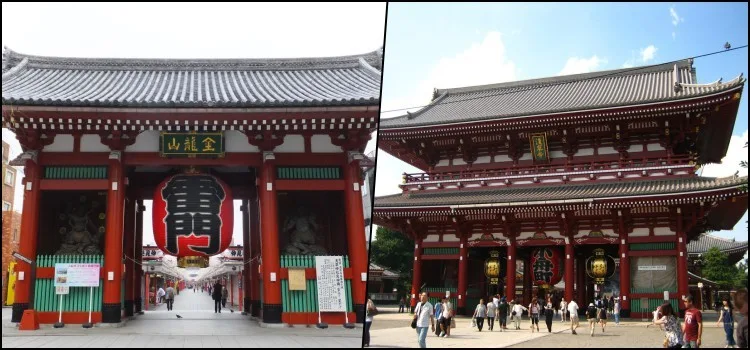
The grounds are easy to recognize even from a distance. The giant red lantern at Kaminarimon is the symbolic entrance to Asakusa, while Hōzōmon marks the approach to the Main Hall. The five-storied pagoda rises above the complex and remains one of the classic photo spots in Tokyo.
What to experience at Sensō-ji
A visit to Sensō-ji is not only about looking at old buildings. The temple is still active, and much of its appeal comes from the small rituals and habits that give the place its atmosphere.
Incense, prayer and omikuji
Near the entrance, visitors gather around the large incense burner and waft the smoke toward themselves, a gesture associated with purification and good health. At the Main Hall, many people place an offering, bring their hands together in prayer and pause for a quiet moment before continuing through the grounds. Another familiar custom is drawing omikuji, paper fortunes that can be tied nearby if the result is unfavorable.
Kaminarimon, Hōzōmon and the pagoda
Walking from Kaminarimon toward the temple gives a good sense of how the site is laid out. After the outer gate and the shopping street, Hōzōmon leads into the main precinct, where the Main Hall and the five-storied pagoda define the skyline. This sequence of spaces is one reason Sensō-ji feels so memorable even on a short first visit.
Festivals and the energy of Asakusa
The area becomes especially lively during major annual events. The best known is Sanja Matsuri, centered on Sensō-ji and nearby Asakusa Shrine, when portable shrines and crowds fill the neighborhood. Even outside festival dates, the temple grounds host seasonal markets and events that keep the district active throughout the year.
Nakamise-dōri and what to see around the temple
Sensō-ji stands at the heart of a neighborhood that rewards slow walking. The approach to the temple is part of the experience, and the surrounding streets make it easy to extend your visit beyond the Main Hall.
Nakamise-dōri shopping street
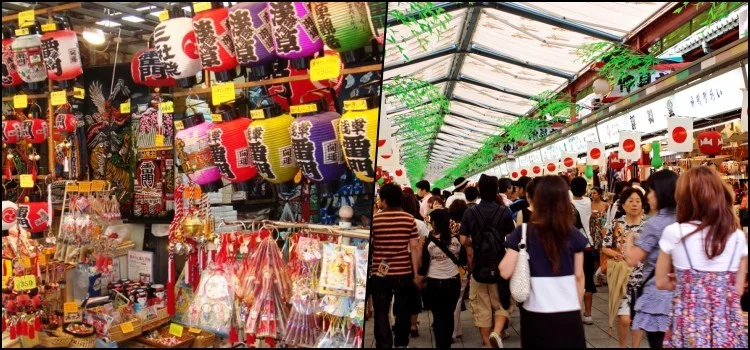
Nakamise-dōri is a 250-meter arcade that runs from Kaminarimon to Hōzōmon. Around 90 stalls line the route, selling souvenirs, traditional snacks and small crafts associated with old Tokyo. It is one of Japan's oldest shopping streets, and it adds a festive rhythm to the temple approach without feeling disconnected from the religious setting.
Nearby places worth combining with Sensō-ji
After visiting the temple, many travelers continue through Asakusa on foot. Good additions to the same walk include Tokyo Skytree, a stroll along the Sumida River and a stop at Asakusa Shrine, which is closely tied to the neighborhood's festival culture.
Sensō-ji rewards both first-time visitors and people returning to Tokyo with more time. It offers famous landmarks, but also a strong sense of continuity between faith, commerce and daily life in Asakusa.
We also recommend reading:




Community
Comments
0 comments
There are no published comments in this language yet.
Send comment