
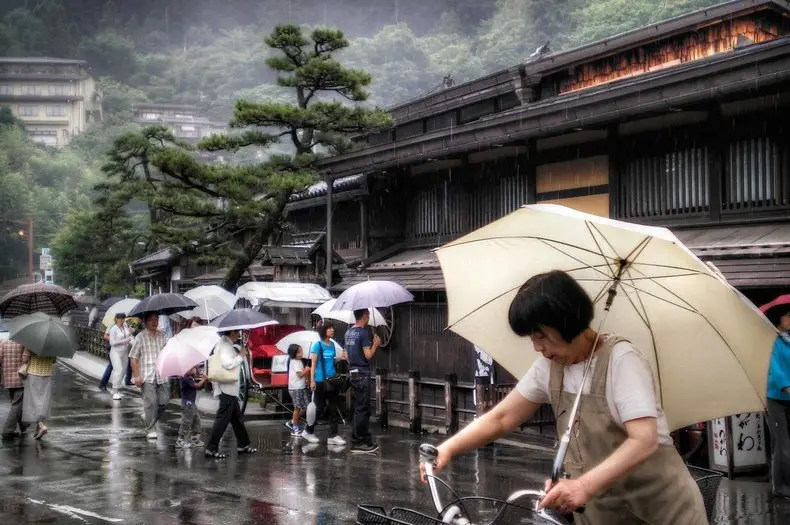
In Japanese, the everyday word for an umbrella is kasa (傘). English usually separates umbrella and parasol, but Japanese often does not. Context tells you whether someone means rain cover, sunshade or a traditional paper parasol.
That small language detail says a lot about life in Japan. Umbrellas are not treated as an afterthought. They sit at the crossroads of weather, etiquette, design and craftsmanship, from the clear plastic model bought at a convenience store to the handcrafted wagasa used in tea gatherings, weddings and stage performances.
If you have ever walked through a Japanese city during the rainy season, you have probably noticed how varied this everyday object can be. Some umbrellas are purely practical, some are beautiful enough to feel like props, and some become part of the visual identity of a neighborhood or season.
Contents 5
Why clear umbrellas are everywhere in Japan
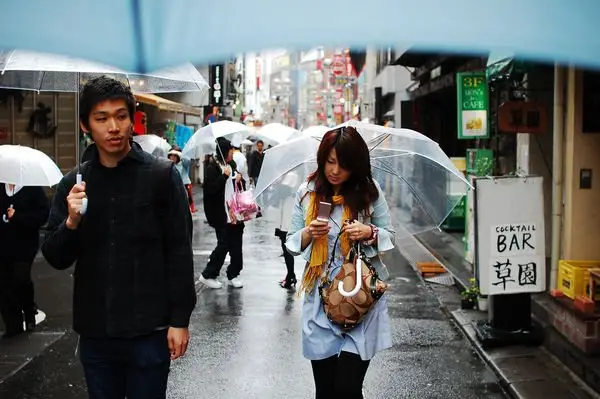
The umbrella most travelers remember is the transparent plastic one. It shows up outside train stations, convenience stores, supermarkets and office buildings because it is cheap, easy to replace and surprisingly practical. You can keep your view of traffic and pedestrians while still staying dry, which helps on narrow sidewalks and crowded crossings.
Basic clear umbrellas usually cost only a few hundred yen, so they are a common emergency purchase when rain starts suddenly. That convenience also creates one small problem: many of them look almost identical. In restaurants, stations and shops with umbrella stands, people sometimes grab the wrong one by mistake.
Rain in Japan even leaves a mark on language and habits. If you enjoy that side of the culture, it is worth reading about the many Japanese words linked to rain, because the umbrella culture makes much more sense once you see how present the weather is in daily life.
Wagasa: the traditional Japanese umbrella
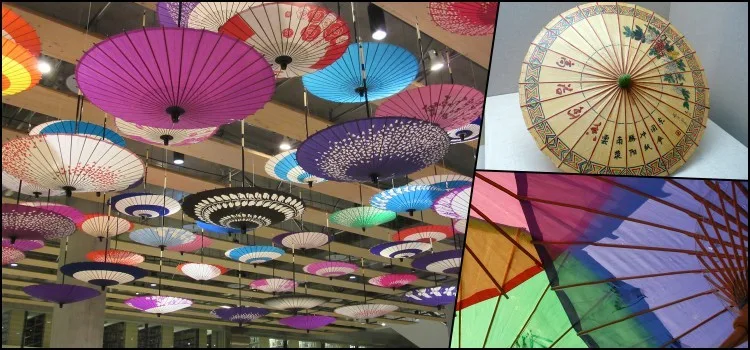
When people outside Japan picture a Japanese parasol, they usually mean a wagasa. This traditional style developed in Japan after earlier umbrella forms arrived from China. A classic wagasa uses bamboo ribs and washi paper, and many versions are finished with oil so they can resist light rain.
Today, a wagasa is less about commuting and more about atmosphere, ceremony and craft. You will see it in tea ceremony settings, traditional dance, festival performances, photo shoots in Kyoto and wedding imagery. Red paper umbrellas in particular carry strong visual and ceremonial associations.
Within this broader tradition, sturdier styles such as bangasa are associated with rain use, while more delicate models lean toward shade, display and formal occasions. Either way, the appeal is not only function. A good wagasa also shows off the texture of washi, the rhythm of the bamboo ribs and the care of hand assembly.
Why umbrellas became a design category in Japan
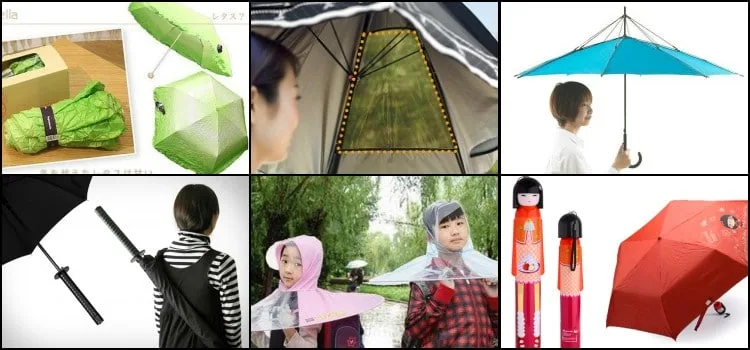
Japan has a habit of refining ordinary objects, and umbrellas are a good example. Modern Japanese brands experiment with compact folding mechanisms, stronger wind resistance, reverse-opening frames, subtle patterns and playful seasonal prints. Even when the structure is familiar, the finish rarely feels careless.
This is why umbrella shopping in Japan can be unexpectedly fun. One shelf may hold plain clear vinyl models for commuters, while another offers understated business umbrellas, colorful pieces for summer festivals or specialty designs that react to water and reveal a hidden pattern in the rain.
Not every unusual design is practical for everyday use, but that is part of the charm. Umbrellas in Japan often sit between utility and self-expression, which is also why they appear so often in photography, anime, films and romantic imagery such as aiaigasa, the shared love umbrella motif.
How to choose an umbrella in Japan
If you need one for a trip, the best choice depends on what you want from it. A clear convenience-store umbrella is ideal for sudden rain and short stays. A folding umbrella makes more sense if you are moving around by train every day. A wagasa is the better option when you want a craft object, a gift or something tied more closely to traditional aesthetics than to heavy daily use.
- For sudden rain: buy a simple clear umbrella at a convenience store or drugstore.
- For travel: choose a folding umbrella that fits easily in a bag.
- For culture and design: look for a wagasa or a Japan-made specialty umbrella from a craft or design shop.
If you do buy a basic clear umbrella, adding a small strap, sticker or handle marker is a smart move. It makes your umbrella easier to recognize when dozens of identical models are standing together outside a shop or restaurant.
More than something to keep you dry
Japanese umbrellas stand out because they reveal two sides of the country at once. One side values convenience, portability and practical solutions for daily weather. The other side keeps older craft traditions alive and turns ordinary objects into something expressive.
That is why the humble kasa says more about Japan than many visitors expect. It is everyday rain gear, a seasonal habit, a visual symbol and, in the case of wagasa, a piece of living craft history all at the same time.



Community
Comments
0 comments
There are no published comments in this language yet.
Send comment