
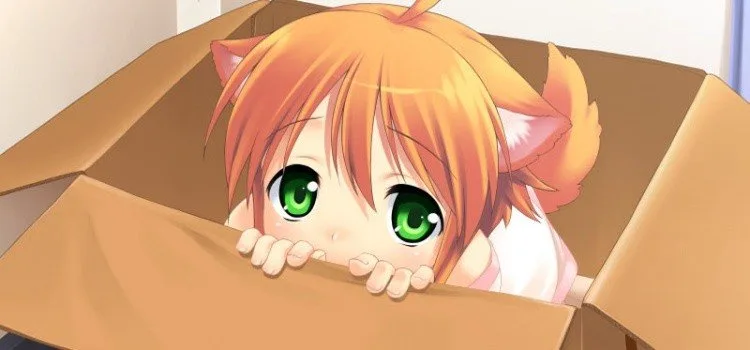
Have you heard an anime character mutter moe moe, or seen a whole list labeled “moe anime”? In English the word landed as if it were a genre: cute faces, light plots, girls in maid outfits. In Japanese it started closer to a sprout — a feeling that buds toward someone you cannot quite have.
The kanji 萌え is the same “sprouting” used for a plant pushing through soil. Fans still fight over whether that feeling stays innocent or whether it can heat into desire. That argument is older than the chant moe moe kyun shouted over omurice in maid cafés.
Contents 6
What does moe mean?
The Japanese slang moe [萌え] names a strong affection — adoration, protectiveness, a little spark — usually aimed at a character from anime, manga, or games. The subject is often cute, youthful, a little defenseless. The word can also attach to idols, animals, even objects: Japanese fans talk about factory moe the way others talk about loving trains.
The verb underneath is moeru (萌える), “to sprout.” Used as slang, it is less “this girl is cute” and more “something in me just germinated.” That is why it sits next to kawaii without being the same thing: kawaii describes the thing. Moe describes the reaction.
The slang is typically used exactly when a character — or a real person — tips into that blooming cuteness. It can stay innocent. It can also slide toward fascination and desire. Many fans insist moe should stay pure. Others treat the word as a catch-all for any crush on a 2D character. There is no academy that settles the fight.
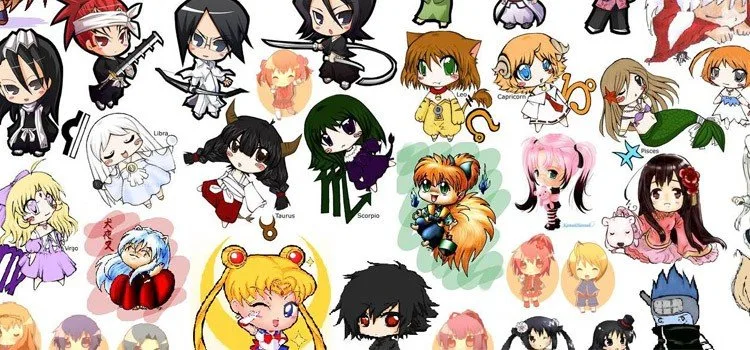
So-called moe anime often share a look: round faces, a slightly chibi silhouette, a light story that lives on reactions more than plot. That look is a product. The feeling is older than the product.
Where did moe come from?
Nobody has a single birth certificate for the word. It spread on Japanese bulletin boards in the early 1990s, after a few tentative uses in the late 1980s. What we have are theories — and they keep circulating because each one almost fits.
Some fans point to Hotaru Tomoe (土萌) from Sailor Moon: the second kanji in her family name is the same 萌. Others point to the character Moe in the 1993 NHK anime Kyōryū Wakusei (Dinosaur Planet), or to the homonym moeru (燃える), “to burn,” as in a heart catching fire. Sprouting and burning both make sense: one is the feeling starting, the other is the feeling catching.
Those remain theories. People who worked on Kyōryū Wakusei have said the slang already existed before the show. Safer to treat the origin as a knot of message-board use, character names, and a convenient pun — not a neat founding myth.
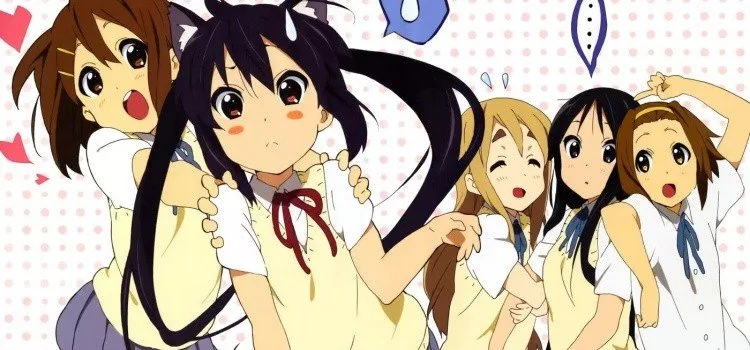
The look that English fans now call “moe anime” blew up later. K-On! did not invent the slang, but it did fix a Western picture of it: after-school tea, clumsy guitar, Yui’s round eyes. Through that show many viewers also learned the chant oishiku nare moe moe kyun — which maid cafés had already been using as a food spell.
What does moe moe kyun mean?
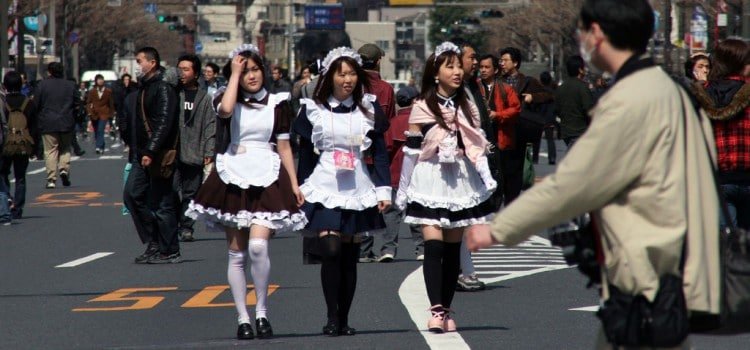
There is no extra dictionary entry hiding under the three words. In a maid café they work like a ritual, an abracadabra over the plate: the maid blesses the food so it will taste better, and you play along. Akihabara’s at-home café, which opened in 2004, presents itself as the place where the chant was born. The phrase then leaked into anime, memes, and every other maid café that wanted the same joke.
Kyun (キュン) is an onomatopoeia for a tightness in the chest — the squeeze you get when something is too cute or too close. English speakers reach for crush or “heart skip,” but kyun is the sensation, not the person you like. It is not a way to call someone senpai.
Moe moe kyun is that squeeze performed as theater. You will hear it where maids appear on screen and in cafés in Japan. A name suffix like “kyun” or “kyan” is a different habit. It only borrows the same flutter.
Right before the chant, maids often say oishiku nare [美味しくなれ]: become delicious. Together the line is a tiny spell — make this food taste like affection.
What makes a character moe?
Today certain girls get labeled moe almost on sight. The traits people keep listing are not a law, just a cluster:
- Shyness
- Kindness
- A pretty, unguarded face
- Innocence that still feels a little fragile.
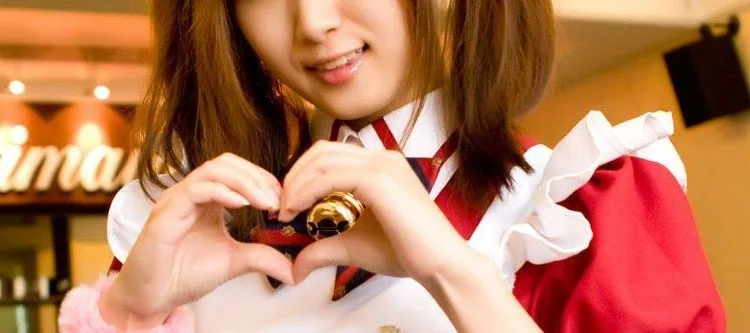
A character can be moe because of how she looks or because of how she reacts. Maid outfits, nurse uniforms, and cat ears show up constantly because they push that mix of service, play, and smallness. Embarrassment — a blush, a stammer, a hidden crush — does as much work as the costume.
The point is the feeling, not a personality template. If a girl (or a boy) stirs affection, protectiveness, and a little ache, that character can be moe for you. A tsundere, a yandere, or a kuudere is not disqualified. Male characters get the word too, especially when they are drawn fragile or aimed at a female gaze. Moe is not a men’s-only crush, even if a lot of marketing pretends it is.
Moe anime worth watching
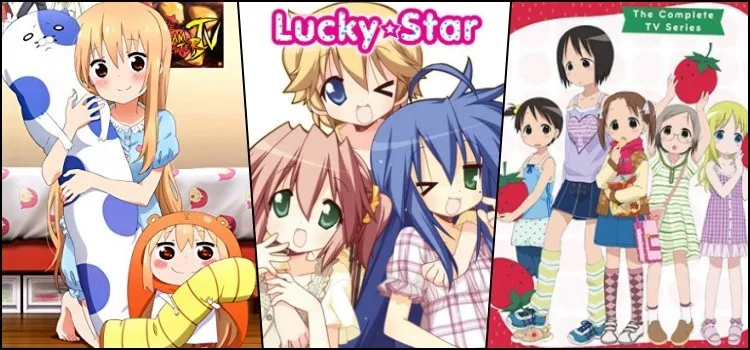
We already gathered a longer list of cute, kawaii, and moe anime. The titles below are not a ranking — they are a map of the feeling on screen. Watch a few if you want the word in your bones instead of in a glossary:
- K-On!
- Usagi Drop
- Himouto! Umaru-chan
- Lucky Star
- Ichigo Mashimaro
- Mikakunin de Shinkoukei
- Love Live and other idol anime
- Hanamaru Youchien
- Acchi Kocchi
- Yuyushiki
- Minami-ke
- Yuru Yuri
- Gochuumon wa Usagi Desu ka?
- Suzumiya Haruhi no Yuuutsu
- Non Non Biyori
- Hibike! Euphonium
- Shinryaku! Ika Musume
Characters often called moe
Moe is not locked to anime. Games, novels, dramas, and real idols pick up the same word. If a character of yours belongs here, that is the point: moe is a reaction, so the list is always personal.
These names come up again and again in fan talk — a sample, not a trophy case from some vanished online vote:
- Mami Tomoe — Madoka Magica
- Mikoto Misaka — Toaru / Railgun
- Mio Akiyama — K-On!
- Mikuru Asahina — Suzumiya Haruhi
- Meiko Honma — Anohana
- Mirai Kuriyama — Kyoukai no Kanata
- Fuuko Ibuki — Clannad
- Kosaki Onodera — Nisekoi
- Ayumi Otosaka — Charlotte
- Tsukiko Tsutsukakushi — Hentai Ōji to Warawanai Neko
- Shiro — No Game No Life
- Rikka Takanashi — Chuunibyou
- Rem — Re:Zero

Community
Comments
0 comments
There are no published comments in this language yet.
Send comment