
Father's Day in Japan falls on the third Sunday in June, not in early autumn the way it does in some other countries. The Japanese name is chichi no hi (父の日), and the day is observed much more quietly than the equivalent celebration in the United States: no big barbecues, no public parades, mostly a low-key family moment with a card, a small gift, or a meal shared with dad.
The tradition took shape around 1950. Families typically honor fathers and fathers-in-law with modest presents such as ties, a bottle of whisky or sake, a favorite snack, or simply something the father enjoys. Some children hand over a drawing or an origami figure; others bring a small bouquet. When the family feels like going out, a yakiniku or a restaurant serving wagyu beef is a common choice, and a shared drink of sake often closes the day.
Contents 11
Historical background: from a Tokyo YMCA group to a national habit
Father's Day in Japan is a relatively young tradition. Its roots lie in the United States, where Sonora Smart Dodd pushed for the first Father's Day in Spokane in 1910. In Japan, a student group at the Tokyo YMCA picked up the idea; most sources place the start in 1949 or 1950. The model was haha no hi (母の日, Mother's Day), which had been introduced in 1931. By the early 1960s, chichi no hi had spread across the country, and it is still observed today, in a noticeably calmer way than in many other cultures.
Compared with Mother's Day, Father's Day has always been the more reserved of the two. Mother's Day is big business in Japan, with carnation sales peaking in early May and entire marketing campaigns built around the date. Father's Day never attracted the same level of commercial push, which is part of why it still feels like a personal, family-driven moment rather than a national event.
Carnation symbolism: yellow for living fathers, white for those gone
The flower most associated with Father's Day in Japan is the carnation, just as it is for Mother's Day. The color convention, however, is the opposite. A yellow carnation is the typical gift for a living father; a white carnation is often placed on a family altar to remember a father who has passed away. The custom echoes the Mother's Day palette, where pink carnations are given to a living mother and white ones to one who has died.
Where you are in Japan also makes a small difference. In the Kanto region (Tokyo and surroundings), yellow carnations dominate the shelves in the week before Father's Day. In Kansai (Osaka, Kyoto, Kobe), red carnations sometimes appear as a more vivid alternative. Neither rule is written down; it is a soft regional habit that florists and shoppers tend to follow.
Traditional gifts: ties, whisky, and small daily luxuries
Walk into a Japanese department store in mid-June and the Father's Day corner is easy to spot. Ties are still a classic, often in darker, sober colors that match a salaryman's work wardrobe. Bottles of whisky, shochu, or sake rank high on the list, usually in the 3,000 to 10,000 yen range (roughly 20 to 70 USD). Pouches of quality green tea, coffee beans, and small leather goods are common too.
Modern favorites have also grown: massage chairs and cushions for desk-bound fathers, premium snack boxes with wagashi or single-origin chocolate, gift cards for Amazon Japan, Rakuten, or Yahoo! Shopping, and subscriptions for monthly beer, whisky, or coffee deliveries.
For very young children, handmade items still carry the most weight. A drawing, an origami figure, or a short handwritten letter is often the present the father will remember the longest, even if a brand-new tie is what gets worn to the office on Monday.
The family meal: yakiniku, sushi, and the wagyu upgrade
When families mark the day with a meal out, three formats tend to dominate. Yakiniku (grilled meat at the table) is a frequent choice because it lets everyone cook at their own pace. Sushi, from a mid-range neighborhood shop, is a safe pick for fathers who appreciate a quiet, classic meal. A restaurant specializing in wagyu beef is the upgrade option, used for a meaningful occasion, and the price climbs quickly once A5 wagyu is on the menu.
Family restaurant chains also publish seasonal Father's Day sets every year. Saizeriya, Gusto, and Coco's typically run a limited-time plate with steak, hamburger steak, or a small roast, paired with a drink and a dessert. A low-cost way for a family with kids to mark the day without booking weeks in advance, and proof of how widely the date is acknowledged, from the smallest casual diner to the most careful kaiseki kitchen.
Father's Day around the world: same day, very different mood
Father's Day is not a fixed international date. In the United States, Canada, and the United Kingdom, it falls on the third Sunday in June, the same day as in Japan. In Brazil and Italy, the date is on the second Sunday in August. In Germany, the equivalent Vatertag is celebrated on Ascension Day, forty days after Easter, and is famous for the Vatertagstour, a hiking trip with beer carts. In Spain and Portugal, Father's Day falls on March 19, the feast of Saint Joseph. Australia and New Zealand follow the British calendar in September, Thailand celebrates on December 5, and South Korea keeps May 8 as Parental Day, honoring both parents at once. The variety is a useful reminder that, while the word "Father's Day" is shared, the way a country marks it reflects its own family culture, calendar, and public mood.
Useful Japanese phrases for Father's Day
If you are in Japan around the third Sunday in June, a short greeting in Japanese goes a long way.
父の日おめでとうございます
Chichi no hi omedetou gozaimasu;
Happy Father's Day.
お父さん、いつもありがとう。
Otousan, itsumo arigatou.
Dad, thank you for everything.
For a more personal touch, add 体に気をつけて (karada ni ki o tsukete, take care of your health), a phrase Japanese people use often when speaking to an older relative. If your father has passed away, a visit to a family altar with a small offering of white carnations and incense is a common, quiet way to mark the day.
The role of fathers in Japan
Like fathers everywhere, Japanese fathers come in every type. Some are loud and playful, others quiet and serious, others strict and demanding. The same desire to see their children grow up well runs through all of them.
For decades, the cultural image of the Japanese father was shaped by the kyaria-man, the salaryman who left early in the morning and came home late at night, with most of his contact with his children on weekends. Some adults I spoke to in Japan said they saw their father only three or four times a week, and even then mostly in passing.
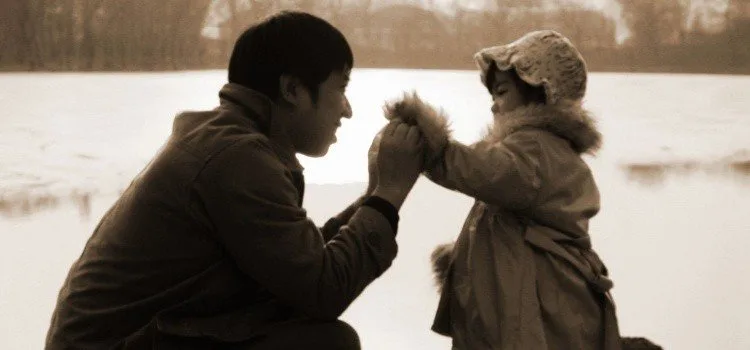
It is, of course, dangerous to generalize. In the household I stayed in during my time in Japan, the father spent real time with his two young daughters in the evening, playing with them and reading picture books. A warm scene, and not at all what the tired salaryman stereotype would lead you to expect. Many fathers also stay close to their children well into adulthood, even when the relationship is expressed through quiet support rather than daily conversation.
That distance can also have a darker side. The link between an absent or emotionally distant father and the rise of the hikikomori or NEET phenomenon has been discussed in Japanese sociology for years, as one of several factors alongside school pressure, bullying, and a job market that can be harsh on young people, not the only explanation. There is also the more traditional father figure who tries to chart his child's path for them, often steering them toward the family business, a stable civil service job, or the same profession the father practiced himself.
Father's Day in Japanese: the words for "father"
There are three main ways to say father in Japanese, and the choice depends on who is speaking and to whom.
- 父 (chichi) refers to one's own father. It is a direct, slightly formal word, used in compounds such as chichi no hi (Father's Day) and chichi-oya (parent, in legal or written contexts).
- お父さん (otousan) is the everyday, polite form. Children use it at home to address their father, and adults use it when talking about someone else's father in a respectful register.
- パパ (papa) is the small-child word, the Japanese equivalent of "daddy." Many children keep using it into elementary school. It is not the right register for a card or a formal greeting.
For Father's Day, the most natural form is otousan, in sentences such as otousan ni nanika purezento o ageru (I will give my father a small present). In a written card, chichi in kanji with otousan in hiragana next to it gives a softer feel.
The commercial side: a quiet day, a real market
Even though Father's Day in Japan is a low-key affair, it is not a small commercial event. Industry associations put annual consumer spending in the tens of billions of yen, and the figure keeps growing slowly year over year.
Some sociologists read the rise of the date as a sign of how the role of the father is shifting in Japanese families. As more fathers take an active part in childcare, the commercial offer has widened from the classic kyaria-man gift (a tie, a bottle of whisky) to items the whole family can use: home electronics, board games, outdoor gear. Either way, the day remains, for most families, a warm, low-key thing: a card, a meal, a short message, and a moment to say thank you. That, more than the sales figures, is what chichi no hi has come to mean in Japan.
Celebrating Father's Day in Japan as a visitor
If you happen to be in Japan in mid-June, the easiest way to feel the date is to stop by a local department store. The chichi no hi corner is usually on the main floor, runs from late May to the Sunday itself, and brings together ties, whisky, snack boxes, and seasonal items.
For a meal, you do not need a reservation weeks in advance. A neighborhood yakiniku place, a mid-range sushi shop, or a casual family restaurant will all be running something. If you want to mark the day for a Japanese friend or host, a small wrapped gift from a local konbini or a sweet shop is perfectly appropriate; it is the gesture that counts, not the price tag.
Other Japanese holidays worth knowing
Father's Day sits inside a wider pattern of small, warm, gift-friendly Japanese dates. Children's Day in Japan (Kodomo no Hi) falls on May 5, the loudest of the bunch, with carp streamers outside every home with children. Mother's Day in Japan (Haha no Hi), on the second Sunday of May, is the bigger commercial sibling of Father's Day and the model on which chichi no hi was built. Valentine's Day and White Day in Japan run on February 14 and March 14, with their own, very Japanese rhythm of reciprocal chocolate gifting.




Community
Comments
0 comments
There are no published comments in this language yet.
Send comment