
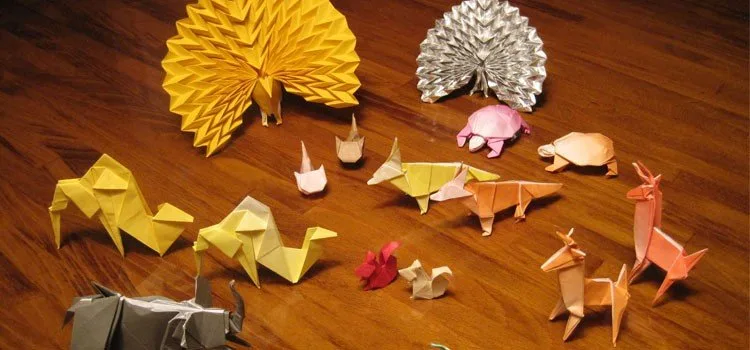
Origami [折り紙] is the Japanese art of folding paper — the word comes from [折る] oru, to fold, and [紙] kami, paper. With a few careful creases, a flat square can become a crane (tsuru), a frog, a boat, or something far more elaborate. That simple transformation is why the craft stuck in Japanese culture and traveled the world.
Origami still shows up far beyond craft tables: architects and engineers borrow its folds for compact structures, and therapists use slow, precise folding as a gentle exercise for hands, focus, and patience. The same paper that once wrapped gifts in formal ceremonies now sits in classrooms, hospitals, and design studios.
Contents 4
Where origami comes from
A full origin story is hard to pin down. Paper reached Japan from China via Korea around the 6th century, and Japanese makers refined strong, flexible sheets of washi. Early folds were often ceremonial — gift wrappers, shrine decorations, and formal etiquette — not weekend hobbies. Solid recreational paperfolding is clearer from the Edo period (1603–1868), when cheaper paper let more people fold for pleasure.
By the late 17th century, poets already took folded butterflies for granted. Manuals followed: ceremonial folds in works like Ise Sadatake’s instructions (1764), then recreational linked cranes in Hiden senbazuru orikata (1797). The everyday word origami itself became common later, around the late 19th century, as Japanese schooling mixed local folding with European kindergarten paper crafts.
You can roughly split what people fold today into traditional models and modern creative work. Traditional shapes include birds, frogs, balloons, boats, insects, and plants passed down at home. Creative origami grew in the mid-20th century with masters such as Akira Yoshizawa (1911–2005), who treated folding as living art, popularized wet-folding for softer curves, and helped standardize the diagram symbols folders still use. He did not “invent origami in 1950,” but he did push it from folk craft toward a global art form.
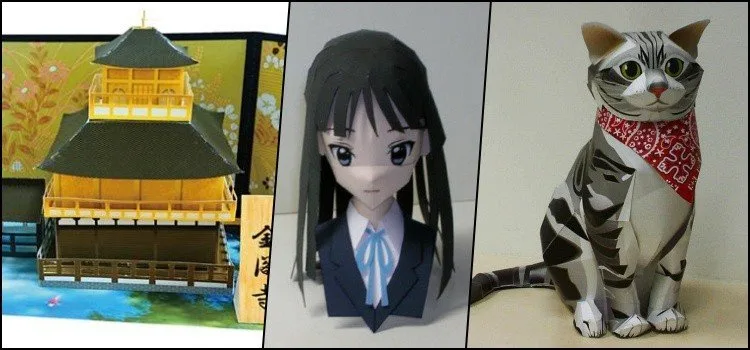
There is also kirigami [切り紙], “cut paper.” It looks related, yet the paper may be snipped to open more complex designs. Pure modern origami usually avoids cuts and glue; traditional practice was sometimes freer. Neither should be confused with papercraft or pepakura, where printed nets are cut and assembled into 3D objects.
The crane, senbazuru, and Sadako’s story
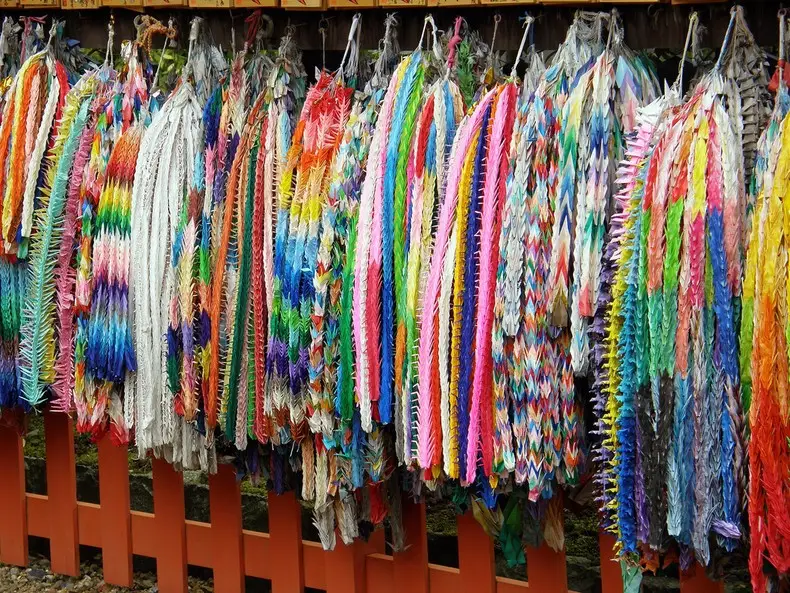
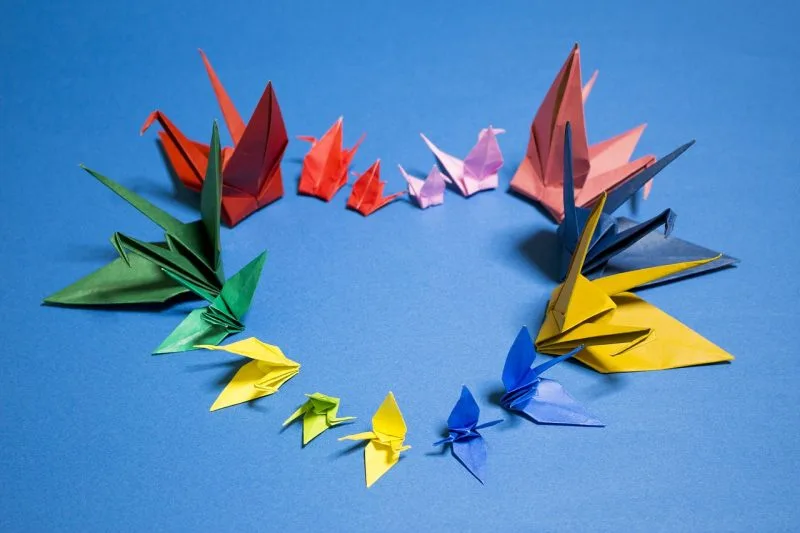
The paper crane is the face of origami for many people. In Japan the crane (tsuru) is a long-life symbol, and the custom of folding a thousand cranes — senbazuru — grew into a wish for recovery, luck, or peace.
That custom became inseparable from Sadako Sasaki, a girl exposed to the Hiroshima bomb as a small child who later developed leukemia. In the hospital, friends shared the legend that a thousand folded cranes could grant a wish. Sadako folded crane after crane, hoping to heal and, in many retellings, for peace beyond her own illness. Accounts differ on the exact count she finished, but the image of her work — and of classmates completing strings of cranes after her death on 25 October 1955 — reached the world.
Her friends and classmates helped raise the Children’s Peace Monument in Hiroshima Peace Memorial Park. The words often associated with that memorial still circulate: “This is our cry, this is our prayer: for building peace in the world.” Strings of paper cranes still arrive there from school groups everywhere.
If you want the crane legend and folding steps in more detail, read: How to Make Tsuru Origami + Legend.
Want to fold a tsuru yourself? Follow a clear step-by-step video and crease slowly — the bird base rewards patience more than speed.
Tips for making your origami
Anyone can start with traditional models without a course. You need square paper, a flat surface, and a few reliable habits:
- Work on a flat, smooth surface;
- Use thin paper if you are a beginner or if the model has many layers;
- Cut the square accurately when you start from a rectangle;
- Align edges and corners before you press;
- Sharpen each crease by running a fingernail or bone folder along the fold;
- Keep your hands clean so the sheet stays bright.
You do not need specialty packs for every project. Newspaper, flyers, and wrapping paper all work for practice. Size, weight, and color depend on the model. For a finished piece that holds detail, Japanese handmade washi is a classic choice: strong fibers, a soft hand, and creases that stay put.
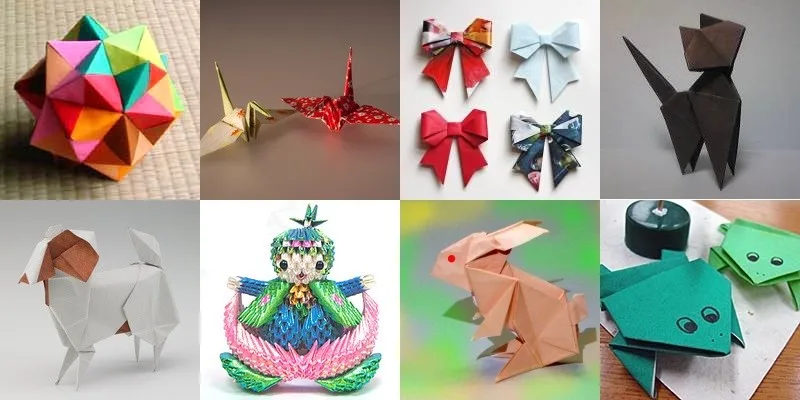
Most figures begin as a perfect square: fold a triangle and trim the excess if needed. Good results come from edges that meet cleanly and creases that are pressed fully. Many sequences ask you to fold, unfold, reverse, squash, or open a pocket — that temporary “map” of creases is normal, not a mistake.
Origami is portable: one sheet is enough to pass a train ride or a quiet evening. For a wider map of Japanese arts that sit next to folding — from calligraphy to woodblock — see types of Japanese art.
Anime and character origami
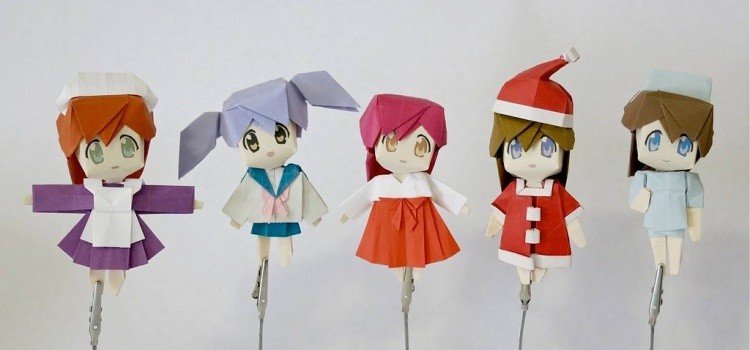
Folders also turn paper into anime and game characters. Some pieces stay pure origami; others slip into kirigami when cuts shape hair, eyes, or accessories. That is still paper art — just name the technique honestly.
Below are character-inspired models people often share (lists, not a ranking):
- Suiseiseki / Suigintou-style dolls from Rozen Maiden (and related doll aesthetics);
- Sakura Kinomoto from Cardcaptor Sakura;
- Hatsune Miku from Vocaloid;
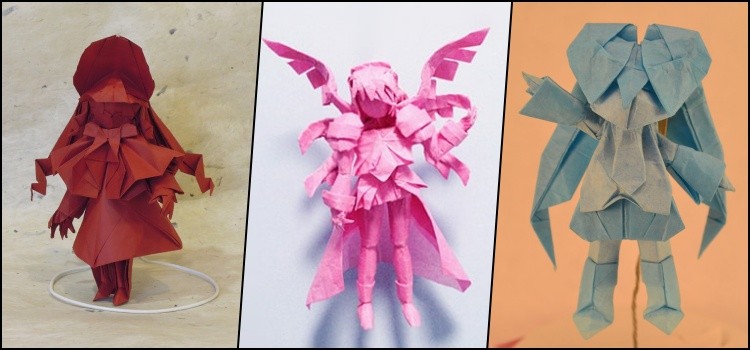
- Suigintou from Rozen Maiden;
- Zero from Code Geass;
- Flandre Scarlet from Touhou Project;
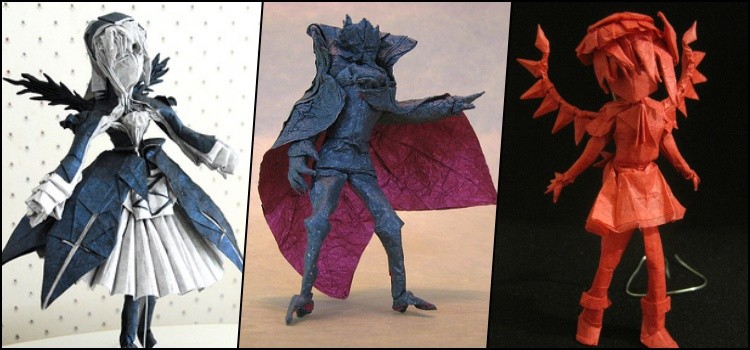
- Maid-style figure;
- Chibi character in a Santa outfit;
- Kurumi Tokisaki from Date A Live;
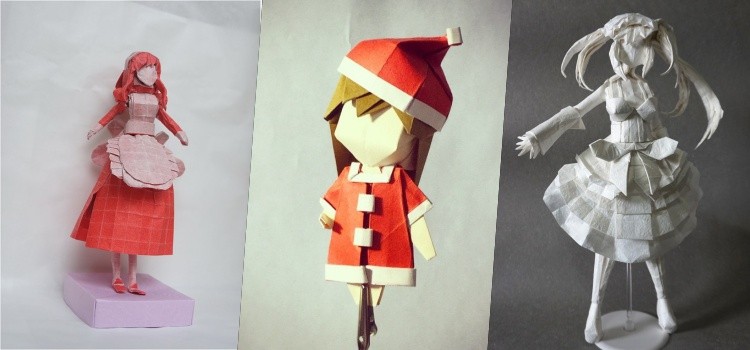
- Doraemon;
- Pikachu from Pokémon;
- Luffy from One Piece;
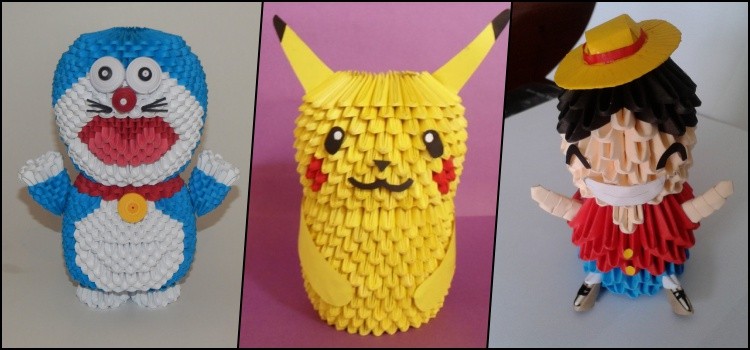
Some artists keep a single paper color and suggest eyes or hair only with folds and crumples, closer to traditional restraint. Others combine several sheets for color changes. High-quality galleries of anime, manga, and game models live on sites such as origami.me, which also inspired some of the photos shared with this piece over the years.


Community
Comments
0 comments
There are no published comments in this language yet.
Send comment