
In Japanese class the question pops up early, and it sounds almost like a riddle: can a word even begin with ん? Hiragana ん is the only kana without its own vowel — which is exactly why a word-initial ん feels so strange.
The short surprise: in standard Japanese almost no native words start with ん. In slang, dialects, and some foreign names, that kana still appears up front. Those exceptions are worth a closer look — and they explain why Shiritori ends so abruptly once someone lands on ん.
Contents 9
The ん: The Only Kana Without a Vowel
What makes it special
In the Japanese sound system, ん really is an outlier. Every other kana carries a vowel (like か "ka" or た "ta"). The ん stands for a nasal sound and normally closes a syllable. When it shows up at the start of a word or phrase, it stands out right away.
Few Japanese words begin with ん. Most cases are slang, regional forms, or borrowings from other languages. In the standard lexicon, an initial ん stays the rare exception — and that is precisely what makes it memorable for learners.
Slang and Dialects That Use ん
In everyday speech and in dialects, ん appears more often at the beginning, especially when someone wants to stress disbelief, anger, or hesitation. Here are a few well-known examples:
Slang expressions with ん
- んなばかな!
- Origin: contracted form of そんなばかな.
- Meaning: "No way! That can't be!"
- Used when something said or done feels completely unbelievable.
- んなわけねぇだろう!
- Origin: derived from そんなわけねぇだろう.
- Meaning: "No chance! It can't be like that!"
- An even sharper way to deny or push back.
- んやろう
- んと…
- Meaning: "Umm…" or a hesitation sound.
- A very common filler while you figure out what to say next.
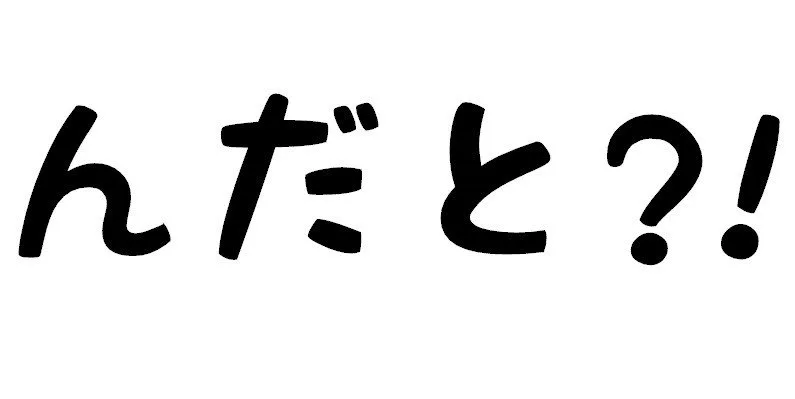
- んだと?!
- Origin: slang from なんだと (nan da to).
- Meaning: "What did you just say?!"
- Sounds surprised, indignant, or ready for a challenge.
Dialect words
In some regions — especially in the Ryukyuan languages of Okinawa — words starting with ン are common. One often-cited example is the Okinawan word for miso: ンース (nnsu). Forms like this are not standard Japanese, but they show that a word-initial nasal can be perfectly ordinary in related languages.
Foreign Words and Proper Names with ん
With names and terms from other languages, writers often turn to katakana ン when the original sound begins with a nasal. A classic example is the Ngorongoro region in Tanzania, written in Japanese as ンゴロンゴロ. The same pattern appears with place names such as ンジャメナ (N'Djamena, the capital of Chad).
Syllables like "Nwa", "Nwi", "Nwe", or "Nwo" are also written this way when the goal is to keep the original pronunciation as close as possible — for instance in certain place or personal names. For learners, the key point is simple: these are special writing cases, not proof that everyday standard vocabulary suddenly starts with ん.
The Challenge of the Shiritori Game
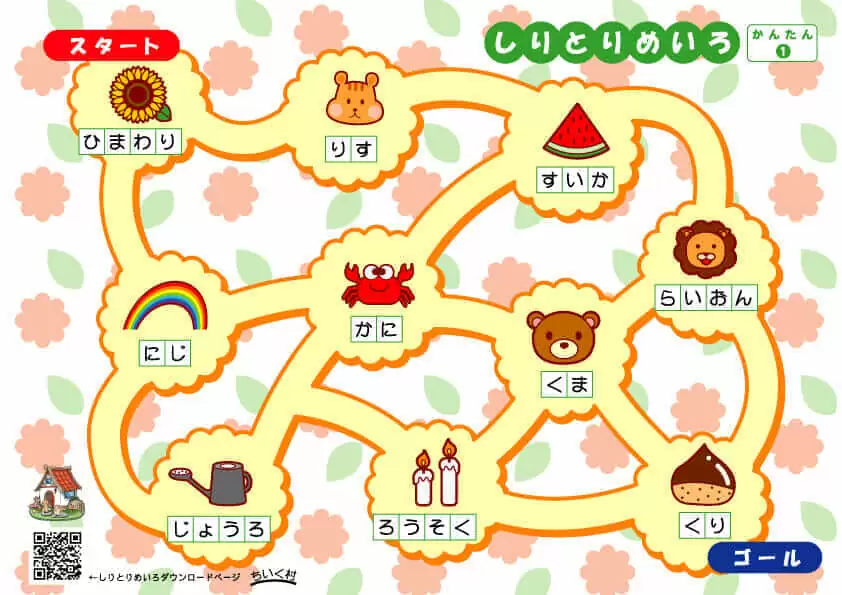
In the game Shiritori, players take turns saying words that begin with the last mora of the previous word. The famous rule: if you say a word that ends in ん, you lose — because in everyday Japanese almost no word begins with that kana.
Why is ん such a trap?
The reason is straightforward. The next player would need a word that starts with ん, and in standard Japanese that follow-up almost never exists. Slang, dialect forms, and foreign names usually do not count as a rescue in the classic game. So if someone says "udon" (うどん) and ends on ん, they fall into the strategic trap — and the match ends right there.
Conclusion
At the start of a word, ん is rare but not invisible: it shows up in colloquial forms, in regional languages such as Okinawan, and in some foreign names. For ordinary vocabulary, the textbook rule — and the Shiritori rule — still holds, which is exactly why this kana sticks in your memory. Do you know any other expressions that begin with ん, or have you already lost a round of Shiritori because of it?





Community
Comments
0 comments
There are no published comments in this language yet.
Send comment