
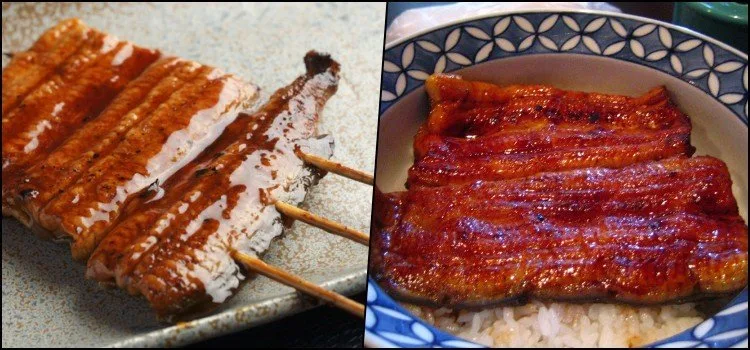
Unagi is the Japanese word for freshwater eel, especially the species most commonly used in Japanese cooking. It is richer and fattier than anago, the saltwater conger eel, so the two are not treated the same on the table. In Japan, unagi is prized for its soft texture, smoky aroma, and the sweet-savory glaze that clings to the fish after grilling.
The classic preparation is kabayaki: the eel is filleted, deboned, skewered, grilled, brushed with tare sauce, and grilled again until glossy. That technique turns a fish many people find intimidating into something buttery, fragrant, and easy to eat. Good unagi is rarely cheap, which is one reason it is still seen as a dish for special meals or seasonal cravings.
How unagi is eaten in Japan
The best-known rice bowl is unadon, where slices of grilled eel are laid over hot rice so the sauce seeps into every bite. The same combination served in a lacquered box is called unaju. In Nagoya, another favorite is hitsumabushi, chopped eel over rice that can be eaten plain first and then with condiments or broth.
Unagi also appears in sushi, but not as a raw topping. Freshwater eel is cooked before serving, and one familiar combination is unakyu, made with eel and cucumber. Beyond sauce-glazed eel, there is shirayaki, a simpler version seasoned mainly with salt, umaki, where eel is rolled into tamagoyaki, and even hone senbei, crisp fried eel bones served as a snack. Restaurants may also serve kimosui, a clear soup made with eel liver.
Why unagi is linked to summer
Unagi is strongly associated with summer in Japan, especially during Doyō no Ushi no Hi, the midsummer Day of the Ox. The custom goes back to the Edo period and survives because eel is still seen as a hearty food for the hottest part of the year. Many specialty shops advertise heavily around that date, and families treat it as the moment to splurge on a proper eel meal.
Regional style matters too. Kantō cooks often steam the eel after an initial grill, then finish it with sauce for a softer and flakier result. Kansai style skips the steaming step and grills the eel more directly, giving it a firmer bite and deeper char. Both styles are unmistakably unagi, but they feel different enough that travelers often develop a clear favorite.
If you want to understand why unagi has such a loyal following, start with a simple bowl of unadon or unaju. The appeal is not only the sauce, but the contrast between smoky skin, tender flesh, and rice that absorbs every drop. It is one of those foods that says a lot about Japanese cuisine: technique matters, season matters, and even a humble bowl can feel memorable.
We also recommend reading:
- Nori - All about the famous seaweed used in sushi
- Taiyaki - The famous fish-shaped cake
- Yatai - Discover the street food of Japan

Community
Comments
0 comments
There are no published comments in this language yet.
Send comment