
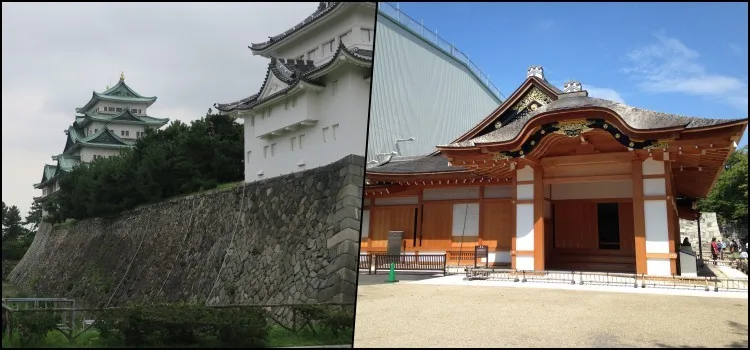
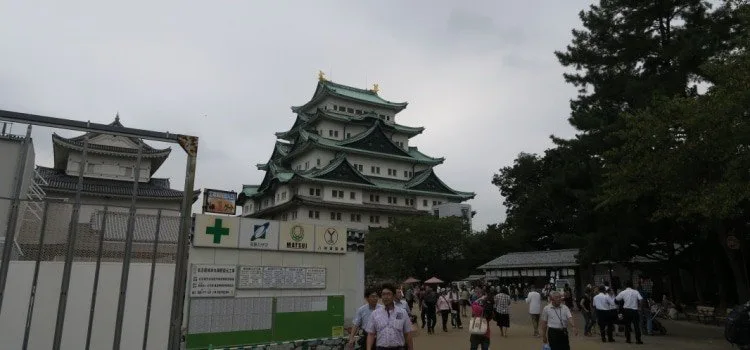
Nagoya Castle is one of the best places to understand how power, art and urban life came together in central Japan. Rising above the city in Aichi Prefecture, it is famous for its golden kinshachi, massive stone walls and the richly restored Hommaru Palace. Even people who have already visited other Japanese castles usually notice that Nagoya has a different scale and a more political story behind it.
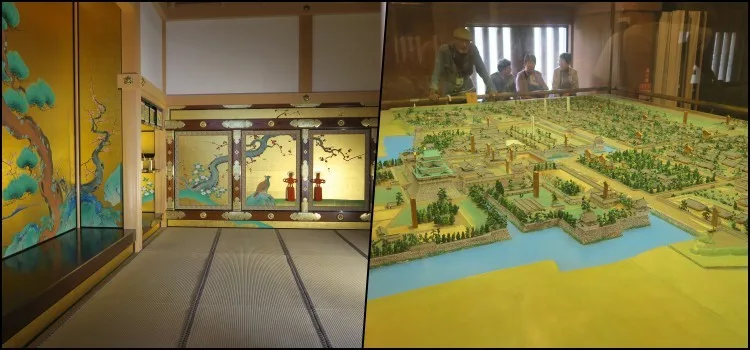
What makes the visit interesting is the contrast between military strength and refined interior design. Outside, you see moats, gates and defensive walls built for the Tokugawa era. Inside the palace area, the atmosphere changes completely, with gold-leaf rooms, painted sliding doors and ceremonial spaces created to impress guests and confirm authority. It is not just a photogenic landmark. It is a clear introduction to why Nagoya became such an important city.
Contents 8
History of Nagoya Castle
The castle that visitors know today belongs to the Tokugawa period. After the Battle of Sekigahara, Tokugawa Ieyasu ordered the creation of a new castle town in Nagoya and construction began in 1610 for his son Tokugawa Yoshinao. The main tower keeps were completed in 1612, and the Hommaru Palace was completed in 1615. Nagoya Castle then became the seat of the Owari branch of the Tokugawa family, one of the most important lines connected to the shogunate.
For centuries the castle stood as a symbol of status and control in the region. It was also known for its grand scale and for the golden roof ornaments that became the visual signature of Nagoya. Much of the complex was destroyed in the air raids of 1945 during World War II. The present main keep was rebuilt in 1959, while the Hommaru Palace was later reconstructed with historical plans, surviving artwork and old photographs, reopening in 2018.
This layered history is part of the appeal. Nagoya Castle is not a perfectly preserved medieval site. It is a place where original remains, postwar reconstruction and careful restoration all meet in one visit.
What to see inside the complex
Golden kinshachi
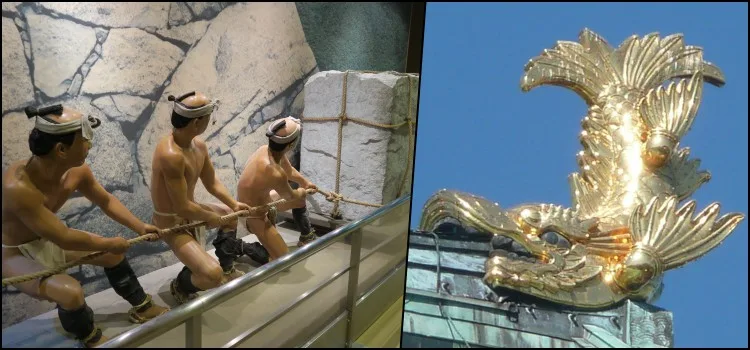
The pair of golden kinshachi on the roof are the castle's most famous symbol. These mythical tiger-headed fish were traditionally believed to protect buildings from fire, but at Nagoya Castle they also became a statement of prestige. Even if you know the image from postcards or city logos, seeing the ornament motif repeated around the grounds gives the castle a stronger identity than many other sites in Japan.
Hommaru Palace
The Hommaru Palace is the highlight for many visitors. It served as the residence and administrative center of the Owari Tokugawa family, and today it shows the decorative side of samurai rule better than a bare stone tower ever could. The restored rooms are filled with painted panels, formal audience spaces and details that reveal how political ceremony worked in the Edo period. If you only have time for one part of the complex, make it this one.
Stone walls, gates and open views
Do not rush straight to the palace. The castle grounds themselves are worth slowing down for. The giant stone walls, moats and surviving turrets make it easier to imagine how imposing the original complex must have felt. The Ninomaru and surrounding areas also give you room to walk, take photos and appreciate the contrast between the old fortifications and modern Nagoya in the background.
Is Nagoya Castle worth visiting?
Yes, especially if you want more than a quick exterior photo. Nagoya Castle works well for travelers interested in Japanese history, architecture and city culture, but it is also easy to enjoy without deep background knowledge. The site explains itself well, and the combination of broad grounds and ornate interiors keeps the visit from feeling repetitive.
It is also one of the easiest historic stops to fit into a city itinerary. You can pair it with museums, shopping districts or a simple half-day walk through Nagoya without needing a long detour. During cherry blossom season, the castle becomes even more attractive, with the grounds turning into one of the city's best-known spring viewing spots.
Visitor information and access
According to the official visitor information available on July 8, 2026, Nagoya Castle is open from 9:00 a.m. to 4:30 p.m., with entry to the castle grounds until 4:00 p.m. The site is closed from December 29 to January 1. Adult admission is 500 yen, while junior high school students and younger children enter free. Access is straightforward from the Meijo Line via Nagoyajo Station, and the castle is also reachable from Sengencho Station on the Tsurumai Line.
The official site also notes that the tower keep cannot currently be entered, so the visit centers on the grounds, the palace and the surrounding historic structures. That does not make the experience feel incomplete. In practice, the Hommaru Palace, the stonework and the iconic skyline view are what most people remember anyway.
Final thoughts
Nagoya Castle earns its reputation because it offers more than one kind of experience. It has political history tied to Tokugawa power, visual drama in the golden roof ornaments, and a palace interior that shows how refined samurai authority could look in practice. If your trip through Japan includes Nagoya, this is one stop that easily justifies the time.
For travelers building an itinerary in Aichi, it is a strong first choice: central, historically important and genuinely memorable once you step beyond the postcard view.


Community
Comments
0 comments
There are no published comments in this language yet.
Send comment