
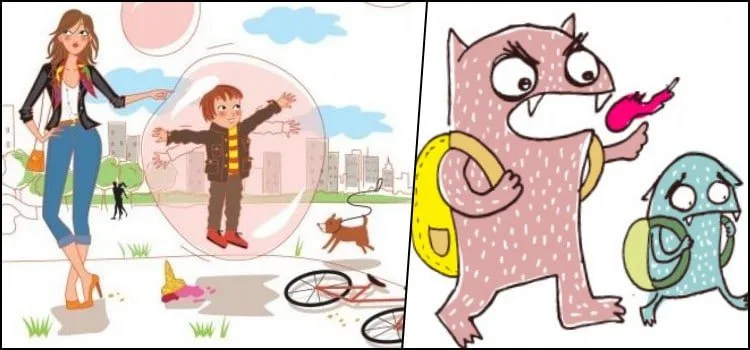
Monster parent (モンスターペアレント), often shortened to monpe, is a Japanese term for a guardian who makes unreasonable demands or repeated complaints to a school. The label is controversial, and this article explains where it came from, what behavior it describes and why it became a social issue instead of treating it as a simple insult.
Contents 8
What the term describes
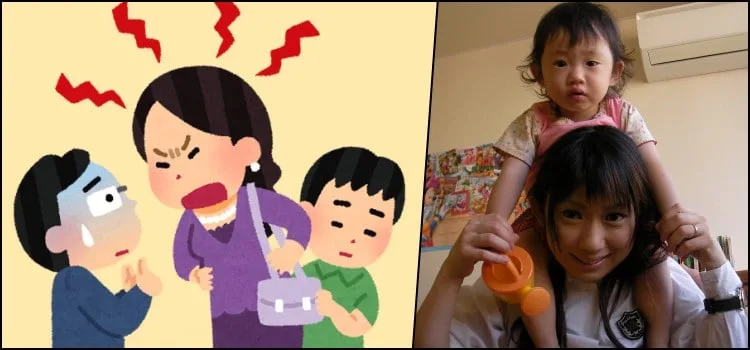
In its original sense, a monster parent is not simply a caring mother or father. The term points to guardians who turn ordinary school matters into disputes: demanding special treatment, questioning teachers in front of other students, insisting on cleaning exemptions, or escalating small complaints to the board of education.
The behavior can overlap with overprotection. Some parents control their children's schedules, forbid ordinary activities and push for results, while others focus their energy on the school. The common thread is the pressure placed on teachers and on the institution.
Where the word came from
The phrase is a wasei-eigo, a term built from English words in Japan. It was coined in 2007 by the educator Yōichi Mukōyama and spread quickly through media and school circles. It is not a neutral academic category; it started as a label used by teachers to describe difficult cases.
By the early 2010s the term was also used in Hong Kong, where similar debates about parental pressure on schools were taking place.
The 2008 drama and the media
A Fuji TV drama titled Monster Parent aired from July 1 to September 9, 2008. It presented episodes based on real situations in which parents interfered in school affairs and in teachers' lessons, and it made the expression familiar to a national audience.
The drama also shaped how the public pictures the phenomenon. Television tends to show the most dramatic cases, which is one reason the label later became associated with a stereotype rather than with a measured description.
Why it became a social issue
Several pressures came together. Competition for school places and exam results raised anxiety about children's futures. Families with fewer children concentrated expectations on one student. Teachers already carried heavy administrative workloads, and schools often lacked clear procedures for handling complaints.
When a parent shouts in the staff room or calls the board of education over a minor issue, the cost is paid by teachers and by other students. That is why the topic moved from gossip to education policy.
What it does to children
Excessive intervention can limit a child's autonomy. When a parent solves every conflict, the student does not learn to negotiate, accept a setback or handle disagreement with a classmate. Anxiety can also pass from the parent to the child, making school itself feel like a threat.
This does not mean that every involved parent harms their child. The issue is the degree and the method, not the presence of care.
How schools respond
Japanese schools and boards of education have developed consultation desks, complaint records and team-based responses so that a single teacher is not left alone against an angry guardian. Many schools now separate legitimate requests from abusive behavior and set limits on after-hours contact.
The practical principle is to move conflicts from a personal confrontation to a procedure: listen, document, respond within a stated time and involve a third party when needed. That protects teachers and gives families a fair hearing.
The problem with the label
The word has a strong stigmatizing effect. A parent who is worried about bullying or a learning difficulty can be dismissed as a monster parent, and that discourages families from asking for help. Media coverage that focuses on the most extreme cases reinforces the stereotype.
For this reason, some educators prefer neutral terms such as guardian response or school complaints. The label may be useful for describing a pattern of behavior, but it is a poor tool for judging individual people.
Conclusion
Monster parent is a Japanese coinage from 2007 that became famous through a 2008 drama and remains a shorthand for unreasonable pressure on schools. Understanding its origin helps separate a real problem from a stereotype, and the better response is usually a clear procedure rather than a stronger insult.
For a closer look at the behaviors and the school response, read the article on what monpe really means. Related reading: bullying in Japan and teacher salaries in Japan.





Community
Comments
0 comments
There are no published comments in this language yet.
Send comment