
Funeral rituals in Japan are deeply rooted in Buddhist and Shinto traditions, creating practices that differ markedly from those in many other countries. One of the most striking features is the near-universal use of cremation: well over 99% of the deceased are cremated, and the remaining bone fragments are treated with a care that mixes ancestor reverence, memory, and—sometimes—unexpected modern ideas.
Anyone trying to understand how Japan says goodbye soon hits contrasts: strict everyday taboos beside high-tech columbariums, quiet sutra chanting beside niche services that send a pinch of ashes into space. That tension between respect and adaptation is the cultural core of Japanese funerals and cemeteries.
Contents 17
Funeral Rituals in Japan
Body Preparation and Wake
In Japan, body preparation often follows a ritual called nokan (納棺), performed by trained professionals. They dress the deceased in specific clothing, usually white, symbolizing purity and the transition toward the spiritual world. This process gained international attention through the film Okuribito (Departures), which won the Oscar for Best Foreign Language Film and portrays the delicate work of these professionals.
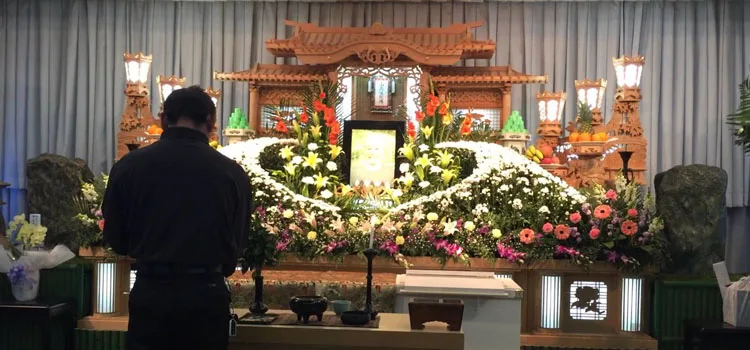
The wake, known as tsuya (通夜), is a moment of prayer and farewell. Family and friends attend dressed in black and present condolence money in special envelopes—okoden or kōden (香典), a contribution meant to ease the family’s burden. A Buddhist priest recites sutras to guide the spirit of the deceased, while those present pay their respects, often with incense and flowers as fixed elements of the ceremony.
Cremation and the Bone Ritual
Cremation is one of the central elements of Japanese funerals. After roughly one to two hours in the crematorium, family members take part in a distinctive ritual called kotsuage (骨上げ, “lifting the bones”). Using longer chopsticks—reminiscent of everyday hashi (chopsticks)—they pass the remaining bones among themselves, starting from the feet and ending at the head, so the deceased rests “upright” in the urn. The gesture expresses unity and respect, and it deepens the emotional bond among those left behind.
This act is typical of Japanese funerals—and that is why sharing food directly from chopsticks to chopsticks is considered a taboo in daily life: it echoes the funeral bone ritual. After the bones are gathered, purification with salt is common before the urn goes home for a time and, later, to the family grave.
Tombs and Cemeteries in Japan
Structure of Tombs
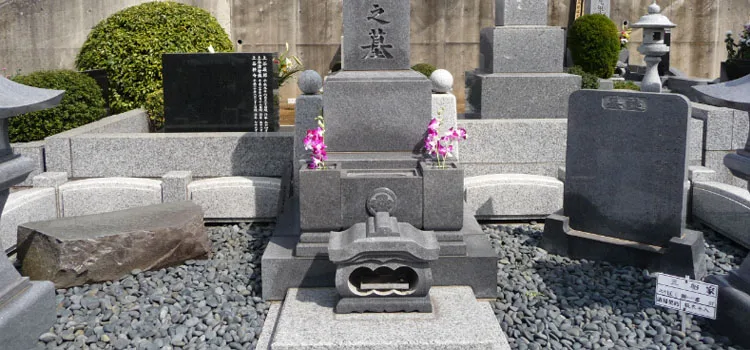
Japanese tombs, called haka (墓), are stone monuments with a clear, recognizable layout. They generally include:
- a place for incense and flowers;
- an underground chamber or niche for the ashes;
- inscriptions carved in stone, including the family name and often the family crest (kamon).
Some tombstones add modern touches: stone lanterns, small holders for letters from loved ones, and even screens with photos or genealogical information. It is common for the names of living family members to be engraved in red—a sign that they are still in this life and will join the grave later.
Modern Cemeteries in Japan
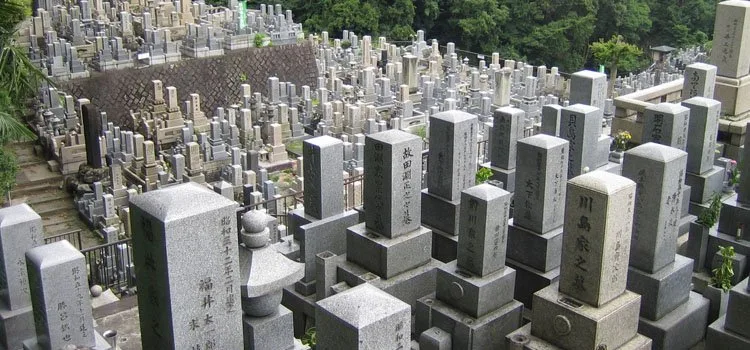
Cemeteries in Japan are often smaller than those in many Western countries, shaped by limited urban space and the high cremation rate. Some families also keep household altars (butsudan) or maintain private tombs where local rules allow it.
To save space and cost, there are vertical cemeteries and automated columbariums where urns are stored and retrieved electronically. Another growing option is tree-based or eco-style burial, with ashes resting near trees that serve as living memorials.
Tombs of Famous People
Tombs of public figures and celebrities sometimes have tighter security. That helps prevent incidents such as ash theft, which has occurred in the past because of obsessive fans or for extortion.
Curious Facts and Innovations in Funerals
Sending Ashes to Space
A striking niche trend is sending a small portion of ashes into space. Specialized providers offer memorial orbital flights for families who want an unusual symbolic farewell. It remains a rare choice next to the classic urn interment.
Funerals for Animals
In Japan, pets often receive elaborate ceremonies as well. There are crematories and cemeteries dedicated to them, with altars and tombs similar to those for people—a sign of how closely animals sit in the daily and emotional life of many families.
Cost of Funerals
Traditional Japanese funerals rank among the most expensive in the world: ceremony, cremation, religious services, and especially grave space can easily reach the range of one to several million yen. Leaner packages and simpler farewells are becoming more common, yet unclear add-on fees still frustrate families—comparing written estimates from more than one provider is wise.
Superstitions Related to the Dead
Many everyday superstitions in Japan brush against death without being labeled “funeral rules”: cutting nails at night is said to invite misfortune; the number 4 (shi) sounds like “death” and is often avoided; sleeping with the head to the north recalls the laying-out of the body and is shunned in daily life. Such taboos keep a boundary between ordinary life and death ritual.
Common Questions About Cemeteries and Funerals in Japan
Why do Japanese people prefer cremation?
Cremation is seen as clean and practical, and it fits limited urban space. It also aligns with religious and cultural ideas of purity and a relatively quick transition of the deceased into the status of a hotoke—an ancestral “Buddha” in the sense of ancestor veneration.
Is it allowed to divide the ashes among family members?
Yes, and it happens. Portions of the ashes or bone fragments may stay at a household altar, be placed in nature, or—in rare cases—be used for special memorial ideas. Regional and family customs differ widely.
Are there Shinto funerals in Japan?
Yes. Shinto funerals (shinsōsai) exist, though they are less common than Buddhist ones. During mourning the home shrine (kamidana) is often covered, because death is treated as ritual impurity (kegare). Today cremation is also usual in this context; pure earth burial without cremation remains the exception.
How long does the mourning period last?
In a Buddhist frame, the first 49 days are often especially important: weekly memorial rites accompany the soul on its path. After that come anniversary services and festivals such as Obon, when the family honors the ancestors again.
Japanese funeral rituals say a great deal about social values: respect, tradition, and the ability to adapt old forms to crowded cities and modern technology. Knowing these practices makes it easier to see how Japan honors its ancestors and keeps the memory of the dead present in everyday life.

Community
Comments
0 comments
There are no published comments in this language yet.
Send comment