Blog

  • Relationship between Korea and Japan – Do they hate each other?

    Relationship between Korea and Japan – Do they hate each other?

    Researching the history of the Land of the Rising Sun, one learns about the invasions that Japan made to other countries. In addition, one also learns about the invasions that the Japanese themselves suffered throughout history.

    For 1500 years, the relations between Korea and Japan were marked by trade. At the same time, they were characterized by wars and political conflicts between the two nations. Conflicts that still interfere in the relationship today.

    In recent decades, controversies over historical facts have bittered relations between South Korea and Japan.

    Disputes over the veracity of historical facts have strengthened the nationalist movements of each country, encouraging the commercial and political distancing of the respective nations.

    Both countries have tried to reach a political armistice, unfortunately, without success.

    Currently, 94% of Koreans believe that the Japanese “do not feel remorse for the crimes of the past.”

    63% of Japanese believe that Korea’s demands for recognition and forgiveness for past acts are “incomprehensible.”

    Relationship between Korea and Japan - Do they hate each other?

    Japan’s Invasions of Korea (and vice versa)

    During the Kamakura period, the Japanese suffered invasions from the Mongol Empire, along with the Goryeo Kingdom (Korea).

    However, the Mongols and Koreans failed in their offensives against the archipelago, resulting in Japan’s victory.

    During the 16th century, during the Muromachi period, samurai and pirates attacked ships off the coasts of China and Korea.

    In 1592 and 1598, Toyotomi Hideyoshi, who unified the nation, ordered the daimyos to conquer China through Korea. Meanwhile, King Seonjo warned China about the invasion.

    Subsequently, Japan completed the occupation of the Korean peninsula in three months.

    The Chinese attempts to reclaim the peninsula from the Japanese failed, and Korea lost the land battles. However, the Korean Kingdom managed to turn the tide by winning all the naval battles, resulting in the decisive defeat of the Japanese fleets.

    With the war stalled between the Chinese army and the Japanese army and the death of Toyotomi, the Council of Five Elders ordered the withdrawal of Japanese troops, resulting in Korea’s victory.

    Relationship between Korea and Japan - Do they hate each other?

    Occupation of Korea

    Between 1910 and 1945, Japan occupied Korea and established a government to administer it as if it were part of Japan.

    However, with the occupation, the industrialization of the peninsula accelerated, at the cost of negative changes to Korean culture.

    Testimonies from Koreans reported the brutalities committed by the Japanese during this time, ranging from looting and forced labor to rapes and executions.

    If you haven’t read about the Unit 731, Koreans were also victims of experiments conducted by the Japanese along with Chinese and other prisoners of war during the occupation.

    After the withdrawal of Japanese troops in 1945, the peninsula ended up being contested by the Soviets and the Americans.

    In 1948, this gave rise to the two Koreas. However, the two countries are still at war as no peace treaty has ever been signed.

    Relationship between Korea and Japan - Do they hate each other?

    Political Conflicts and Controversies

    Since then, South Korea has refused to establish any diplomatic relations with Japan, and it was only resolved in a Basic Relations Treaty in 1965.

    The only possible progress in the relationship was in 2015, when both addressed the issue of the atrocities committed by the Japanese. This resulted in a public apology from Prime Minister Shinzo Abe.

    Relationship between Korea and Japan - Do they hate each other?

    Do Japanese and Koreans hate each other?

    In South Korea, 77% of South Koreans view the Japanese negatively, and 22% had a positive opinion of Japan. Only 1% remained neutral.

    In Japan, 37% of Japanese view South Koreans negatively, with only 13% viewing them positively. The rest remained neutral.

    There have been attempts by Japan to improve the political situations between the two nations. However, the results have been minimal and have not had much effect.

    Did you like the article? Don’t forget to comment and share with your friends.
  • Fan Service – What is it? How did it come about? Why is it bad?

    Fan Service – What is it? How did it come about? Why is it bad?

    Have you heard of the term fan service? Do you know what it means? What is it? Why does it exist? In this article, we will delve deep into the meaning of the term fan service, which is quite present in anime, manga, movies, series, and other modern works and media.

    Fan service (ファンサービス) refers to ideas that the author creates in their works to please and attract more fans. Some tend to do this by including scenes of humor, double meanings, or even sensual content. Many anime end up going overboard.

    What is Fan Service? What does it mean?

    The most common fan service in anime is adding ecchi (sensuality), such as characters with large breasts and visible underwear. It may seem interesting to perverts, but this can end up ruining the anime or manga.

    In theory, the goal of fan service is to deliver things that fans want to see. A good example of fan service is the references and easter eggs from other series, stories, and interesting visual elements. If only it were just that, unfortunately, the term fan service has gained a negative reputation due to the sensuality used to attract fans in most works.

    There is nothing wrong with doing fan service; this happens not only in anime and manga but in all existing works on earth. The big problem is that many authors and directors have no idea what they are doing. It can be very disturbing when used at the wrong time.

    Fan service is increasingly prevalent in anime. Although it attracts many children and perverts, many people end up being put off by the works due to the excess of fan service. One of the major causes of fan service is the clichéd scenes and elements that further alienate people.

    Fan Service - What is it? How did it come about? Why is it bad?

    How did Fan Service originate?

    Fan service is not something created by the Japanese. The desire to please the audience is as old as fiction itself. Homages, parodies, and breaking the fourth wall are just some of the techniques used to please and attract fans.

    One of the first notable examples of fan service is the cheerleaders that appeared in 1950 in professional sports. Their flashy outfits, performances, and dances aimed to please, entertain, and excite fans. At a time when works with sexual appeal or even erotic scenes were rare, fan service was a way used in cinema to generate more profit.

    Over time, the industry became less rigid regarding the content displayed in films, comics, music, and animations. This causes the trend in media to have more sexual appeal. The term fanservice emerged in the late 1980s and was introduced in the film Otaku no Video in 1991.

    While some notice the fan service, others have no idea they are dominated by it. Just look at successful Brazilian songs, both sertanejo and funk, which are full of sexual appeal, all to please and attract the target audience. The whole world is contaminated by this; it is not something exclusive to Japan.

    Fan Service - What is it? How did it come about? Why is it bad?

    The main mistakes with Fan Service

    One of the most disturbing mistakes in fan service is inflating the breasts of most female characters. Some go beyond the limits of physics by adding an unrealistic size to the characters’ breasts. Animes where all female characters are excessively busty end up deterring many from appreciating the work.

    Some don’t care about this, but in various battles, female characters end up tearing their clothes exactly in inconvenient places. Some end up equipping powerful armor that does not protect the important parts.

    Some animes are impressive in terms of plot, storyline, and characters, but they end up being ruined because of fan service. One such example is the famous Sword Art Online, which started with a beautiful story and romance and was soon destroyed with a harem and scenes focusing on unnecessary parts.

    Fan Service - What is it? How did it come about? Why is it bad?

    Some animes/mangas show underwear every 5 minutes, focus the cameras in unnecessary positions just to please young perverts. Fan service also happens for girls, where there are various scenes where men walk around shirtless or force girls to ship characters.

    Many characters are androgynous, perverted, and have strange personalities just to create humor, but it ends up scaring some and making them think that Japan is a place full of crazies. Not to mention the excess of loli characters.

    Animes like Rosario + Vampire and Kaichou wa maid-sama could have new seasons if they hadn’t been a failure because of fan service. Although I like maid-sama, Usui being perfect is nothing more than fan service to attract girls.

    Fan Service - What is it? How did it come about? Why is it bad?

    List of animes with the most fan service

    Below we will share the result of an online survey that presents which animes have the most fan service in the whole world. Will you disagree that one has more fan service than the other?

    1. High School DxD
    2. Sekirei
    3. Shinmai Maou No Testament
    4. High School of the Dead
    5. Freezing
    6. Monster Musume: Everyday Life with Monster Girls
    7. To Love-Ru
    8. Is It Wrong to Try to Pick Up Girls in a Dungeon?
    9. Kill la Kill
    10. Maken-ki
    11. Sekirei: Pure Engagement
    12. Prison School
    13. Queen’s Blade
    14. Rosario + Vampire
    15. Heaven’s Lost Property Forte
    16. Fairy Tail
    17. Date A Live
    18. Masou Gakuen Hxh
    19. Kiss X Sis
    20. Is This a Zombie?
    21. Seikon no Qwaser
    22. Ikki Tousen
    23. Manyuu Hikenchou
    24. Cat Planet Cuties
    25. Chivalry of a Failed Knight
    26. Elfen Lied
    27. Girls Bravo
    28. Valkyrie Drive: Mermaid
    29. Witchblade
    30. LADIES VS BUTLERS
    31. Infinite Stratos
    32. Heaven’s Lost Property
    33. Kanokon
    34. Kenichi: The Mightiest Disciple
    35. Hundred
    36. Zero no Tsukaima
    37. Sword Art Online
    38. Mayo Chiki!
    39. Gurren Lagann
    40. Golden Boy
    41. No Game No Life
    42. Haganai
    43. Grisaia Series
    44. KonoSuba
    45. Blood Lad
    46. Nisekoi
    47. B Gata H Kei
    48. Strike Witches
    49. Bleach
    50. Bakemonogatari
    51. Triage X
    52. MM!
    53. Black Butler
    54. Yosuga no Sora
    55. Nisemonogatari
    56. Mirai Nikki – Another: World
    57. Free! Eternal Summer
    58. Unbreakable Machine-Doll
    59. Cross Ange
    60. Shomin Sample
    61. Tenchi Muyo
    62. Please Twins!
    63. Nyaruko: Crawling with Love!
    64. Listen to Me, Girls. I Am Your Father!
    65. Certain Magical Index
    66. Strike Witches 2
    67. We Without Wings
    68. Mysterious Girlfriend X
    69. One Piece
    70. Dusk maiden of Amnesia

    What do you think about fan service?

    Some animes only became famous because of fan service, even when used excessively. Animes like To Love Ru, Triage X, Free!, Shokugeki no Souma, HotD, and Freezing are some examples. Other animes like Fate/Zero received good reviews for the correct use of fan service.

    What is your opinion on the subject? Which animes had good fan service? Which ones were ruined because of excess and sexual appeal? We would love to hear your opinion in the comments.

  • Recipe – The famous strawberry cake from anime

    Recipe – The famous strawberry cake from anime

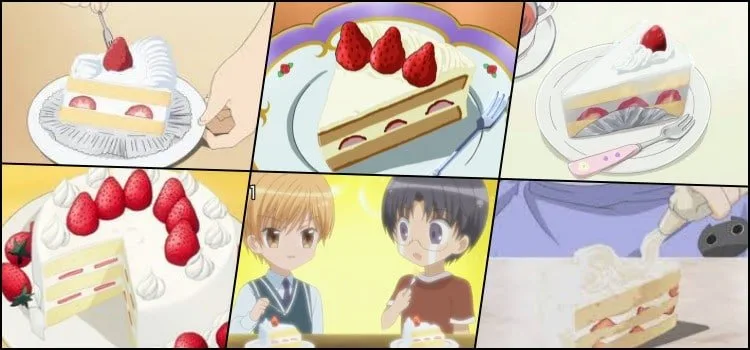
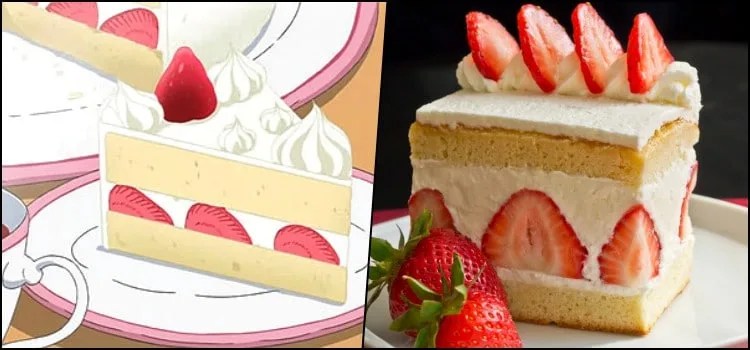
    You probably saw some anime where the character passes by a beautiful pastry shop and chooses a white cake full of strawberries. This is one of the most appreciated cakes by the Japanese and has an extremely light and refreshing flavor.

    This cake should be served cold and pairs well with both cold and hot beverages, especially black tea. Although the most sold is the strawberry one, you can add other fruits, such as apple, melon, mango, or even persimmon (many Japanese recipe books recommend persimmon for winter).

    This cake, being a refrigerator cake, has a shelf life of 3 days, as the fruit may start to deteriorate after that time. This cake is made in 3 stages; just wait for the batters and syrups to cool before assembling the cake, so it doesn’t risk spoiling quickly.

    The cake can also be made with other ingredients like powdered milk. In fact, this cake is so common around the world that there are thousands of versions of this recipe with strawberry cake both inside and out.

    Recipe - The famous strawberry cake from anime

    Strawberry Cake Recipe

    Makes a 20 cm cake with 10 cm height

    Batter (sponge cake);

    • Preheat the oven to 180°C
    • Grease a 20 cm pan with butter and place parchment paper at the bottom;

    Ingredients

    • 120g of sifted wheat flour
    • 40g of melted butter/or margarine
    • 4 large eggs or 5 small (separated yolks and whites)
    • 120g of refined sugar
    • 2 tablespoons of milk

    How to make

    In a mixer, place the egg whites and beat them until they start to foam. When this happens, gradually add the sugar. The egg whites will form a meringue.
    Then, with the mixer still running, add the yolks one by one. Then the butter and milk. Stop mixing.

    With a spoon, gently add the flour. Pour into the pan and bake for 15 to 20 minutes (check if it is lightly golden and baked in the middle using a fork) Make 2 cake layers and set aside.

    Recipe - The famous strawberry cake from anime

    For the syrup

    • 1 cup of water;
    • 1/2 cup of sugar;
    • 1 tablespoon of vanilla essence/or liqueur/or brandy;

    How to make

    In a small saucepan, mix the sugar and water. Bring to a boil for 5 minutes. Turn off the heat. Add the essence or liqueur. Let cool before using.

    For the filling and topping

    2 boxes of chilled whipped cream (whip according to package)
    500g of chopped strawberries

    Assembling the cake

    • Cut the cake layers in half;
    • Using a spoon, spread the syrup over all cake layers;
    • Place whipped cream and chopped strawberries. Repeat until the layers are finished;
    • Finally, cover with whipped cream and decorate with strawberries to taste;

    Did you like this recipe? In how many different animes have you seen this cake? Tell us and share this recipe with your friends:)

  • Betrayal, infidelity, and divorce in Japanese marriage

    Betrayal, infidelity, and divorce in Japanese marriage

    I bet many have wondered what married life is like in Japan. It’s even hard to imagine since we are talking about a country where marriage is becoming a question mark in the lives of Japanese citizens in general, and the number of married people tends to decrease. In this article, we will specifically talk about betrayal, infidelity, and divorce in Japanese marriage.

    They say there is a lot of cheating within Japanese marriage due to the fact that the Japanese man commits to working hard, doing shifts of more than 10 hours a day, and being out of the house practically all day while the woman, being a housewife, ends up having an affair with another man while her husband is away. The opposite also happens with the man being out of the house while the woman raises the children.

    The truth is that, yes, the tendency for extramarital affairs in a marriage between Japanese people is high. Most Japanese marry out of obligation, thanks to the social pressure imposed by family and society to have a family.

    Women are the most pressured to do this because, for Japanese men, after the age of 25, if a woman is still unmarried, they see her as an eternal party girl or a woman who doesn’t get along with any man. Women, on the other hand, end up having to choose between work and children, and many end up leaving their jobs to raise the children.

    Betrayal, infidelity, and divorce in Japanese marriage

    Extramarital affairs usually happen for emotional reasons. When discovered, in addition to resulting in divorce, the partner who cheated on their spouse ends up losing their job and their social reputation falls, causing the person to have a bad reputation.

    What do Japanese people think about betrayal?

    Believe it or not, there are Japanese people who justify extramarital affairs, especially when the partner in question cheats on their spouse with a prostitute. In this case, many believe that the betrayal is justifiable because it is a matter of “utilizing a professional service” and being a relationship between client and merchant and nothing more.

    However, when there is a case between the partner and a person who is not involved in prostitution, due to being emotional, the Japanese find that unacceptable. If there is any sense in this, it probably must be for them, because betrayal is betrayal regardless of the reason.

    Betrayal, infidelity, and divorce in Japanese marriage
    School Days is a good example of how betrayal can be fatal!

    But not everyone thinks that way as there are still traditionalists who refuse to accept any kind of excuse for committing adultery and believe that marriage is a serious commitment that must be fulfilled with seriousness and loyalty.

    Research conducted in Japan shows that about 27% of men and 13% of women have cheated. We should not trust these rankings, which are quite imprecise. Probably the research reached a specific audience that leads a lifestyle that causes this result. In Brazil, research reveals that 70% of men and 54% of women have cheated on their partners.

    What are the reasons for infidelity?

    One reason is that some Japanese men dedicate themselves a lot to work. Spending little time at home and neglecting their wives. The woman, feeling lonely, ends up having an affair with another man.

    The opposite is also true in that one of the reasons men end up working overtime is to “not come home early” and avoid contact with their own wives. In these situations, the man may also get involved with another woman and cheat on his wife.

    Betrayal, infidelity, and divorce in Japanese marriage

    The fact that many marry out of obligation and societal pressure results in a very unhappy and loveless marriage. So, one of the partners, or even both, end up having extramarital affairs, often with their partner being aware of it. Arranged marriages still happen today among wealthy families in Japan.

    So, is betrayal and divorce common in Japan?

    Obviously not, because that would be a grotesque generalization. It’s just something that happens both in Japan and around the world, including for the same reasons mentioned earlier. The divorce rate in Japan is 1.73% (2016) while Brazil is 2.41% (2014) per thousand inhabitants.

    This means that most couples manage to maintain a marriage after a betrayal. Some, just for the sake of keeping up appearances. Other men lose custody of their children and never see them again; to avoid this, they maintain the marriage. Forgiveness is another great option in a culture of seemingly innocent and good people.

    Fortunately, the number of divorces in Japan has been decreasing each year. What do you think about this subject? We appreciate comments and shares. We recommend continuing to read:

  • Is there Black Friday in Japan?

    Is there Black Friday in Japan?

    Is there Black Friday in Japan? Black Friday literally means black Friday and takes place on the last Friday of November after Thanksgiving in the USA, where discounts of up to 80% occur to clear out store inventories.

    Brazil has already embraced this trend of clearing inventories with Black Fraud, even though it does not celebrate Thanksgiving. What we see are products for half the double.

    Japan also does not celebrate this American holiday, despite celebrating Halloween. Few stores participate in the Black Friday event, such as Aeon, Toys R Us, and Gap.

    It is worth remembering that in addition to Black Friday, on Monday there is Cyber Monday, a similar event focused on online stores. Large stores like Japanese Amazon and Rakuten participate in both events with daily discounts similar to those in Brazil.

    Is there Black Friday in Japan?

    Why is there no Black Friday in Japan?

    The Japanese tend to have much more sales during the New Year holidays, due to the famous custom of buying lucky bags. They take advantage of these bags with random products to clear out old stock and still profit much more than during a Black Fraud.

    Another reason already mentioned is the simple fact that Japanese do not celebrate Thanksgiving, even though they embrace other Western commercial holidays like Christmas and Halloween.

    In Brazil itself, the holiday is recent, so I believe we will have something similar in Japan in the coming years. With time and the westernization of Japan, we believe that more stores will join Black Friday.

    Is there Black Friday in Japan?
  • The campaigns to grope breasts in Japan

    The campaigns to grope breasts in Japan

    Japan has a rather peculiar history of doing different and strange things. While some countries set up kissing booths or offer free hugs, Japan has once again surpassed the unimaginable with its campaigns involving breast fondling. In this article, we will talk about different breast fondling campaigns in Japan.

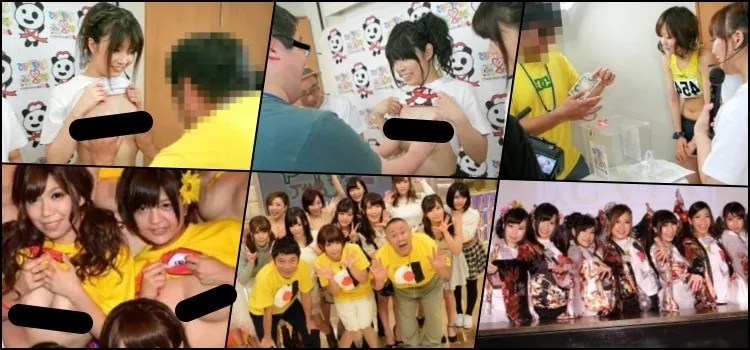
    A campaign against Aids was carried out by adult film actresses in Japan. During a weekend in Tokyo, Japanese people could pay to fondle the breasts of the actresses, all the money raised would be used in the fight against Aids. Everything was done in an organized manner, in a private place, with hygiene and for adults only.

    The event took place for several years and is usually called Oppai Bokin. In addition to participating in the event, people could watch the program through the cable television channel. In this event, customers can directly touch the breasts of Japanese women twice in any way they wish. One man even donated 20 times.

    The breast fondling campaigns in Japan

    In 2016, more than 7,000 people participated in the event, raising a total of 6 million yen. The cost to participate usually costs around 500 yen. The event seems to be organized by some sub-channel of the company sptvjsat. Similar events started to emerge with the same objective.

    It is not necessary to wait for such an event to happen to fondle the breasts of Japanese women. There are bars that offer exactly this service, where you have total freedom to fondle the breasts of a Japanese woman for a period of time while talking to her.

    Fondling breasts for free – Free Oppai

    On November 23, 2017, a YouTuber named Pepsi Lu appeared at the famous Shibuya station with a sign that read Free Oppai (フリーおっぱい), which literally means free breasts. More than 60 people had the chance to fondle the breasts of the Japanese woman, both men and women.

    Some were very polite, others took the opportunity to stick their faces in, and others were extremely embarrassed. The Japanese woman seemed happy and laughed at the whole situation; the innocence must be great. We couldn’t find anything related to Pepsi Lu, the channel where the video is available is called チンフェ (Timfe) and does not seem to be the original source. It was probably posted on Twitter.

    The Japanese comments about the video were quite diverse. Many criticized the practice, especially for happening in a public place, even with the touch being done over clothing. Some commented that this could affect the young woman’s graduation, employment, and marriage.

    This is not exclusive to Japan

    The desire to fondle breasts is something universal. As Asian religions do not usually get involved in moral discussions, it is likely that things like this happen more easily than in the West. Things like incest, censorship, and prostitution only ceased to exist in Japan thanks to Western influence. Various programs on cable TV have games involving breasts.

    During a wedding party in Hainan, southern China, the bride allowed guests to fondle her breasts to raise money for the honeymoon. Various events around the world have similar scenes, like that bull festival in Pamplona. Unfortunately, these occasions are not charitable.

    Did you know that this tradition may have originated in China? People often talk about Japan, but in China, there has been a breast fondling festival since the Sui Dynasty. The festival of touching breasts occurs to protect women from the ghosts of soldiers who were sent to war.

    The breasts of Japanese women – sizes, curiosities, and statistics

    This happens in the city of Eija in Yunnan province on the 14th, 15th, and 16th of July. On these days, men are free to fondle the breasts of women. Unfortunately, this dream is not a reality for those who intended to visit this city, as it is nothing more than a false news that was published on Wikipedia in 2010. Or is it just a lie to keep foreigners away from the festival?

    What is your opinion on the subject? Would you participate in such an event? Even if for a good cause? We appreciate the comments and shares!

  • Guide on how to create a shounen protagonist

    Guide on how to create a shounen protagonist

    Selling many animes of the shounen genre, one ends up noticing a certain pattern after a while. All the main protagonists tend to have a very similar physical appearance, a very similar story, and very similar behavior, only varying in the degree of emotional intelligence, protagonism, and insolence.

    In this article, I will present to you the basic recipe for how to create a main character in case one day you want to write your own shounen manga or perhaps create a shounen anime. Check out the items below to shape your protagonist so that he fits the pattern:

    Manual on how to create a shounen protagonist

    Rule #1: Appearance and clothing style©

    He should have spiky hair with bangs covering his eyes. The hair color is up to you, but if you want to stick to the standard, dye the hair blue, brown, red, or any other extravagant color.

    Black or blonde hair is for background characters or secondary characters (Sasuke and Naruto being an exception).

    The clothing doesn’t need to be very flashy (leave that for the main antagonist). When he is not at school (if it involves school), a simple t-shirt and jeans along with a pair of sneakers are enough.

    Manual on how to create a shounen protagonist

    Rule #2: My parents are dead or very useless©

    Feel free to use and abuse this element. Originality is for fools. Now seriously, taking most protagonists who are orphans, you could already form a new unit of GAASP with them.

    Don’t bother developing a family for this guy unless for flashbacks or short scenes because his parents must be dead or as useful as an ejection seat in a helicopter.

    Manual on how to create a shounen protagonist
    Naruto, the Harry Potter of animes

    Rule #3: As delicate as an elephant©

    The standard for every protagonist is to have a short fuse, to the point of wanting to pick a fight over little things. Dude, what is considered “normal” in anime would already be a reason to get admitted to a sanatorium in real life. Your protagonist should have the emotional intelligence of a 5-year-old.

    Bonus points if he always makes decisions without thinking twice that end up yielding positive results. Otakus like impulsive behaviors that only work because of the plot.

    Manual on how to create a shounen protagonist
    Is there a more foolish protagonist than him?

    Rule #4: A chair is smarter than this guy©

    Besides the standard “sitting at the back of the classroom on the left and admiring the scenery outside instead of paying attention in class” (again, if it involves school), your protagonist has to be the worst student in the class or among the mediocre students. Remember, the more shounen it is, the dumber the protagonist will be.

    It is generally implied that the reason for low grades is due to the adventures in which your character gets involved, but it can be observed that when they have free time, they do absolutely nothing.

    If it focuses solely on fighting, with the protagonist as a guy who doesn’t live in society, make him very naive.

    Manual on how to create a shounen protagonist
    Behold, the pinnacle of genius.

    Rule #5: As deep as a plate©

    His motivations, ideals, and philosophy of life will always be somewhat superficial and quite trivial. Unless you are writing a manga about a more abstract theme and not so shounen. In that case, the extreme opposite applies.

    Manual on how to create a shounen protagonist
    Basically, all the people of the genre. I can hardly think of a protagonist who doesn’t have a stupid motivation.

    Rule #6: Protagonism is love, protagonism is life©

    This is another important element in character building. Protagonism.

    Basically, it is when the author shapes the plot in favor of the protagonist, even if he has to contradict the story and the rules he created himself.

    Invent new techniques at the last minute, make the character get beaten like a street dog only to win the fight with a single blow, and don’t forget to buff him to the point of being overpowered.

    It doesn’t matter how trained and prepared his opponent is, it doesn’t matter if the enemy has more battle experience than the protagonist who is a novice, he will always defeat the antagonist.

    Regardless of whether the antagonist has a more lethal technique with less chance of survival, your protagonist will always survive. If he is injured or dies, there will always be the sidekick to heal or resurrect.

    Manual on how to create a shounen protagonist
    I don’t need to say anything, right?

    Rule #7: Persistence and insistence do not go hand in hand©

    As a consequence of the fourth rule, your protagonist will never give up, regardless of the severity of the situation. However, he will always insist on the same mistake and worse, he will succeed. This applies to battles when the protagonist uses the same previous technique against the opponent he couldn’t defeat using said technique.

    Manual on how to create a shounen protagonist
    This guy appears for the third time because he is the best example of these clichés. Rarely does a fight come to mind where he hasn’t spammed the Shadow Clone or this crap Rasengan.

    Rule #8: Romeo, Romeo. Why art thou, Romeo?©

    Romance is the aspect where you will put your plot and character development skills to the test (especially in harem). And to pass the test, do the opposite of good development and elaboration.

    Why develop a concrete romance? Why will you create a character compatible with your protagonist? Why make your protagonist stop stalling? WHY THE HELL will you listen to your fans, who have a better sense of shipping than you?

    Just make him so stupid that he ignores or doesn’t realize when someone likes him. More shounen than that is impossible.

    Manual on how to create a shounen protagonist
    Damn wanker…

    Rule #9: But, oh man, who art thou, that God replies?©

    Your protagonist will always be right. Always. No matter how foolish he is or how much he doesn’t understand the context of the situation he is in, he will never be wrong. Anyone who contradicts him, no matter how much they know what they are doing, is either alienated or evil.

    Manual on how to create a shounen protagonist

    Follow these rules and you will have your shounen protagonist, ready to be part of yet another repetitive and clichéd work that differs nothing from other works. Have fun.

    Did you like the article? Don’t forget to share and feel free to check out other articles about the absurdities in the world of otaku entertainment:

  • Ghost Stories – A somewhat controversial anime

    Ghost Stories – A somewhat controversial anime

    Probably, you may not remember the anime Ghost Stories or you may vaguely remember this anime.

    Ghost Stories, also known as Gakkou no Kaidan (Japan) and Ghost Stories (USA), was a 20-episode anime that premiered in Japan in 2000.

    The anime was produced by Pierrot Studios, known for producing the animations of Naruto, Bleach, YuYu Hakusho, among other animes.

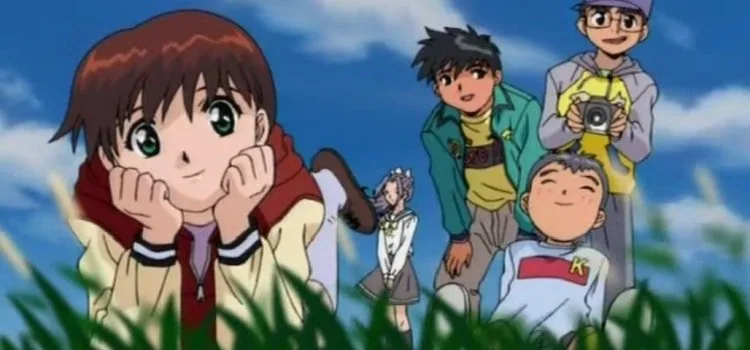
    It is the story of Satsuki Miyanoshita, the daughter of a deceased exorcist who sealed the spirits that haunted her city and left a diary that provided instructions on how to seal them if the spirits were to be freed.

    The diary is found in an abandoned and haunted school, and due to the urbanization process of the city, the spirits are freed and begin to haunt the city.

    Satsuki, along with her brother, Keiichirou, her friends Hajime and Leo, her friend Momoko, and her cat Kaya who was possessed by the spirit Amanojaku, will have to seal all the ghosts back.

    The anime, in general, was a ratings fiasco and ended up being canceled after 20 episodes.

    Then, Pierrot sold the rights to an American studio called ADV.

    The Japanese basically told the Americans that they could dub the anime however they wanted as long as they followed the original plot and did not change the names of the characters.

    Ghost Stories - A somewhat controversial anime

    The Americans then decided to dub it in such a way that the anime, whose genre is horror and supernatural, ended up turning into dark humor.

    Japanese Dub and American Dub

    The Japanese dub was considered amateurish and the characters had similar voices. In the original version, Satsuki is brave, Keiichirou is cowardly, Hajime is perverted, Leo is a boy curious about the supernatural, and Momoko is a calm and serene girl.

    In the American version of the dub, Satsuki is foul-mouthed, Keiichirou is mentally challenged with speech problems, Hajime is a pervert, Leo is a Jew, and Momoko is a fanatical Christian.

    Moreover, the American dub contained offensive humor involving blacks, Jews, and mentally disabled people comparable to jokes from South Park, and certain scenes gained sexual connotations that did not exist in the Japanese version.

    The anime ended up gaining an offensive tone due to the jokes placed in the American dub.

    Ghost Stories – Reactions

    Many reacted negatively to the American dub, but over time, the general opinion ended up taking it lightly.

    Many considered the dub as an official parody of the anime. An English version of the dub that remained faithful to the original version was released later.

    The anime was released in Brazil with the dubbed version in 2005 on Cartoon Network. The Brazilian dub remained faithful to the Japanese version.

    It’s hard to understand these choices of horrible animes for adaptation.

    Have you heard of this unknown anime? Did you have the chance to watch it? What did you think? We appreciate comments and shares.

  • The streets and traffic in Japan – An example to be followed

    The streets and traffic in Japan – An example to be followed

    Japan is known for its education, respect, and honesty. Things are no different in traffic; the Japanese drive while preserving human life, without haste, and respecting all traffic laws. In this article, we will see some curiosities about the streets and traffic in Japan, which serves as a great example to be followed.

    If you still don’t know how traffic works in Japan, let’s give a brief summary. In Japan, cars drive on the left with the steering wheel on the right side of the vehicle. There are expressways, toll roads, and express lanes. Traffic in Japan is slow due to the number of traffic lights, few roads suitable for overtaking, and the number of vehicles.

    501487343_d1

    The speed limits on expressways are usually 80-110, 50-60 on city roads, and 30-40 in urban areas. Toll booths are always located at the entrance of a Japanese expressway. There are times when it is cheaper to go by train; a trip from Tokyo to Kyoto can cost up to 9,000 in tolls. To understand more about traffic in Japan, see:

    Traffic in Japan – An example to be followed

    It is part of Japanese culture to follow traffic laws, which makes driving in Japan much more pleasant and safe. Another thing that helps traffic to function perfectly is the high value of traffic fines. The amounts easily exceed 1,000 dollars, which makes people think twice before committing infractions.

    The Japanese even tend to thank in traffic for simple behaviors that are the obligation of any driver. To understand more about behavior in Japan’s traffic and the examples we should follow, watch our friend’s video below:

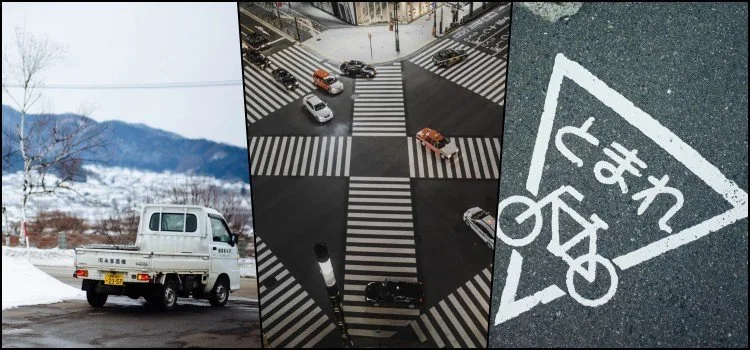
    Driving in Japan does not require haste, but a lot of attention. Since the streets tend to be narrow and have many strange intersections, you must pay close attention. You will find signs saying 止まれ (Tomare – Stop!) and 徐行 (jokou – slow), and sometimes you will come across dashed white lines indicating the possibility of overtaking, solid lines indicating that passing is allowed but must be done with great caution, and yellow lines that should never be crossed.

    It doesn’t matter if you are in the middle of an intersection, at a traffic light, on a busy street; sometimes it will always be necessary to stop to allow pedestrians or another car to pass, this is extremely common and no one behind you will get angry.

    The streets of Japan

    We don’t need to say that the streets of Japan are super clean, well-signposted, and in great condition for pedestrians and drivers. But there are some details that can sometimes go unnoticed; some streets in Japan are extremely narrow and still tend to be two-way.

    The streets and traffic in Japan - An example to be followed

    In some cities at night, these streets have no lighting, becoming completely dark. Many of the streets in Japan have no names; maps usually show block and lot numbers, but not street names. In my opinion, this is more practical for finding addresses.

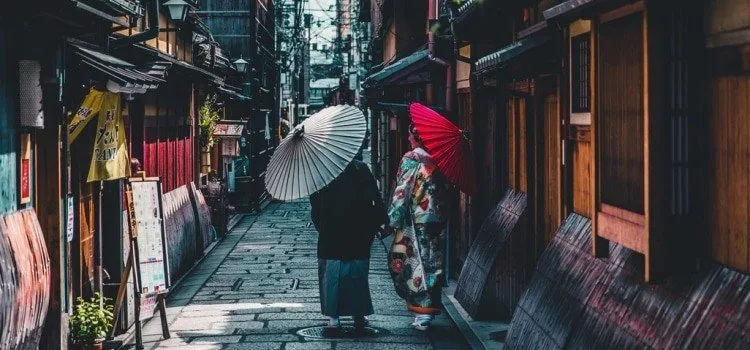
    Walking through the streets of Japan is a unique experience; it all depends on the city and location you are in. You can find everything from busy streets full of people to super deserted streets with many alleys and houses. Still, it is easy to find stores and vending machines.

    I hope that traffic in Japan serves as an example for the reckless drivers who roam our streets causing more than 50,000 traffic accident deaths in our country. There is even a saying that goes: It is easier to die taking a bath in a bathtub in Japan than in a car accident.

    And don’t even think about driving drunk because that results in a 20,000 reais fine.

  • Tips and Rules for Those Who Will Drink in Japan

    Tips and Rules for Those Who Will Drink in Japan

    The Japanese love to drink, the nightlife is quite lively, and most of the older guys who leave work go straight to an izakaya to have a beer and sake. Perhaps you want to enjoy drinks in Japan and a good social gathering. In this article, we will talk about tips and rules for those who will drink in Japan.

    Drinking is part of Japanese culture, and there are even gatherings with this purpose called nomikai (meeting to drink) and bonenkai (year-end gathering). There are no mandatory rules when it comes to drinking, but there are things you can do to improve your interaction with the Japanese and make a good impression.

    Tips and Rules for Drinking in Japan

    Going to an izakaya after work when invited by colleagues is almost mandatory. Socializing is important for having a good life in Japan, even if you don’t drink alcoholic beverages, accept the invitation to go out together after work.

    Rules for Drinking in Japan

    You must be at least 20 years old to drink alcoholic beverages. – This is the law established by Japan. Each country has its minimum age; in Brazil, it is 18, in the USA, it is 21. Avoid problems by obeying the rules, because things there are serious.

    Tips and Rules for Drinking in Japan

    When going home. – Be careful not to miss the train; check the last train time that you usually take. Otherwise, you will need to pay for a taxi, which is quite expensive, or stay at a capsule hotel.

    Betsu-betsu. – Name used for splitting the bill when drinking in a group. Everyone needs to keep track of how much they spent and pay the correct individual amount to avoid problems. Sometimes, someone in the group may offer to pay the entire bill.

    Don’t drive. – If you have a car, there are drivers who can take your car home for you. If you decide to drive drunk, be prepared to pay a fine of 20 thousand reais and lose your license for up to 5 years.

    Tips and Rules for Drinking in Japan

    Don’t go talking to strangers. – It is not common to interact with people who are already in a group of friends or who want privacy. Avoid talking to strangers or getting involved in other people’s conversations. This doesn’t mean you can’t greet bartenders and others; just use discernment.

    Tips for Drinking with Friends in Japan

    If you are drinking in a group, the first thing they usually order is a beer. Things like wine and sake are left for later; there are no rules related to this, but it is what generally happens.

    Tips and Rules for Drinking in Japan

    The custom is for someone to always pour the drink into your glass. You can do the same by filling your friend’s beer glass; he will probably do the same with yours. Some try to show humility by refusing you to pour the drink into their glass; insist a little more.

    Remember to start drinking only when everyone is ready, so you can drink together. Before starting to drink, the group of friends usually shouts kanpai, and sometimes you may hear an otsukaresama desu if they are work colleagues.

    Tips and Rules for Drinking in Japan

    When making the kanpai toast, make sure your glass is lower than the glass of someone who is superior to you, like your boss. We wrote a detailed article talking about the meaning of kanpai, you can read it by clicking here. In some places, your friends may play games to see who drinks more; a popular game is called Takendo Takendo Nyoki Ki.

    Other Tips for Drinking in Japan

    There are restaurants and bars that offer nomihoudai where you pay a fee and can drink as much as you want for a time that varies from 1 to 3 hours. Other places like karaoke also usually offer this option. Pub does not always mean bars in Japan. Be careful not to confuse a bar with a hostess or clubs where women sing Enka.

    Tips and Rules for Drinking in Japan

    The leading beer brands in Japan are Asahi, Kirin, and Sapporo. There is also happoshu, a type of beer with low malt content. Sake usually has an alcohol content of 10 to 20%. There is an alternative to wine and beer called chuhai, which usually has seasonal and fruit flavors. It typically has an alcohol content of 5 to 8%.

    I hope you enjoyed these little tips about drinking in Japan. We would be happy if you share the article and leave your experiences and tips in the comments. We recommend that you continue reading the following articles:

  • Honne and Tatemae – Understanding the two faces

    Honne and Tatemae – Understanding the two faces

    Have you heard of these two words? Honne (本音) and Tatemae (建前) are expressions whose literal meanings would be, respectively, “true sound” and “facade.”

    And where does this apply in the lives of the Japanese? Well, this is, practically, the life of the Japanese in general when they interact with others.

    Honne and Tatemae are basically etiquettes that the Japanese use when talking to other people.

    Depending on who the interlocutor is, the Japanese will use Honne or Tatemae.

    Honne, as mentioned before, means “true sound” in literal translation and is basically when a person expresses their true opinions in front of someone, without holding back. The equivalent here in Brazil would be the famous “straight talk.”

    Tatemae, literally means “facade” and is the complete opposite of Honne. Tatemae is basically hiding one’s own opinions in order to please someone of importance or relevance or to avoid conflict situations.

    Honne and Tatemae - Knowing the two faces

    In Japanese culture, it is important to preserve peace and avoid verbal or physical conflicts as much as possible, and the Japanese do everything to avoid any kind of trouble, even if it means lying and pretending to agree with the person they are discussing with.

    Influence and pressure of society

    It is already known that Japanese society, in certain aspects, operates under pressure, and it is also important to maintain appearances to fit into the demands imposed by it.

    Some, unable to cope with the pressure, end up becoming isolated from society like a hikikomori.

    Tatemae is important in Japanese society. Emitting sincerity, which often goes against what society considers correct, makes you stand out negatively, and as the saying goes, “the nail that sticks out gets hammered down.”

    Standing out is not something that the Japanese usually appreciate.

    Honne and Tatemae - Knowing the two faces

    Honne is only used when a person is with their relatives or close friends and needs to vent.

    The Japanese, in general, have the habit of not commenting on their own problems to avoid worrying or bothering others.

    But we all know that no one has a heart of ice, and there comes a time when we need to vent.

    One of the most common moments for them to express themselves is during festivities like bonenkai and shinnenkai, and sometimes even in a simple nomikai.

    Stereotypes of Honne and Tatemae

    Those who skim through how Japanese society works tend to think that the Japanese are fake and deceitful people who have the blood of a cockroach.

    Without understanding the reasons, a stereotype is created that the Japanese are people who will never tell you anything to your face but will talk about you behind your back.

    Honne and Tatemae - Knowing the two faces

    The problem is that Honne and Tatemae are not general rules; there are Japanese people who care little and say whatever comes to mind.

    And this story that “JP is all fake BR better HUAEUAHEUHAEHUAEHUE” is a huge generalization. Many follow this culture thinking of others to avoid causing problems.

    The culture of Honne and Tatemae can be harmful, as some end up not expressing their own opinions and accepting those of others.

    It is nice to think of others, but we need space to express our own desires and opinions.

    To give you an idea, some Japanese learn the English language just to vent with a gaijin, because they know that foreigners do not have this culture of pretending an opinion to please everyone.

    What do you think of the culture of Honne and Tatemae? It can be useful at times, but using it too much can cause various social problems that the Japanese already face. We look forward to your sincere comments (Honne) and shares, thank you xD

  • City Hall in Japan – Discover its numerous services

    City Hall in Japan – Discover its numerous services

    Did you know that the municipalities in Japan are capable of solving various problems in a practical and organized way, causing envy in other countries? Various issues faced by the Japanese population are resolved only at the municipality of each city. In this article, we will learn what the municipalities of Japan are capable of doing and what they are like.

    In Japan, the word municipality has come to refer to the administration of the 47 prefectures in Japan. There are also sub-municipalities called shicho (支庁). These local municipalities found in various cities act as part of the administration at a level below the prefecture of the province.

    In Brazil, each municipality usually has its own municipality, and even so, we need to travel to various places to solve problems. In the municipalities of Japan, things are usually resolved in just one location.

    Municipality in Japan - Discover its numerous services

    I want to make it clear that in this article we are not specifically talking about the municipalities known as todōfuken (都道府県). We are talking about the Local Government Offices of each city known as yakusho (役所), City Hall. In some cities, the term shicho (市庁) is used, but it is a different word from the sub-municipality, understand below:

    • 都道府県 – todoufuken – The 47 municipalities of the 47 provinces;
    • 役所 – yakusho – Government Office – City Hall;
    • 市庁 – shichou – Municipal Hall;
    • 支庁 – shichou – Submunicipalities – Branch

    Basically, we can conclude that most cities in Japan have a municipality (City Hall) responsible for solving problems for the city’s residents. Other issues can only be resolved in sub-municipalities or in the 47 prefectures of the states.

    What are the municipalities of Japan like?

    The municipalities are usually organized with support for multiple languages, offering various services for residents and foreigners. They tend to be large, high-quality buildings, just like the hospitals in Japan. A video from our friend Caipira in Japan shows all the details of a municipality in Japan below:

    As the video from the caipira showed, there are various departments (部署) in a municipality, such as:

    • Department of Policy Measures Promotion;
    • Department of General Affairs;
    • Department of Life, Culture, and Sports;
    • Department of Cooperation with Residents’ Work;
    • Department of Health and Welfare;
    • Department of Economy & Construction;
    • Department of Education;
    • Department of Industry;
    • Department of Retirement;
    • Department of Residents;
    • Department of Policy and Planning of the International Affairs Division;
    • Department of Longevity Care;
    • General Support Center for Social Welfare;
    • Department of Social Security;
    • Chamber and meeting room of councilors and mayors;
    • Fire service;
    • Department of Human Resources;
    • Education Council;
    • Department of Transportation;
    • Agriculture Committee;
    • Hospital Division;
    • Department of Water;
    • Urban Planning Section;

    In a municipality in Japan, you can resolve issues related to your visa, citizenship, retirement, insurance, taxes, and even search for a lost relative. You can also obtain documents, register marriages, births, and even speak with a lawyer.

    Municipality in Japan - Discover its numerous services

    It seems that Japan was smart and placed all government departments in one building. We don’t need to go to a notary, chamber, court, social security office, and other different places to solve a simple problem.

    How to find a municipality in Japan?

    Japanese cities are very close to each other; some cities are small villages with less than 100 inhabitants. Traveling to a local municipality, sub-municipality, or provincial municipality is easier and more practical. Still, some small cities have at least a small office to resolve local issues.

    To find out the location of your city’s municipality, the hours, and the services it offers, just search for your city’s official website. Searching for municipality will make your search more difficult, as this term is more commonly used to refer to the municipalities of the 47 prefectures and the todōfuken. If you live in a capital, it will be easier to find it and resolve issues.

    Have you had the chance to visit a municipality in Japan? What was your experience with the service and problem-solving? We would love to see your comment and sharing. To finish, I will leave two more videos about the municipalities in Japan for you to watch:

  • Animelon – Learn Japanese with Animes

    Animelon – Learn Japanese with Animes

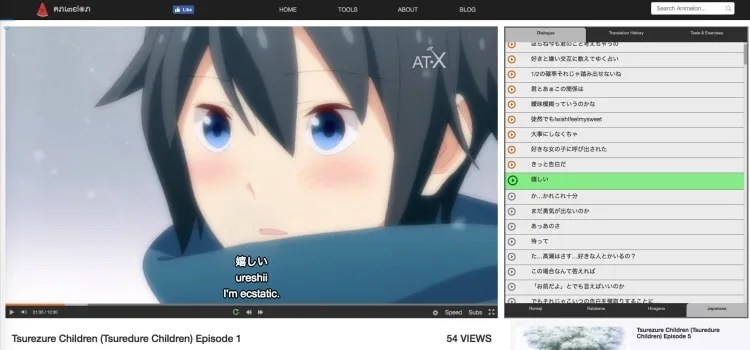
    In this article, I want to introduce you to the site “animelon,” where you can watch anime while following the subtitles in Japanese, English, and romanized. The site was created with the focus of learning Japanese through anime; it offers some options and tools to help with this goal, in addition to being a very fast site.

    With animelon, you can choose which subtitles will appear in the video, you can remove the English subtitle, add a subtitle in hiragana, and even one completely in katakana. You can create a loop of a specific phrase and repeat it until you learn it. The site also offers tools for those who create an account and even tests for phrases and vocabulary.

    You are not required to register or log in; just access animelon.com, choose the anime, and watch completely for free. Although the site is in English, this does not hinder your learning. First, choose the anime and the episode you want to watch. You will find a screen similar to this:

    Animelon - Learn Japanese with Anime

    Note that on the left side, you find a box with all the phrases that appear in the episode. Just select the phrase, and the video will open exactly at that moment. In this same box, you can access your translation history, tests, flashcards, and other activities focused on helping with your memorization.

    How can Animelon be useful for Japanese?

    By clicking on any text of the phrase that appears in the subtitles, you open a bubble with the meaning of the word in Japanese. If you click on the word in English, you open a bubble with the various ways to say that word in Japanese. This tool is incredibly useful for those who want to expand their vocabulary in Japanese.

    You can also choose the speed at which the video is being played, making it easier to follow the subtitles and the dialogues of the anime. The best way to learn is by using memorization tools like flashcards and typing exercises.

    The idea of animelon is to passively learn the Japanese language while enjoying anime, being a strong means of Japanese cultural communication. In addition to learning informal Japanese, you will be in touch with everyday conversations and Japanese life.

    The site was created in March 2017 and has yet to gain the deserved recognition, as this idea is totally brilliant. What do you think of this idea of learning Japanese with anime? Visit the animelon site and tell us about your experience with this great Japanese teaching tool.

    With this site, you can even learn specific subjects, perhaps technical words from a soccer game while watching Super Eleven. Or maybe scientific terms while watching Dr. Stone, and who knows game words in Death Parade?

    How to Get Japanese Subtitles for Anime

    Perhaps you prefer to download the subtitles and put them in the anime downloaded on your computer. Maybe you want to study the subtitles in text or translate subtitles into Portuguese on your own.

    In this case, one of the sites where you can find subtitles in Japanese is kitsunekko.net. Download the subtitles and study on your own. I hope you enjoyed the article. We appreciate your comments and shares.

  • Hatsune Miku – Unraveling this famous Vocaloid

    Hatsune Miku – Unraveling this famous Vocaloid

    Do you know Hatsune Miku? A quite different pop star who marked the music industry in Japan and around the world. How was this virtual girl able to create over 150,000 songs and have millions of fans spread across the globe? In this article, we will be uncovering her origin and success.

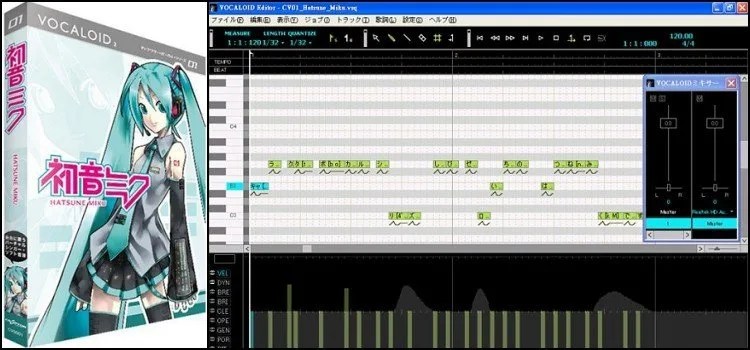
    For those who are unaware, Hatsune Miku (初音ミク) is a Vocaloid. A voice package developed for a voice synthesizer program, used to create music through a computer program. She was created in 2007 by the Japanese company Crypton Future Media.

    Hatsune Miku - Unraveling this famous Vocaloid

    The Vocaloid program was launched in 2004, where you write the syllables and choose the pitch of the voice to create your songs. It was meant to be a simple voice program, but thanks to marketing, the program created a phenomenon quite popular among young people and adults all over the world.

    Japan is famous for creating stylized illustrations of anime/manga characters. The same was done, illustrations were created to represent the voices used in the program. Hatsune Miku became the most popular voice/character, becoming a standout character worthy of giant shows.

    Hatsune Miku - Unraveling this famous Vocaloid

    How did Hatsune Miku’s success arise?

    It was on August 17, 2007, that version 2 of the Vocaloid program was launched in Japan. Hatsune Miku was released as the first voice of the future on the 31st! This is the meaning of her name, where Hatsu (初) means first, Ne (音) means sound, and Miku (未来) means future, although it is usually written in katakana (ミク).

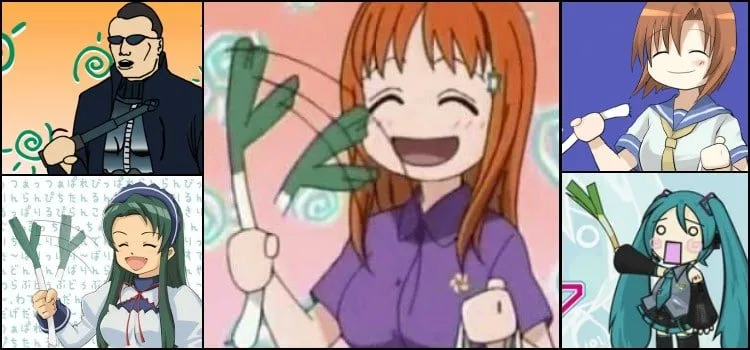
    It was thanks to the Japanese YouTube site Nico Nico Douga that Miku became a sensation. Already in September 2007, a user named Otomania published a remix of Hatsune Miku swaying a leek while singing the song Ievan Polkka. It was because of this first song that Hatsune Miku became a web sensation:

    The original video gained over 3 million views by August 2011. Not to mention the over 200 million views (or more) from re-ups and different versions of the music video.

    Soon, other very popular songs were created using the singer. Songs like Melt, Po-pi-po, and thousands of remixes and versions of already known songs. Soon, other voice packs of Vocaloid illustrated by different characters appeared, allowing the creation of songs with various voices and Vocaloid characters.

    In addition to songs with synthesized and somewhat robotic voices, another thing that was responsible for Hatsune Miku’s success was the dance videos featuring the character in both 2D and 3D. Soon, various 3D animation editing programs were created for dance creation to accompany the songs.

    The Japanese even created a version using Miku and other Vocaloids of the song Paranaue:

    The Impact of Hatsune Miku on Japanese Culture

    Hatsune Miku became popular in all areas involving music, videos, 3D animations, and especially memes. YouTubers began to do crossovers, and a flood of videos was uploaded to the platform. The popularity of Vocaloid videos reached the Japanese mainstream, receiving media coverage and endorsed by various J-pop celebrities.

    Her popularity was so great that in August 2009, a promotional concert sponsored by SEGA took place. A real show, with Miku projected on glass screens, drove fans wild. In addition, a famous rhythm game was released called Project Diva. This was just the beginning of a series of shows and games.

    Hatsune Miku made her first holographic debut in the USA through the David Letterman show. Even games like No More Heroes 2 featured songs by Hatsune Miku in their soundtrack. Fans began to create Mods and Skins for other games and created numerous modifications to Hatsune Miku, bringing the singer to life.

    Various action figures and products related to the singer were created and spread around the world. At anime events, someone always appears cosplaying as Hatsune Miku or another famous Vocaloid. Clothes, toys, towels, and even jeans were created using the highlight of Hatsune Miku.

    Curiosities about Hatsune Miku

    Who is the voice behind Hatsune Miku? The name of the voice actress who provides the voices used in the Vocaloid of Hatsune Miku is Sakiko Fujita (咲子藤田), nicknamed Saki.

    Hatsune Miku - Unraveling this famous Vocaloid

    Hatsune Miku went to space! In 2009, Miku fans made a petition to convince JAXA to send aluminum plates of the character on a probe to Venus. The petition surpassed 10,000 signatures and gained the support of a professor from JAEA. On May 21, 2010, the first Venus probe was launched containing 3 plates of Hatsune Miku.

    The opening of the OVA of Black Rock Shooter was sung by Hatsune Miku along with Supercell. The original artist of the character also created an unofficial manga with several short stories about the character. The name of the manga is Hatsune Mix!

    The first version of viral nyancat was made using the Vocaloid with Hatsune’s voice.

    In 2012, a wave of people began reporting Hatsune Miku’s videos due to copyright issues on YouTube. A campaign was launched to combat this problem. Indeed, Hatsune became popular for creating covers, remixes, and parodies of well-known songs, but that was not the reason for the reports; it was merely envy of her success.

    The universe created around Miku and the other Vocaloids is truly gigantic. There are several new songs every day, videos, and 2D, 3D animations, and even fan games, doujinshi, and others. I hope you enjoyed this short article; if you want to delve deeper, we will leave some related articles about Hatsune Miku below. We appreciate the comments and shares:

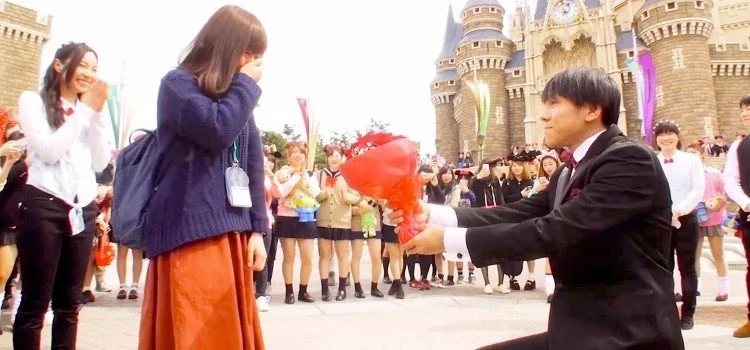
  • How to propose to someone in Japanese

    How to propose to someone in Japanese

    While in Portuguese there aren’t many variations and ways to say: Will you marry me? In Japanese, thanks to kanji and grammar, we can think of several ways to ask for someone’s hand in marriage. In this article, we will see the numerous ways to propose to someone in the Japanese language.

    It doesn’t matter if you are not getting married or are dating. Studying these marriage phrases in Japanese is important for your learning. You will learn in this lesson the variation of phrases that have the same goal. Read, review, and study! Just don’t be crazy enough to ask for someone’s hand who doesn’t know Japanese using the phrases below.

    Let’s start by getting to know the Japanese ways to propose to someone in marriage, which in Japanese is called: puropoozu (プロポーズ) or kyuukon (求婚). The translation to our language may sound a bit strange, but they are simple and straightforward phrases. The traditional ways are not so popular, especially if you are a foreigner. Modern Japanese women may find it strange if you try to say something like:

    Will you make miso soup for me every day?

    僕にお味噌汁を作ってくれない?
    Boku ni omisoshiru o tsukutte kurenai?

    In the past, Japanese marriage proposals were very indirect and outdated. Some even proclaimed eternal love in death, suggesting to stay in the same grave. Nowadays, women expect a marriage proposal that is much more direct and objective.

    How to propose to someone in the Japanese language

    What you need to know before proposing

    Currently, men prefer to ask for someone’s hand in marriage through fireworks festivals or some important event and dinner. There are no more rules regarding marriage proposals in Japan, do it the way you want.

    In Japan, you must ask for the parents’ permission before marrying their daughter. Before asking for the girl’s hand, you should at least have met her parents. If the girl introduces you to her family, it means she is almost ready to accept a marriage proposal.

    We recommend getting to know the parents and having a good friendship with them. Some parents can be stubborn, but don’t give up and remember to speak to them in Japanese. Be aware that there is also an engagement ceremony called yuinou (結納).

    How to propose to someone in the Japanese language

    Main ways to propose to someone

    See below the main ways to propose to someone in the Japanese language:

    彼女にプロポーズするんだ。 
    Kanojo ni puropoozu surunda;

    I will propose to you.

    結婚してくれませんか。 
    Kekkon shite kuremasenka;

    Will you marry me?

    彼女と結婚したい。 
    Kanojo to kekkon shitai;

    I want to marry her.

    俺と結婚してくれ 
    Boku to kekkon shite kure

    Do you want to marry me?

    Here you use one of the ways to say I. You can use other ways like watashi, but be careful when using ore. Boku is a more humble way to ask for someone’s hand in marriage.

    How to propose to someone in the Japanese language

    In some situations, it may be necessary to get straight to the point. Some people don’t care much about the marriage proposal and have been waiting for you to ask for her hand for a long time. You don’t need to say anything other than let’s get married? Surprising the person can be dangerous, so be careful not to get a no.

    結婚しよう(か)
    kekkon shiyou (ka)

    Let’s get married

    You can ask the question directly without using the particle か, in this case, you will be suggesting marriage. This is the direct and informal way, more common to propose to someone in the Japanese language. Use wisely!

    一緒になろう
    isshou ni narou

    Shall we join together?

    Although it is a direct phrase, the person may not understand the expression isshou which literally means being together.

    How to propose to someone in the Japanese language

    Romantic and indirect proposals

    結婚してくれないかな... 
    kekkon shite kurenai ka na…

    I wonder if you don’t want to marry me…

    新婚旅行どこ行? 
    shinkon ryokō doko ikou ka?

    Where will we go for our honeymoon?

    僕と幸せな家庭を作りませんか? 
    Boku to shiawasena katei o tsukurimasen ka?

    Will you create a happy family with me?

    これからもずっと俺の隣にいてください 
    korekara mo zutto ore no tonari ni ite kudasai

    From now on, always be by my side.

    今日を二人の結婚記念日にしたい 
    kyou o futari no kekkon kinenbi ni shitai

    I want to make today our wedding anniversary.

    この印鑑をこれから使ってほしい 
    Kono inkan o korekara tsukatte hoshii

    I want you to use this inkan from now on.

    The seals inkan are stamps used as a signature, which have the family surname.

    指輪のサイズ教えて?左手薬指の 
    yubiwa no saizu oshiete? Hidarite kusuriyubi

    Tell me your finger size. The left ring finger.

    結婚式はいつにしようか? 
    Kekkonshiki wa itsu ni shiyouka?

    When should we have our wedding ceremony?

    These were some ways to propose to someone in the Japanese language. Do you know other ways? When asking the girl, which one did you use? We want to hear your comments and have your joyful sharing on social media. Thank you very much! To complement, we will leave some related articles about dating and marriage below:

  • Akira Toriyama: the master of Japanese animation and his most notable works

    Akira Toriyama: the master of Japanese animation and his most notable works

    If you don’t know this man by his name, you have certainly seen or at least heard of some character or work he created. Akira Toriyama (明 鳥山) is a Japanese manga author, quite famous and known for being the creator of globally successful series such as Dr. Slump and mainly Dragon Ball.

    Born on April 5, 1955, in Kiyosu, Aichi, Japan, Akira does not like to expose himself or give many interviews, as he does not consider himself a very popular person and feels he does not deserve so much public attention. But he did not start in stardom; like many, he achieved success after years of effort and various works, for example, his first story released in 1978 called Wonder Island did not achieve much success.

    After that, several of his projects were rejected, but in 1979 the manga Tomato Girl Detective began to change things, and in 1980 he found success with Doctor Slump, which was soon converted into anime in two series.

    Akira Toriyama - Curiosities and his great works

    Even with his relatively simple drawings, he was soon working on designing characters for the famous video game series Dragon Quest, and also served as a character designer for other games such as the RPG Chrono Trigger, Tobal No. 1. In 1983, Akira created Bird Studio, and in the same year he created Dragon Boy, which served as the basis for Dragon Ball.

    The success of Dragon Ball

    The Dragon Ball manga emerged in 1984, initially inspired by the classic Chinese novel Journey to the West, had its chapters serialized from 1984 to 1995 by Shounen Jump in 519 chapters, this became Akira’s most famous and well-known work, reaching the entire world.

    Akira Toriyama - Curiosities and his great works

    The Dragon Ball manga was adapted into two anime series by Toei Animation: Dragon Ball and Dragon Ball Z, which together were broadcast from 1986 to 1996 in Japan. In addition, 19 animated feature films and 3 TV specials were produced, along with two other anime series titled Dragon Ball GT (1996-1997) and Dragon Ball Super (2015), not to mention the remake version with some cuts of Dragon Ball Z called Dragon Ball Kai.

    Since its launch, Dragon Ball has become one of the most successful anime and manga series in the world. The 42 volumes of the manga sold over 240 million copies worldwide. Critics praised the art, characters, and humor of the story that Akira Toriyama created, being even considered the work that inspired others the most and that propelled Japanese animation in Western culture.

    Akira’s life beyond Dragon Ball

    His works after Dragon Ball were short pieces like Cowa!, Kajika, and Neko Majin Z, but nothing with the reach of Dragon Ball. Recently, he worked as a character designer for the RPG Blue Dragon for Xbox 360, which also received an anime adaptation.

    In 2006, Akira worked on the crossover between Dragon Ball Z and One Piece, called Cross Epoch. Even in 2009, Akira Toriyama was responsible for the drawing of the CD of the Japanese pop-rock singer Ayumi Hamasaki, where she is dressed in Goku’s outfit.

    He continues to live in Aichi, has been married to his wife Nachi Mikame since 1982, and has a son named Sasuke Toriyama, born in 1984, and a daughter born around 1990 whose identity has never been revealed.

    Akira Toriyama - Curiosities and his great works

    Curiosities about Akira Toriyama and his works

    • He is a big fan of actor Jackie Chan;
    • Dr. Slump appears in some episodes of Dragon Ball, just as Goku also appears in the new version of The New Dr. Slump, in several episodes;
    • As of November 2014, the franchise generated $5 billion in merchandise, making Dragon Ball one of the most commercially successful anime-based media franchises in the world;
    • Toriyama was a fan of Brazilian driver Ayrton Senna, so much so that he even met him personally and drew the McLaren team with Dragon Ball characters;
    • In Dragon Ball GT, Akira only participated with initial tips, character designs, environments, and objects, and gave the title of the series;
    • Dragon Ball is the most valuable anime franchise in the world, totaling 43.1 billion yen in profits, while One Piece earned 14.4 billion yen and Naruto 5.4 billion yen;

    Works of Akira Toriyama

    Below we will leave some related works of Akira Toriyama for you to purchase if you wish: I hope you enjoyed these little curiosities about the King Akira Toriyama. We appreciate the comments and shares. We also recommend reading:

  • Understand why the streets of Japan are so quiet.

    Understand why the streets of Japan are so quiet.

    In addition to being clean, the streets of Japan are also usually quiet. Of course, not on busy avenues in neighborhoods like Ginza and Akihabara, but almost all the streets in Japan tend to be quiet for various reasons. In this article, you will understand why the streets of Japan are so quiet.

    Most people should be aware that the Japanese are polite and respect others. That is why they avoid making noise in their apartments and homes as much as possible. They usually do not throw loud parties at home with loud music and shouting. Many prefer to stay home browsing the internet or at a night bar having a beer and sake.

    Understand why the streets of Japan are so quiet

    It’s not just the cities! Even though Japan has a smaller land area for its population, you can easily find your quiet and restful place anywhere. It is even possible to have a beach all to yourself.

    Quiet streets – Traffic

    Although many Japanese have cars, they tend to travel more by bicycles and trains. Public transportation is usually much more practical and faster than taking a car. Not to mention that everything the Japanese need can be bought at a nearby konbini, without the need to take the car and go to the center.

    Understand why the streets of Japan are so quiet

    Not to mention that cars are newer and well-maintained due to strict vehicle inspection laws. A large part of the cars in Japan are already hybrids and super quiet. The Japanese are respectful and usually do not put car audio systems in their cars. What’s the problem with listening to music just for yourself?

    Most residential neighborhoods do not have good street lighting at night, which encourages people to stay home instead of causing a ruckus on the street. If you go out on the street at night, you will see tremendous silence and tranquility.

    Understand why the streets of Japan are so quiet

    The Japanese are not free from noise

    Some live in busier neighborhoods with an active nightlife. Others have to endure the presence of bosozoku, who are young troublemakers with anti-social behaviors that make noise on the street at night with their motorcycles or in other bizarre ways.

    Some unlucky ones end up having a noisy neighbor who seems to be hammering things in their house, doing laundry at dawn, and other things that can end up being a nuisance for you. Japan is quite quiet, but there are still these cases. What is your experience regarding silence in Japan? Were you able to sleep in peace? Or have you ever had to call the police?

  • Purin – Recipe for the favorite pudding of anime and Japanese people

    Purin – Recipe for the favorite pudding of anime and Japanese people

    Japanese people love pudding, which in Japan they call purin (プリン) or in English pudding. Some people don’t know, but Japanese pudding is different from Brazilian pudding. In Japan, it has a different composition and is classified as flan here in Brazil.

    The flavor is light and extremely addictive. You can understand why the Japanese enjoy this dessert so much. If you pay attention, in anime, characters usually buy ready-made puddings at konbinis (convenience stores) and eat them with the packaging upside down, with the caramel on the bottom.

    In Japanese households, mothers also prefer to serve pudding in glass cups upside down. The difference with purin is that you don’t need condensed milk to firm up the cream. The combination of egg yolks and milk will make the cream thicken and the flavor won’t be as cloying as a traditional pudding in Brazil.

    Purin - Recipe of the favorite pudding of anime and Japanese

    Purin Recipe – Japanese Pudding

    Before you start, determine where you would like to make the purins. There are several options such as: jelly jars, pudding molds, small cheese molds, or ramekins (those white pots we see a lot in restaurants).

    • Start by preheating the oven to 180ºC;
    • Heat enough water for the water bath of the purins;

    Making the Caramel  

    • 200g of granulated or refined sugar;
    • 100ml of water;

    How to Make the Caramel: 

    1. In a saucepan, mix the ingredients and cook over low heat until golden. Do not stir the mixture while it is on the heat;
    2. Immediately transfer the caramel to the molds. Set aside;

    Making the Purin

    • 500 ml of milk;
    • 4 egg yolks + 2 whole eggs;
    • 1 tablespoon of vanilla essence;
    • 120g of refined sugar;

    How to Make the Purin: 

    1. Blend all the ingredients in a blender and pour into the pots;
    2. Cover the pots with aluminum foil (with the shiny side down);
    3. Bake in a water bath with hot water for 1 hour, or until firm to the touch;
    4. Let cool and refrigerate for 4 hours before serving;

    I hope you enjoy this recipe. Have you had the chance to make a Japanese pudding? What do you think? We appreciate comments and shares.

  • Are you nervous? Write people (人) on your hand and swallow!

    Are you nervous? Write people (人) on your hand and swallow!

    Have you ever seen in an anime or dorama someone telling a nervous and anxious person to write the kanji for people (人) on their hands and then tell them to eat it? In Japan, nervous children are taught to do this. In this article, we will understand the story behind this belief of swallowing people in hand.

    In Japan, students who are nervous about a presentation are advised by friends to draw the kanji for people (人) three times on their palm. The drawing can be done mentally; people should pretend they are swallowing or eating the drawing on their hand.

    Just run your finger forming the kanji for (人) three times and then place your hand in front of your mouth. This belief is used to relieve anxiety and nervousness. By doing this, you are insinuating that the people drawn on your hand are the cause of your nervousness. By eating them, you make it seem like they are irrelevant and unworthy of your anxiety.

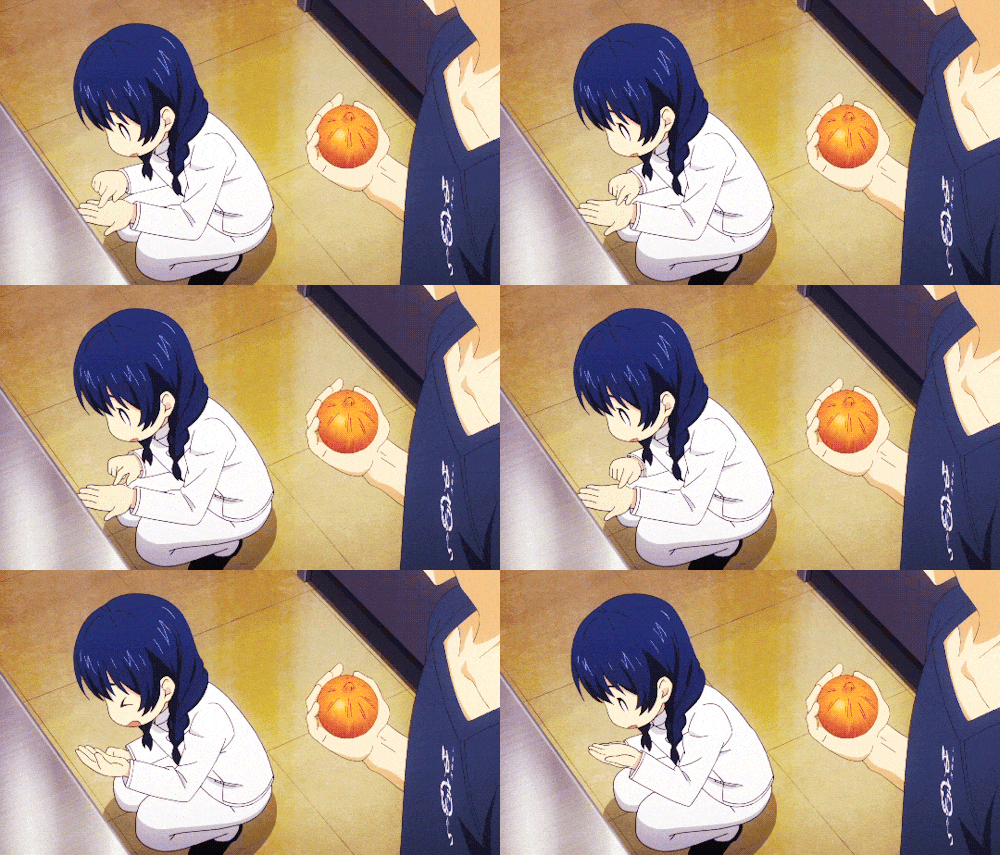
    Animes like Shokugeki no Souma show Tadokoro nervously doing the same thing:

    Are you nervous? Write people (人) on your hand and swallow!

    Why write people and eat them?

    The name of this popular belief is hito wo nomu (人を飲む) which translates to swallowing people, but metaphorically means dominating someone. This movement is used to oppress the audience and calm oneself. It’s like swallowing before being swallowed by nervousness and shyness. Perfect for those who fear the stage and have social anxiety disorder (agarishou – あがり症).

    It is not known how this superstition originated. It was probably a mother who told her child to do this before a school presentation. Until it finally became common for parents, teachers, and peers to teach it to students who are very nervous about some speech, lecture, or talent show at school.

    Although the kanji (人) is used both in singular and plural, writing it three times refers to a large crowd that is making you nervous. This is strange, since just two consecutive kanji (人々) already means people or everyone. If you are embarrassed or anxious about just one person, you only need to write it once.

    Are you nervous? Write people (人) on your hand and swallow!

    Does swallowing your hand really work?

    Does this action really help? It can help, as there are connections in our hands capable of controlling our feelings and anxiety. Moreover, this action also trains our mind to gain confidence and determination. Tension caused by fear can easily dissipate through this technique if you believe!

    This is what we call the placebo effect. Many people have calmed down before presentations using this method, which is why it has become popular among young people in Japan. Some also claim that the two major lines in our hands come together, thus automatically forming the kanji for hito (人).

    Westerners have something similar, telling someone who is nervous, “Imagine your audience naked!” In Japan, they also suggest imagining the audience, but as pumpkins or potatoes.

    Japanese people also have other methods to relieve stress. Check out the articles we recommend below:

    Have you seen this scene in any anime? What do you think of the subject? We appreciate comments and shares.

  • Are there still hot springs or onsen with mixed bathing in Japan?

    Are there still hot springs or onsen with mixed bathing in Japan?

    While centuries ago Americans were studying the possibility of accepting mixed bathing at the beach. The Japanese have long had a tradition of bathing together in a hot spring called onsen. People of all ages, women and men without their clothes bathed without caring about the nudity in a controversial place called mixed onsen.

    The Japanese have never been ones to notice the nudity of others while enjoying the delicious waters of a hot spring. Even if there was a pervert in the place, he could not stare too much at a woman’s body covered by water, nor could he touch her because of the large number of people present at the onsen.

    Mixed baths are called konyokuburo (混浴風呂) and are more organized than you think. Nowadays, hot springs are already full of rules, imagine the mixed ones? Women who visit a modern mixed onsen usually cover themselves with a towel to avoid perverted eyes.

    Are there still hot springs or onsen with mixed bathing in Japan?

    What happened to mixed bathing in onsen?

    Indecent cases have always happened, especially when few people were present at the onsen. Gradually, the rules ended up being broken and more bad people frequented the places. It was with the influence of the West that the Japanese ended up prohibiting the creation of mixed baths.

    It was after the Meiji Restoration in 1868 that Japanese authorities began to gradually eliminate the large number of mixed onsens that existed in Japan. All this to present a good image to Westerners who saw Japan as an indecent and immoral place. Various criticisms were raised by foreign historians.

    The history of Westerners and the prohibition of mixed bathing in Japan is long. The great discussion ended with Japan prohibiting the emergence of new mixed onsens. The existing ones ended up separating baths by sex, and those who wished to maintain the tradition did not last long due to the behavior of the bathers.

    Are there still hot springs or onsen with mixed bathing in Japan?

    Is there still mixed bathing in Japan?

    There are still places that allow couples to bathe in a private onsen. There are also public baths that allow both sexes with swimwear. Traditional mixed onsens that allow bathing without clothes usually request that women use a towel and that everyone present behaves at the location.

    The existence of mixed onsens in Japan is a complicated matter because if something happens at the location, the responsibility falls on the owner. For this and other reasons, traditional mixed baths are increasingly ceasing to exist.

    Fortunately, some rural areas and mountains allow local residents to enjoy traditional mixed bathing at the hot springs. Some of these places are natural and do not usually charge for access to avoid problems with the law. A large part of the Japanese who frequent these secret mixed baths are elderly residents.

    Are there still hot springs or onsen with mixed bathing in Japan?

    The existing mixed baths in Japan are really in remote locations. Few foreigners usually access these places. Besides men and women, monkeys and deer can bathe along with you in the mountains.

    If you want to find a mixed bath, we recommend visiting the site secret-japan.com. On the site, you will find the name, location, and details of the mixed onsens. There are about 82 mixed baths on the list. You should research details about it to know if they allow the entry of foreigners or if the bath is without clothes.

    Some Onsen that Allow Mixed Bathing

    We recommend checking the places on the list through the website or other means of research. Some may have certain restrictions, or are private, or are mixed onsens with clothing. We also recommend 7 onsens to visit in Japan.

    • Amagiso (Shizuoka);
    • Awanoyu (Nagano);
    • Fujiyoshi (Shizuoka);
    • Kurogane Onsen (Yamanashi);
    • Lamp no Yado (Ishikawa);
    • Oyadani no Yu (Ishikawa);
    • Tsubame Onsen (Niigata);
    • Yarimikan (Gifu);
    • Aidomari Onsen (Hokkaido);
    • Hot Spring Lodge Daiichi (Hokkaido);
    • Fukiage Onsen Recreation Facility Shirogane (Hokkaido);
    • Kotan Onsen (Hokkaido);
    • Mizunashi-Kaihin Onsen (Hokkaido);
    • Shikaribetsu Gorge Shikanoyu (Hokkaido);
    • Iwaobetsu Onsen (Hokkaido);
    • Hirauchi Kaichu Onsen (Kagoshima);
    • Myoken Ishiharaso (Kagoshima);
    • Hozantei (Kumamoto);
    • Oku no Yu (Kumamoto);
    • Hage no Yu (Kumamoto);
    • Fukumotoya Kabeyu (Oita);
    • Hoyo Land (Oita);
    • Beppu Beach Sandbath (Oita);
    • Aoni Onsen (Aomori);
    • Numajiri Onsen (Fukushima);
    • Sukayu (Aomori);
    • Tae no Yu (Akita);
    • Todoroki Ryokan (Miyagi);
    • Saiunsou (Iwate);
    • Tsuru no Yu (Akita);
    • Ubayu Onsen (Yamagata);
    • Arima Grand Hotel (Kobe);
    • Hotel Kitanoya (Kyoto);
    • Kaisyu (Wakayama);
    • Kawayu Onsen (Wakayama);
    • Hotel Kazurabashi (Tokushima);
    • Iya Onsen Hotel (Tokushima);
    • Kamitoku Onsen (Ehime);
    • Onsen Yurara (Ehime);
    • Seapa Makoto (Ehime);
    • Kikunoya (Shiga);
    • Rurikei Onsen (Kyoto);
    • Ryujin Onsen (Wakayama);
    • Spa World (Osaka);
    • Tsuboyu Onsen (Wakayama);
    • Asuka no Yu (Ehime);
    • Hoshi no Oka Onsen (Ehime);
    • Yumoto Yachio (Kagawa);
    • Semi Onsen (Iwate);
    • Akashiya (Tottori);
    • Chorakuen (Shimane);
    • Megahira Hot Spring (Hiroshima);
    • Misasa Onsen Ryokan (Tottori);
    • Togo Yu-asis Ryuhokaku (Tottori);
    • Yubara Onsen Sunayu (Okayama);
    • Yunogou Bishunkaku Onsen (Okayama);

    You who live in Japan, have you ever tried going to a mixed bath? What was your experience? We appreciate comments and shares. We also recommend reading:

  • Recipe for Lemon with Honey from Kuroko’s Basketball!

    Recipe for Lemon with Honey from Kuroko’s Basketball!

    Those who followed the Kuroko no Basket series saw various ways athletes improved their physique through training and nutrition. Lemon with honey serves to replenish energy and contains vitamin C, and it’s very refreshing to eat it cold.

    The preparation is super simple and quick. The time-consuming part is waiting a few days for the lemon to become sweet. You can eat the lemon or use the honey and squeezed lemon to make lemonade. If you use sparkling water, it becomes a great natural soda! Or you can use it to flavor cakes and cookies. As it is a marinade, these lemons have a shelf life of 3 months in the refrigerator.

    About the lemons: In the anime, Sicilian lemons were used, which are milder and more aromatic. If you don’t have this type of lemon in your city, you can substitute with Tahiti/white lemon (the one with a greenish skin) + pear or Bahia orange. I do not recommend making this marinade only with Tahiti lemon, as it is extremely acidic and can compromise the flavor. So balance between lemon and orange.

    Recipe for Lemon with honey from Kuroko no Basket!

    Recipe

    Below is how to make your Lemon with honey in the style of Kuroko no Basket:

    Ingredients List

    • 1 jar of jam boiled in filtered water;
    • 3 to 4 Sicilian lemons;
    • 500 ml of honey;

    Note: nothing prevents you from making a mix of various types of oranges and lemons:)

    Preparation Method for the Lemon

    1. Cut the lemons into thin slices. Remove the seeds;
    2. Place the slices inside the jar and alternate with honey, until covering the lemons;
    3. Place the jar in a cool, dark place for 3 days;

    After it’s ready, keep the jar in the refrigerator. Enjoy the summer :)

    P.S: Are you catching a cold? Add grated ginger to this marinade. Besides improving, you won’t get sick for a long time. Thanks for the comments and shares, we also recommend:

  • Leekspin – The origin of leek and Ievan Polkka

    Leekspin – The origin of leek and Ievan Polkka

    Do you remember Hatsune Miku? A vocaloid that became famous thanks to the Ievan Polkka video? In this video, the character appears spinning a leek, but where did this meme come from? Did you know that this happened before Hatsune Miku? In this article, we will talk about Leekspin, the true origin of the leek that Miku is swinging.

    Leekspin is also known as Loituma Girl, which consists of a small flash or gif animation of a female anime character spinning an onion. The question that remains is, is it a green onion or a leek? In Japanese, when searching for negi (onion) you can easily find this viral object from Miku, but leek is leek in English…

    The Leekspin meme was created from a scene in the anime Bleach where the character Orihime appears spinning a leek. The leekspin is a simple animation without music, but it managed to make a huge impact on the English and Japanese internet around the 2000s.

    How did the leek meme originate?

    Both the animation and the song Ievan Polkka managed to make a big impact on the online community, especially in Russia. A year before Hatsune Miku appeared with her remix of Ievan Polkka, the animation called Leek Spin emerged on April 23, 2006. In the video below, we can see the first version of Miku’s song:

    In May 2006, a website called leekspin appeared with this flash animation. It quickly gained popularity among anime fans and was shared on various blogs and sites like LiveJournal, GeoCities, and 4chan.

    The video and several parodies were uploaded around July. The video quickly began to be viewed by over 10 million people. Soon fans discovered that the song is of Finnish origin, the cultural song ended up attracting attention from all over the world and received millions of views.

    Leekspin - The origin of the leek and Ievan Polkka

    The beginning of Miku’s success and Ievan Polkka

    It was on the Japanese youtube, Nico Nico Douga that the viral spread even more with the help of the famous Hatsune Miku. In September 2007, a user named Otomania published a remix of Hatsune Miku swinging a leek while singing the song Ievan Polkka. It was because of this first song that Hatsune Miku became a web sensation.

    What do you think of Hatsune Miku’s success and Ievan Polka? Did you know about the Leekspin viral? Do you think it is a green onion or a leek? We hope to hear your opinion, we appreciate comments and shares.

  • Is there prejudice against hair types and colors in Japan?

    Is there prejudice against hair types and colors in Japan?

    Because of genetics, most Japanese women have black, straight hair. Because of this and other events, some people become apprehensive and have doubts about hairstyles and colors in Japan. Is there prejudice against wavy, curly, red, or colored hair in Japan?

    Why do people think there is prejudice? Some students have been forced to dye their hair black to maintain a standard at school. In places like companies and schools, Japanese people are encouraged not to be different from one another. There is even a saying that the nail that sticks out will be hammered down.

    Some schools are really strict about haircuts, changing color, or lightening. Some workplaces also like to maintain a certain standard, but there are no rules, and there are few cases where people are forced to maintain a certain appearance. This standard is so common that the subject is not widely discussed, but there is no prejudice as they imagine.

    Is there prejudice against hair types and colors in Japan?

    In the 90s, most young people wanted to color and change their hair, but school rules did not allow it; some simply ignored the rules. In some cases, teachers ended up forcing the student to return their hair to the standard. Some were bullied by older students who liked the traditional.

    Some, even with brown or another natural color, faced problems at school. Some had to sign documents to certify their natural hair color. Currently, these rules are not as strict, but there are still people who love to impose irrational rules. However, these are school rules and not prejudice.

    Japanese people like different hairstyles!

    Even though school rules are strict, especially regarding clothing, Japanese people are free to do what they want with their hair. The biggest artists and singers often have totally different and crazy hairstyles like visual kei. Japanese women with brown and red hair are also becoming increasingly popular.

    Is there prejudice against hair types and colors in Japan?

    In Japanese anime, games, and manga, most characters have colorful and very stylish hair. These cases only show that Japanese people, especially the young, want to diversify from one another. Hair in Japan is taken seriously; some strive to invent diverse styles.

    Various Japanese fashion segments use totally different and colorful looks. The gyaru often have blonde, curly hair, and some lolita often dye their hair. A few decades ago, it was common for rebellious youth to have extremely funny hairstyles.

    Currently, in big cities, you can have hair down to your feet with rainbow colors and all tangled. Japanese people won’t mind; they will continue to be friendly and polite, and it’s more likely that some will come to take a picture with you.

    Is there prejudice against hair types and colors in Japan?

    Can I have colored or curly hair?

    This idea that there is prejudice against curly or blonde and brown hair is totally absurd. They are just uncommon because of genetics; many Japanese women envy these hairstyles, and many end up dyeing and curling their hair to differentiate themselves from others.

    The only place where different hairstyles may be disapproved is in schools. If you are a young student, try to find out the rules of your school. There is no need to worry about what people will think of your hair. In Japan, the uncommon is cool! Enjoy your charm!

    Is there prejudice against hair types and colors in Japan?

    I hope you enjoyed the article. What is your opinion on this subject? We appreciate comments and shares. To finish, I will leave some related articles about hairstyles below:

  • Tokio Jokio – Racist propaganda from World War II

    Tokio Jokio – Racist propaganda from World War II

    In Japan itself, we see Japanese characters being portrayed in anime in a way that is opposite to their appearance in reality. Colorful hair, big eyes, and tall stature.

    In the West, in certain cartoons like South Park, their characteristics are exaggerated, being drawn with very small eyes, large glasses, horse teeth, goofy faces, and an extremely short stature with the intention of satirizing them.

    But these caricatures of today are nothing compared to a short film made by Warner Bros. Pictures in 1943, during World War II. The short is called Tokio Jokio and you can easily find it on YouTube since Warner Bros did not renew the copyright, making the animation public domain.

    The animation of Tokio Jokio

    The short Tokio Jokio lasts about 7 minutes and the animation begins with the narrator saying:

    “Attention, please! This film released for the public was captured from the enemy! It is an example of evil Japanazist propaganda!”

    Then, the image changes to a rooster about to crow when suddenly, a big-toothed vulture with large glasses comes out from inside the rooster saying: “Cock-a-doodle-doo, please!” in a Japanese accent.

    And then, the image changes to a text that reads “Civil Defense” and soon changes to the image of a village while the narrator talks about the “best air raid siren” and shows two Japanese men poking each other in the rear and screaming.

    Next, the scene cuts to the “listening post,” which is basically a pole full of keyhole holes, and then cuts to the “aircraft painter” literally decorating a plane with polka dots.

    The narrator then talks about the “fire prevention headquarters” with the scene showing the rubble of said headquarters. The narrator then says: “Oh, wow! Too late!”

    The scene transitions to an image with a lit incendiary bomb with a text that reads “Incendiary Bombs: First Lesson” and then, a Japanese man appears with an umbrella.

    Tokio Jokio - Racist propaganda from World War II

    How does the animated short end?

    Then, a text appears: “Stay away from incendiary bombs for 5 seconds” and the Japanese man looks at his watch and counts 5 seconds. Then, he approaches and starts roasting a sausage near the bomb that explodes next.

    Then, the scene changes to “Cooking Tips” where it shows Hideki Tojo (the Japanese prime minister at the time) teaching how to make a sandwich out of paper and then hitting himself on the head.

    After that, the scene changes to the “victory outfit of the Japanese which has no sleeves, pleats, lapel, or uniform” while showing a semi-nude Japanese man feeling cold warming himself with a candle.

    The scene changes to the “Main Personalities” showing Admiral Isoroku Yamamoto (responsible for planning the attack on Pearl Harbor) walking on a pair of stilts to appear taller, explaining his intention to negotiate peace terms at the White House.

    An editor’s note appears covering the screen saying: “This is the room reserved for Admiral Yamamoto” and then shows an electric chair. The short also features dictators Adolf Hitler and Benito Mussolini being satirized.

    What was the intention of Tokio Jokio?

    At the time, Japan and the United States were at war and the Americans produced such animation to demoralize the enemy and create anti-Japanese propaganda. During the war, it was common for propaganda to demoralize the enemy (both from the Allied and Axis sides) and boost the nation’s self-esteem.

    Nowadays, this type of propaganda is considered racist and would not be aired due to the content of the animation. Warner Bros. intentionally did not renew the copyright of the short because they wanted the animation to fall into obscurity.

    And you? Did you know about this Tokio Jokio propaganda? What is your opinion on the subject? We would love to hear more in the comments and have your possible sharing.