
Hiroshima Peace Memorial Park and the Hiroshima Peace Memorial Museum are among the most moving places to visit in Japan. What begins as a walk through a green riverside park quickly becomes a lesson in memory, loss, and the long effort to turn one of the darkest moments of the twentieth century into a public space devoted to peace.
The park stands in central Hiroshima, close to the Atomic Bomb Dome, on land that was once part of the city's lively commercial and administrative district. After the atomic bombing of August 6, 1945, the area was rebuilt as a place of remembrance rather than ordinary redevelopment. Today, monuments, trees, museums, and quiet walking paths all work together to tell that story with unusual clarity.
Contents 7
What happened in Hiroshima on August 6, 1945
At 8:15 a.m. on August 6, 1945, the United States dropped Little Boy, the first atomic bomb used in war, over Hiroshima. The blast destroyed much of the city in seconds, and the human toll continued to rise afterward as injuries and radiation sickness spread. The scale of the destruction still shapes how Hiroshima presents its history to visitors today.
That is why the park and museum do not feel like ordinary sightseeing stops. They are places built to explain what happened, honor the dead, and keep the memory of the bombing tied to a clear message: the cost of nuclear war cannot be separated from the lives it destroys.
Hiroshima Peace Memorial Park
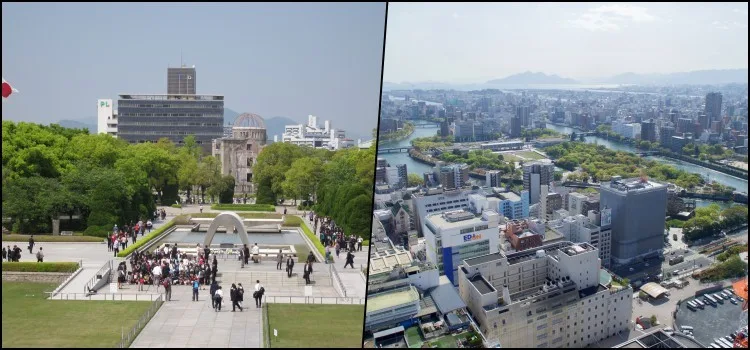
Peace Memorial Park covers more than 120,000 square meters and stretches south from the Atomic Bomb Dome between the Motoyasu and Honkawa rivers. Even with its heavy historical meaning, the park does not feel oppressive from start to finish. Water, trees, lawns, and open sightlines soften the space without hiding what it represents.
One of the best things about visiting is that the memorials are close enough to explore on foot. Rather than rushing straight to the museum, it is worth walking slowly through the grounds and letting each monument add another layer to the story.
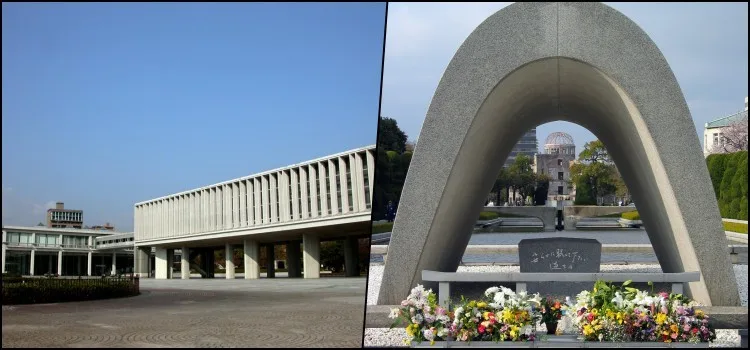
- Cenotaph for the A-bomb Victims shelters the register of victims and frames the Peace Flame and Atomic Bomb Dome on the same visual axis.
- Flame of Peace has burned since 1964 and is meant to remain lit until nuclear weapons disappear from the world.
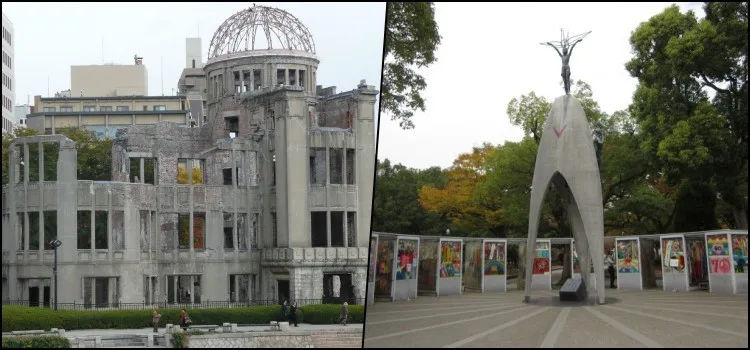
- Children's Peace Monument remembers the many children killed by the bombing and is closely associated with Sadako Sasaki and the paper crane tradition.
- Atomic Bomb Memorial Mound commemorates unidentified victims whose remains were collected after the bombing.
- Peace Memorial Park Rest House is itself an a-bombed building and adds another physical trace of the day to the park.
Atomic Bomb Dome and the UNESCO site
The most recognizable landmark in the area is the Atomic Bomb Dome, also called Genbaku Dome. It was originally the Hiroshima Prefectural Industrial Promotion Hall, designed by Czech architect Jan Letzel and completed in 1915. Because the bomb exploded almost directly overhead, part of the structure remained standing while the surrounding district was devastated.
In 1996, the Atomic Bomb Dome was inscribed on the UNESCO World Heritage List. That distinction applies to the dome itself, not to the whole park. Preserved in its damaged state, it remains one of the strongest visual reminders of the bombing and one of the clearest symbols of Hiroshima's peace message.
The Children's Peace Monument and Sadako's story
Many visitors feel a special connection to the Children's Peace Monument. The site is linked to Sadako Sasaki, who was exposed to the bombing as a child and later died of leukemia in 1955. Her story became associated with folded paper cranes, and over time the monument turned into one of the best-known places in Hiroshima for offerings and prayers for peace.
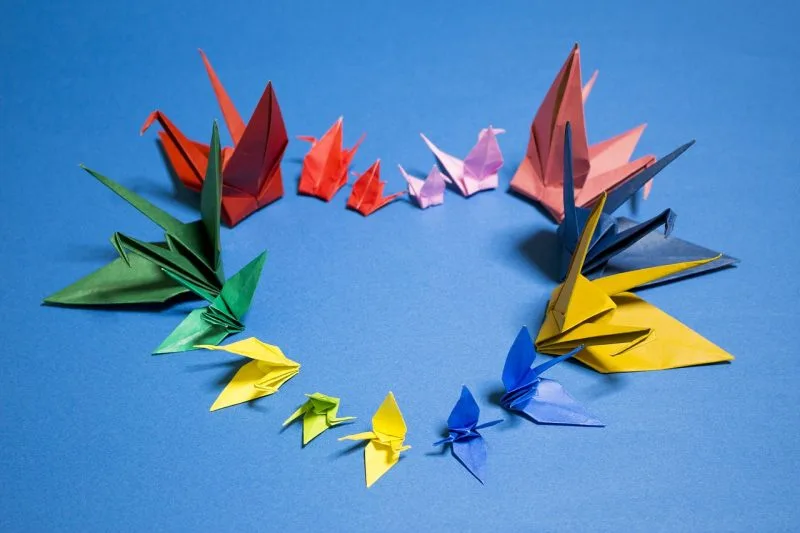
Brightly colored paper cranes are still brought here from Japan and from abroad in huge numbers every year. The result is a memorial that speaks in a different tone from the museum: quieter, more personal, and especially powerful for families traveling with children.
Hiroshima Peace Memorial Museum
Opened in 1955, the Hiroshima Peace Memorial Museum was created to convey the realities of the atomic bombing and support Hiroshima's call for lasting world peace. It is the main interpretive space in the park and the place where the historical context becomes most concrete.
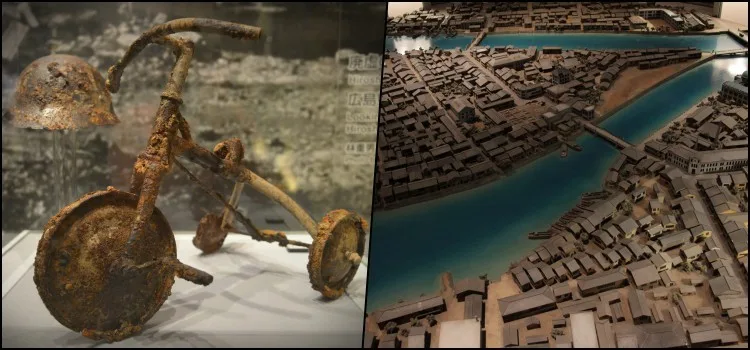
The museum displays personal belongings recovered after the bombing, photographs of the destroyed city, survivor testimonies, and exhibits that explain Hiroshima before the war, the bombing itself, and the nuclear age that followed. Some rooms are emotionally demanding, especially those centered on individual victims, but that directness is also what makes the museum unforgettable.
First-time visitors should set aside enough time to move slowly through both the exhibits and the park outside. Rushing the museum often means missing the balance between historical explanation and personal testimony that gives the visit its weight.
Practical information for visitors
Peace Memorial Park is free to enter. The Hiroshima Peace Memorial Museum charges a modest admission fee and, according to the current official visitor information, opens at 7:30 a.m. year-round with closing hours that vary by season. Last admission is 30 minutes before closing, and the museum is normally closed on December 30 and 31. Because temporary closures and timed-entry arrangements can happen, checking the official museum page before you go is still the safest plan.
For most visitors, a half day works well. Around three to four hours gives enough time for the museum, the Atomic Bomb Dome, the cenotaph axis, the Children's Peace Monument, and a slower walk through the rest of the grounds. If you want to pause, read memorial inscriptions, or spend extra time in the museum, give yourself longer.
Access is straightforward. The usual route is by Hiroshima streetcar to Genbaku Dome-mae, followed by a short walk. The Maple Loop sightseeing bus also stops at Peace Memorial Park, and travelers staying near central Hiroshima can often reach the area on foot.
Why this place stays with people
Many historic sites teach through dates and monuments. Hiroshima does that too, but the park and museum go further because they show how a city chose to remember. The experience is not just about seeing a famous landmark. It is about moving between open public space, damaged architecture, personal artifacts, and memorials that still receive offerings every day.
If you are planning a trip to Hiroshima, this is one place that deserves real time and attention. It is sobering without becoming abstract, and it leaves most visitors with a much clearer sense of both the bombing itself and the way Hiroshima has turned remembrance into a living part of the city.


Community
Comments
0 comments
There are no published comments in this language yet.
Send comment