
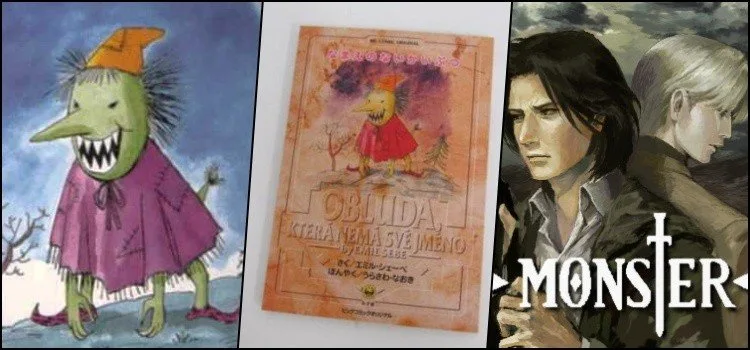
Monster is a manga by Naoki Urasawa, serialized from December 1994 and adapted into a 74-episode anime in 2004. Because it is old, few have had the chance to appreciate this wonderful work; I myself hesitated a lot because of the art style and the square screen. Finally, I had the opportunity to watch this masterpiece, a psychological thriller that asks whether there is a monster inside every person. If you haven't watched it yet, hurry and watch!
The anime has nothing supernatural; the story takes place in Germany and shows a doctor named Tenma who decides to save a boy who was shot in the head. Years later, it turns out that this boy has grown into a psychopathic serial killer who manipulates people. The anime shows how simple words and actions can turn people into emotionless monsters.
Contents 3
A nameless monster
The background story of the anime features an illustrated book named Namae no nai kaibutsu (なまえのないかいぶつ), which literally means a nameless monster. The original Czech title is Obluda, která nemá své jméno. The story it tells runs through the whole series, especially in this line:
Look at me, look at me! The monster inside me has grown so big! (Boku wo mite! Boku wo mite! Boku no naka no kaibutsu ga konnani ookiku natta yo.)
The story is quite complex; its deeper meaning only becomes clear once you have watched the anime. Even so, I like the text as a way into Japanese: it is told in the style of a children's story, with short sentences, polite past forms and plenty of repetition. In this article, we go through it sentence by sentence, word by word, ideogram by ideogram.
To look up the meanings of the words, I recommend the site Jisho; the guide on how to use Jisho.org to study Japanese shows how to get more out of it. This way, you can create your own sentences for Anki and study at the same time.
Studying the story in Japanese
Each line appears first in Japanese, followed by the romaji reading and the English translation. If romanization is new to you, the guide to romaji explains how Japanese is written with Latin letters.
昔々ある所に名前の無い怪物がいました。
mukashi mukashi, aru tokoro ni namae no nai kaibutsu ga imashita.
A long time ago, there was a nameless monster.
怪物は名前が欲しくて欲しくて、仕方ありませんでした。
kaibutsu wa namae ga hoshikute hoshikute, shikata arimasen deshita.
The monster wanted a name so badly that it couldn't bear it.
そこで怪物は旅に出て名前を探すことにしました。
soko de kaibutsu wa tabi ni dete namae wo sagasu koto ni narimashita.
So it decided to set out on a journey to find a name.
でも世界は広いので怪物は二つに別れて旅に出ました。
demo sekai wa hiroi node kaibutsu wa futatsu ni wakarete tabi ni demashita.
But the world was a big place, so the monster split in two and set out on the journey.
一匹は東へ、もう一匹は西へ。
ippiki wa higashi e, mou ippiki wa nishi e.
One went east and the other went west.
東へ行った怪物は村を見付けました。
higashi e itta kaibutsu wa mura wo mitsukemashita.
The monster that went east found a village.
村の入口にはかじやがいました。
mura no iriguchi ni wa kajiya ga imashita.
There was a blacksmith at the entrance of the village.
「かじやのおじさん、僕にあなたの名前をください。」
"kajiya no ojisan, boku ni anata no namae wo kudasai."
"Mr. Blacksmith, please give me your name."
「名前なんてあげられるものか。」
"namae nante agerarerumono ka."
"I can't give you my name."
「名前をくれたら、お礼におじさんの中に入って力を強くしてあげるよ。」
"namae wo kuretara, orei ni ojisan no naka ni haitte, chikara wo tsuyoku shite ageru yo."
"If you give me your name, I will go inside you and make you strong in return."
「本当か?力が強くなるなら、名前を上げよう。」
"hontou? chikara ga tsuyoku naru nara, namae wo ageyou."
"Really? If I become stronger, I will give you my name."
怪物はかじやの中に入っていきました。
kaibutsu wa kajiya no naka ni haitte ikimashita.
The monster went inside the blacksmith.
怪物はかじやのオットーになりました。
kaibutsu wa kajiya no Ottō ni narimashita.
The monster became Otto, the blacksmith.
かじやのオットーは村一番の力持ち。
kajiya no Ottō wa mura ichiban no chikaramochi.
Otto was the strongest in the village.
でも、ある日
demo aru hi
But one day:
「僕を見て、僕を見て、僕の中の怪物がこんなに大きくなったよ。」
"boku wo mite, boku wo mite, boku no naka no kaibutsu ga konnani ookiku natta yo."
Look at me, look at me. The monster in me has grown so much!
*バリバリ、グシャグシャ、バキバキ、ゴクン*
baribari, gushagusha, bakibaki, gokun
Munch munch, chomp chomp, gobble gobble, gulp.
おなかの空いた怪物はオットーを中から食べてしまいました。
onaka no suita kaibutsu wa Ottō wo naka kara tabete shimaimashita.
The hungry monster ate Otto from the inside out.
怪物はまた名前の無い怪物にぎゃくもどり、靴屋のハンスの中に入っても
kaibutsu wa mata namae no nai kaibutsu ni gyaku modori, kutsuya no Hans no naka ni haitte mo
The monster went back to being a nameless monster, and even inside the shoemaker Hans:
*バリバリ、グシャグシャ、バキバキ、ゴクン*
baribari, gushagusha, bakibaki, gokun
Munch munch, chomp chomp, gobble gobble, gulp.
また、名前の無い怪物にぎゃくもどり、かりゅうどのトマスに入っても
mata, namae no nai kaibutsu ni gyaku modori, karyūdo no Thomas ni haitte mo
It became a nameless monster again, and even inside the hunter Thomas:
*バリバリ、グシャグシャ、バキバキ、ゴクン*
baribari, gushagusha, bakibaki, gokun
Munch munch, chomp chomp, gobble gobble, gulp.
やっぱり名前のない怪物にぎゃくもどり。
yappari, namae no nai kaibutsu ni gyaku modori.
And it went back to being a nameless monster.
怪物はお城の中にすてきな名前を探しに行きました。
kaibutsu wa oshiro no naka ni suteki na namae wo sagashi ni ikimashita.
The monster went to the castle in search of a wonderful name.
お城の中には病気の男の子がいました。
oshiro no naka ni wa byouki no otoko no ko ga imashita.
Inside the castle, there was a very sick boy.
「きみの名前を僕にくれたら、強くしてあげるよ。」
"kimi no namae wo boku ni kuretara, tsuyoku shite ageru yo."
"If you give me your name, I will make you strong."
「病気が直って強くなるなら、名前を上げる。」
"byouki ga naotte tsuyoku naru nara, namae wo ageru yo."
"I will give you my name if my illness is cured and I become strong."
怪物は男の子の中に入って行きました。
kaibutsu wa otoko no ko no naka ni haitte ikimashita.
The monster went inside the boy.
男の子はとても元気になりました。
otoko no ko wa totemo genki ni narimashita.
The boy became very healthy.
王さまは大喜び 「王子は元気になった!王子は元気になった!」
ousama wa ooyorokobi, "ouji wa genki ni natta! ouji wa genki ni natta!"
The king was overjoyed. "The prince is well! The prince is well!"
怪物は男の子の名前が気に入りました。
kaibutsu wa otoko no ko no namae ga ki ni irimashita.
The monster liked the boy's name.
お城の暮らしも気に入りました。
oshiro no kurashi mo ki ni irimashita.
And it also liked life in the castle.
だから、おなかが空いてもがまんしました。
dakara, onaka ga suitemo gaman shimashita.
For that reason, it endured even when it got hungry.
毎日毎日、おなかがペコペコでもがまんしました。
mainichi, mainichi, onaka ga pekopeko de mo gaman shimashita.
Day after day, it held out even with its stomach growling.
でも、あまりおなかが空いてしまったので
demo, amari onaka ga suite shimatta node
But because it got very hungry:
「僕を見て、僕を見て、僕の中の怪物がこんなに大きくなったよ。」
"boku wo mite, boku wo mite, boku no naka no kaibutsu ga konnani ookiku natta yo."
Look at me, look at me. The monster in me has grown so much!
男の子は王様もけらいもみんな食べてしまいました。
otoko no ko wa ousama mo kerai mo minna tabete shimaimashita.
The boy ate the king, the servants, and everyone else.
*バリバリ、グシャグシャ、バキバキ、ゴクン*
baribari, gushagusha, bakibaki, gokun
Munch munch, chomp chomp, gobble gobble, gulp.
誰もいなくなってしまったので、男の子は旅に出ました。
dare mo inaku natte shimatta node, otoko no ko wa tabi ni demashita.
Since there was no one left, the boy set out on a journey.
何日も何日も、歩き続けて。
nannichi mo, nannichi mo, arukitsuzukete.
He walked and walked for days.
ある日、男の子は西へ行った怪物に出会いました。
aru hi, otoko no ko wa nishi e itta kaibutsu ni deaimashita.
One day, the boy met the monster that went west.
「名前がついたよ。すてきな名前なんだ。」
"namae ga tsuita yo. suteki na namae nan da."
"I have a name. It is a wonderful name."
西へ行った怪物は言いました。「名前なんていらないわ。
nishi e itta kaibutsu wa iimashita: "namae nante iranai wa.
And then the monster that went west said:
名前なんてなくてもしあわせよ。わたしたちは名前の無い怪物ですもの。」
namae nante nakutemo shiawase yo. watashitachi wa namae no nai kaibutsu desu mono."
"I don't need a name. I am perfectly happy without one. After all, that is what we are: nameless monsters."
男の子は西へ行った怪物を食べてしまいました。
otoko no ko wa nishi e itta kaibutsu wo tabete shimaimashita.
The boy ate the monster that went west.
せっかく名前がついたのに、名前をよんでくれる人はいなくなりました。
sekkaku namae ga tsuita noni, namae wo yonde kureru hito wa inaku narimashita.
Even though he finally had a name, there was no one left to call him by it.
「ヨハン」、すてきな名前なのに。
Johan, suteki na namae nanoni.
Johan, and it is such a wonderful name.
What the picture book means in Monster
Johan Liebert hears the story as a child and begins to identify with the nameless monster. That makes the book a key to his character: it tells of a monster that takes a name and devours the people who come close to it, and Johan's actions in the series follow the same logic.
For anyone starting with Japanese, the text stays accessible. The sentences are short, repeat themselves and are almost always in polite past forms such as ~ました, which appear early in any textbook. Readers who want more can find the picture book in the collected edition published by Shogakukan in 2008, while Viz Media publishes the manga in English and Netflix began streaming the anime internationally in 2023.


Community
Comments
0 comments
There are no published comments in this language yet.
Send comment