
English speakers look for one word. Japanese splits the idea. 福 blesses a New Year bag. 運 names the luck that rises and falls. And when a friend walks into an exam hall, people often do not wish fortune at all — they tell the person to hold the line.
That split is why a dictionary line for “luck” feels thin. The language keeps blessing, fate, and effort in different drawers. Once you see which drawer a word comes from, the phrases stop looking like synonyms and start looking like tools.
Contents 8
Fuku — 福 — blessing, fortune, luck
Fuku is a noun for good fortune, and the kanji 福 itself carries blessing, luck, and wealth. It shows up in dozens of everyday words that lean toward happiness or a lucky break, not toward “I hope this works.”
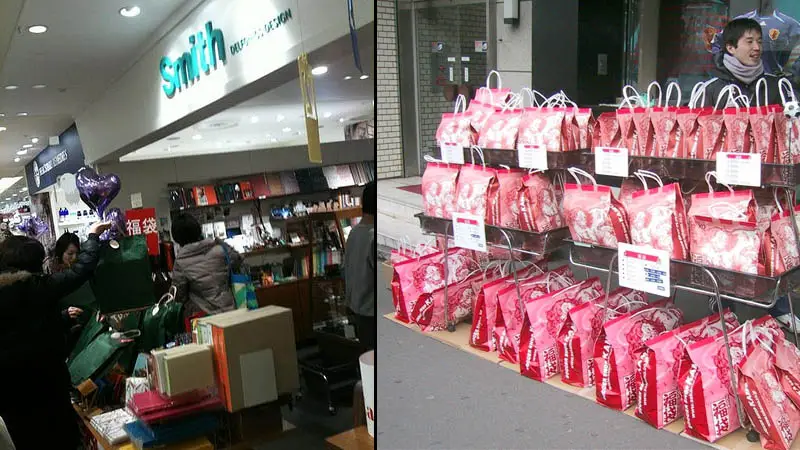
A fukubukuro is the clearest picture: a sealed “lucky bag” sold around the Japanese New Year, stuffed with mystery items. You buy the bag for the surprise and for the 福 written into the name.
Words built on 福:
- 福祉 — fukushi — welfare, well-being
- 福音 — fukuin — good news, gospel
- 福岡 — Fukuoka — the city name
- 福引 — fukubiki — a lottery or raffle
- 福寿 — fukuju — long life and happiness
- 福徳 — fukutoku — fortune, virtue, prosperity
Kouun — 幸運 — the word that actually means luck
If you need a noun that maps closest to English “luck” or “good fortune,” start with 幸運 (kouun). The first character is 幸, happiness. The second is 運, fortune or fate. Together they name a favorable turn, not a blessing stamped on an object.
That is why 幸運 shows up in formal wishes. 幸運を祈ります (kouun o inorimasu) is “I pray for your good fortune” — the line you write in a card or say when the situation is stiff and sincere. It is also why learners who only memorize 福 miss the word Japanese speakers reach for when they mean luck as an event, not luck as a charm.
Un ga ii — 運がいい — lucky, as a state
運がいい (un ga ii) is how you call someone lucky. It is not one glued word. 運 is fortune, fate, the luck that moves. がいい says that luck is good. The opposite is 運が悪い (un ga warui): luck is bad.
You hear it when someone just missed a train that later stalled, or when a ticket comes through. It describes a person or a moment. It does not bless an object the way 福 does.
The same kanji sits in a family of fate words:
- 運命 — unmei — destiny
- 運良く — unyoku — luckily, as it happened
- 運勢 — unsei — one’s fortune, the kind a horoscope claims to read
Tsuiteiru — ついている — luck that is “on” you
ついている (tsuiteiru), also written 付いている, is the verb for being in a lucky streak. Literally it is “to be attached”: the good thing is sticking to you today. The negative is ついていない (tsuiteinai), not a clipped “tsuitena.” That is the ordinary way to say the luck is off.
It is more bodily than 運がいい. 運がいい judges the fortune. ついている is the feeling that the day itself is clinging to you in the right way — the coin you needed, the seat that opened, the answer that happened to be on the page.
Rakkii — ラッキー — the English loan
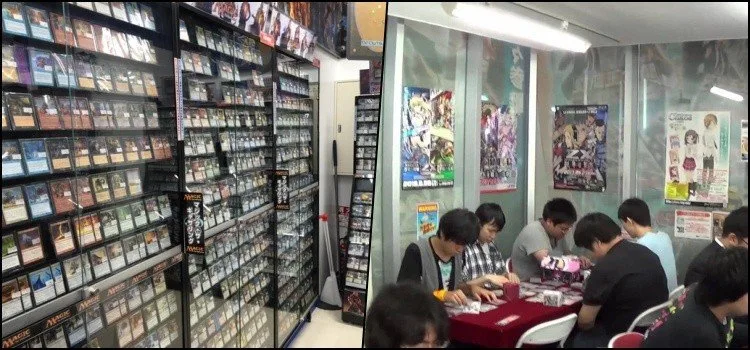
ラッキー (rakkii) is “lucky” borrowed from English. People use it for a small, bright break: a last train caught, a rare card pulled, a day that went sideways in your favor. Say “lucky” in English and many listeners will follow. The katakana word just makes that loan official.
It is casual. It does not replace 幸運 in a formal note, and it does not carry the New Year weight of 福. Think of it as the sticker you put on a moment, not the name of fortune itself.
Ganbatte — 頑張って — the wish people actually say
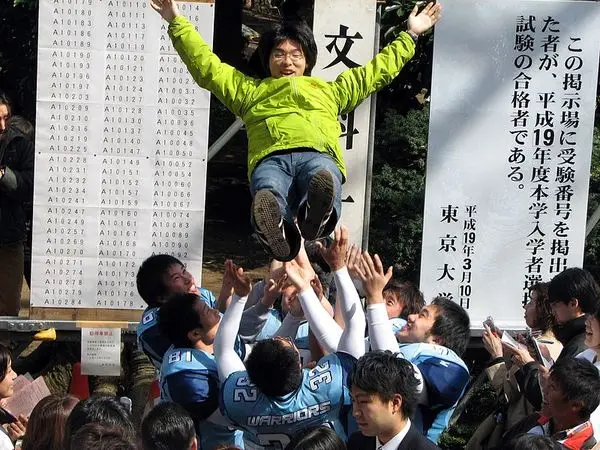
Ask how to say “good luck” before a test and the answer is usually 頑張って (ganbatte): do your best, hang in there, give it everything. Coaches shout 頑張れ (ganbare). With coworkers it becomes 頑張ってください (ganbatte kudasai). The reply is 頑張ります (ganbarimasu) — I will do my best.
That is the cultural hinge. English often hands the result to chance. Japanese, in the everyday wish, hands it back to effort. 幸運を祈ります still exists for formal writing. In the hallway outside an exam, superstition may ride in someone’s pocket, but the sentence in the air is almost always ganbatte.
Engimono — 縁起物 — lucky things, not a synonym for luck
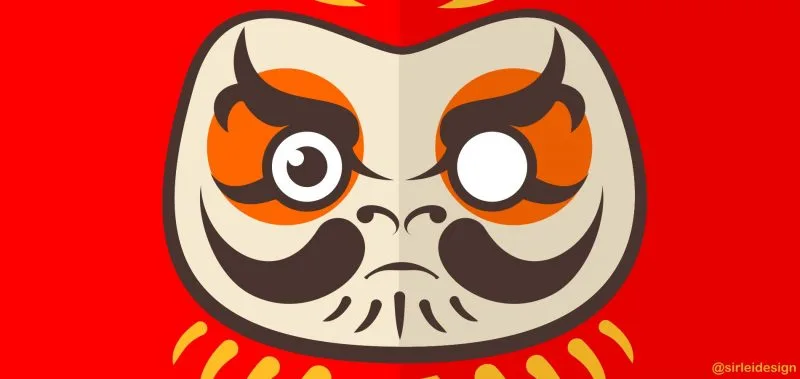
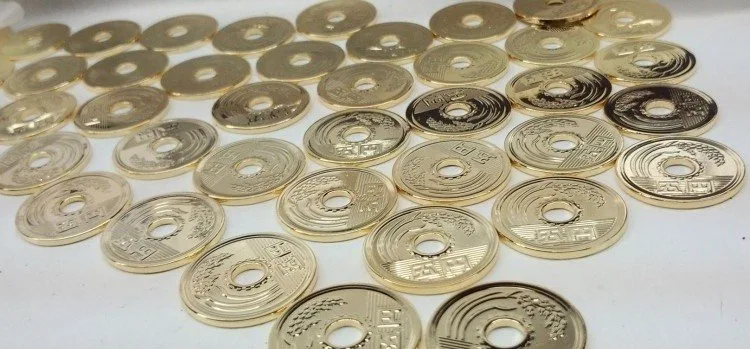
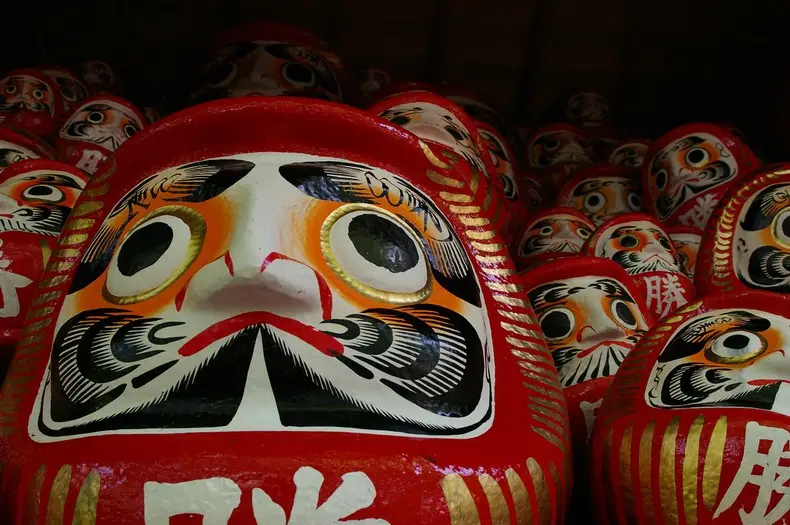
縁起物 (engimono) is not another word for luck. It is the category of objects thought to invite it: a Daruma doll with one eye waiting to be filled, a Maneki Neko in a shop window, a five-yen goen coin on a shrine string. Food, flowers, incense, even a song can land in the same bucket if people treat it as a luck-bearing thing.
Nearby words that get mixed in
A few more sit next to luck without being the same tool:
- 吉 — kichi — good fortune, the bright mark on an omikuji slip
- 幸せ — shiawase — happiness, luck only by implication
- 不運 — fuun — bad luck, the clear opposite of 幸運
やった (yatta) is the cheer after something lands — “I did it,” “yes.” People sometimes gloss it as “what luck,” but it is a shout of success, not a name for fortune. Keep it for the moment after the result, not for the wish before it.





Community
Comments
0 comments
There are no published comments in this language yet.
Send comment