
Unit 731 was a secret branch of the Imperial Japanese Army that turned medical research into a cover for human experimentation and biological warfare in occupied China. Based in Pingfang, near Harbin, the unit became one of the darkest chapters of Japan's wartime history.
Its leaders claimed to be studying disease prevention and water purification, but the real work involved infecting prisoners, testing weapons on living people, and developing pathogens for use beyond the laboratory. Understanding what happened there is essential for anyone trying to understand the violence of the Second Sino-Japanese War and the wider Pacific War.
Contents 6
What was Unit 731?
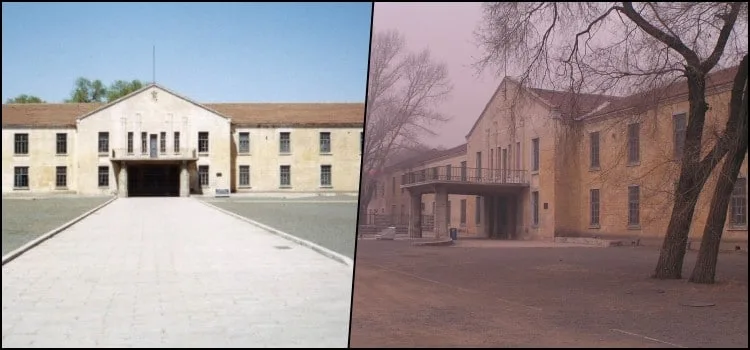
Unit 731 was part of the Kwantung Army in Manchukuo, the Japanese puppet state in northeastern China. It grew under the leadership of Shirō Ishii, a military doctor who believed biological weapons could give Japan a strategic advantage. The official name sounded administrative and harmless, but the complex in Pingfang was designed for detention, experimentation, and large-scale production of infectious agents.
The unit expanded during the 1930s and 1940s and worked alongside other secret detachments linked to Japanese biological warfare. Prisoners were kept alive only as long as they were useful to the experiments. Many victims were Chinese civilians or prisoners, but records and testimonies also mention Koreans, Mongolians, Soviets, and some Allied prisoners of war.
What happened inside Unit 731?
The crimes committed there were not isolated abuses by a few guards. They were organized experiments carried out in the name of military research. Survivors were almost nonexistent because the system itself was built to eliminate witnesses.
- Vivisection without anesthesia to observe organs after infection or injury.
- Deliberate infection with plague, cholera, anthrax, typhus, and other pathogens.
- Frostbite experiments that exposed limbs to severe cold and then tested different methods of thawing.
- Weapons tests with grenades, flamethrowers, and chemical or biological agents on restrained prisoners.
- Pressure and dehydration tests meant to measure how long the human body could endure extreme conditions.
- Sexual violence and forced pregnancy reported in testimony and historical research tied to the unit's broader pattern of abuse.
The prisoners were often referred to by the dehumanizing term maruta (丸太), usually translated as "logs." That language mattered because it reduced people to objects and made systematic cruelty easier to rationalize.
Biological warfare in China
Unit 731 was not limited to laboratory crimes. It also helped develop and deploy biological weapons in China. Historians associate the unit with attacks involving plague-infected fleas, contaminated food, and poisoned water sources. These operations spread disease far beyond the walls of Pingfang and contributed to mass civilian deaths in occupied areas.
Estimates vary, but the broader biological warfare campaign linked to Unit 731 is often described as having killed hundreds of thousands of people in China. That larger death toll is one reason the subject cannot be reduced to a single prison camp story. Unit 731 was both a research center and part of a wider war machine.
Why were so few people punished?
As Japan's defeat became inevitable in 1945, Unit 731 personnel destroyed documents, demolished parts of the facility, and tried to erase evidence. Even so, enough testimony and records survived to reveal what had happened.
Accountability after the war was uneven. Soviet authorities prosecuted some members in the Khabarovsk war crimes trials in 1949. Many of the central figures, however, avoided trial. The most controversial reason was the postwar American decision to grant immunity to key personnel in exchange for research data gathered through those experiments.
That deal helped bury the subject for years. Instead of becoming one of the best-known war crimes cases in Asia immediately after the war, Unit 731 remained obscure to much of the public for decades.
Memory, museum, and historical debate
Today, the former site in Pingfang is part of a memorial and museum complex in Harbin. In China, Unit 731 is treated as a central example of Japanese wartime brutality. In Japan, discussion has often been more fragmented, shaped by school curricula, court cases, journalism, and the slow release of archival evidence.
The debate is not only about the past. It is also about how societies remember atrocities, how states deal with evidence of war crimes, and how easily scientific language can be used to hide cruelty.
Why Unit 731 still matters
Unit 731 matters because it shows what happens when military secrecy, racism, and pseudoscientific ambition operate without moral limits. The case also remains important for the history of medicine, international law, and East Asian memory politics.
Anyone studying Imperial Japan, the war in China, or the history of biological warfare eventually reaches Unit 731. It is not a footnote. It is one of the clearest examples of how a modern state can turn research, bureaucracy, and propaganda into tools of mass violence.






Community
Comments
0 comments
There are no published comments in this language yet.
Send comment