
Romaji (ローマ字) literally means “Roman letters.” It is how Japanese gets written with the Latin alphabet so people who still cannot read kana or kanji can follow a sign, a passport line, a textbook example, or a song lyric.
You will meet the same word spelled more than one way: romaji, rōmaji, roumaji, even ro-maji. That is not random error. Japanese has several romanization systems, and long vowels are marked with a macron, a doubled vowel, or simply ignored on everyday signs. The spelling changes; the Japanese word underneath does not.
Contents 4
Where Japanese romanization came from
An early Portuguese-based romanization is linked to the mid-16th century and the Jesuit encounter with Japan—often associated with the convert known as Yajiro (Anjirō). Missionaries needed a way to preach and study without first mastering full Japanese script, and the syllable shapes of Japanese lined up relatively well with Romance vowel habits.
In the Meiji era, some reformers went further and argued for dropping Japanese writing and using only rōmaji. Full texts appeared in Latin letters, but the project did not stick. Japanese is full of homophones and short words that only become clear with kanji and context. Kanji remains a practical necessity in the language, not a decorative extra.
Even so, rōmaji still greets travelers and beginners every day. One famous title shows how the same sentence can look in different romanizations:
| Japanese | 俺の妹がこんなに可愛いわけがない |
| Translation | There’s no way my little sister can be this cute |
| Roumaji / wāpuro style | Ore no imouto ga konnani kawaii wake ga nai |
| Rōmaji (macron) | Ore no imōto ga konnani kawaii wake ga nai |
Both lines are “correct” inside their conventions. Systems disagree mainly on a handful of syllables and on how they show long vowels—not on the Japanese meaning.
Main types of romaji
Several romanization systems grew up across modern Japanese history. The ones you will actually bump into are these:
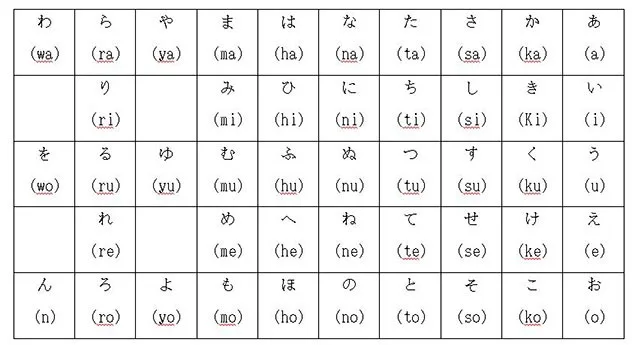
Hepburn (ヘボン式 / hebon-shiki). Named after James Curtis Hepburn (1815–1911), the American missionary who published an influential Japanese–English dictionary. Hepburn spells for an English-reading ear: し as shi, ち as chi, つ as tsu, ふ as fu. It is the system you see on most station signs, road signs, passports (in a simplified form), and learner materials. In late 2025 Japan also moved official national rules toward Hepburn after decades of Kunrei as the formal school standard.
Kunrei-shiki (訓令式). Promulgated by cabinet order in the 1930s and reissued in 1954, Kunrei prioritizes the regularity of the kana grid over English intuition. The same row keeps a stable consonant letter, so し / ち / つ appear as si, ti, tu. Many Japanese school worksheets still use Kunrei, which is why a learner can meet Huzi for the mountain English speakers write as Fuji.
| Hepburn | shi, chi, tsu, fu, ji, sha, shu, sho, cha, chu, cho, ja, ju, jo |
| Kunrei | si, ti, tu, hu, zi, sya, syu, syo, tya, tyu, tyo, zya, zyu, zyo |
Nihon-shiki (日本式 / nippon-shiki). Created by Tanakadate Aikitsu in the 1880s, it is a strict one-to-one mapping of kana. It is close to Kunrei on many rows, but keeps older distinctions such as ぢ as di and づ as du even when modern speech has merged those sounds. You mostly meet it in historical or linguistic contexts.
| Nihon-shiki | da, di, du, de, do, dya, dyu, dyo |
| Kunrei | da, zi, zu, de, do, zya, zyu, zyo |
| Hepburn | da, ji, zu, de, do, ja, ju, jo |
JSL and keyboard (wāpuro) styles. Teaching systems such as JSL often avoid special diacritics and show long vowels with doubled letters or other plain-ASCII habits. What you type into a Japanese IME is another practical “system”: 東京 is entered as something like toukyou, even if the elegant printed form is Tōkyō.
Long vowels are a common trap. Words like 東京 and ローマ字 stretch the vowel; different systems mark that stretch differently:
| Style | Long-vowel mark | 東京 | ローマ字 |
| Hepburn | ā ē ī ō ū (macron) | Tōkyō | rōmaji |
| Kunrei / Nihon-shiki | â ê î ô û (circumflex) | Tôkyô | rômazi |
| Plain / passport-like | often omitted | Tokyo | romaji |
| Wāpuro / doubled | ou, oo, uu… | toukyou / tookyoo | roumaji / roomaji |
Is romaji worth using to study Japanese?
Romanization can help more than it hurts—at the start—and then quietly hold you back if you never leave it. The first problem is the systems themselves: people argue about the “correct” spelling of a name because they are comparing Hepburn to Kunrei without realizing both are standards.
Foreign names add another twist. Sounds written with R in Japanese may come back into English with L, or the other way around, depending on origin and habit. Romanization is a bridge, not a photograph of every language the word ever touched.
Why not drop kana and kanji and live in romaji forever? Homophones are the short answer. Japanese packs many meanings into the same sound. How do you know which kami—紙, 神, or 髪—means “paper,” “god,” or “hair” if you only see Latin letters? Homophones are everywhere in Japanese, and writing carries the distinction that speech alone often blurs.
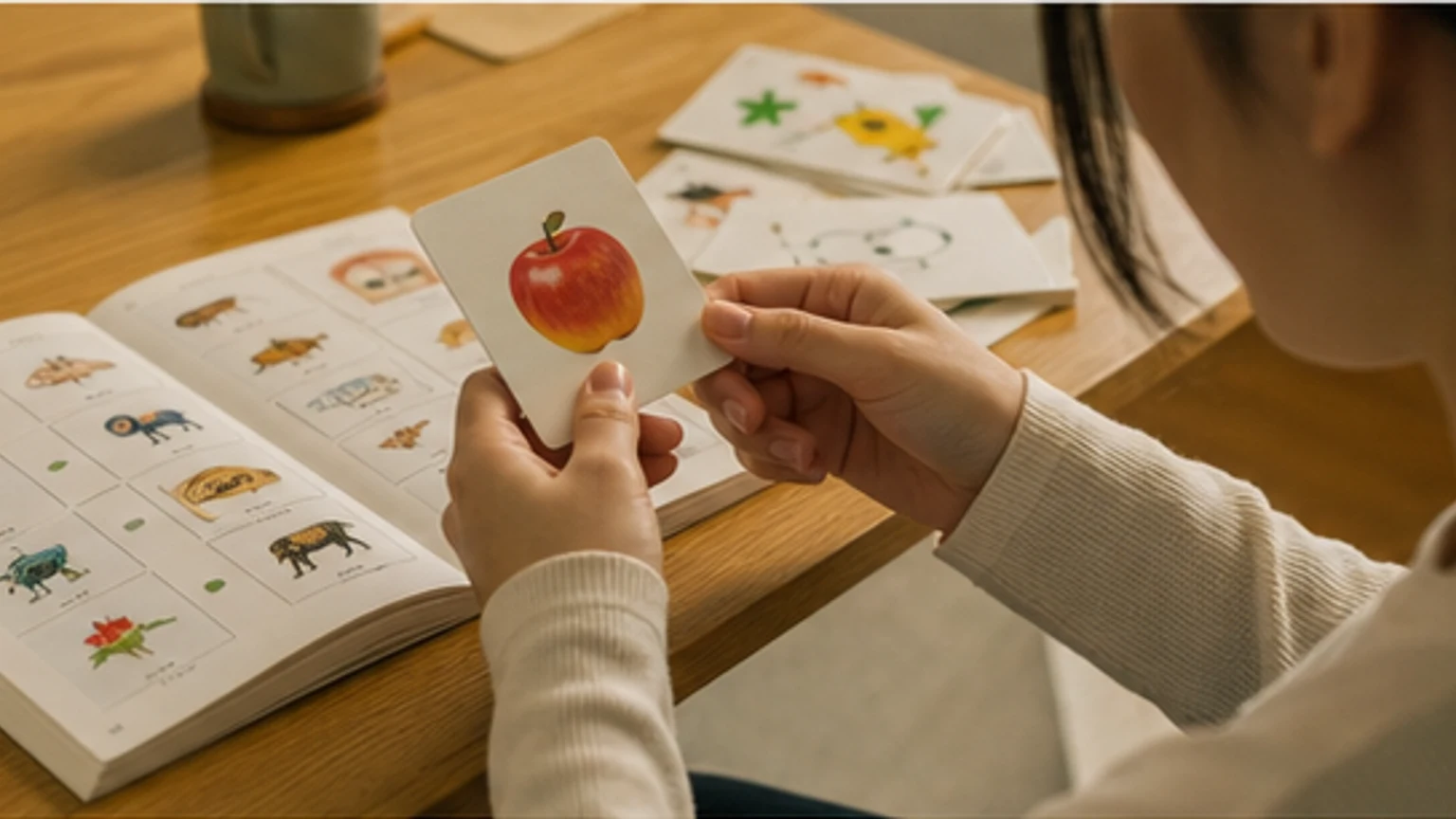
If you already know hiragana and katakana, treat rōmaji as a temporary tool: fine for a song title, a map, or a quick search, but not as your main reading diet. Converters and machine translation can dump text into Latin letters when you truly need it; they should not replace learning the scripts.
For absolute beginners, Roman letters still have honest advantages: familiar shapes, word spacing that standard Japanese writing usually lacks, and a way to say hello before the kana chart sticks. With romaji you can already practice things such as:
- Basic everyday questions
- Greetings
- Learning and singing Japanese songs
- Numbers
- Hours, days, and months
- Shopping phrases
- Asking for directions
- Hotel and travel basics
- Sharing notes with people who do not read Japanese yet
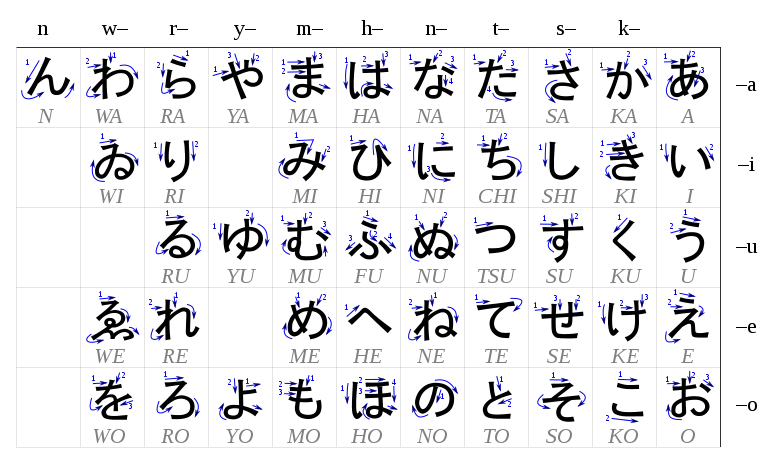
You also need some romanization simply to start hiragana and katakana—almost every chart pairs a kana with a Latin reading at first.
Long-term study that stays only in romaji runs into real walls:
- Near-identical words that only kanji or context separate
- Sounds that English letters only approximate
- Vocabulary locked inside kanji compounds
- One-syllable or one-mora words that look bare in Latin letters
- Competing romaji systems that train inconsistent habits
- Limited authentic material published only in romanization
After kana, another helper appears: furigana—small readings printed above or beside kanji. If you want the practical next step, read our guide on furigana and online converters.
A practical way to live with romaji
Use Hepburn when you write for international readers, signs, or class notes aimed at non-Japanese speakers. Expect Kunrei (or mixed spellings) on Japanese school materials and some official older documents. When two spellings fight, check the kana—not the internet argument.
Romaji is a doorway, not the house. Cross it on purpose, then spend most of your reading time where Japanese actually lives: hiragana, katakana, and, step by step, kanji.





Community
Comments
0 comments
There are no published comments in this language yet.
Send comment