

In a lot of places, a kiss can show up early — even as a casual goodnight after one evening out. In Japan, that same gesture often lands later, and with more weight. Many people treat it as something for a couple that already knows where they stand, not a default move between almost-strangers.
That is why the “right moment” can feel confusing if you grew up with Western pacing. After a kokuhaku (a clear “I like you — will you go out with me?”), you might still wait. Dates can feel warm and close, yet hands stay free and lips wait for a quieter setting. The puzzle is less about a secret trick and more about reading comfort, privacy, and timing.
Contents 4
Why the first kiss often comes later
Japanese dating culture tends to separate friendship-mode from couple-mode. Until both sides agree they are dating, physical affection can stay light or even absent. A kiss is frequently read as intimacy for a passionate couple — not as small talk with your mouth. That does not mean nobody kisses on an early date; surveys of Japanese daters often put the third date near the top, with the first date not far behind. The range is wide. What stays steadier is the preference for privacy: public stages are for walking and talking; private corners are for risking a first kiss.
So if nothing happens after dinner in a busy street, do not treat it as automatic rejection. Crowds, trains, and bright restaurants are awkward places for many Japanese partners to lean in. The same person who seemed reserved outdoors may open up on a Ferris wheel, in a car, or when saying goodbye at the door — places where eyes are fewer and the moment can belong to just the two of you.
The best situations to kiss
Relationships here sometimes begin in a slightly peculiar way. Flirting blurs into friendship, and you may stay unsure whether romantic interest is mutual. Sometimes even after a confession, kisses do not land right away, and you wonder how to make space for them. Below are situations that often lower the pressure — always with consent and a sense of the other person’s comfort.
When being gently “cornered” against the wall — kabedon (壁ドン) — The term kabedon became a pop-culture shorthand: one person places a hand on the wall near the other’s head, creating a close frame. Manga and drama love it. In real life it only works if the vibe is already playful and welcome; forced drama is just pressure. If she (or he) is smiling into the space you created, that is a better moment for soft words, eye contact, and a careful kiss than for springing a surprise in a crowded hallway.

On the Ferris wheel — On an amusement-park date, the cabin at the top is classic for a reason: a short bubble of privacy, a shared view, nowhere to run from the silence. Confessions and even proposals get told there too. If both of you have been leaning closer all day, the highest stop is a natural window — not a script you must force.
At the end of a date — Saying goodbye after a romantic outing is one of the most common kiss windows. Many people wait for the other person to take the lead. If you are the more outgoing one, a clear but gentle approach helps; if you are waiting on a shy partner, a small signal that you are open to it (lingering, standing close, not rushing to leave) can matter more than a perfect movie line.
If you are already in a long-term relationship or married, daily kisses when leaving and returning home keep affection ordinary instead of dramatic. Another soft moment many couples enjoy: when one person is cooking, a quiet hug from behind — only if that is welcome in your home rhythm.
Planning a private place for the kiss
If you are already dating and still feel unsure when to kiss, you can gently create situations like the ones above instead of hunting for a “perfect second.” Japanese partners are often more comfortable kissing in an isolated environment. Start with holding hands — something many people expect on a real date before lips enter the picture. Build a calmer atmosphere; then look for a setting where neither of you has an audience.
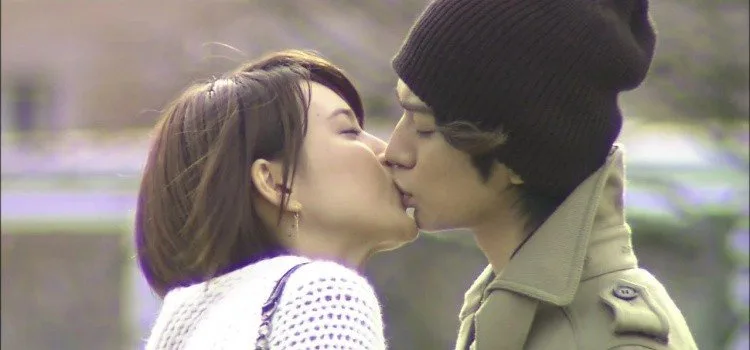
Common, expected places (more romantic cliché than law, but useful as a map):
- On a school terrace or quiet rooftop corner;
- Inside an elevator, when the doors close and the world shrinks for a few floors;
- Inside a car, after parking somewhere calm;
- In a cinema, during a dark scene — careful not to bother neighbors;
- In a private room, when both of you clearly want the same thing.
Public affection is not illegal, and big cities show more hand-holding and occasional kisses than older stereotypes claim. Still, many couples keep longer kisses off trains, packed sidewalks, and family-heavy spaces. For a deeper look at how kissing is viewed in public, see our piece on kissing culture in Japan.
Signals that the moment may be open
No checklist replaces reading the person in front of you. These cues are hints people often notice — never proof, never a free pass to ignore a “no” or a stiff body:
- They put on lipstick or fix their appearance in front of you;
- They stand or sit closer than the conversation requires;
- Compliments become more frequent and more personal;
- They lightly bite or wet their lips without noticing;
- Their eyes move from your eyes to your mouth and back;
- They drop soft, indirect hints instead of joking everything away.

On a real date, shyness does not have to cancel initiative forever. It does ask for patience: privacy first, consent always, and a pace that fits how Japanese dating and relationships often unfold. Kissing in Japan is less of a total taboo than foreigners sometimes imagine — especially among younger people in large cities — but it still carries more meaning than a casual brush of lips at a party.
If you want language for the feelings that come with that moment, start with how people say I love you in Japanese. And if you have your own experience of timing a first kiss in Japan, that story is usually more useful than any list of “perfect” locations.


Community
Comments
0 comments
There are no published comments in this language yet.
Send comment