
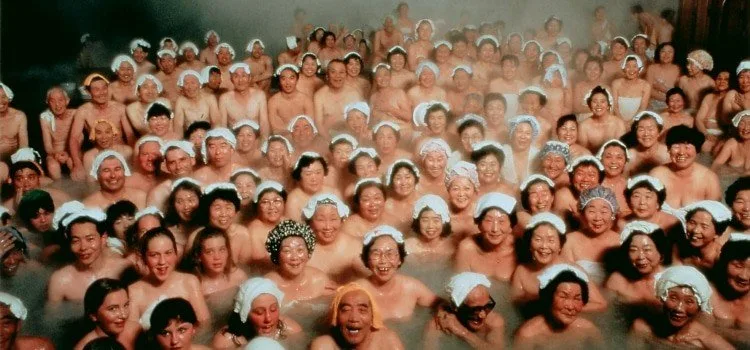
While Americans were still arguing over mixed swimming at the beach, Japan already had a habit of soaking together in hot spring water. People of every age, men and women, sat in the same pool without treating nudity as a spectacle. The Japanese name for that bath is konyoku (混浴), sometimes called a konyoku-buro (混浴風呂).
The remaining mixed onsen are more organized than the rumor suggests. A woman may wrap a towel, the water covers most of the body, and a crowd is, in a way, its own chaperone. What vanished from the cities still hides in mountain valleys, old tōji towns, and a handful of riverside inns.
Contents 5
What happened to mixed bathing in onsen?
Indecent cases were never a myth, especially when the bath was empty. Rules got broken, and a kind of bather nicknamed wani — “crocodile” — would wait in the water just to stare. That reputation made mixed baths easy to attack.
After the Meiji Restoration in 1868, Japanese authorities began shutting mixed bathing out of cities to look “modern” to Western visitors who read nudity as indecency. New mixed public baths were, in practice, blocked. Existing ones split by sex. Those that tried to keep the old custom often closed because guests would not behave.
Japan did not lose konyoku in a single night. It lost it bath by bath, as urban sento went gendered and only older mountain springs kept sharing one pool.
Konyoku is not a private couple bath
This is where most searches go wrong. Konyoku is a communal bath used by more than one gender at the same time. Other guests are there. You are not renting privacy.
Kashikiri (貸切), sometimes called a family bath, is the opposite: a room you reserve for your group. If the goal is to soak with a partner without an audience, kashikiri is the honest answer, and many ryokan with a private onsen sell exactly that. Confusing the two is how people arrive at a rural mixed bath expecting a honeymoon suite.
Is there still mixed bathing in Japan?
Yes. It has not disappeared. It has narrowed.
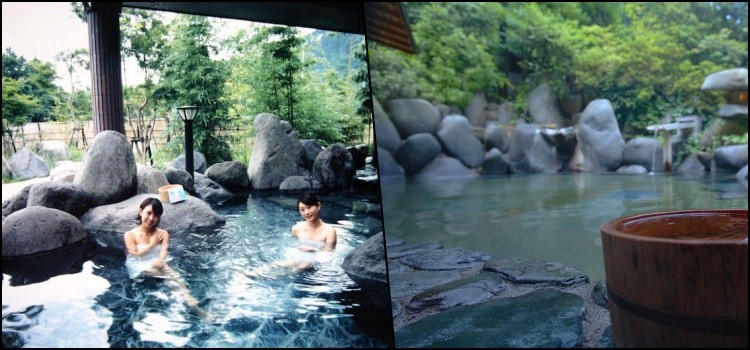
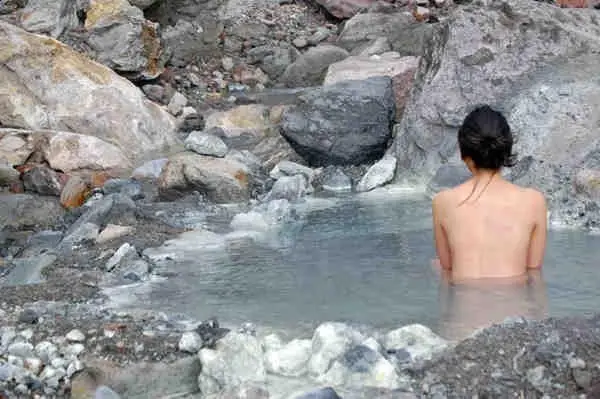
You will still find couples in a reserved kashikiri tub. You will find leisure complexes that allow mixed soaking in swimwear. You will find traditional konyoku where women are asked to cover with a towel or a thin bathing garment called yuamigi (湯浴み着). And you will find a few wild outdoor pools, noyu, with no changing room and no cashier — usually far from a train line, used by locals who already know the water.
Owners of a remaining mixed bath sit on a legal and social tightrope. If a guest misbehaves, the inn takes the blame. That is one reason traditional konyoku keeps shrinking even where the spring itself still flows.
Rural mountains still hold the old habit more than Tokyo ever will. Mixed bathing was banned in the capital long ago and has stayed that way. The guests who keep a secret riverside pool alive are often older residents, not a bus of first-time tourists.
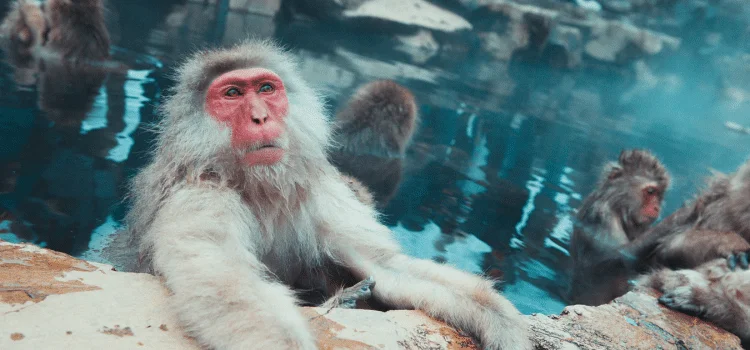
Hot springs even attract Japanese macaques in places such as Jigokudani. That is a wildlife scene, not an invitation to share a konyoku with deer and monkeys. If a listing sounds like a zoo, it is not the mixed bath you are looking for.
A few places that still keep konyoku
Lists of fifty names go stale overnight. Hours, towel rules, and even whether the mixed pool is open change by season. Confirm with the inn before you travel. These five are repeatedly documented as places where mixed bathing still has a real role, not a footnote:
- Sukayu Onsen (Aomori) — the huge indoor sennin-buro, or “thousand-person bath,” in the Hakkoda mountains. Cypress, acidic sulfur water, and women-only hours at times.
- Tsurunoyu (Nyūtō, Akita) — milky outdoor sulfur water, thatched roofs, lamps at night. The opacity of the water is part of the manners.
- Takaragawa Onsen Osenkaku (Gunma) — large riverside outdoor baths. Yuamigi is expected in the mixed pools, which makes it one of the easier first visits.
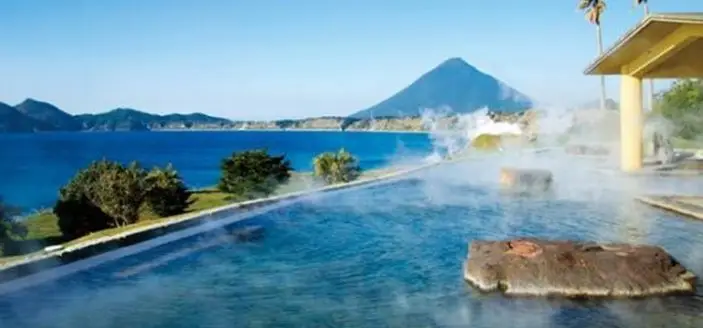
- Hirauchi Kaichū Onsen (Yakushima, Kagoshima) — a rock pool on the shore that only appears at low tide. Mixed, outdoor, and useless if you ignore the tide table.
- Kawayu Onsen (Wakayama) — in winter, the riverbed sennin-buro is dug as a huge mixed bath, usually in swimwear, with a festival mood rather than a silent mountain soak.
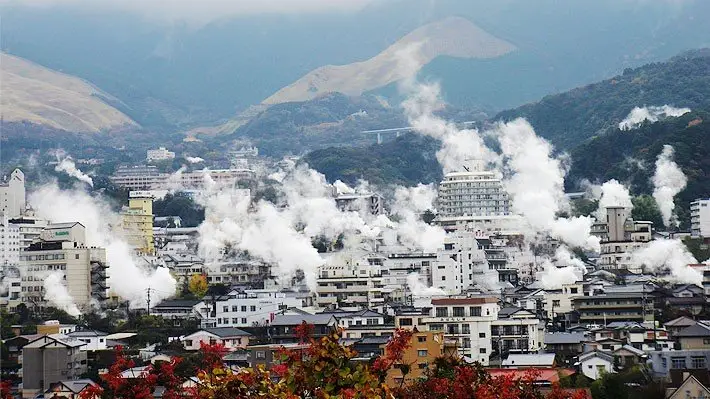
If you are mapping a longer trip, the cluster of onsen towns worth visiting in Japan still helps you choose a region. Mixed bathing is a local rule, not a tourist-board badge. Ask for konyoku or kashikiri by name.
How a mixed onsen actually works
The basic onsen sequence does not change: wash first, soak quietly, keep hair out of the water. Mixed baths add a thinner layer of patience.
Do not stare. That is the rule that keeps konyoku alive. Look at the mountain, the steam, or the surface of the water. The nickname wani exists because staring is the fastest way to close a mixed bath for everyone else.
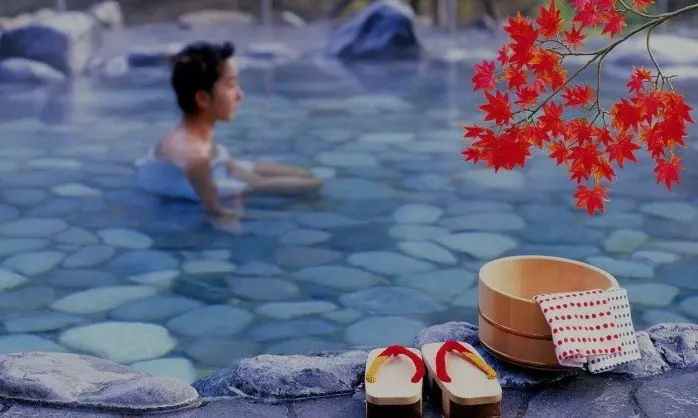
Coverage follows the house, not your beach habit. Some konyoku are fully unclothed. Some lend yuamigi or a wrap towel, especially to women, and those are often the only baths that allow fabric in the water. Ordinary swimwear is usually wrong unless the place is a leisure spa that says so. If a rental wrap is sitting at reception, use it.
Phones stay out. Conversation stays low. Separate changing rooms may still lead to the same pool. Women-only hours exist at several famous mixed baths; using them is not a failure of nerve. If the room feels wrong, leave. A private kashikiri is still an onsen.
Have you tried a mixed bath in Japan, or did you book the private tub instead? Either choice is a real onsen day. The tradition only survives when the people in the water treat it as a bath, not a show.

Community
Comments
0 comments
There are no published comments in this language yet.
Send comment