
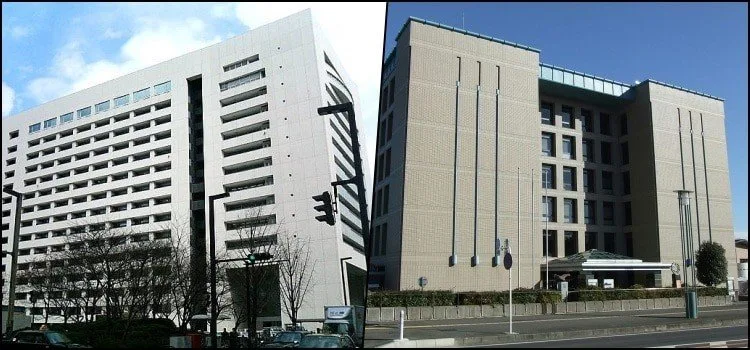
A Japanese city hall is not just a big administrative building with endless counters. For most residents, it is the everyday front desk of local government: the place where address changes, certificates, insurance enrollment and many practical procedures are handled in one stop. If you have just moved to Japan, this is usually one of the first offices you need to learn.
The confusion starts with the vocabulary. People often mix up prefectures, municipalities and the office itself. In daily life, what most people call a city hall is the yakusho (役所), shiyakusho (市役所) or kuyakusho (区役所), depending on the city and district. That is different from the prefectural government explained in our guide to the administrative divisions of Japan.
Contents 6
What does a city hall in Japan actually do?
Think of it as the place where local government meets daily life. A city hall or ward office deals with records, taxes, public insurance, family procedures and neighborhood-level services. The exact layout varies by city, but the core functions are similar across the country.
- Resident registration: registering a new address, reporting a move, and updating household information.
- Certificates: issuing documents such as a residence certificate (juminhyo) and, for Japanese nationals, copies related to the family register.
- Public insurance and pensions: joining or updating National Health Insurance and handling other local social procedures connected to your move or household status.
- Taxes and local payments: municipal tax notices, payment guidance and consultation counters.
- Family-related procedures: birth, marriage, divorce and death notifications, plus child-care and welfare support depending on the city.
- Everyday resident services: seal registration, garbage rule guidance, school-related enrollment steps, elder-care consultation and multilingual help desks in some municipalities.
That is why many people living in Japan end up visiting city hall for ordinary life events rather than rare emergencies. The office that handles your paperwork depends on your address, not on where you work or where you would prefer to go.
What foreign residents usually go there for
For foreign residents, the most common reason is address registration. Official guidance for students and new arrivals explains that after you decide where you will live, you usually need to go to the municipal office for that address within 14 days and complete resident registration. In practice, this is one of the first bureaucratic steps that connects you to local services.
After that, city hall often becomes the place where practical life in Japan starts to make sense. You may need it when moving to a new apartment, enrolling in National Health Insurance, receiving My Number-related notices or asking which counter handles a specific certificate. If you later move out, the office may issue the moving-out certificate that the next municipality uses to process your arrival.
One important detail: city hall is not the same as the immigration office. Immigration status, visa renewals and residence status decisions belong to the Immigration Services Agency, while the city hall handles local registration and resident-side procedures tied to your address.
What to bring to a Japanese city hall
The required documents change from city to city, but some items appear again and again. Going prepared saves time, especially in larger wards where the counters can be busy.
- Residence card and passport if you are a foreign resident.
- My Number Card if you already have one.
- Moving-out certificate when transferring from one municipality to another.
- Health insurance card or related paperwork if your procedure involves public insurance.
- In some cases, your personal seal or identification documents requested by the municipality.
If you are unsure, check the official website of your city before going. Many municipal websites now list the exact counter, business hours and document checklist for common procedures. Some also explain whether part of the moving process can begin online before you show up in person.
City hall, ward office and prefectural office: what is the difference?
This is where many articles oversimplify the subject. Japan has 47 prefectures, but the office most residents use regularly is usually the municipal one. The prefectural government handles broader regional administration, while the city hall or ward office handles daily resident procedures tied to the address where you live.
- Prefectural office: larger regional administration.
- City hall or ward office: local resident procedures, certificates and everyday services.
- Branch office: a smaller local counter for convenience in some municipalities.
This distinction matters because the wrong office can turn a simple errand into a wasted afternoon. Someone looking for a residence certificate, a local tax notice or National Health Insurance guidance should usually start with the city hall or ward office, not the prefectural building.
Why city hall matters so much in daily life
In many countries, paperwork is scattered across several buildings. In Japan, local government often feels more centralized at the municipal level. That does not make every procedure fast, but it does mean one building can connect you to services that affect housing, health coverage, household records and local taxes.
This is also why a city hall visit teaches you something practical about life in Japan. You begin to see how the country organizes residence, public insurance, moving procedures and neighborhood administration. If you want to understand everyday systems beyond tourist impressions, few places reveal more than the municipal office.
If you are also sorting out healthcare costs after moving, our articles on the Japanese health system and Shakai Hoken and social insurance help put the paperwork in context. For local taxes that may appear after registration, see our guide to taxes in Japan.
How to find the right office without guessing
The safest route is simple: search for the official website of the city, ward or town where you live, then look for resident registration, moving procedures or certificates. Large cities often separate services by ward, so going to the correct district office matters.
Once you know which office serves your address, the rest becomes easier. You stop treating Japanese bureaucracy as a vague maze and start seeing it for what it is: a local system with specific counters, specific documents and, usually, a clear next step.



Community
Comments
0 comments
There are no published comments in this language yet.
Send comment