Japan is a country full of legends, mythologies, and superstitions. In this article, we selected 5 urban legends from Japan that grew around ordinary objects and accidents. We also recommend reading our article about monsters, myths, and Japanese legends that are also quite bizarre.Contents5
The Shirokiya Fire of 1932
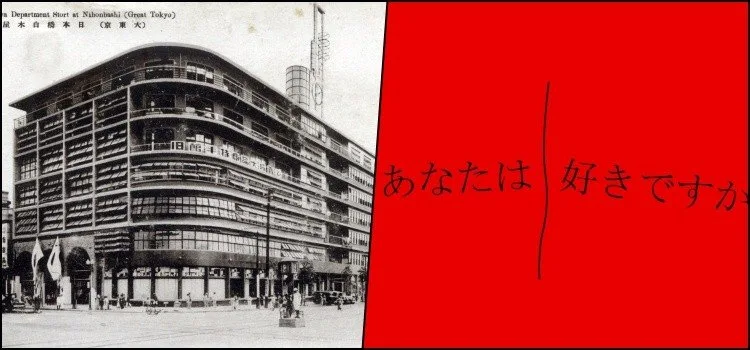
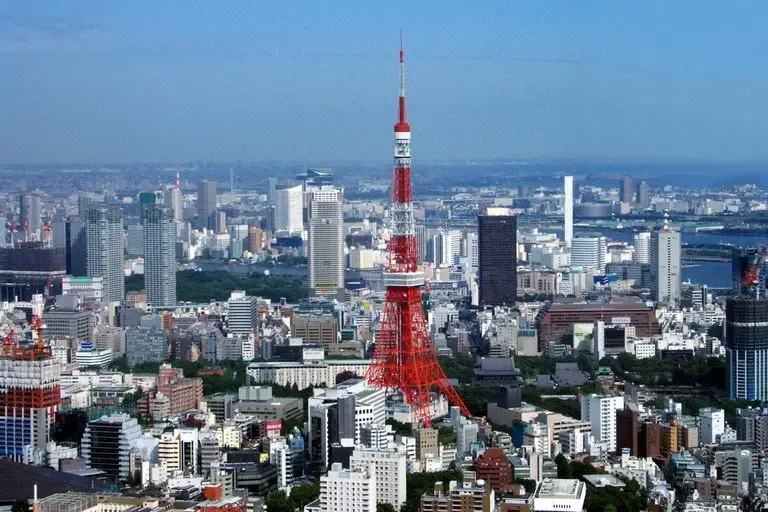
On December 16, 1932, the eight-story Shirokiya department store caught fire in Tokyo, killing 14 people. There are rumors that women at the location who were dressed in kimono were forced to go to the roof and refused to jump into the firefighters' safety nets for fear of exposing themselves. Under kimono, women often wore a koshimaki, a cloth wrapped at the waist, rather than Western-style underwear.
It is believed that after the incident, the store management ordered all saleswomen to wear underwear along with kimono, and this practice slowly spread throughout Japan. In Japanese the rumor is sometimes called hi-pantsu, "fire pants." Despite the legend being strong and appearing in books, it has never been proven.
Curse of the Red Room
The legend was based on a horror Flash animation (swf) that spread in Japanese as Akai Heya, the Red Room. A pop-up appears on the Internet and a recording will ask, "Do you like the red room?" Even if you close the pop-up, it will keep reappearing until the recording finishes asking the question. Shortly after, the viewer will be killed and their room will be painted red with their own blood.
The urban legend gained notoriety after it was discovered that the 11-year-old student who killed a 12-year-old (Sasebo Slashing, 2004) had the Flash animation saved in her computer's favorites.
Cursed Kleenex Commercial
The Kleenex commercial that aired in Japan and later became the seed of the rumor.
In 1986, Kleenex released three exclusive commercials for Japan. As you can see in the ad above, many viewers found this advertisement disturbing. Because of these commercials, curses began to spread.
Rumors started saying that the song "It's a Fine Day" was a German curse, despite being sung in English, and led the crew members to face premature deaths. The biggest incident happened with the lead actress of the ads, Keiko Matsuzaka. She would die, or be institutionalized, or give birth to a demon child. None of this actually happened.
The Curse of Colonel Sanders
According to fans of the baseball team Hanshin Tigers, Colonel Sanders of KFC became the reason the team could not win another championship after 1985.
The Tigers won the Japan Series that year. During the pennant celebration in Osaka, fans threw a statue of Colonel Sanders into the Dōtonbori river as a stand-in for American slugger Randy Bass. After that, the team reached the Japan Series in 2003, 2005, and 2014, and lost each time. Fans believed that the curse would end when the original statue was recovered.
Divers found most of the statue in the river on March 10, 2009. The glasses and the left hand were still missing. In 2023 the Tigers won the Japan Series again, 38 years after that first title, and KFC Japan buried the recovered statue in 2024.
Kiyotaki Tunnel
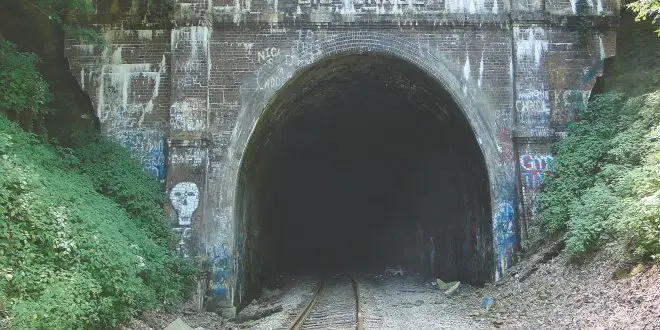
This tunnel in Kyoto, on the road between Arashiyama and the village of Kiyotaki, was built in the late 1920s for the Atago Railway and later used by cars. People usually give its length as 444m (4 is a cursed number in Japan, similar to the number 13 for most Western people). Kiyotaki is, according to legends, cursed by all the workers who died while building it, due to the terrible working conditions of the time, which forced them to work like slaves, and by all those who died in the tunnel, victims of accidents caused by the spirits of the workers.
It is said that ghosts can be seen in the tunnel at night, and that they can even possess your car and cause an accident. It is also said that there is a mirror in this tunnel, and that if you look into it and see a ghost, you will have a horrible death. The length of the tunnel can also vary, depending on the time and the period in which you are measuring it (night or day).
These five keep circulating because each one points at something you can still look up: a fire in Tokyo, an old commercial, a river in Osaka, a tunnel in Kyoto. The rumor grows around that object, even after the facts have moved on.
Kevin Henrique has written about the Japanese language, culture, anime, games, and travel since founding Suki Desu in 2014. He first visited Japan in 2016.
Community
Comments
0 comments
There are no published comments in this language yet.

 This tunnel in Kyoto, on the road between Arashiyama and the village of Kiyotaki, was built in the late 1920s for the Atago Railway and later used by cars. People usually give its length as 444m (4 is a cursed number in Japan, similar to the number 13 for most Western people). Kiyotaki is, according to legends, cursed by all the workers who died while building it, due to the terrible working conditions of the time, which forced them to work like slaves, and by all those who died in the tunnel, victims of accidents caused by the spirits of the workers.
It is said that ghosts can be seen in the tunnel at night, and that they can even possess your car and cause an accident. It is also said that there is a mirror in this tunnel, and that if you look into it and see a ghost, you will have a horrible death. The length of the tunnel can also vary, depending on the time and the period in which you are measuring it (night or day).
These five keep circulating because each one points at something you can still look up: a fire in Tokyo, an old commercial, a river in Osaka, a tunnel in Kyoto. The rumor grows around that object, even after the facts have moved on.
This tunnel in Kyoto, on the road between Arashiyama and the village of Kiyotaki, was built in the late 1920s for the Atago Railway and later used by cars. People usually give its length as 444m (4 is a cursed number in Japan, similar to the number 13 for most Western people). Kiyotaki is, according to legends, cursed by all the workers who died while building it, due to the terrible working conditions of the time, which forced them to work like slaves, and by all those who died in the tunnel, victims of accidents caused by the spirits of the workers.
It is said that ghosts can be seen in the tunnel at night, and that they can even possess your car and cause an accident. It is also said that there is a mirror in this tunnel, and that if you look into it and see a ghost, you will have a horrible death. The length of the tunnel can also vary, depending on the time and the period in which you are measuring it (night or day).
These five keep circulating because each one points at something you can still look up: a fire in Tokyo, an old commercial, a river in Osaka, a tunnel in Kyoto. The rumor grows around that object, even after the facts have moved on.


Community
Comments
0 comments
There are no published comments in this language yet.
Send comment