
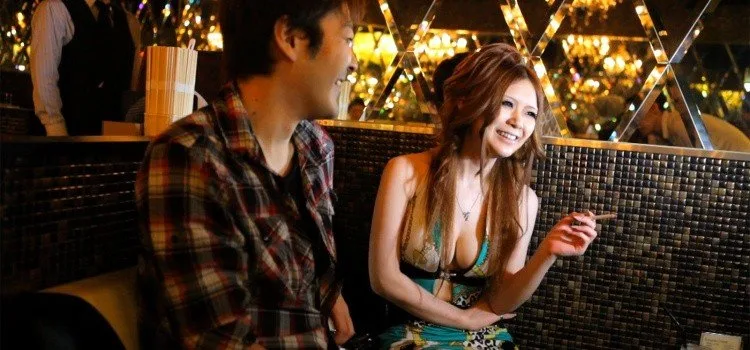
Japan has a nightlife format that exists almost nowhere else: the hostess club. Locals call it kyabakura (キャバクラ), a contraction of the words "cabaret" and "club". A customer pays for a table, and a hostess sits with them to pour drinks, keep the conversation going and treat them like the most interesting person in the room. The job is to stay, talk, listen and make the evening feel personal.
Regular kyabakura run under a strict no-touching policy. Physical contact is prohibited, hostesses often work under professional names and most clubs rotate the cast between tables. The venues are licensed as food and entertainment establishments, inspected by the local public safety commission, barred from employing anyone under 18 to serve customers and usually required to close by midnight. Women who want the same kind of attention can visit a host club (ホストクラブ), where male hosts serve female customers.
The comparison with geisha comes up often, although the two worlds differ in training, setting and history. Readers curious about the older tradition can start with our article on who the geisha really are and how their work is organized.
Contents 11
How a Visit Works
First-time customers are usually greeted at the entrance and taken to a table. The club assigns a hostess, or the guest can request a specific one. The visit is charged in time blocks, most commonly 50 to 90 minutes, and the hostess stays at the table for that period. When a club works with rotation, the customer meets several hostesses during the same night and can choose a favorite on a later visit.

Choosing that favorite has a name: shimei (指名), the designation of a specific hostess, which the club charges as an extra fee. Meeting a hostess for a meal before heading to the club together is called dohan (同伴) and appears on the bill as another extra. Bottle keep is the other habit that turns a visitor into a regular: instead of ordering drink by drink, the customer buys a bottle of whisky or shochu that stays behind the counter with their name on it for the next visit.
When the time block is about to end, the staff asks whether the guest wants to extend. Extensions cost extra and are offered as a matter of routine; declining is normal. The hostess drinks with the customer, often from a glass of juice or soft drink, and keeps an eye on the clock without letting the mood drop. That balance of conversation and timing defines the service.
Districts such as Kabukicho in Shinjuku concentrate the largest number of these clubs, from simple neighborhood bars to large venues with stage shows.
What a Night Costs
Every reputable club presents its prices before the customer sits down. The base charge is a set fee per time block, usually between 5,000 and 15,000 yen per person, and it covers the table and a first round of drinks. On top of the set fee come the extras.
Requesting a specific hostess (shimei) adds 1,000 to 5,000 yen. Drinks ordered outside the set cost around 1,500 yen each, and bottles start around 10,000 yen. An extension adds roughly 3,000 to 8,000 yen per 30 minutes, and most clubs apply a service charge of 10 to 20 percent to the final bill.
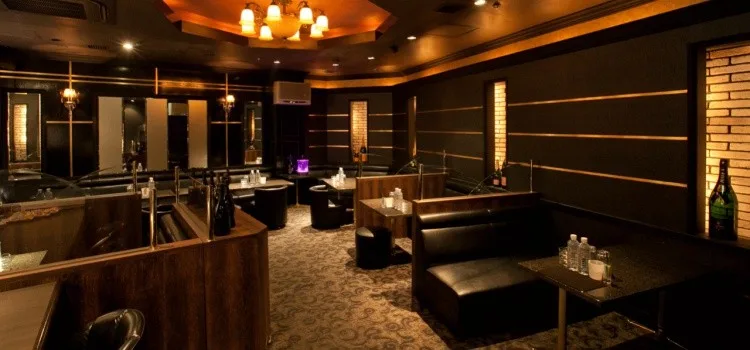
For a first visit, a realistic budget is 15,000 to 25,000 yen at a mid-range club in Tokyo. High-end houses in Ginza and similar districts charge 30,000 to 50,000 yen or more, and premium bottles can reach several million yen. The spending grows over months, with kept bottles and gifts for a favorite hostess adding to each return visit.
Honest clubs put every charge on the sheet and hand over an itemized receipt at the end. Visitors who follow street touts into unmarked venues are the usual victims of inflated bills.
The Different Types of Hostess Venue
The word kyabakura covers the most common format, but the nightlife industry separates these houses into a few clear categories. Each one sets different expectations, prices and levels of formality.
Kyabakura (キャバクラ)
The standard hostess club. Table seating, an open floor, a roster of hostesses and a set fee per time block. They range from small local bars to large clubs with professional performances, and they are the type most foreign visitors picture when they hear the term.
Club (クラブ)
The more formal and expensive tier, usually called simply a club. The rooms are smaller, the clientele older and wealthier, and conversation carries more weight than rotation. Instead of a time-based set, these houses work with bottle keep and often require an introduction or a reservation. Ginza concentrates the most exclusive ones.
Girl's Bar (ガールズバー)
A casual version with counter seating. Female staff serve drinks across the bar and talk with customers, without the table service or the set fee of a kyabakura. The format spread from around 2006 and became a common first step into the nightlife scene for younger customers and for visitors who speak little Japanese.
Snack Bar (スナック)
Small bars, usually run by a mama-san who serves behind the counter and often joins the conversation. Snacks rarely charge an entrance fee. The house earns on drinks, on a bottle that regulars keep with their name on it, and on the karaoke machine that anchors the night. The atmosphere feels almost like an extension of someone's living room.
Aiseki-ya (相席屋)
A shared-table bar built for meeting strangers. The name means "sharing a table", groups are seated together, and the staff places men and women at the same table to talk. The pricing is unusual: women enter free, with unlimited time and food and drink included, while men pay an entrance charge plus a fee per ten minutes while sharing a table. The official Aiseki-ya chain lists around 650 yen per ten minutes on weekdays and 750 yen on weekends and holidays. It is a place for conversation and dating more than for hostess service.
Seku-Kyabakura (セクキャバ)
In adult entertainment districts there is a separate category of venue, known as seku-kyabakura or ichya-kyabakura, where touching above the waist and sexual conversation are part of the service. These houses operate under their own rules and licensing, a different world from the no-touching etiquette described above. Visitors should know which type of establishment they are entering and what its rules allow.
Regional Names
The vocabulary changes with the map. In Sapporo and parts of northern Japan, the regular format is advertised as "new club" because the word kyabakura there describes the adult version. In parts of Kyushu, the same houses go by "lounge". Knowing both names helps a visitor read the signs correctly.
The Business Behind the Compliments
Inside the club, flattery is part of the service. Customers hear that they are kind, smart, handsome and mature, and the performance is convincing enough that many guests leave with the feeling of a genuine connection. This is the part of the business that outsiders find hardest to judge. The hostess is a professional doing a job, and the work rewards memory, timing and conversation skills.
Regulars hear the same lines night after night:
- You are so nice.
- You are smart.
- You are handsome.
- You are so mature.
The emotional side cuts both ways. Some customers fall in love with their favorite hostess and return with gifts and plans that go far beyond a bar tab. Some hostesses build real friendships with regulars and keep in touch between shifts. The line between professional attention and personal interest is seldom clear to either side.
Japan has started to treat the aggressive end of this business as a legal problem. The 2025 revision of the entertainment and amusement business law tightened the rules for host and hostess clubs, banning fake rankings, exaggerated titles and misleading advertising used to push customers into spending beyond their means. The reform also targeted scout kickbacks and other practices that left clients buried in debt.
The search for company is not limited to bars. Maid cafés and cosplay cafés sell conversation in a different costume, and services that pair customers with someone for karaoke or a film address the same need, as our article on maid cafés in Japan shows. Ordinary dating follows its own etiquette of confessions and formal commitment, which we cover in our guide to how relationships and dating work in the country. The growth of these formats points to something simple: in a crowded city, many people are looking for a regular face to talk to.
Working in a hostess club is not considered a bad thing in Japan. Most of the women who do it describe the routine as closer to waitressing: pouring drinks, reading the table and keeping the mood light for a few hours. The customer pays for attention with rules and a time limit, and the house turns that trade into a controlled version of being welcomed. The formula has survived since the 1980s because it answers a real demand, and the 2025 reform shows the country's intention to keep the gentler side of the trade while cutting into its predatory practices.




Community
Comments
0 comments
There are no published comments in this language yet.
Send comment