
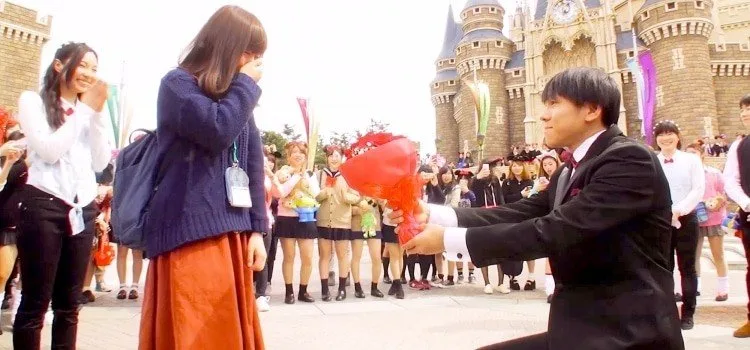
If you want to say Will you marry me? in Japanese, the safest classic line is 結婚してください (kekkon shite kudasai). It is direct, polite, and easy to understand. If your relationship is already casual, 結婚しよう (kekkon shiyou) sounds warmer and more natural.
The best proposal is not about using the fanciest sentence. In Japanese, tone matters as much as vocabulary. A phrase that sounds sincere in your relationship will land better than a dramatic line that feels borrowed from a movie.
Contents 5
Best Japanese phrases for a marriage proposal
結婚してください。
Kekkon shite kudasai.
Will you marry me?
This is the classic choice. It is respectful, clear, and natural for people who want a direct proposal without sounding rough or theatrical.
結婚してくれますか?
Kekkon shite kuremasu ka?
Will you marry me?
This version stays polite, but it feels a little more conversational. It works well if you want something gentle without losing clarity.
結婚しよう。
Kekkon shiyou.
Let us get married.
This is warmer and more intimate. It fits couples who already speak casually with each other and want a proposal that sounds personal instead of formal.
一緒になろう。
Issho ni narou.
Let us build a life together.
This line is romantic, but softer. Some people hear it as a promise about the future rather than an explicit proposal, so context matters.

Direct versus soft proposals
If your goal is zero ambiguity, 結婚してください and 結婚してくれますか are the safest options. They answer the search intent immediately and leave little room for misunderstanding.
If you prefer a softer tone, 結婚しよう can sound more affectionate because it includes both people in the decision. That said, it works best when the relationship already has that level of closeness.
結婚してくれないかな…
Kekkon shite kurenai ka na...
I wonder if you would marry me...
This shy form is understandable, but it can sound hesitant. Use it only if that nervous tone really matches your personality. Otherwise, a clear proposal usually lands better.
Proposal etiquette in Japan
Modern couples do not follow one fixed script. Grand proposals at restaurants, on trips, or during seasonal events still happen, but the line itself is usually simpler than people expect.
Family can still matter a lot. In more traditional households, meeting the parents before the proposal is a sign of respect. If you have not even had the kind of honest relationship talk that comes before marriage, it helps to understand how dating and commitment are often approached in Japan.
You may also hear references to yuinou (結納), the traditional engagement ceremony between families. Many couples now skip the formal version, but the idea behind it still matters: marriage is often seen as a connection between households, not only between two individuals.
Old fashioned lines you should use carefully
毎日僕に味噌汁を作ってくれない?
Mainichi boku ni misoshiru o tsukutte kurenai?
Will you make miso soup for me every day?
This old style line is famous because it implies married life without saying marriage directly. Today, many people read it as a cultural reference or a joke, not as the best real life option.
Another symbolic angle appears in lines about a family seal or surname. If that topic interests you, it helps to understand what an inkan or hanko means in Japanese paperwork and family identity.

Which phrase should you actually use?
If you want one answer that works for most learners, use 結婚してください. It is simple, classic, and unlikely to sound strange. If your relationship is very close and casual, 結婚しよう may sound more natural and affectionate.
The real key is sincerity. A correct Japanese sentence helps, but timing, trust, and the way you speak to the other person matter far more than trying to sound poetic for a single moment.




Community
Comments
0 comments
There are no published comments in this language yet.
Send comment