
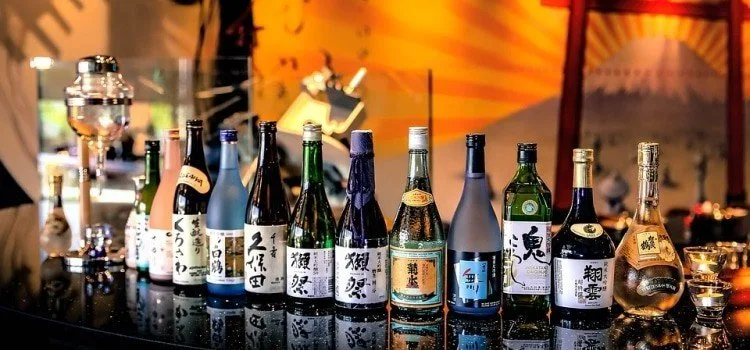
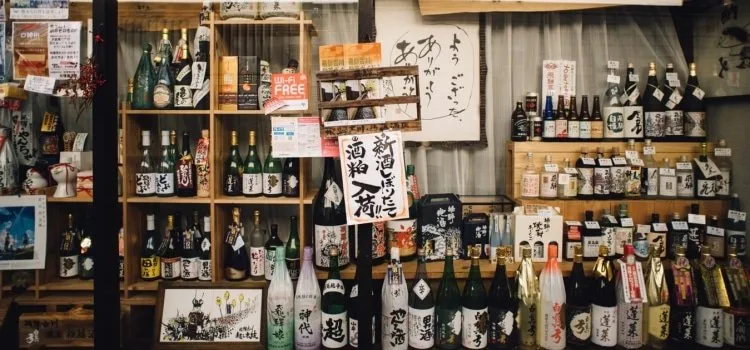
In Japanese, お酒 (osake) is not only the rice drink printed on tourist menus. It is the everyday word for alcohol itself. Order お酒 at an izakaya and the glass that arrives might be beer, a highball, or 日本酒 (nihonshu) — the brew made from rice.
That double meaning is why drink words pile up so fast. A convenience-store fridge, a cafe board, and a vending machine all mix tea names, milk labels, and imported liquor written in katakana. Once you know which word is the category and which one is the bottle, the labels stop looking random.
If you want the rice side of the bar first, start with drinks Japan makes from rice and the longer notes on sake. The list below stays with names you actually see on a menu.
Contents 5
How Japanese names a drink
飲み物 (nomimono) is the umbrella: anything you drink. 飲料 (inryou) shows up on bottles and in formal writing. ドリンク (dorinku) is the katakana cafes put on the drink menu.
Keep the お酒 / 日本酒 split in mind as you read. English flattens both to “sake,” which is why learners order the wrong thing and then blame the waiter.
Water, tea, and coffee
Hot drinks are not one Japanese category. Water changes word with temperature, tea has a family of names that are not simply “green tea,” and coffee lives almost entirely in katakana. 麦茶 (mugicha) is the summer exception: roasted barley tea, usually poured cold from a plastic bottle, with no caffeine.
- 水 (mizu) — Water
- お湯 (oyu) — Hot water
- 熱いお湯 (atsui oyu) — Very hot water
- 温かい水 (atatakai mizu) — Warm water
- 生温い水 (namanurui mizu) — Lukewarm water
- 冷たい水 (tsumetai mizu) — Cold water
- お茶 (ocha) — Tea in general; in daily speech this often means green tea
- 緑茶 (ryokucha) — Green tea
- 煎茶 (sencha) — Everyday steeped green tea
- 抹茶 (maccha) — Powdered green tea used in the tea ceremony
- 焙じ茶 (houjicha) — Roasted green tea
- 玄米茶 (genmaicha) — Green tea mixed with roasted rice
- 紅茶 (koucha) — Black tea
- 烏龍茶 (uuroncha) — Oolong tea
- 麦茶 (mugicha) — Barley tea, usually served cold in summer
- 昆布茶 (konbucha) — Kelp tea, not the fizzy fermented drink sold as kombucha abroad
- 抹茶ラテ (maccha rate) — Matcha latte
- コーヒー (koohii) — Coffee
- アイスコーヒー (aisu koohii) — Iced coffee
- エスプレッソ (esupuresso) — Espresso
- ココア (kokoa) — Cocoa / hot chocolate
Soft drinks, juices, and milk
ジュース (juusu) covers sweet fruit drinks. 果汁 (kajuu) is fruit juice on a label. 汁 (shiru) is not a juice word: it is the broth or soup in dishes such as 味噌汁. Milk splits the same way: 牛乳 (gyuunyuu) is cow’s milk; ミルク (miruku) is the loanword cafes print on lattes.
Two katakana lookalikes sit next to each other on many lists. ラムネ (ramune) is the marble-bottle soda. ラム (ramu) is rum. They are not the same drink, and neither one means milk.
- ジュース (juusu) — Juice
- 果汁 (kajuu) — Fruit juice
- オレンジジュース (orenji juusu) — Orange juice
- 牛乳 (gyuunyuu) — Cow’s milk
- ミルク (miruku) — Milk (loanword)
- 豆乳 (tounyuu) — Soy milk
- カルピス (karupisu) — Calpis, the lactic drink; see also Calpis and Calpico
- ラムネ (ramune) — Ramune, the carbonated soda with a marble in the neck
- メロンソーダ (meron sooda) — Melon soda
- 清涼飲料 (seiryou inryou) — Soft drinks
- 炭酸飲料 (tansan inryou) — Carbonated drinks
- エナジードリンク (enajii dorinku) — Energy drink
- スムージー (sumuujii) — Smoothie
- ココナッツウォーター (kokonattsu uootaa) — Coconut water
Alcoholic drinks
The legal drinking age in Japan is 20. Beer still leads at izakaya tables; 焼酎 (shouchuu) is the distilled spirit behind many canned チューハイ (chuuhai). Pouring, toasting, and the age rule matter as much as the names, and the room where those words get used is often an izakaya.
- お酒 (osake) — Alcohol in general; also used for sake
- アルコール (arukooru) — Alcohol (loanword)
- 日本酒 (nihonshu) — Japanese rice brew / sake in the narrow sense
- 焼酎 (shouchuu) — Distilled spirit, often from barley, sweet potato, or rice
- 梅酒 (umeshu) — Plum liqueur
- ビール (biiru) — Beer
- 生ビール (nama biiru) — Draft beer
- チューハイ (chuuhai) — Shochu highball, usually fruit-flavored and sold in cans
- ワイン (wain) — Wine
- 赤ワイン (aka wain) — Red wine
- 白ワイン (shiro wain) — White wine
- スパークリングワイン (supaakuringu wain) — Sparkling wine
- シャンパン (shanpan) — Champagne
- シェリー (sherii) — Sherry
- ウイスキー (uisukii) — Whisky
- ブランデー (burandee) — Brandy
- ジン (jin) — Gin
- ウォッカ (wokka) — Vodka
- テキーラ (tekiira) — Tequila
- ラム (ramu) — Rum
- マティーニ (matiini) — Martini
- コーヒーリキュール (koohii rikyuru) — Coffee liqueur
- アーモンドリキュール (aamondo rikyuru) — Almond liqueur
Useful phrases when you order
The names get you through a vending machine. These phrases get you through a counter.
- 飲み物をください (nomimono o kudasai) — A drink, please
- 乾杯 (kanpai) — Cheers
- ロック (rokku) — On the rocks
- 水割り (mizuwari) — Spirit diluted with water
- お代わり (okawari) — Another round / a refill
- 氷を入れますか (koori o iremasu ka) — Would you like ice?
If one word sticks, let it be お酒. It tells you the menu has crossed into alcohol. The rest of the list is just choosing which glass.






Community
Comments
0 comments
There are no published comments in this language yet.
Send comment