
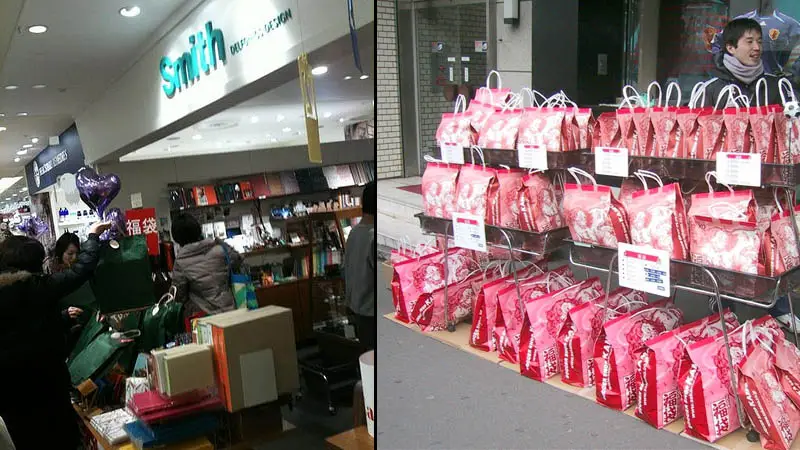
Few Japanese shopping customs feel as seasonal as fukubukuro (福袋), the sealed "lucky bags" that appear during the first sales of the year. People buy them for the same reason they buy lottery tickets or limited drops: the price is fixed, the discount can be excellent, and the surprise is part of the fun.
At first glance, a fukubukuro looks like a simple bargain bag. In practice, it says a lot about how Japan treats New Year shopping: limited stock, long queues, early openings, and a small ritual of starting the year with good fortune. If you are already reading about New Year in Japan, fukubukuro is one of the customs that turns the holiday mood into a full shopping event.
Contents 6
What does fukubukuro mean?
The word joins fuku (luck, blessing, good fortune) and fukuro (bag). That is why it is often translated as "lucky bag." The name matters: shoppers are not only buying discounted goods, but also the feeling of trying their luck at the beginning of the year. If you want to see how the kanji 福 appears in other expressions, our guide to luck in Japanese helps put the term in context.
Traditionally, the contents were hidden. That mystery is still part of the appeal, but modern retailers often reveal the category, the size, or even most of the contents in advance. A fukubukuro today can be fully blind, partly revealed, or almost transparent in what it offers.
Why are lucky bags sold at New Year?
Fukubukuro are closely linked to hatsuuri, the first sale of the year, held right after January 1. Department stores, malls, fashion brands, food counters, and electronics chains use them to attract shoppers as the New Year begins. The custom is seasonal, but it is not frozen in the past: many stores now open reservations before January, and some popular bags sell out through online lotteries before the doors even open.
The older explanation is that merchants used lucky bags to move remaining stock from the previous year. That still happens in some categories, but it is no longer the whole story. Many modern bags include exclusive sets, limited packaging, or combinations prepared specifically for the event.
What can be inside a fukubukuro?
Almost anything. Clothing brands use them for coordinated outfits and accessories. Department stores sell food, cosmetics, kitchenware, and lifestyle items. Electronics retailers have become famous for lottery-based bags with cameras, tablets, home appliances, and gaming gear. There are also luxury editions, character collaborations, beauty boxes, and food-themed sets.
The price range changes from store to store, but mainstream bags often sit between 3,000 and 10,000 yen. More expensive premium editions also exist, especially at department stores. What stays consistent is the promise that the total value should feel higher than the amount paid, even when the exact mix is a gamble.
Where to buy fukubukuro in Japan
The easiest places are major department stores and shopping complexes, especially during the first days of January. Fashion chains, cosmetics brands, coffee shops, bookstores, toy shops, and electronics retailers all join in. In recent years, online pre-orders have become just as important as physical queues, especially for popular brands with limited stock.
If you want a bag from a famous retailer, do not assume that you can simply walk in on January 2 and choose calmly. Some shops require advance booking, some use lotteries, and some publish collection dates before the New Year even starts. Checking the official store page is often more useful than relying on last-minute social media rumors.
How to avoid a disappointing lucky bag
- Pick a category that you would actually shop for even without the surprise factor.
- Check whether the bag is mystery, semi-revealed, or fully visible before paying.
- For clothing, confirm the size rules and whether returns or exchanges are possible.
- Watch for reservation periods, lottery systems, and pickup dates.
- Set a budget first, because the fun disappears quickly when the "deal" becomes impulse shopping.
This is also where brand familiarity helps. A fukubukuro from a shop that you already like is usually safer than a random bargain from a category that you barely use. The best purchase is not the one with the biggest theoretical value, but the one whose contents fit your habits.
Are fukubukuro still worth buying?
Yes, but not for everyone. If you enjoy surprise, seasonal shopping, and limited sets, they can be one of the most entertaining parts of the Japanese New Year. If you only want one specific item, a regular sale is often the smarter choice. Modern fukubukuro work best when the buyer likes the brand first and the mystery second.
That balance explains why the tradition survives. Fukubukuro are not just cheap bags stuffed with leftovers. They sit halfway between bargain hunting, seasonal ritual, and brand culture. For visitors, they are a memorable glimpse of Japanese consumer habits. For locals, they are a familiar way to start the year with luck, curiosity, and a real chance of carrying home more than expected.



Community
Comments
0 comments
There are no published comments in this language yet.
Send comment