

The term Oppai Bokin still appears in headlines and social posts whenever people discuss Japan's most provocative charity stunts. The phrase is usually translated as "Boob Aid," but that label hides an important distinction: some cases were organized adult-only fundraising events, while others were later public stunts that had nothing to do with charity.
That difference matters. If you only see a short clip or a sensational headline, it becomes easy to treat every case as part of the same trend. In reality, the better-documented stories fall into separate episodes with different rules, settings, and legal consequences.
Contents 4
What Oppai Bokin actually was
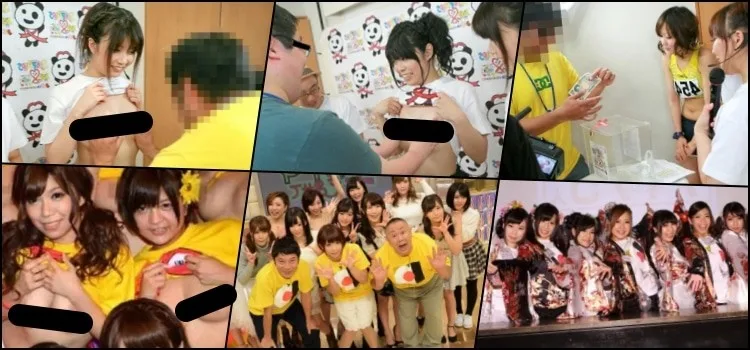
The best-known version of Oppai Bokin was tied to Paradise TV, an adult satellite channel that used live events to raise money for HIV and AIDS prevention. Tokyo Reporter documented the campaign in the 2000s, and later coverage from 2014 described a televised event in Tokyo where nine adult performers allowed brief touching in exchange for donations to the cause.
Reports at the time said the fundraiser was backed by the Japan Foundation for AIDS Prevention. Participants were asked to donate at least 1,000 yen, and organizers provided disinfectant before contact. Contemporary coverage also noted that the 2014 edition drew thousands of participants over the weekend, which helps explain why the event attracted so much media attention inside and outside Japan.
Even so, the campaign was controversial from the start. Supporters framed it as an attention-grabbing way to raise money and keep HIV prevention in public view. Critics argued that the format turned a serious public-health issue into spectacle and relied on the objectification of the women involved.
Why the backlash never really disappeared
Oppai Bokin is the kind of story that spreads because it combines charity, sexuality, and shock value in one easy headline. That also means the nuance is often the first thing to disappear. A fundraiser involving consenting adult performers in a controlled setting is not the same thing as random public behavior, and it is not a good shortcut for explaining everyday life in Japan.
The broader criticism was not just about nudity. It was about whether a campaign for AIDS awareness should depend on voyeurism to get attention. That tension is exactly why the story stayed memorable long after the event itself.
How "Free Oppai" differed from Oppai Bokin
Years later, another story helped blur the lines. In late 2017, YouTuber Pepsi Lu appeared near Shibuya Station with a sign reading Free Oppai. The stunt was filmed in public, circulated online, and quickly became part of the same viral conversation as Oppai Bokin, even though it was not the same kind of event.
The distinction became even clearer in early 2018, when Japanese media reported that three people, including a 16-year-old girl, were referred to prosecutors over a separate YouTube stunt in Shibuya involving public breast touching. That case was not an AIDS fundraiser, did not involve the same adult-only structure, and raised obvious legal and ethical concerns because it happened in public and involved a minor.
Putting these cases in one bucket creates more confusion than clarity. Oppai Bokin was controversial enough on its own, but the later Shibuya incidents belonged to a different context.
The Yunnan festival rumor that keeps resurfacing
Another claim that often gets attached to articles like this is the supposed "breast-touching festival" in Yunnan, China. The rumor circulated widely online, but China Daily later reported that local authorities in Chuxiong rejected the story as fabricated. Because of that, it makes more sense to treat it as an internet rumor than as a reliable cultural reference point.

In the end, these stories are remembered less because they represent normal life and more because they are unusual, controversial, and easy to share. If you want to understand them fairly, the first step is separating the charity telethon, the street stunt, and the rumor mill instead of treating them as one single phenomenon.






Community
Comments
0 comments
There are no published comments in this language yet.
Send comment