

Do you know Hatsune Miku (初音ミク)? A pop star unlike any other, one who left a real mark on the music industry in Japan and around the world. How did this virtual girl help create more than 150,000 songs and gather millions of fans across every continent? In this article, we will walk through her origin, the technology behind her voice, and the cultural wave she still rides today.
If you have never heard of her, here is the short version: Hatsune Miku is a Vocaloid, a voice package built for a singing synthesizer program that lets producers compose music directly on a computer. She was released in August 2007 by the Japanese company Crypton Future Media, based in Sapporo, which had already distributed other voices for the same engine. Miku was the first to break out of pure tool territory and turn into a character in her own right.
Before we get into Miku herself, it helps to understand the program she lives inside. Vocaloid (ボーカロイド) was originally developed by the Spanish company Voctro Labs and licensed in Japan in 2004 by Crypton Future Media and Yamaha. The idea is simple on paper: a real singer records a large library of individual syllables, that recording is cut into phonemes, and the engine reassembles them at runtime, letting users type lyrics and pick a pitch to generate a finished vocal track. What started as a fairly dry music utility turned, with smart marketing and an even smarter mascot, into a worldwide phenomenon among teenagers, musicians, and anime fans.
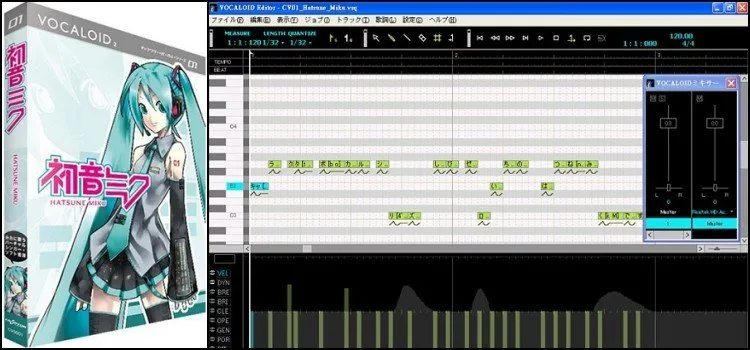
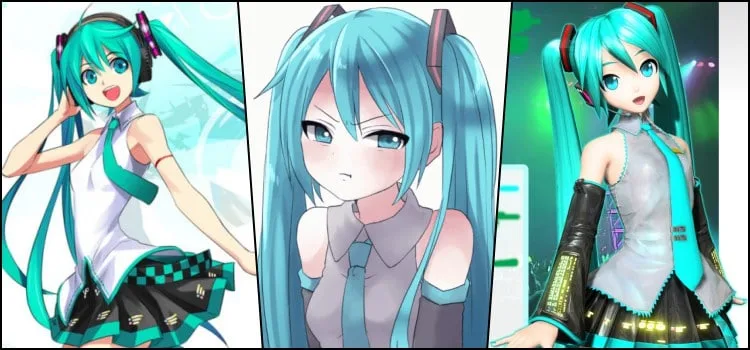
Japan has always been skilled at turning audio or software concepts into stylized anime-style illustrations. Crypton took that instinct and ran with it: every commercial voice got its own character design, its own backstory, and its own community. The illustrator KEI drew the iconic turquoise-haired girl with the long twin-tails we now know as Hatsune Miku. She quickly became the most popular voice in the catalog and grew a personality that reached well beyond the program she was built for.
Contents 6
How did Hatsune Miku's success take off?
On August 17, 2007, Crypton Future Media released Vocaloid 2 in Japan. Hatsune Miku appeared on August 31, 2007, as the first voice of that new generation, and gave the software a face. Her name tells the whole story in three kanji: Hatsu (初) means first, Ne (音) means sound, and Miku (未来) means future, although the given name is normally written in katakana as ミク. In Japanese, you pronounce it roughly Hatsune Miku, not "Hatsune Mik-oo" with a hard u.
The breakthrough came through the Japanese video site Nico Nico Douga, which at the time did roughly what YouTube and TikTok do together today. As early as September 2007, a user named Otomania uploaded a video of an animated Miku cheerfully waving a leek while singing the Finnish folk song Ievan Polkka. That single clip is widely seen as the spark of the phenomenon: the original pulled in millions of views within months, and reuploads, covers, and dance edits together have since passed 200 million views.
Once that mechanism was clear, Miku stopped being just a voice and became a stage. More hits followed, including Melt, Po Pi Po, World is Mine, and thousands of remixes of well-known songs. Crypton shipped additional voices such as Kagamine Rin and Len, Megurine Luka, KAITO, and MEIKO, which let producers arrange full choirs and duets. Today, more than 150,000 songs have been created with Miku, a number nobody on the original software team had on their roadmap.
Alongside the music, a second success story grew: dance videos in 2D and 3D. Tools like MikuMikuDance, often shortened to MMD, let fans animate their own choreography to Miku's tracks and share it worldwide. What started as a small freeware tool became the backbone of a real subculture, where amateurs and professionals team up to put on concerts, short films, and full music videos.
The impact of Hatsune Miku on Japanese culture
Hatsune Miku became popular almost anywhere digital creativity could reach: music, video, 3D animation, games, and of course memes. YouTubers and other creators started doing crossovers with other franchises, and a real flood of videos hit the platform. The Vocaloid wave spilled into the Japanese mainstream, picked up coverage in major media, and got endorsements from established J-pop names.
The proof that Miku was more than an internet curiosity came in August 2009 with her first official solo concert. Sponsored by SEGA, the show used a technique that was still novel at the time: Miku was projected as a hologram onto a transparent screen, a live orchestra played in the room, and the audience sang along. The event sold out and showed that a new kind of concert had just been born. Crypton used that momentum to launch a long series of Hatsune Miku Expo tours that now carry Miku through Asia, North America, and Europe.
Around the same time, SEGA released the rhythm game Hatsune Miku: Project DIVA, which lets players play along to the original videos and songs created by the community. The series has since continued on PlayStation, Nintendo Switch, and arcade machines and is still one of the main meeting points between Vocaloid and the wider gaming world.
Her reach kept growing: in 2014, Hatsune Miku made her United States debut on the Late Show with David Letterman, followed a few years later by an appearance at South by Southwest in Austin, Texas, and the first major North American Miku Expo tour. Games such as No More Heroes 2 and Persona 4: Dancing All Night officially licensed Miku tracks for their soundtracks. Fans went further, building mods, skins, and full game modifications that brought Miku into Minecraft, League of Legends, and many other titles, a sign of how deeply the character is rooted in digital gaming culture.
On top of the software and concerts, a sizable merchandise empire took shape. Action figures, plush toys, clothes, towels, school bags, jewelry, and even fashion collections have all carried Miku's image. At anime events you can still see cosplayers dressed as Miku or one of the other popular Vocaloid voices. Japan has dedicated Miku cafés, and in several large cities life-size figures serve as photo spots for fans and tourists alike.
The technology behind Vocaloid and Crypton's role
To really understand Miku, it helps to look at the engine that makes her sing. Vocaloid 2, the version Miku debuted on in 2007, works with samples of a real human voice that have been broken down into individual phonemes. When you input a song, you type the lyrics in romaji or Japanese kana, set the pitch, duration, and volume for each note, and the engine renders a full vocal take. For its time, this was a real breakthrough: it let people without singing talent produce vocals that sounded professionally mixed.
Crypton Future Media built a deliberate business model on top of that engine. The company licensed the core technology from Yamaha and focused almost entirely on the character and marketing side: each voice got a sharp design, a backstory, and its own community strategy. While competitors such as AH-SoftwareCo shipped their voices in a more low-key package, Crypton invested in building an emotional bond between users and the characters, an approach that would later be copied across many other otaku markets.
In 2011 Crypton released the iPhone app MIKUHAKO, followed in 2013 by Miku Flick, and in 2014 the company helped roll out Vocaloid 4, a substantially reworked engine. That newer version supports smoother transitions, more expressive vibrato, and multilingual samples, so English, Chinese, and Korean Miku variants are now available, each with its own voice, outfit, and fan base.
The commercial scale is impressive. Crypton itself has said that the Hatsune Miku voicebank remains the single best-selling Vocaloid product ever released, well ahead of any other commercial voice in the lineup. Industry analysts put the combined Vocaloid-related market, covering merchandise, concerts, and games, in the low single-digit billions of dollars, a number that goes far beyond what anyone imagined for a voice synthesizer tool.
Fan community and derivative works
A big part of why Miku has lasted so long is Crypton's open attitude toward its users. Unlike in many corners of the music industry, the commercial use of Miku songs is allowed under clearly defined rules, as long as the official credits stay intact. That more permissive licensing has triggered a huge wave of derivative works: covers, remixes, parodies, dance videos, manga, doujinshi, and full fan albums appear every day on YouTube, bilibili, and SoundCloud.
One especially notable example is the relationship with Black Rock Shooter. The character was originally drawn by the artist huke and got an opening animation in 2008 in which the theme song was sung by Hatsune Miku together with the music producer ryo and his project supercell. That song became one of the most-played Miku tracks ever and lifted both sides to international recognition. huke later drew an unofficial manga titled Hatsune Mix, which tells short stories about Miku's daily life, a good example of how closely the official and unofficial spheres are intertwined in this fandom.
The famous Nyan Cat meme, the flying cat pixel with the Pop-Tart body, also has a direct line to Miku. The first Japanese version of the meme was re-recorded with Miku's voice and spread virally through Nico Nico Douga. So when you hear that iconic Nyan Nyan Nyan today, there is a fair chance you are actually hearing Miku sing.
Curiosities about Hatsune Miku
Who is the voice behind Hatsune Miku? The voice actress whose recordings form the basis of Miku's singing database is the Japanese actress and singer Saki Fujita (藤田咲). She has voiced additional Vocaloid characters and is still active in Japan's voice-acting and music scene. Even though Miku herself is a fictional character, Saki Fujita gives the digital singer the emotional expressiveness that comes through in the songs.
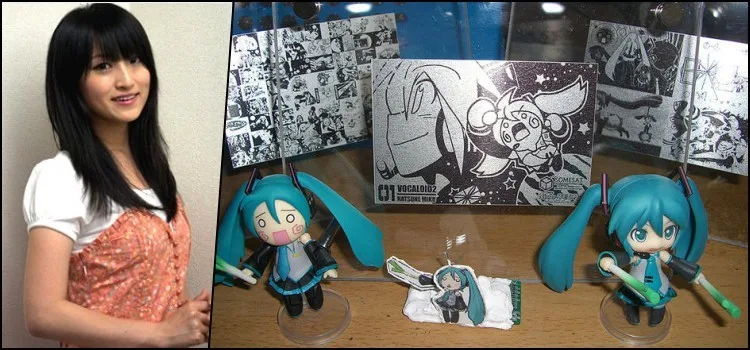
Hatsune Miku went to space. In 2009, a group of fans launched a petition asking the Japan Aerospace Exploration Agency, JAXA, to send small aluminum plates bearing Miku's image aboard a probe to Venus. The campaign passed 10,000 signatures and won the support of a professor at the Japan Atomic Energy Agency, JAEA. On May 21, 2010, the Akatsuki probe launched carrying three Miku plates. It was the first time a fictional character had been sent into space that way, and a clear sign of how seriously Japanese fan culture takes its idols.
Copyright battles on YouTube. From 2012 onward, copyright claims piled up against Miku videos on YouTube, because automated Content ID systems kept misidentifying the original voice samples as licensed commercial music. An international fan campaign called Free Miku successfully pushed for the Miku samples to be officially excluded from automated matching. The episode is still cited as a useful example of how a fan community can organize and act when the platforms that host them fail.
Annual birthday concerts. Every August 31, fans around the world celebrate Miku's birthday, the day her voicebank shipped back in 2007. Japan, China, Indonesia, Brazil, and Germany all host official or fan-run birthday events with live bands, DJs, and hologram shows. Small but dedicated English-speaking communities have grown up over the years and mark the date with cosplay meetups of their own.
What is Hatsune Miku's lasting legacy?
What started as a fairly dry voice tool for music producers has become a self-contained piece of pop culture. Hatsune Miku proved that a digital character can build a real fan base when you give her time, a thoughtful identity, and, above all, an active community. She sits at the start of a whole wave of virtual idols that now stretches from AI singers to VTubers to hologram concerts.
If you want to dig deeper, the translated Miku songs we have covered on the site, such as the catchy World is Mine and The Game of Life, or the more melancholic Suicide Song, show how versatile producers get with Miku's voice. You might be surprised by how much real human emotion sits inside a voice that looks synthetic on paper. What Miku moments have you run into so far, and which songs or performances hit you the hardest?







Community
Comments
0 comments
There are no published comments in this language yet.
Send comment