
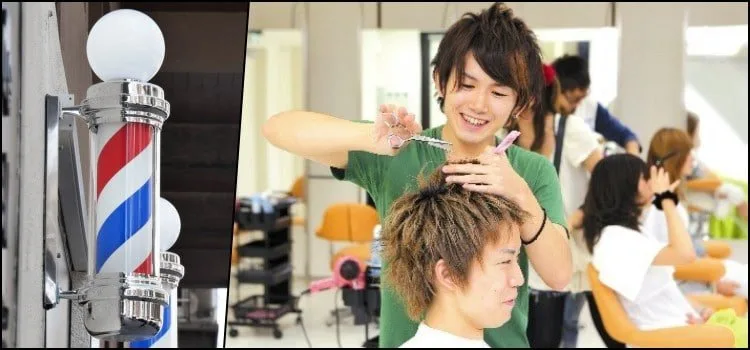
Want to get a haircut in Japan and don't know where to start? The shop on the street looks ordinary until three details hit you: it has a different Japanese name, the price moves if you add shampoo or come on Saturday, and the stylist may never have cut hair like yours.
Traditional barbershops can be identified by a spinning post with blue, red, and white stripes. They are called tokoya (床屋) and still skew toward a male audience, with plenty of middle-aged regulars. Beauty salons are called biyouin (美容院) and take both genders — color, perm, and a styled finish live there more often than in the old barber chair.
Contents 5
Tokoya and biyouin are not the same shop
Japan does not treat “barber” and “hairdresser” as casual synonyms. A tokoya, also written as riyoushitsu (理容室), is run by a licensed riyoushi (理容師). A biyouin, or biyoushitsu (美容室), is run by a licensed biyoushi (美容師). The split is legal, not just branding: only a riyoushi may shave a client’s face with a straight razor. If you want the hot-towel kao-sori (顔剃り), you walk into a tokoya, not a trend salon.
Women can use a tokoya. Many shops will say yes if you ask 女性でも大丈夫ですか? (josei demo daijoubu desu ka?). The room still feels closer to a quiet men’s shop than a Harajuku color studio, so choose by the service you want. If the goal is a Japanese idea of looking ikemen, the cut is only one piece of how male beauty is read in Japan.
What actually feels different in the chair
There are many small differences once you sit down. They usually cover your face with a cape to wash your hair. The capes often have sleeves, and many salons offer drinks like tea, coffee, or even soft drinks. The price can vary if your hair is very long, and weekends tend to be more expensive.
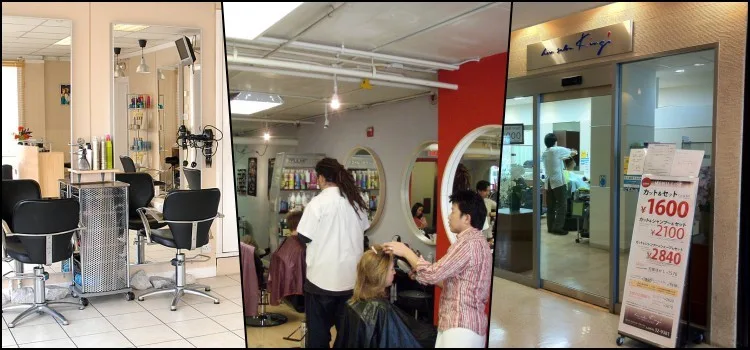
Salons often post a cheaper number if it is just the cut. Plenty of 10-minute shops skip shampoo and blow-dry; a full biyouin will usually wash and dry, and that time is already in the bill. Do not treat a station quick-cut poster as what a weekend color appointment will cost.
Although some Tokyo salons run high, the service can feel unusually thorough: a drink, a short shoulder massage, and a shampoo that is really a scalp massage. That is ordinary care in a lot of shops, not a VIP extra you have to beg for. Traditional tokoya may also clean the ears (mimikaki, 耳掃除) or finish the neckline with a razor — that is more barber than every beauty salon, so do not expect it from a color specialist.
The awkward part for foreigners is the hair itself. Japanese hair is often straight and relatively thick, and a stylist who has only cut that texture can misread curls, volume, or bleach history. Say it early, or show a photo. If you want the biology behind that texture, we already wrote about why Japanese hair tends to be straight and thick.
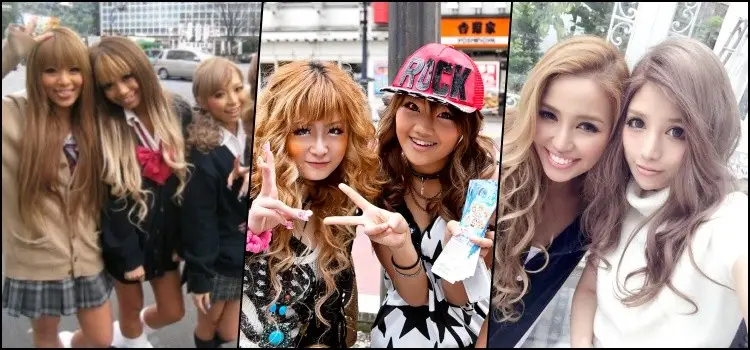
Street styles like gyaru go far beyond a basic katto. Color, length, and bangs are part of the look, closer to what a biyouin will discuss than a 10-minute tokoya trim. A lot of those choices sit inside how Japanese beauty culture talks about looking young.
You do not need a special “foreigner salon” to survive. Photos, a few set phrases, and a shop used to visitors in a big city are enough. Smaller neighborhood tokoya may have almost no English — pointing at the price board still works.
How much a haircut costs, and why you should not tip
A single “haircuts cost 500 to 3,000 yen” line no longer describes the country. Think in layers, then read the menu on the door:
Responsive Table: Scroll the table sideways with your finger >>
| Kind of shop | What you usually get | Ballpark |
| Quick-cut chain | Short cut, often no shampoo | about 1,000–1,400 yen |
| Neighborhood tokoya or salon | Cut, often with shave or wash depending on the shop | often 3,000–6,000 yen |
| Tokyo salon, designated stylist | Consultation, wash, cut, blow-dry | 6,000–12,000 yen is common |
| Cut + color or perm | Time and chemicals on top of the cut | several thousand yen more; check the menu |
City, stylist rank, long hair, and Saturday slots all move the number. The figure on the menu is the figure you pay. Tipping is not part of Japanese salon culture; leaving extra cash can make the staff uncomfortable. A clear ありがとうございました (arigatou gozaimashita) on the way out does more than a folded bill. Confirm whether shampoo is included, and whether a designated-stylist fee applies, before you sit.
Older tokoya still lean cash. City salons increasingly take cards and PayPay. Ask カードで払えますか? (kaado de haraemasu ka?) at reception if you are not carrying yen.
Vocabulary and haircuts in Japanese
There are thousands of words related to haircuts and used in beauty salons. Here are some you will actually see on a menu or hear in the chair:
Responsive Table: Scroll the table sideways with your finger >>
| English | Japanese | Romaji |
| Barbershop | 床屋 | tokoya |
| Barber | 理容師 | riyoushi |
| Beauty salon | 美容院 | biyouin |
| Hairdresser | 美容師 | biyoushi |
| Hair salon | ヘアサロン | hea saron |
| Cut | 切る | kiru |
| Haircut | カット | katto |
| Haircut (literal) | 髪のカット | kami no katto |
| Long | 長い / ロング | nagai / rongu |
| Short | 短い / ショート | mijikai / shooto |
| Medium | ミディアム | midiamu |
| Bangs | 前髪 | maegami |
| Hairstyle | 髪型 | kamigata |
| Hair texture | 髪質 | kamishitsu |
| Frizz / kink | クセ | kuse |
| Wavy hair | ウェーブ | weebu |
| Straight hair | ストレート | sutoreeto |
| Bob | ボブ | bobu |
| Shaggy cut | シャギー | shagii |
| Layer cut | レイヤーカット | reiyaa katto |
| Razor cut | レザーカット | rezaa katto |
| Thinning shears | スキバサミ | sukibasami |
| Stroke cut | ストロークカット | sutorooku katto |
| Effect cut | エフェクトカット | efekuto katto |
| Shampoo | シャンプー | shanpuu |
| Blow-dry | ブロー | buroo |
| Treatment | トリートメント | toriitomento |
| Perm | パーマ | paama |
| Straight perm | ストレートパーマ | sutoreeto paama |
| Color | カラー | karaa |
| Hair manicure | ヘアマニキュア | hea manikyua |
| Brown hair | 茶髪 | chapatsu |
| Black hair | 黒髪 | kurokami |
| Blonde hair | 金髪 | kinpatsu |
| White / gray hair | 白髪 | shiraga |
| Roots | 根元 | nemoto |
| Mustache | 口髭 | kuchi hige |
| Beard | 顎髭 | ago hige |
| Comb | 櫛 | kushi |
| Razor | カミソリ | kamisori |
Sentences to say at the hairdresser
Reservations are normal at a biyouin. Many tokoya still take walk-ins on a weekday. A photo on your phone still beats a perfect sentence.
Responsive Table: Scroll the table sideways with your finger >>
| I’d like to make a reservation. | 予約をお願いします。 | Yoyaku wo onegaishimasu. |
| I have a reservation. | 予約しています。 | Yoyaku shiteimasu. |
| How much does a haircut cost? | カットはいくらですか? | Katto wa ikura desu ka? |
| I want to get a haircut, please. | カットをお願いします。 | Katto wo onegaishimasu. |
| Please do it like this photo. | この写真のようにしてください。 | Kono shashin no you ni shite kudasai. |
| I have wavy or kinky hair. | くせ毛があります。 | Kusege ga arimasu. |
| What length do you want? | 長さはどうしますか? | Nagasa wa dou shimasu ka? |
| Can you cut it a little shorter, please? | もっと短くしてください。 | Motto mijikaku shite kudasai. |
| Please cut it to here. | この辺まで切ってください。 | Kono hen made kitte kudasai. |
| Is this length okay? | 長さはいかがでしょう? | Nagasa wa ikaga deshou? |
| Cut a little more, please. | もう少し切ってください。 | Mousukoshi kitte kudasai. |
| Please show me color samples. | 色のサンプルを見せてください。 | Iro no sanpuru wo misete kudasai. |
| Please put some gel in my hair. | ヘアジェルをつけてください。 | Hea jeru wo tsukete kudasai. |
| Can I pay by card? | カードで払えますか? | Kaado de haraemasu ka? |
Phrases help, but they will not cover every detour a colorist can take. You do not have to drag a fluent friend unless the work is a correction you cannot describe. Show the photo, say the length, and stop the cut if it is going shorter than you wanted — Japanese stylists would rather hear that in the chair than see a silent customer leave unhappy.

Community
Comments
0 comments
There are no published comments in this language yet.
Send comment